Short answer : Compostable food waste bags are liners designed to collect kitchen scraps and then break down along with the food inside them in a composting system. Match the bag to your disposal route — home compost bins need home-compostable liners, while council food-waste collections usually accept only bags approved for industrial composting. Check the bag size against your kitchen caddy and confirm the film thickness feels sturdy enough to hold wet scraps without tearing before you commit to a larger pack.
In short
- Match the liner to your disposal route: home compost bins and council collections accept different certifications.
- Measure your kitchen caddy before buying so the bag fits without sagging or overhanging the rim.
- Thicker film resists tears from wet scraps, but confirm it still meets your composter’s requirements.
- Store bags dry and sealed; moisture weakens compostable film before it ever reaches the bin.
What Compostable Food Waste Bags Actually Are
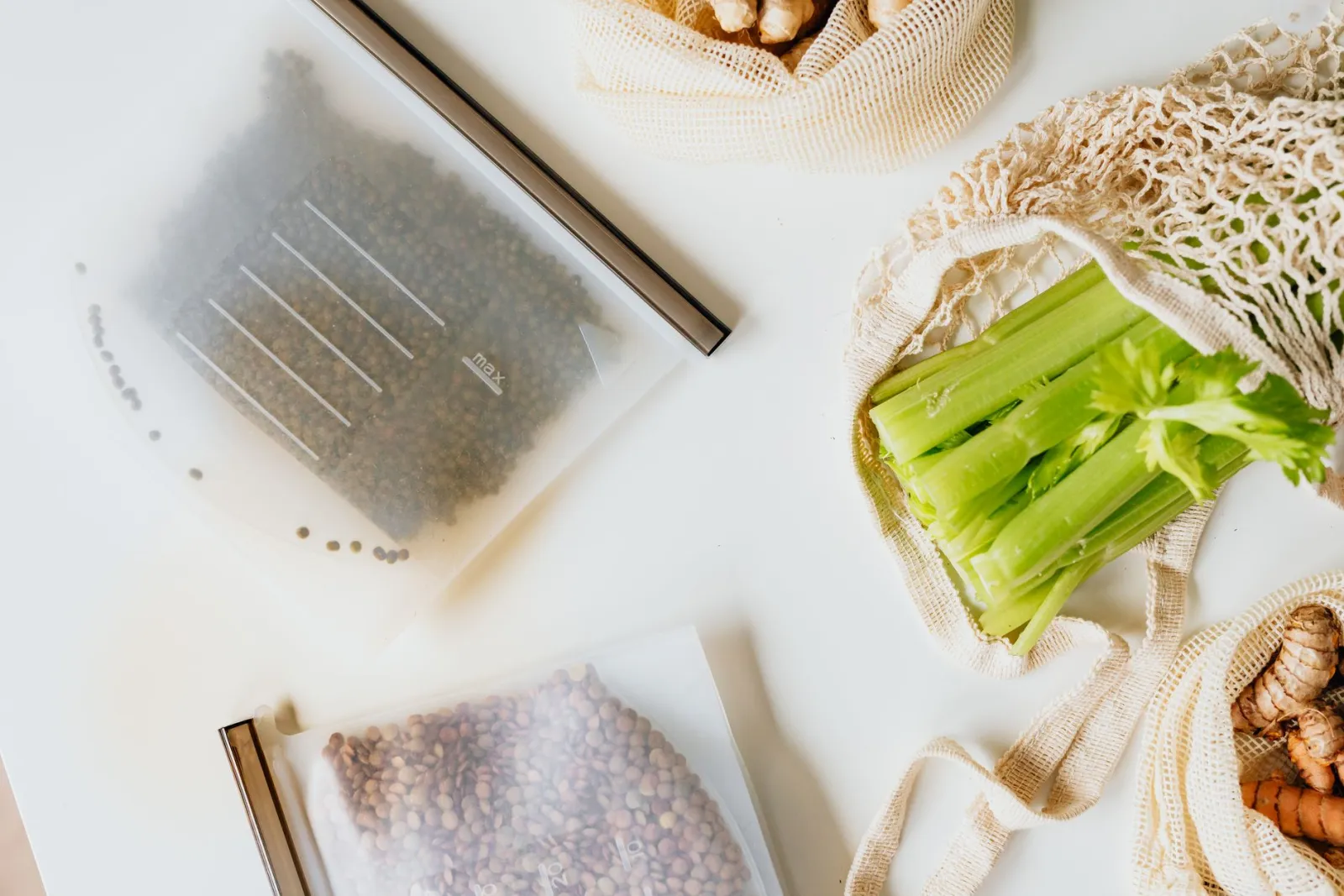
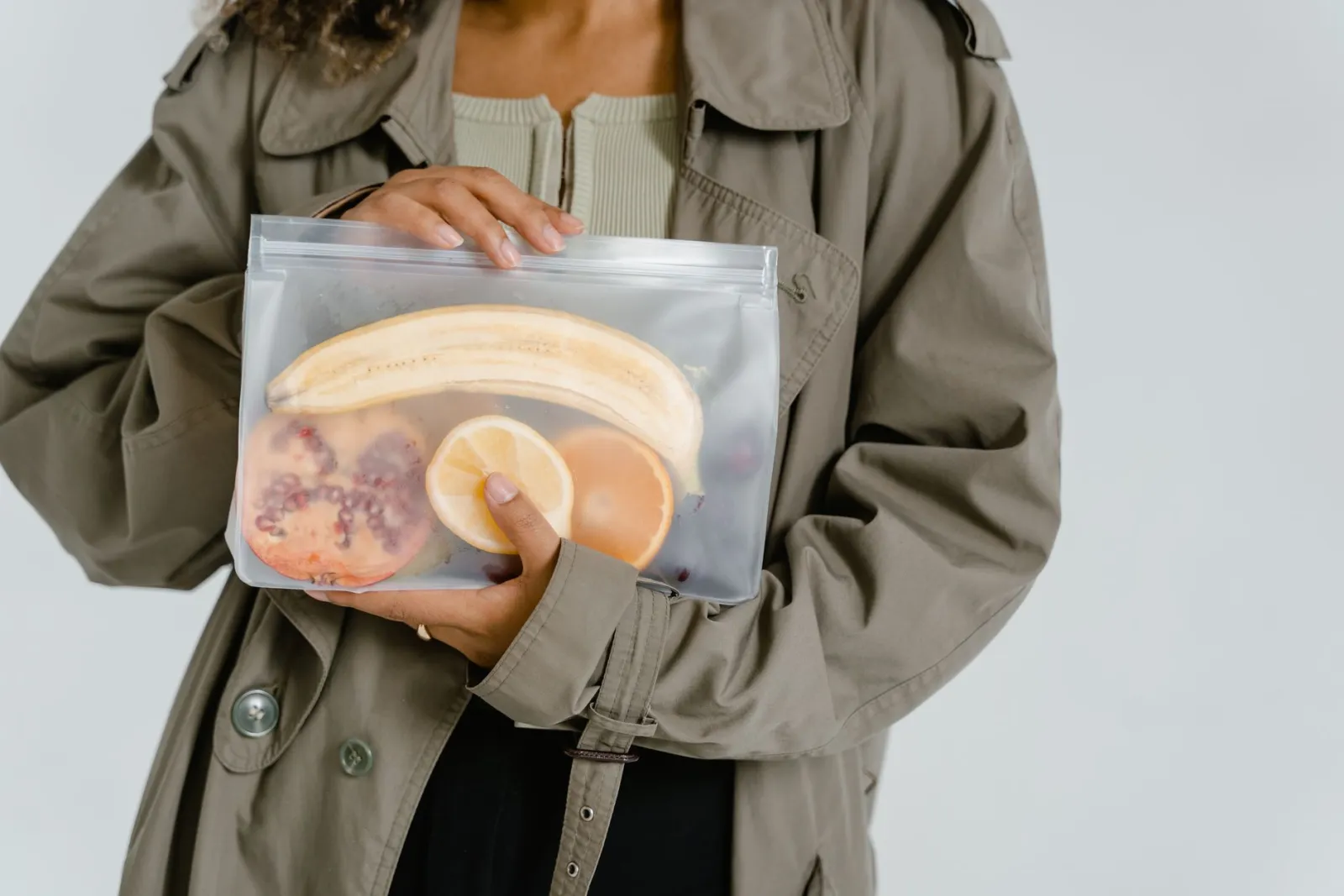
A compostable food waste bag is a bag designed to be filled with kitchen scraps and then, along with its contents, broken down by microorganisms in a composting environment. The defining feature is not that the bag disappears on its own, but that it is made to biodegrade under the specific conditions of a compost system, leaving behind water, carbon dioxide, and biomass rather than persistent plastic fragments. This distinguishes it from a conventional plastic bag, which may fragment into microplastics over time but does not meaningfully decompose, and from a “degradable” bag, a looser marketing term that often describes plastic that simply breaks into smaller pieces.
The material question matters more than the label. Most compostable food waste bags on the market are built from plant-based polymers or starch blends, sometimes combined with compostable polyester compounds, and they are engineered to meet a compostability standard rather than to look natural. The practical takeaway is to trust the certification mark and the standard it references over the texture, colour, or wording on the box.
A key distinction is where the bag is meant to break down. Home compostable bags are formulated to decompose in a backyard heap or bin at the lower, more variable temperatures a household system reaches. Industrially compostable bags are designed for the higher, controlled temperatures of a commercial composting facility and may not break down reliably in a cold home pile. If your scraps go to a municipal collection scheme, an industrially compostable bag is usually the right match; if you compost at home, look specifically for a home compostable claim. Using the wrong type can leave intact bag fragments in your finished compost.
Thickness and strength are practical criteria worth weighing. A food waste bag needs to hold wet, heavy scraps without splitting on the way to the bin, yet a very thick bag takes longer to break down. Many compostable bags are thinner than standard bin liners by design, so a light, tear-resistant construction is often preferable to a heavy one. Consider how the bag will be used: a small caddy liner that is emptied every day or two has different demands from a larger bag that sits for a week.
Finally, understand the intended end-of-life path. A compostable food waste bag is only compostable if it reaches a composting environment. Tied shut and sent to landfill, it behaves much like any other bag and will not break down to advantage. The bag is a delivery system for your scraps, and its value depends on the scraps actually arriving at a compost heap or collection point.
Home Compost vs Industrial Compost Certification
The distinction between home compost and industrial compost certification is the single most important thing to understand before buying compostable food waste bags, because the two labels describe very different disposal conditions. A bag that carries only an industrial certification is not a safe choice for a backyard compost pile, and treating the two as interchangeable is the most common buying mistake.
The practical difference comes down to temperature and time. A home compost pile typically runs cooler and more variably, so home-compostable materials are tested against lower temperatures over a longer period. When you see a home compost certification, it signals that the material has been assessed under conditions closer to what an ordinary gardener can actually provide. When you see only an industrial certification, assume the bag needs the heat and consistency of a commercial operation.
Your disposal route should drive the purchase. If you compost at home in a bin, tumbler, or open heap, look specifically for a home compost certification, because an industrial-only bag may persist as visible fragments. If you have no composting route at all and the bag will go to general waste, the compostable claim brings little benefit, since landfill conditions do not support aerobic breakdown.
Certification marks are your most reliable guide, but they need reading carefully. Look for the specific standard named on the packaging rather than a vague “compostable” or “biodegradable” word, and check whether the mark refers to home or industrial conditions. A bag carrying both certifications is the most flexible option, since it works in either setting. Be wary of bags that mention biodegradability without naming a standard or an end-of-life environment, as that wording says nothing about where or how quickly the material will break down.
Finally, match the bag to how you actually use it. Reading the certification against your real disposal route, rather than the marketing on the front of the pack, is what keeps compostable bags from becoming contamination in the wrong system.
How to Read Compostability Certifications Correctly
Compostability certifications are the part of the label most shoppers skim past, yet they carry more practical weight than any marketing claim on the front of the pack. The key is understanding what each type of certification actually verifies, because they are not interchangeable. A certification for industrial composting tells you the bag will break down in a managed facility with sustained high heat and controlled conditions. A separate home-compostable certification tells you the material will disintegrate in a backyard heap at ambient temperatures. A bag can legitimately hold one and not the other, so the first step is to match the certificate to where the bag will actually end up.
Look for the specific standard named on the packaging rather than a generic leaf or “eco” icon. Reputable certifications reference a published standard and usually print a registration or certificate number you can verify with the issuing body. Industrial compostability is typically assessed against recognized regional standards that require the material to disintegrate, biodegrade within a defined timeframe under controlled conditions, and leave no harmful residue or ecotoxicity in the finished compost. Home-compostable certifications apply similar logic but at lower temperatures and longer timeframes, which is why fewer products qualify. If the packaging shows only a recycling symbol or the word “biodegradable” with no standard cited, treat it as unverified.
The distinction matters most in real use. Some bags carry both, which gives you flexibility, but expect those to be the exception rather than the rule.
Watch for the gap between “compostable” and “biodegradable.” Biodegradable is a broad, weakly defined term that says nothing about timeframe, conditions, or residue, and some biodegradable plastics fragment without fully breaking down. A genuine compostability certification closes that gap by specifying conditions and outcomes.
Finally, confirm the certification matches your disposal route before buying in bulk. Read the certificate, not the badge.
Choosing the Right Bag Size for Your Bin
Bag size is one of the few variables you can control completely, and getting it wrong creates problems at both ends. A bag that is too small will not stretch over the rim of your caddy, so it slips down and the contents end up loose in the bin. A bag that is too large bunches at the bottom, wastes material, and makes the liner awkward to lift out without tearing. The practical approach is to match the bag to the internal dimensions of the container you actually use, not to the outer shell or the lid.
Kitchen caddies come in a few rough size classes, and bag sizing tends to follow them. Small countertop caddies, the kind that sit beside the sink, usually take a compact liner of a few litres, sized so the bag sits snugly against the walls. Mid-sized pedal bins that hold a day or two of scraps need a noticeably larger liner, often in the range of ten to fifteen litres. Full-size kitchen bins that take a standard swing or pedal lid generally call for a larger liner again. Rather than guessing, measure the height from the rim to the base and the width across the opening, then compare against the bag’s stated dimensions, allowing a little extra for the fold over the rim.
Shape matters as much as volume. Tall, narrow caddies suit a bag with a longer drop and a narrower base, while wide, shallow bins need a bag with a broad base so it does not pull tight across the corners. Square or rectangular caddies are the most common source of fit problems, because a round bag stretched over a square rim leaves slack at the corners that collects moisture and scraps. If your bin is square, look for liners described as fitting square or rectangular caddies rather than relying on litre capacity alone.
Think about how often you empty the bin, too. A household that fills a small caddy every day can use a compact liner and change it frequently, which keeps odours down and means the bag never gets heavy. A larger bin that is emptied less often needs a stronger, larger bag that can carry the weight without the base splitting, and a size that still lifts out cleanly. Matching bag size to your emptying rhythm avoids the two common failures: a bag so small it overflows before collection day, and a bag so large it hangs half empty for a week.
Finally, consider the rim fit. Most compostable liners rely on a fold or a tie to stay put, and the bag needs enough material above the bin rim to fold down securely. If the bag only just reaches the top, it will slip. A slightly taller bag that folds neatly over the edge holds its position far better than one that is exactly the height of the caddy. When in doubt between two sizes, the taller option usually gives a more reliable fit without wasting much material.
Thickness, Strength and Tear Resistance Explained
Thickness is the first thing most shoppers look at, but the number on the pack tells only part of the story. Compostable bags are typically sold in a range of gauges, from light films suited to small kitchen caddies up to heavier films intended for larger bins and outdoor collection. A thicker film generally resists punctures better, yet thickness alone does not guarantee strength: how the resin is formulated and how the film is blown or cast matter just as much. Two bags of similar gauge can behave very differently once loaded.
Strength in a compostable bag comes down to two different demands. The first is load-bearing capacity, meaning the bag must hold its contents without stretching into a sagging teardrop when lifted. The second is puncture resistance, which matters most when the bag contains rigid or angular items such as bones, fruit stones, or the sharp edges of packaging. A film that feels soft and pliable may stretch under weight, while a stiffer film may resist deformation but crack if flexed repeatedly. Good bags balance the two rather than maximizing one.
Tear resistance is where real-world use diverges most from the spec sheet. Tear propagation, the tendency of a small nick to run into a long split, depends on the film’s molecular orientation and on how the bag’s seams are bonded. A bag can be strong in the middle and fail at the seal, so check that the base and side welds look even and continuous rather than thin or rippled. Bags with a reinforced or gusseted base tend to handle heavier, wetter loads with less risk of the bottom splitting when lifted.
Match the film to the job. For a small countertop caddy emptied every day or two, a lighter, more flexible bag is easier to handle and tie off, and the loads are rarely heavy. For a larger kitchen bin, a shared household bin, or a bag that sits waiting for weekly collection, choose a heavier gauge with a sturdy base, since the contents will be denser and may include wet food that softens the film over time. For outdoor or curb collection, where bags may be stacked or compressed, prioritize puncture and tear resistance over flexibility.
Finally, remember that compostable films behave differently from conventional plastic. They are designed to break down, and moisture, warmth, and time all work against them. A bag that feels tough when new can weaken if left loaded for too long, so use bags at a sensible pace and store them dry. When comparing options, squeeze the film, flex a corner, and inspect the seams; those quick checks reveal more about real durability than the gauge printed on the box.
Breathability and Odour Control in Kitchen Caddies
Breathability is the least visible property of a compostable food waste bag, yet it shapes almost everything a kitchen caddy user notices day to day. A liner that traps moisture accelerates the breakdown of scraps into a wet, pungent slurry, while a liner that lets vapour escape keeps the contents drier and slower to turn. Compostable films behave differently from conventional polyethylene here: many are designed to transmit water vapour to some degree, which is why a caddy lined with them often smells less aggressively than one sealed with an impermeable plastic bag. The practical takeaway is that breathability should be treated as a buying criterion alongside strength and fit, not as an afterthought.
Vapour transmission matters most in the first day or two, when fresh scraps release the bulk of their moisture. Vegetable peelings, coffee grounds, and fruit trimmings are high-moisture loads; a breathable liner lets that moisture migrate into the air rather than pooling at the bottom. Drier loads such as bread, eggshells, and paper towels generate far less condensate and are more forgiving of a less breathable film. If your caddy typically holds wet preparation waste, prioritise liners described as breathable or vapour-permeable; if it mostly collects dry kitchen debris, the distinction narrows considerably.
Odour control is a system property, not a bag property alone. The caddy lid, the frequency of emptying, and the temperature of the kitchen all interact with the liner. A breathable bag inside a lidded caddy creates a slow drying effect that reduces the anaerobic conditions responsible for the sharpest smells, but it cannot compensate for a caddy left unemptied for days in a warm room. Matching bag capacity to your emptying rhythm is therefore as important as the film itself: an oversized liner that takes a week to fill will smell worse than a smaller one changed every two or three days, regardless of breathability.
Ventilation in the caddy design reinforces the bag. Models with side vents or a loose-fitting lid allow air exchange that complements a permeable liner, while a tightly sealed caddy can trap moisture against the film and undermine its benefits. Where a caddy has no ventilation, a breathable bag still helps by releasing vapour into the headspace, but the effect is weaker. Users in small, warm flats tend to notice the difference most, since odour accumulates faster in confined spaces with little air movement.
A workable approach is to layer absorbent material with the liner: a sheet of newspaper or a sprinkle of baking soda at the base soaks up free liquid before it can turn, buying the breathable film time to do its work. Pair this with regular emptying and a quick rinse of the caddy between changes. Breathability then becomes one part of a routine that keeps a kitchen caddy tolerable, rather than a single feature expected to solve odour on its own.
Matching Bags to Your Composting Method
The composting method you use determines which compostable bag characteristics actually matter. A bag that performs well in one system can be a poor fit in another, so it helps to work backwards from where the bag will end up.
For a home compost bin or tumbler, the limiting factor is usually time and temperature. Home heaps rarely reach the sustained heat of industrial systems, so a bag needs to break down under moderate conditions. If you compost in small batches and turn infrequently, favor bags that feel thinner and tear easily, and expect to see them soften and fragment within a few weeks to a couple of months rather than days. Lining a small kitchen caddy that gets emptied every few days means the bag spends little time full, so a lighter-gauge liner is sufficient and avoids adding unnecessary material to the heap.
For a municipal or council food-waste collection that goes to an industrial facility, the priorities shift. In these schemes the bag is often collected frequently, so capacity per bag matters less than matching the accepted certification.
If you use a bokashi bucket or an indoor fermenting system, the bag plays a different role. Fermentation is largely anaerobic and acidic, and bags are usually not needed inside the bucket itself; where liners help is in transporting the finished fermented material to a soil trench or outdoor pile. Here a sturdy bag that resists tearing when wet is more useful than an ultra-thin one.
Backyard trenching and direct soil burial suit thicker bags less well, because burial relies on soil contact and moisture rather than heat.
Finally, consider how the bag interacts with your collection rhythm. Frequent small pickups favor smaller liners and thinner film; infrequent pickups with heavy, wet food waste favor a bag with more strength and leak resistance, even if it composts a little more slowly. Matching gauge and certification to your actual end destination is the single most useful decision you can make.
Common Mistakes When Using Compostable Bags
The most widespread mistake is treating a compostable bag like a conventional plastic liner and expecting it to behave the same way. Compostable bags are designed to break down in a managed composting environment, not to sit indefinitely in a kitchen caddy. If a bag is left holding wet food scraps for far longer than its intended use, it can start to soften, sag, or develop weak spots at the seams before it ever reaches a compost pile. Matching the bag size and film thickness to how quickly a household fills it matters more than buying the heaviest option available.
A second common error is sealing scraps inside the bag as if it were a landfill liner. Compostable bags work best when the contents can breathe and when the bag is emptied into the compost system rather than tied off and forgotten. Knotting the top tightly traps moisture and slows the breakdown process once the bag reaches the pile. In a home compost setup, loosely gathered or open bags that are mixed into the heap decompose more reliably than tightly knotted bundles that stay intact in the middle of the pile.
Mixing compostable bags into the wrong waste stream is another frequent problem. Users should check which certification a bag carries and confirm it matches where the bag will actually end up, whether that is a council food-waste collection, a commercial facility, or a garden heap.
Overfilling is a practical mistake that shows up constantly. Stuffing a bag past its comfortable capacity stresses the seams and the base, and the resulting leaks defeat the whole point of using a liner. A bag that is filled to roughly its stated volume, with the top left free for gathering, holds up far better than one packed until it bulges. Heavier or wetter scraps, such as melon rinds or cooked leftovers, put more strain on the film than dry peelings, so the same bag size may need to be changed sooner in some kitchens than others.
Finally, many people store compostable bags badly before use. Leaving a pack open in a damp cupboard or near a heat source can make the film brittle or tacky, and bags that have absorbed moisture may tear as soon as they are opened. Keeping unused bags dry and sealed until needed preserves their strength. Storing a filled caddy bag for days in a warm spot, rather than emptying it on a regular rhythm, is the surest way to end up with a soggy, torn liner and a mess to clean up.
Cleaning and Storing Bags Properly
Proper storage protects the material before it ever meets food waste. Compostable bags are designed to break down, and that same quality makes them sensitive to heat, moisture, and prolonged exposure to air and light. Keep unused bags in their original packaging or a sealed container, in a cool, dry spot away from direct sunlight, radiators, and the warmth of appliances. A cupboard or drawer in a normal room works well; a garage shelf that bakes in summer or a damp basement does not. Rotate stock so older bags get used first, and avoid buying more than you will realistically use within a reasonable period, since the material ages even on the shelf. If a bag feels brittle, tears easily at the folds, or has developed a sour or musty smell, it has degraded in storage and will likely fail in the bin.
The kitchen caddy itself is where most day-to-day problems start. Line the bin so the bag sits flat with the rim folded neatly over the edge, which keeps the top dry and makes lifting it out cleaner. Empty the caddy frequently rather than letting it sit for days; the longer wet scraps stay in contact with the film, the more the bag softens and the more odor builds up. Between changes, wipe the inside of the caddy and let it dry fully before fitting a new liner. A dry bin makes a noticeable difference to how well the bag holds together, while a permanently damp caddy accelerates breakdown from the outside in.
Moisture management matters more than most people expect. Drain obvious liquid from plates and let very wet scraps, such as melon rinds or watery leftovers, sit briefly before adding them, and consider wrapping soggy items in a sheet of newspaper or a paper towel. Keep sharp items like bones, shells, and broken crockery out of the liner, or wrap them, since punctures at the base are a common cause of leaks. Don’t compact or press the waste down hard; a loosely filled bag carries its load better than one that has been squashed into a dense, heavy mass.
For storage before collection, place filled bags somewhere shaded and ventilated rather than in direct sun or against a warm wall. In warm weather, move them out to the collection point promptly instead of letting them accumulate. If you use a larger outdoor bin, keep the lid closed to deter animals and rain, and avoid stacking heavy bags on top of each other. A simple routine of dry storage, frequent emptying, and gentle handling keeps compostable liners doing their job right up to the moment they leave the kitchen.
Budget Planning for Compostable Bag Supplies
Budgeting for compostable food waste bags starts with understanding that the cost per bag is only one part of the picture. Compostable liners are typically priced above conventional plastic bags, so the real planning question is how to match bag capacity, thickness, and certification to the way you actually collect scraps. A household that fills a small countertop caddy several times a week has different needs from a café emptying a large bin daily, and the budget should reflect frequency of change rather than headline unit cost alone. Buying in bulk usually lowers the per-bag cost, but only if storage conditions keep the material dry and away from heat, since compostable films degrade over time.
A practical way to size the budget is to estimate how many bags you change each week and multiply by the number of weeks between purchases. Small caddy liners suit kitchens that empty scraps often, while larger bin liners fit households that accumulate waste more slowly or businesses with steady volume.
Seasonality and usage patterns also shape spending. Gardening months, holiday cooking, and canning or preserving seasons tend to increase food scrap volume, so it helps to plan larger orders ahead of those periods rather than buying in small quantities at short notice. For shared households or small food businesses, a simple running tally of bags used per month gives a clearer picture than guessing, and it makes it easier to compare bulk pricing against smaller, more frequent purchases.
Finally, treat the bag budget as part of a wider waste-management plan. If your municipality or compost service specifies certain bag types, buying non-compliant bags wastes money, so confirm requirements first. Pairing bag purchases with a well-ventilated bin and a consistent emptying routine keeps liners from sitting too long and breaking down prematurely. Reviewed together, these choices keep compostable bag supplies predictable and proportionate to real use.
Frequently asked questions
What does compostable mean on food waste bags?
Compostable on a food waste bag means the material is designed to break down through microbial activity into water, carbon dioxide, and biomass, leaving no distinguishable residue and no toxic effect on the soil. It differs from biodegradable, which only signals that something will eventually break down without saying how completely or how safely. Look for a recognised compostability certification printed on the bag, since that confirms the product has been tested against a defined standard rather than just marketed with a loose claim.
Can compostable bags go in my home compost bin?
Check the certification logo and any home-compostable wording on the packaging before adding bags to your own heap, and tear or open them so the contents and the bag are exposed to the same conditions.
Do compostable bags break down in landfill?
Compostable bags are not designed to break down usefully in landfill. A landfill is compacted and oxygen-poor, so the microbes that drive composting cannot work as they would in a compost heap or industrial facility. The bag may remain largely intact for a long time, and anaerobic breakdown in landfill can produce methane. Compostable bags only deliver their intended benefit when they reach a composting process, so avoid treating landfill as a disposal route for them.
How long do compostable food waste bags take to decompose?
There is no single timeline, because decomposition depends on the material, the thickness of the bag, the temperature, moisture, and how actively the pile is managed. In a cool home heap or a sealed bin, the same bag can take considerably longer. Opening the bag and mixing it into active compost speeds things up.
Are compostable bags better than plastic for food waste?
For food waste specifically, compostable bags are usually the better choice because they can be processed together with the scraps, so the whole lot can be turned into compost without separating the liner. Conventional plastic bags contaminate compost and must be removed. That advantage only holds if the bag actually reaches a composting route. If your waste goes to landfill or incineration, the compostable bag offers little benefit over plastic, so match the bag to your disposal system.
What size bag fits a standard kitchen caddy?
Kitchen caddies vary, so measure the width, depth, and height of your own caddy and compare against the bag dimensions on the pack rather than guessing. Small countertop caddies generally take compact liners, while larger under-sink or freestanding caddies need taller bags. A bag that is too large wastes material and slumps into the caddy, and one that is too small tears when filled. Buying a pack in the size that matches your caddy avoids constant misfits.
Can I put compostable bags in council food waste collections?
Many council food waste collection schemes accept compostable liners, but acceptance is decided locally and varies widely between areas. Some schemes ask for bags carrying a specific certification, and others prefer no liner at all or accept only paper. Check your council’s current guidance before relying on compostable bags in the caddy. Putting the wrong liner in can contaminate a whole load of collected food waste, so confirm the rule for your address.
How should I store compostable bags before use?
Store compostable bags somewhere cool and dry, away from direct sunlight, heat, and damp, because the material is designed to break down and can start degrading prematurely in poor conditions. Keep them in their original packaging until you need them, and avoid leaving a roll or pack in a hot cupboard or a humid spot near the sink. Use bags within the period indicated on the pack, and rotate stock so older bags are used first rather than sitting at the back of a drawer.
Full guide :Sustainable Home
More from this guide :
Was this guide helpful?
Share your experience with the WiseHomeGuides community.