This article contains Amazon affiliate links. As an Amazon Associate we earn from qualifying purchases.
In short :
- Organic cotton kitchen towels are better for the planet and the people growing the cotton, but they won’t dry your dishes any better than regular cotton.
- What actually matters for performance is the weave, the weight, and how you plan to use the towel.
- Conventional cotton towels often cost less and can work just as well in your kitchen.
- So pick based on feel and function first, then treat organic certification as a nice bonus if your budget allows.
- Restaurant supply stores are a smart, overlooked place to find durable towels without the markup.
What are the best towels to use in the kitchen?
Walk into any kitchen and you’ll spot them: draped over the oven handle, folded near the sink, tucked into an apron string. Kitchen towels are the quiet workhorses of the home. They dry hands, wipe spills, blot produce, cover rising dough, and rescue a simmering pot from boiling over. But here’s a question worth asking: does the cotton in your towel actually matter?
If you’ve ever stood in a store aisle staring at two nearly identical towels — one labeled “organic cotton,” the other just “cotton” — you’re not alone. The difference isn’t marketing fluff, but it isn’t a life-changing upgrade either. It comes down to how the cotton is grown, how it’s processed, and what that means for your kitchen, your skin, and the planet. This article breaks down organic versus conventional cotton kitchen towels in plain terms, so you can choose with confidence instead of guesswork.
How organic and conventional cotton differ at the source
Cotton is a crop. Like any crop, it can be grown in different ways, and those choices ripple all the way to the towel hanging in your kitchen.
Conventional cotton is typically grown with synthetic fertilizers, pesticides, and defoliants. It’s efficient, widely available, and produces the vast majority of the world’s cotton. Organic cotton, by contrast, is grown without synthetic pesticides or fertilizers, using methods like crop rotation and natural pest control. The seeds themselves must be non-GMO, and the land usually needs a transition period before it can be certified organic.
What does that mean for you practically? Organic cotton farming generally uses less water in some regions and reduces chemical runoff into soil and waterways. It also tends to be gentler on the farmers who grow it. But here’s the catch: those benefits are about how the fiber is produced, not automatically about how the finished towel performs in your kitchen.
A concrete example
Imagine two hand towels side by side. One is made from organic cotton, the other from conventional cotton. Both are 100% cotton, both have a similar weight, and both have been woven the same way. In everyday use — drying your hands after washing dishes, wiping down the counter — you’d be hard-pressed to notice a difference in absorbency or feel. The organic one isn’t magically more absorbent. The real distinction lies upstream, in the field and the supply chain.
Does organic cotton make a better kitchen towel?
Not necessarily. This is where a lot of shoppers get tripped up.
Performance in a kitchen towel depends far more on weave, weight, and construction than on whether the cotton is organic. A tightly woven flat towel behaves very differently from a fluffy terry towel, regardless of how the cotton was grown. GSM — grams per square meter — tells you how dense and thirsty a towel is. A 400 GSM terry towel will absorb far more than a 200 GSM flat weave, organic or not.
That said, there are a few reasons someone might prefer organic cotton in the kitchen:
- Skin sensitivity: Some people find organic cotton feels softer against sensitive skin, partly because it’s often processed with fewer chemical finishes.
- Residue concerns: Towels that touch food, dishes, or a baby’s face may appeal to those who want to minimize exposure to processing chemicals.
- Environmental values: If sustainability guides your purchases, organic cotton aligns with that.
On the flip side, conventional cotton towels can be just as durable, just as absorbent, and often more affordable. A well-made conventional towel will outlast a poorly made organic one every time.
A practical case
Consider a home baker who uses a towel to cover dough during proofing. What matters most is that the towel is clean, lint-free, and breathable — not whether the cotton is certified organic. A conventional flat-weave flour sack towel often does this job better than a thick organic terry towel, simply because of its weave.
Weave and construction: the factors that actually matter
If you want a towel that performs, look at these before you look at the organic label.
| Feature | What it means | Best for |
|---|---|---|
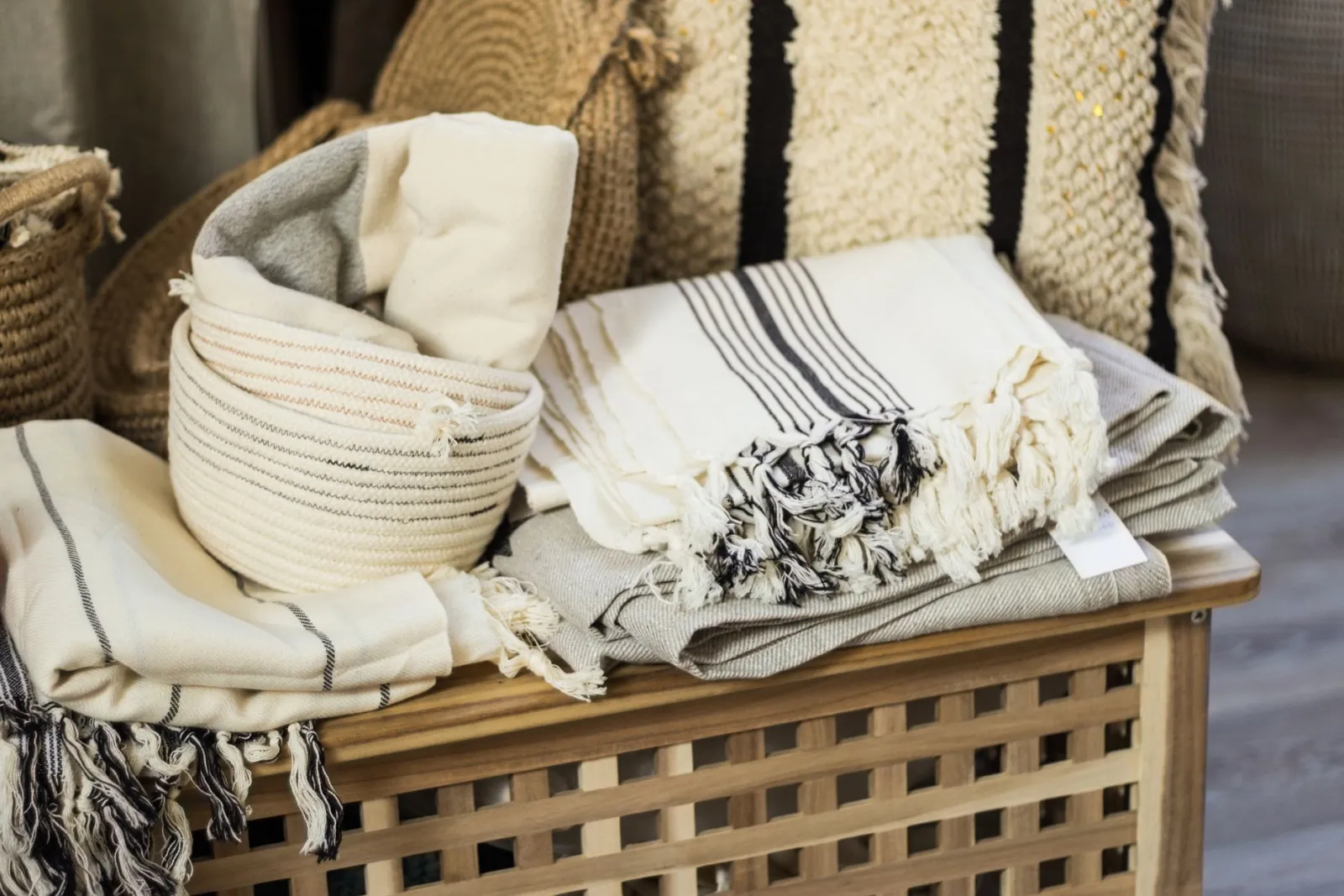
| Flat weave (flour sack style) | Thin, smooth, quick-drying, lint-free | Drying glassware, covering dough, wrapping greens |
| Terry weave | Looped pile, high absorbency, plush feel | Drying hands, mopping spills, general cleanup |
| Waffle weave | Textured grid, airy, fast-drying | Drying dishes, decorative use, quick turnaround |
| GSM (weight) | Higher = denser and thirstier, lower = lighter and faster-drying | Match to task: 300–400 GSM for spills, 150–200 for glassware |
A common mistake is buying a heavy, plush towel for drying wine glasses. It leaves lint and streaks. A lightweight flat-weave towel — organic or not — solves that problem instantly. Conversely, a thin flour sack towel won’t handle a spilled pot of pasta water well. The lesson: match the towel to the task, not to the label.
Real-world observation
Professional kitchens tend to favor simple, flat, white cotton towels. They’re cheap, bleach-friendly, dry fast, and don’t leave lint. Organic certification rarely enters the conversation. Home cooks can borrow that logic: buy towels suited to the job, then choose organic if the values align and the budget allows.
Durability, care, and what to expect over time
Organic cotton isn’t inherently stronger or weaker than conventional cotton. Fiber length matters more. Long-staple cotton produces stronger, smoother yarn, which resists pilling and lasts longer. That quality exists in both organic and conventional forms.
How you care for towels determines their lifespan more than their origin:
- Wash before first use to remove sizing and improve absorbency.
- Skip fabric softener — it coats fibers and reduces absorbency.
- Wash whites hot and colors warm; avoid overloading the machine.
- Line dry when possible; high heat shrinks and wears fibers.
- Replace towels when they smell musty even after washing — that’s bacterial buildup in the fibers.
A conventional towel treated well can easily last years. An organic towel abused in a hot dryer will fray just as fast. The fiber’s origin doesn’t override basic care.
FAQ
What is the main difference between a kitchen towel and a dish towel?
In practice, the terms overlap heavily. A dish towel usually refers to a towel used specifically for drying dishes and glassware — often flat-woven and lint-free. A kitchen towel is a broader category covering hand drying, spill cleanup, covering food, and more. Many households use the same towels for both jobs, though keeping a separate lint-free towel for glassware is a smart habit.
What are kitchen towels called in the UK?
In the UK, you’ll most often hear “tea towel.” It refers to the same everyday cloth used for drying dishes and hands. “Kitchen towel” in the UK can also mean paper towel, so context matters. If you’re shopping online from a UK site, searching “tea towel” will usually get you the reusable cotton cloths you’re after.
Where can I buy the best kitchen towels?
Rather than chasing a single “best” source, focus on what to look for: 100% cotton, a weave matched to your task, a weight suited to how you’ll use it, and a return policy in case the feel isn’t right. Home goods stores, restaurant supply shops, and online retailers all carry solid options. Restaurant supply stores are often overlooked gems for durable, no-frills towels.
The bottom line
Organic cotton kitchen towels offer real environmental and ethical advantages at the growing stage. Conventional cotton towels can perform just as well in your kitchen and often cost less. Neither is universally “better.” The smarter move is to choose based on weave, weight, and how you’ll actually use the towel — then let organic certification be a bonus if it fits your values and budget.
For a deeper look at towel types, care routines, and how to build a functional kitchen linen setup, a more complete guide on the topic covers everything from GSM to storage.
Go further : What temp kills germs on kitchen towels?
Sources
- Organic Trade Association
- Global Organic Textile Standard (GOTS)
- Environmental Justice Foundation
- Skin Health Alliance
Was this guide helpful?
Share your experience with the WiseHomeGuides community.