This article contains Amazon affiliate links. As an Amazon Associate we earn from qualifying purchases.
In short :
- There’s no single best storage type — pick it based on what you’re keeping, how long, and how often you need it.
- Sort your things into frequently accessed, seasonal, and long-term or fragile, then match each group to the right unit.
- Go climate-controlled indoors for furniture, documents and anything humidity-sensitive, and standard indoor units for boxes and seasonal goods.
- For long-term storage, choose a climate-controlled indoor unit with restricted access, raised flooring and pest control, and elevate and label everything.
- For digital files, use the 3-2-1 rule: a local drive plus an off-site copy.
What type of storage is the best?
There is no single best type of storage — the right choice depends on what you are keeping, for how long, and how often you need to reach it. For most households, the best option is the one that matches your access frequency, your space constraints and your sensitivity to humidity and temperature, rather than the largest or cheapest unit available.
Storage decisions tend to get made in a hurry. A move is looming, a spare room has filled up, or a relative’s furniture needs a temporary home. In that rush, people tend to pick whatever is closest or biggest, then discover three months later that the sofa has a musty smell or that they are paying for space they never use. The fix is simple: decide on the basis of what you are storing and how often you will need it. This guide walks through the practical criteria that actually separate a good storage decision from an expensive one, with concrete examples you can apply the same afternoon.
How do you match the storage type to what you are storing?
You match storage to contents by sorting your belongings into three groups — frequently accessed, seasonal, and long-term or fragile — because each group has different requirements for access, climate and handling.
Start with an honest inventory. Walk through your home with a notepad and list what is actually leaving. Most people overestimate by roughly a third, then rent a unit with empty floor space. A useful rule of thumb: a standard one-bedroom flat’s contents usually fit into a small-to-medium unit if furniture is dismantled, but bulky items like a sofa, a mattress and a fridge push you up a size.
Then group by access frequency:
- Frequently accessed (tools, sports gear, seasonal clothing, business stock): choose a facility with extended access hours and easy ground-floor loading. Drive-up access saves a surprising amount of time when you visit weekly.
- Seasonal (holiday decorations, garden furniture, winter tyres): a standard indoor unit is fine; label boxes clearly and keep a map of the unit taped inside the door.
- Long-term or fragile (family furniture, instruments, documents, photographs): prioritise climate control and pest prevention over price or proximity.
Concrete example: a family clearing a parent’s house typically ends up with a mix — a dining table and chairs (long-term, needs dry conditions), boxes of photographs and paperwork (fragile, humidity-sensitive), and garden tools (seasonal). Storing all three in one unheated unit is the classic mistake: the photos absorb damp while the tools sit in prime space. Splitting the load, or at least elevating the fragile items on pallets and away from the walls, solves most of it.
Which storage is best for long-term storage?
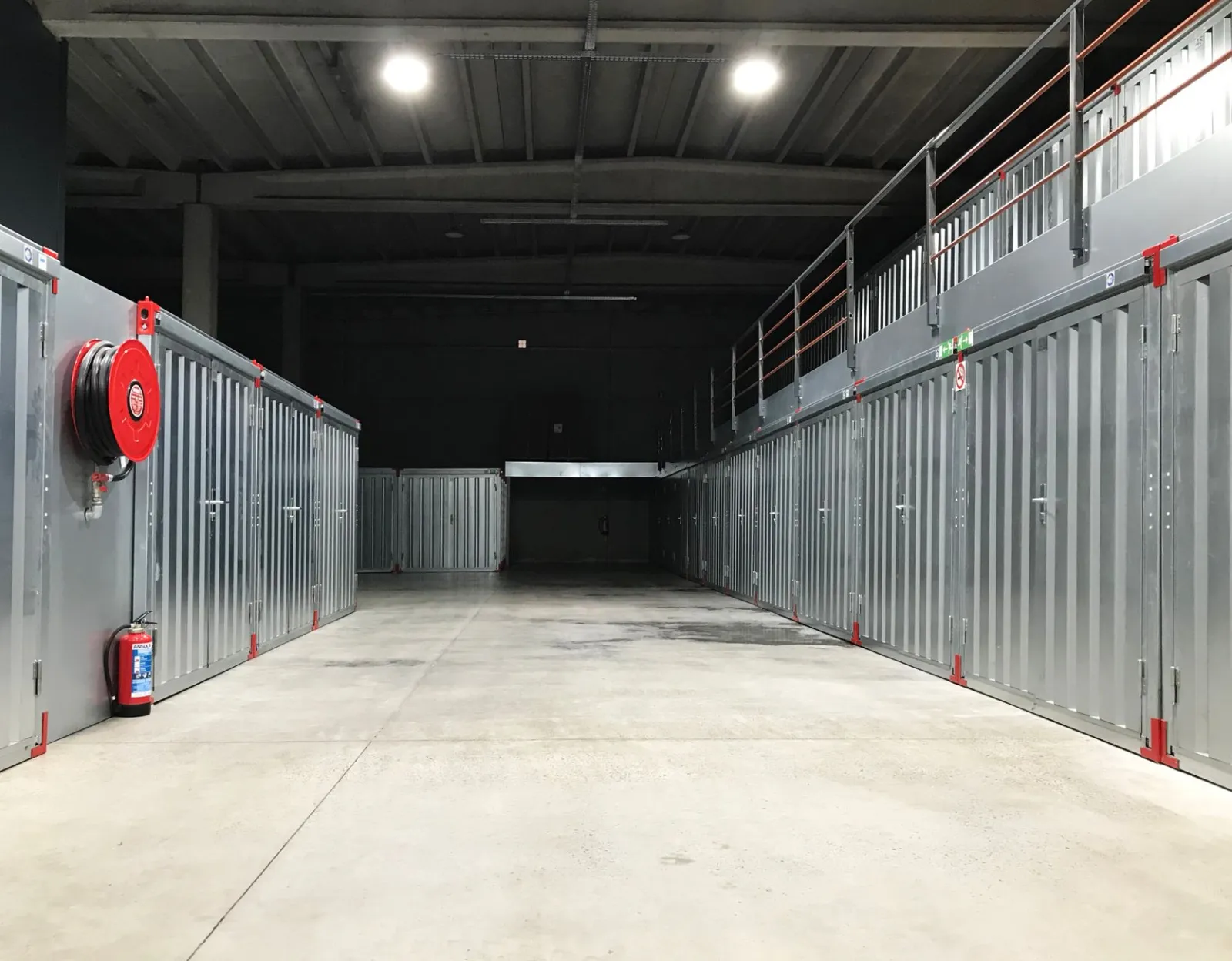
For long-term storage, the best option is a climate-controlled indoor unit with restricted access, good ventilation and a written pest-control routine — not the cheapest outdoor container you can find.
Long-term means months or years, and that changes the priorities entirely. The three things that quietly destroy stored belongings are moisture, temperature swings and pests. A metal container in direct sun can swing from freezing to oven-hot within a day; that cycle cracks leather, warps wood and condenses water on anything cold. An indoor unit with stable temperature and humidity avoids most of this.
What to check before signing anything for a long stay:
- Climate control — ask directly whether the unit is heated, cooled or merely ventilated. “Climate controlled” is sometimes used loosely.
- Elevation — is the floor at ground level or raised? Ground-level units in flood-prone areas are a risk.
- Access restrictions — gated entry, individual locks you control, and CCTV are baseline expectations.
- Contract terms — notice period, annual increases, and whether insurance is included or extra.
Concrete example: wooden furniture stored directly against a cold exterior wall will draw condensation on the back panels and develop white mould within a season. Leaving a hand’s width of air gap and placing pallets or battens underneath solves it — a five-minute job that saves a piece of furniture.
For very long stays, also consider whether self storage is the right tool at all. If you are keeping things “just in case” for more than a couple of years, the accumulated rent often exceeds the value of the contents. A periodic review — once a year, open the unit and ask what you would actually replace — keeps costs honest.
Which storage device is the best for digital files?
For digital files, the best approach is the 3-2-1 rule: three copies of your data, on two different types of media, with one copy stored off-site — because no single device survives fire, theft, failure and human error at once.
This is where “storage” gets confusing, because the same word covers a self-storage unit and a hard drive. If your question is about photos, documents and backups, the principles are different but just as practical.
What works reliably:
- An external drive kept at home for fast, everyday backups — connected, copied, disconnected. Leaving it permanently plugged in exposes it to the same power surge or ransomware as the computer.
- An off-site copy — either a cloud service or a second drive kept at another address, such as a relative’s house or a workplace locker. This is the copy that survives a house fire.
- A periodic integrity check — drives fail silently. Once or twice a year, open a few files from each backup and confirm they actually play or open.
Concrete example: the most common data loss story is not a dramatic crash — it is a laptop stolen from a car with the only backup drive sitting in the same bag. Physically separating the copies is the single highest-value habit in digital storage.
Quick comparison of storage options
| Option | Best for | Watch out for |
|---|---|---|
| Outdoor container | Bulky, weather-tolerant items; short term | Temperature swings, condensation, limited access |
| Indoor unit, standard | Household goods, seasonal items | Humidity in unheated buildings; check floor level |
| Climate-controlled unit | Furniture, instruments, documents, long stays | Higher cost; confirm what “climate controlled” means |
| External drive + off-site copy | Digital backups | Silent failure; keep copies physically separate |
Frequently asked questions
Which self storage company is the best in the UK?
There is no universally best company — the right one is the facility that meets your access, climate and security needs within a reasonable distance of your home. Visit in person before committing. Check the unit for damp smells, ask how access hours work in practice, read the contract’s notice period, and confirm what insurance is required. A well-run independent facility often beats a large chain on flexibility, while chains tend to offer more consistent security and longer access hours.
What type of storage is the best?
Match the type to the contents. Climate-controlled indoor units suit furniture, documents and anything humidity-sensitive. Standard indoor units work for boxes and seasonal goods. Outdoor containers are fine for tools and weather-tolerant equipment over short periods. For digital files, the best “type” is a combination — a local drive plus an off-site copy.
Which storage is best for long-term storage?
A climate-controlled indoor unit with restricted access, raised flooring and a clear pest-control routine. Add physical protection: pallets under boxes, air gaps from walls, breathable covers rather than plastic sheeting, and a labelled inventory so you can find and review items without emptying the unit.
The short answer
Choose storage by contents and duration, not by size or convenience alone: climate-controlled indoor space for anything fragile or long-term, standard indoor units for household goods, and the 3-2-1 rule for digital files. Before you sign, visit the facility, smell the air, check the floor, and read the notice period. Then protect what you store — elevate it, label it, and review it once a year. For a broader walkthrough of unit sizes, packing methods and contract fine print, a more complete guide to storage is available on the site.
To make your choice concrete : Storage Bed: How to Choose the Right One
Work out your own case in 30 seconds:
Methodology
This calculator produces an indicative estimate based on the parameters you enter. The ranges used reflect typical market tiers in the decor and storage space and are neither a commercial offer nor a guarantee. Prices and availability may vary.
Was this guide helpful?
Share your experience with the WiseHomeGuides community.