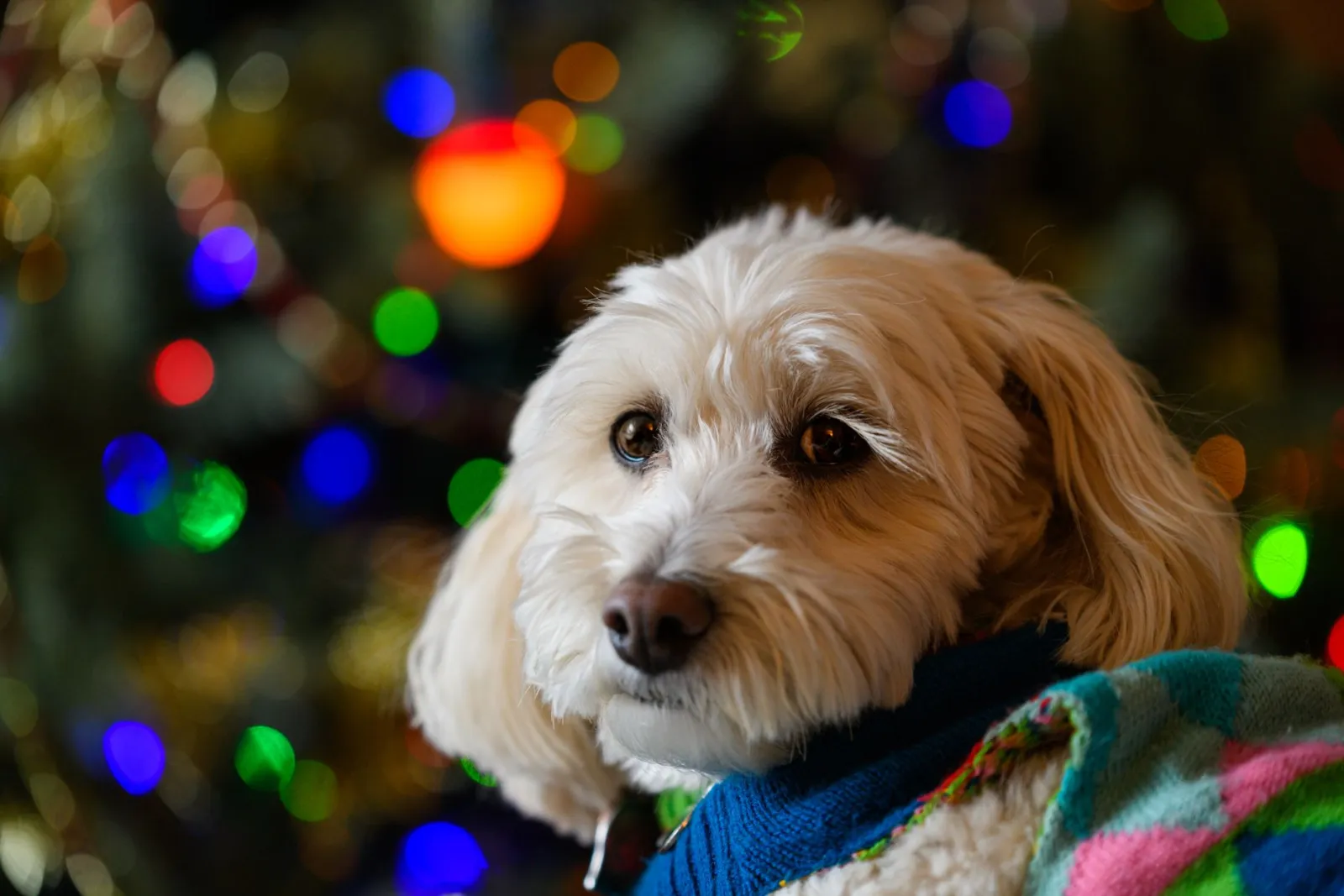
Short answer : Choosing Christmas jumpers for dogs comes down to fit, fabric and safety rather than novelty alone. Look for a jumper that covers the back and chest without restricting the legs, tail or neck, and measure your dog’s back length and chest girth before buying so the knit sits close but never tight. Soft, breathable knits with a bit of stretch are easier to put on and less likely to irritate skin, while openings for a harness or lead make winter walks simpler. Fastenings should be secure but quick to undo, and any decorations should be flat and firmly attached so they cannot be chewed or pulled loose. Washability matters too, since festive knits get worn repeatedly through the season.
In short
- Measure back length and chest girth first; a jumper should cover the back without pulling at the legs.
- Choose soft, breathable knit fabrics with some stretch for comfort and easy dressing.
- Check for lead or harness openings if your dog wears a harness on winter walks.
- Prefer flat, firmly attached decorations and secure fastenings that are quick to undo.
- Pick a machine-washable jumper, as festive knits are worn often through the season.
Why a Christmas Jumper Suits Your Dog
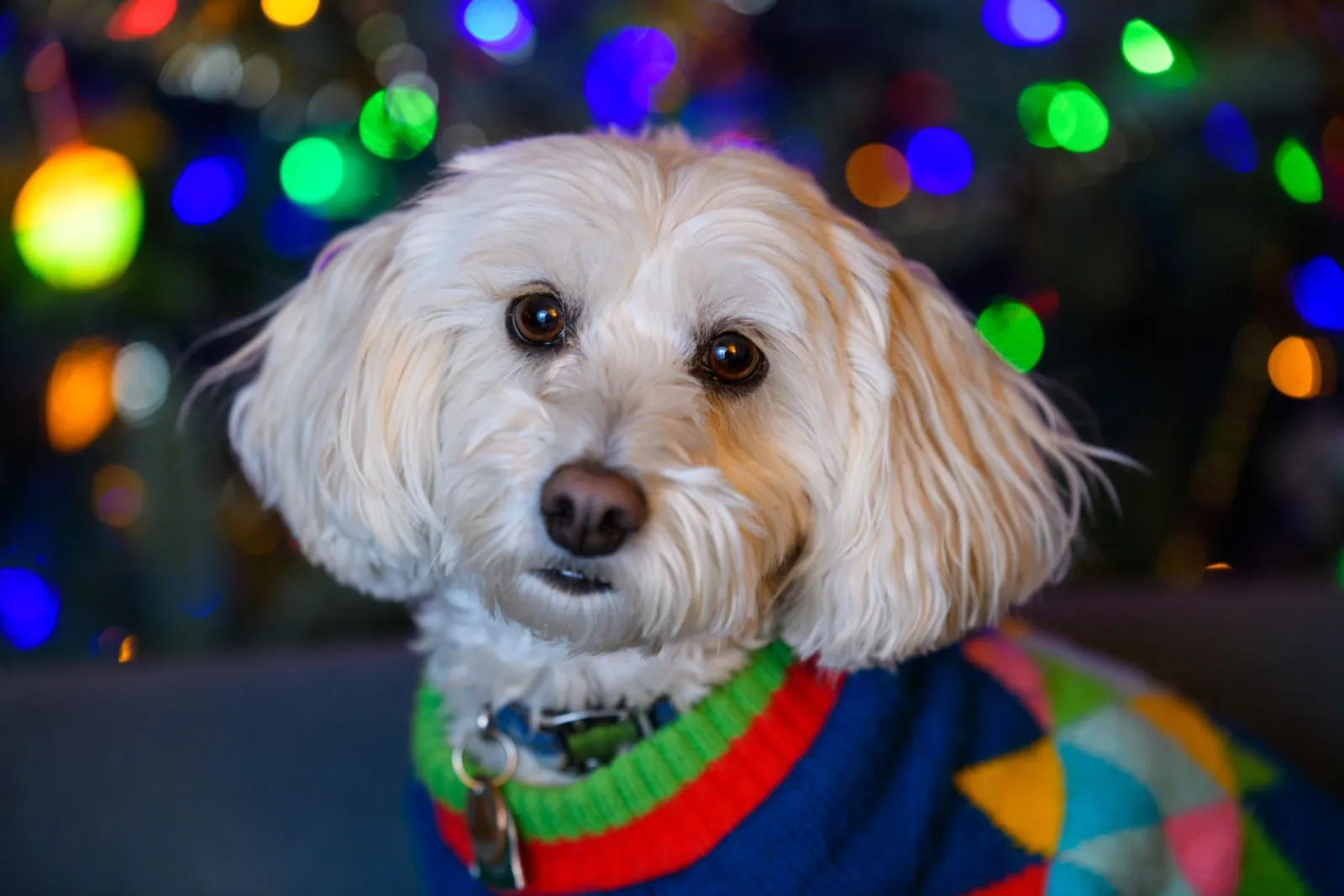
A Christmas jumper works for a dog for the same reasons it works for a person: it marks the season, it photographs well, and it turns an ordinary walk into something neighbours smile at. The difference is that a dog cannot adjust a collar, scratch an itch through thick knit, or tell you the wool is too warm. So the case for dressing your dog in a festive jumper rests on choosing one that respects how the dog actually moves, heats up, and reacts to clothing.
The most practical argument is warmth during the cold months. Short-coated breeds, lean dogs, very small dogs, and older dogs that feel the chill lose heat faster on frosty morning walks than thick-coated working breeds do. A jumper acts as a layer over the back and flanks, the areas most exposed to wind and damp. For a quick garden trip or a slow pavement walk in low temperatures, that extra layer can make the difference between a dog that trots out willingly and one that shivers at the door. It is not a substitute for shelter or for cutting a walk short in harsh weather, but as an everyday comfort layer it earns its place.
The second argument is behavioural and social. Many dogs tolerate a well-fitted jumper without fuss, and some visibly settle when wearing one, particularly nervous dogs who find the gentle pressure calming in unfamiliar situations. A festive jumper also functions as a conversation starter: on a December walk it invites friendly attention, which is useful for shy dogs learning that strangers are not a threat, provided the dog is comfortable being approached. For households with children, dressing the dog becomes part of the ritual of the season, and a dog that enjoys handling will usually accept a jumper as just another piece of attention.
Fit is where the jumper succeeds or fails. A good festive jumper covers the back from the base of the neck to the tail, leaves the belly clear for urination, and does not restrict the front legs. Look for stretch at the neck and leg openings, a cut that clears the chest without dragging, and a fabric that lets the dog walk, sit, and lie down without bunching. Too loose and the jumper twists and trips the dog; too tight and it rubs under the legs and across the chest. Measure the back length and chest girth before buying, and check that the leg holes sit behind the shoulder rather than over it.
Finally, consider the practicalities of the season itself. Festive jumpers are often knitted or fleece-lined, so they suit dry cold rather than wet weather; a soaked jumper clings and chills, so save it for dry walks and indoor festivities. Choose a jumper you can machine wash, because dogs pick up mud, salt, and smells quickly in winter. And treat the jumper as a short-wear item: put it on for the walk or the photograph, then take it off so the dog can groom and cool down. Chosen with fit and fabric in mind, a Christmas jumper is a small, cheerful addition to a dog’s winter routine rather than a costume the dog has to endure.
How to Choose the Right Fit
Fit is the single most important factor in whether a Christmas jumper actually gets worn, because a poor fit defeats the purpose of the garment: it either restricts movement or leaves gaps where cold air reaches the dog. Start by measuring rather than guessing from breed or weight. You need three measurements taken with a soft tape while the dog stands naturally: the neck circumference where a collar would sit, the chest girth at the widest point just behind the front legs, and the back length from the base of the neck to the base of the tail. Chest girth is the decisive number for most jumpers, since the garment has to pass over the widest part of the body, while back length determines whether the jumper covers the hindquarters or stops short at the waist.
Sizing charts vary between makers, so treat the label size as a starting point and match your measurements to the chart instead. A jumper that is snug at the chest but long in the back will bunch and trip a dog on stairs, while one that fits the back but is tight across the chest will restrict the shoulder movement a dog needs to walk and climb comfortably. Look for a cut that follows the dog’s natural proportions: a slightly tapered waist, a chest panel wide enough to clear the front legs, and a hem that sits behind the hind legs rather than over them. Dogs with deep chests and narrow waists, such as sighthound types, need a different cut from blocky, broad-chested breeds.
Allow for what goes underneath and for movement. A jumper worn over a harness needs enough room at the chest and shoulders for the straps to sit flat without pinching, and a jumper worn as a single layer can sit closer to the body. Check the leg openings: they should clear the front legs without rubbing the armpits, and the neck opening should be loose enough to slip over the head easily yet close enough that the jumper does not slide down the shoulders. A jumper that rides up at the back or twists to one side when the dog walks is the wrong fit, no matter what the size label says.
Consider the dog’s build and age. Puppies and lean youngsters tend to change shape quickly, so a fit with a little room to grow is more practical than a precise one, while older or less mobile dogs benefit from a jumper that is easy to put on and take off and that does not need to be pulled over the head. Short-legged, long-bodied dogs need a longer back length relative to their height, and very small dogs need lighter fabric that does not weigh them down or drag at the shoulders.
Finally, test the fit in motion before you commit. Put the jumper on, let the dog walk, turn, sit, and lie down, and watch for bunching at the shoulders, gaps at the belly, or a hem that catches the back legs. A good fit stays in place through normal movement, leaves the tail and hindquarters free for toileting, and lets the dog move without a change in gait. If the jumper shifts, rubs, or restricts the stride, size up or try a different cut rather than settling for an approximate fit.
Fabric and Comfort: What to Look For
Fabric choice matters more than almost any other decision in a Christmas jumper, because the material determines whether your dog wears the jumper comfortably for an evening or tries to wriggle out of it within minutes. Knitted acrylic is the most common fabric you will encounter: it is affordable, holds bright festive patterns and novelty motifs well, and is easy to wash. Its weakness is breathability, so for a dog that runs hot indoors during a family gathering, a thin acrylic knit works better than a thick, dense one. Cotton and cotton-blend knits feel softer against the skin and breathe more readily, which suits dogs that will wear the jumper for long stretches, though they tend to stretch out of shape faster than synthetic knits.
Wool is warm and traditional, but it deserves caution. Coarse wool can feel scratchy against a dog’s skin, and some dogs find the texture irritating enough to scratch at the jumper constantly. If you choose wool, look for a soft, fine gauge and consider a jumper with a lining or a smooth inner layer at the chest and belly, where the fabric sits closest to sensitive skin. For most dogs, a brushed or fleece-lined interior gives a good balance of warmth and softness without the itch.
Pay close attention to the finishing at the edges. Ribbed cuffs at the legs and a ribbed hem at the neck and belly help the jumper stay in place without pinching. Check that the armholes are cut generously enough to allow a full stride; a jumper that restricts the front legs will make walking and stairs awkward. Seams should sit flat rather than bunching under the belly, and any decorative elements such as appliqué motifs, bells, or pom-poms should be securely attached so they cannot be chewed loose.
Fit and fabric work together. A jumper that is slightly too tight in a stiff knit will restrict movement far more than the same fit in a stretchy one, so if your dog is between sizes, a stretchy knit gives more margin. For dogs with thick coats, a lighter knit prevents overheating; for short-coated or older dogs that feel the cold, a denser knit with a fleece lining is the more sensible choice. Finally, consider washing: festive jumpers get worn near food, slush, and muddy paws, so a fabric that survives a gentle machine wash without losing its shape or colour will serve you far better through the season than a delicate knit that needs hand-washing.
Safety Features Every Dog Jumper Needs
Fit and freedom of movement come first. A jumper that restricts the shoulders or neck turns a festive photo into a source of stress, so check that your dog can walk, sit, lie down, and climb stairs without the fabric pulling tight across the chest. Look for armholes that sit cleanly around the front legs rather than cutting into the armpit, and a neckline that leaves room for a collar or harness to sit underneath. If the jumper bunches up behind the front legs when your dog moves, it is too loose in the body and will ride up or twist during walks.
Fastenings deserve close attention. Velcro strips, snaps, and buttons should be positioned on the back or side, away from the throat and belly, and should close securely enough that a dog cannot paw them open mid-walk. Hook-and-loop tape loses grip when it collects hair and lint, so check that the closure overlaps generously rather than relying on a thin strip. Any dangling strap, ribbon, or decorative tie is a chewing and snagging hazard and is best avoided entirely, especially on dogs that like to mouth their clothing.
Leg straps and elasticated cuffs keep a jumper in place, but they must never be tight enough to leave marks or restrict the leg. A useful test is whether you can slide a finger comfortably under the band; if it takes effort, it is too snug. Cuffs that cover the paws can affect grip on smooth floors and reduce traction on walks, so shorter sleeves that stop above the paw are generally the safer choice for everyday wear.
Fabric and construction matter for safety as much as warmth. Loose knit loops, pom-poms, bells, and appliquéd pieces can be chewed off and swallowed, so favour smooth, tightly knitted surfaces with decorations that are securely stitched flat. Check seams and hems for loose threads that a dog could catch a claw in, and confirm the material allows air to circulate so the jumper does not become uncomfortably hot indoors. A jumper worn for a short festive outing is fine; one left on for hours in a heated room is not.
Finally, consider how the jumper interacts with the rest of your dog’s gear. It should fit comfortably under or over a harness without compressing the chest or covering the attachment point for a lead, and it should not obscure your dog’s vision or hearing. Reflective detailing is a sensible addition for winter walks in low light. Supervise your dog the first few times it wears a new jumper, and remove it if the dog shows signs of discomfort or tries persistently to chew it off.
Classic Versus Novelty Christmas Designs
The first decision within this section is really about tone: a classic design reads as clothing, while a novelty design reads as a costume. Classic Christmas jumpers for dogs lean on traditional patterns such as Fair Isle bands, simple snowflake repeats, checks, or a plain knit with a contrasting collar and cuffs. They tend to use a restrained palette of red, green, cream, navy, or grey, and the motif is usually integrated into the knit rather than applied on top. Novelty designs do the opposite: a large single character or slogan across the back, appliqué antlers, a Santa suit effect, tinsel trims, or a print that covers the whole garment. Neither is better in the abstract; the choice depends on how often the jumper will be worn and in what setting.
Classic designs earn their place through versatility. A Fair Isle or plain cable-knit style can be worn to a family lunch, on a winter walk, and in photos without looking out of place, and it layers comfortably under a coat because the surface is flat. Because the pattern is knitted in rather than sewn on, there is less to catch on harness straps or furniture. The trade-off is visibility: a muted classic jumper is easy to overlook in a group photo, and if the point of the purchase is a standout festive image, a classic may feel understated.
Novelty designs are built for occasions and for photographs. A jumper with a large motif, a hood with antlers, or a full-body Santa shape makes the dog instantly readable in a picture and signals the festive theme from across a room. The practical cost is bulk and complexity: appliqué pieces, dangling trims, and attached hoods add layers that can trap heat and restrict movement, and small sewn-on parts are worth checking for how securely they are fixed before the dog wears the garment unsupervised. Novelty styles also tend to be less forgiving on fit, because a misplaced motif or a hood that sits wrong is far more noticeable than a slightly loose sleeve on a plain knit.
A sensible middle path is to match the design to the dog’s temperament and the event. For a dog that wears clothing regularly and will keep the jumper on for hours, a classic knit is the lower-friction choice, especially for older or calmer dogs that dislike extra bulk around the head and neck. For a short photo session, a visit to a festive market, or a family gathering where the jumper comes off after an hour, a novelty design delivers the effect with fewer practical concerns. Dogs that are sensitive around the head are better served by a novelty print on a standard crew-neck shape than by an attached hood or antler headpiece.
Finally, consider how the design will age and how often it will be seen. Classic patterns survive repeat wear across a season and often across several winters, and they photograph well in both indoor and outdoor light. Novelty designs have a shorter useful life in style terms and are more likely to be worn for a single event, so it is worth being honest about how many outings the garment will actually get. Many households end up with one of each: a classic knit as the everyday festive layer and a novelty piece reserved for the moments when the photograph is the point.
Matching Jumpers for You and Your Dog
Matching jumpers work best when you treat the pair as one outfit rather than two separate purchases. The starting point is colour and motif: a small-scale repeating pattern such as snowflakes, reindeer or Fair Isle bands reads clearly on a dog’s shorter body, while a larger motif that suits a human torso can look cropped and busy on a dog. Choosing a design with a tight repeat makes the two garments look related even when the cuts differ. If you want an obvious set, look for the same yarn colour and pattern across both sizes; if you want a subtler link, pick one shared colour and let the patterns differ.
Proportion is the detail most sets get wrong. A dog jumper covers a much shorter torso, so a human-length motif will wrap awkwardly around the chest and back. Designs built around a single central band or a small all-over print scale down more gracefully. Think about where the pattern sits: on a person it usually runs the full body, while on a dog it needs to sit between the neckline and the base of the tail without distortion. Sets sold as coordinated pairs usually solve this by using a simplified version of the adult pattern, which is why they tend to look more deliberate than two independently chosen jumpers.
Fit and practicality should drive the choice as much as appearance. Dogs need room at the chest and shoulders and a clear gap for harness attachment if they wear one on walks, so a jumper with a leash opening is more usable than a purely decorative knit. For the human half, a relaxed fit layers easily over everyday clothes for photos, parties or a Christmas morning walk, while a closer fit looks sharper in posed pictures but restricts layering. Decide first whether the set is for indoor photos, outdoor walks or both, because that answer determines how much stretch and ease each garment needs.
Consider how often each piece will actually be worn. A dog jumper is typically worn for short periods, so a mid-weight knit with some stretch is comfortable and easy to put on and take off, whereas a heavy cable knit can feel stiff and restrict movement. The adult jumper, by contrast, can be worn through the whole festive season, so it is worth choosing a version you would wear beyond the matching photo. A common approach is to buy the adult jumper in a wearable everyday style and match the dog’s jumper to its main colour, which keeps the pairing obvious without making either garment a one-off.
Sizing is where most matching sets fail, so measure before ordering. Dogs vary enormously in chest girth and back length, and a size that fits a slender breed will not fit a broad-chested one even at the same weight. Measure the chest behind the front legs and the back from the base of the neck to the tail, then compare against each brand’s own size chart rather than assuming a size carries over between makers. For the adult garment, check the sleeve and body length against a jumper you already own. Buying both from the same range simplifies colour matching, but confirming measurements on each chart separately is what prevents a set that fits one wearer and not the other.
How to Measure Your Dog Correctly
Measuring your dog correctly is the step that decides whether a Christmas jumper ends up worn all season or abandoned after one outing. You need two numbers taken with a soft tape measure: the chest girth and the back length. The chest girth is the circumference of the ribcage at its widest point, usually just behind the front legs. The back length runs from the base of the neck, where a collar naturally sits, to the base of the tail. Both measurements matter, but chest girth is the one to prioritise, because a jumper that is too tight around the ribcage restricts movement and breathing, while a slightly long back is a minor issue.
Take the measurements with the dog standing squarely on all four legs on a flat surface, not sitting or lying down. A sitting dog compresses the chest and shortens the back, which produces numbers that will not match a standing fit. Keep the tape snug against the fur but not pulled tight enough to indent it. If your dog has a thick or double coat, measure over the fur as it naturally sits rather than pressing the tape down to the skin, since the jumper has to fit over that coat. For a very fluffy dog, take the chest measurement twice and use the larger figure if the two differ noticeably.
Fit varies by build, so interpret the numbers against your dog’s shape rather than relying on a single size label. A deep-chested breed with a narrow waist, such as a sighthound type, may measure large around the chest but need a cut that does not hang loose at the belly. A short-legged, broad-bodied dog may need a shorter back length than its girth would suggest. Puppies and young dogs still growing are a special case: a jumper bought to fit them exactly at the start of December may be tight by the end of the month, so leaving a little room in the chest is sensible for a growing dog.
Use the measurements as a filter before you look at any size chart, and treat the chart as a guide rather than a guarantee, since sizing conventions differ between makers. If your dog falls between two sizes, size up for a pullover-style jumper that has to pass over the head, and consider the neck opening as well: it should be wide enough to slide over the ears and head without force but close enough that the jumper does not slip down the shoulders. A jumper with a higher neck or a turtleneck style needs a neck measurement too, taken around the middle of the neck where the collar rests.
Finally, do a quick movement check once the jumper is on. Watch your dog walk, sit, and climb stairs; the chest should not pull, the leg openings should not rub under the front legs, and the back hem should not drag or ride up. A jumper that passes the standing measurement but restricts a sitting or lying dog is the wrong fit regardless of what the label says.
Washing and Caring for Festive Knitwear
Festive knitwear for dogs is usually made from acrylic, cotton, or a wool blend, and the fibre mix dictates how you should treat it. Acrylic holds its shape well and dries quickly but can pill and stretch if washed hot, while cotton is breathable and machine-friendly but prone to shrinking in a tumble dryer. Wool blends look the most traditional but demand the gentlest handling, since agitation and heat cause felting and matting that cannot be reversed. Before the first wear, check the care label and, if it is missing or unreadable, treat the jumper as delicate by default. A simple test is to stretch a small section of the hem gently; if it springs back readily, the knit has good recovery, and if it stays distorted, plan on hand washing.
For most acrylic and cotton jumpers, a cool or lukewarm machine cycle on a delicate or wool programme works well, provided you turn the garment inside out and fasten any buttons or straps first. Use a mesh laundry bag to stop legs and sleeves from snagging, and choose a mild detergent rather than a biological powder, which can degrade fibres over repeated washes. Skip fabric softener, as it coats the yarn and reduces the jumper’s ability to wick moisture away from the dog. Wool blends and any jumper with appliqué, embroidery, or metallic trim are safer hand washed in lukewarm water with a gentle squeeze rather than a rub, then rinsed until the water runs clear.
Drying is where most festive knits go wrong. Never tumble dry a wool blend, and be cautious even with acrylic, since heat can cause permanent distortion. Instead, roll the jumper in a clean towel to press out excess water, then reshape it flat on a drying rack away from radiators and direct sun. Hanging a wet knit causes the shoulders to stretch and the body to lengthen, so flat drying preserves the original fit. If the jumper has a harness opening or a high collar, smooth those edges back into shape while damp so they sit correctly on the next wear.
Frequency matters as much as method. A jumper worn for an evening indoors can often be aired and brushed rather than washed, while one worn on muddy winter walks will need more regular cleaning. Keep a spare in rotation so a damp jumper is never rushed back onto the dog. Between washes, a soft clothes brush removes loose hair and surface dirt, and a lint roller handles the rest. Store festive knits folded rather than hung, with a cedar block or lavender sachet nearby to deter moths, and check seams and cuffs at the end of each season so small repairs can be made before storage.
Common Mistakes When Buying Dog Jumpers
The most frequent mistake is buying for the look rather than the fit. A jumper that photographs well on a hanger can still ride up the back, twist at the shoulders, or bunch under the belly once your dog moves. Before anything else, measure the neck, the chest at its widest point, and the distance from the base of the neck to the tail, then compare those numbers against the garment’s actual dimensions rather than relying on a size label alone. Sizing conventions vary between makers, so a “medium” from one range may sit closer to a “small” from another. When a dog falls between two sizes, sizing up usually gives more freedom through the chest and shoulders, while sizing down risks a tight fit that restricts the front legs.
A second common error is ignoring how the jumper fastens and where the openings sit. Dogs that wear a harness on walks need a garment with a properly placed leash opening, otherwise the jumper either covers the attachment point or pulls awkwardly when the lead is clipped on. Look at whether the closure runs along the back or the belly, and whether it uses straps, snaps, or a simple pull-over design. Pull-on styles can be quick for a calm dog but fiddly for a wriggly one, while adjustable belly straps suit broader or narrower builds but must be checked so they don’t loosen during a walk.
Choosing the wrong material for the conditions is another frequent misstep. A thick, chunky knit is fine for a short potter around a cold garden but quickly becomes uncomfortable indoors or on an active walk, whereas a lighter knit suits layering and milder weather. Consider how the dog will use the jumper: a brief festive photo, a long winter walk, or everyday wear around the house. Heavier knits also take longer to dry, which matters if the jumper gets damp on a wet walk and needs to be worn again soon.
Owners also tend to overlook the practical details that decide whether a jumper actually gets worn. Leg straps or a shaped chest help keep the garment from sliding sideways, and a high-cut belly is important for male dogs so the jumper stays clear when they toilet. Check that the neckline isn’t so high it rubs under the chin, and that the armholes leave the front legs free to stride. A jumper that needs constant readjusting mid-walk will usually end up in a drawer.
Finally, many buyers skip the simple step of confirming the jumper can be cleaned and will hold its shape. Knitwear that stretches out after the first wash or pills quickly loses its fit, so check the care guidance before buying and favour constructions that keep their elasticity. It also helps to introduce the jumper gradually at home before any festive outing, so the dog is relaxed wearing it rather than distracted by an unfamiliar layer.
Setting a Sensible Budget for Festive Knitwear
Setting a sensible budget for festive knitwear starts with separating a one-off photo prop from a garment your dog will actually wear through the season. A jumper bought purely for a single holiday card or family portrait can be the cheapest option that still looks good in pictures, because it only needs to survive a short session. A jumper intended for daily walks, visits, and repeated wear needs better construction, and that is where spending more makes sense. Decide which of these two jobs you are shopping for before you compare anything, since the right budget for a photo prop is very different from the right budget for a winter wardrobe staple.
Fabric choice is the biggest driver of cost. Acrylic and other synthetic knits are usually the most affordable and are easy to wash, which suits dogs that will wear the jumper once or twice. Cotton and cotton-blend knits sit in the middle and feel softer against the coat. Wool and wool-blend knits cost more but hold warmth and shape better over repeated wear. For a dog that will wear the jumper on cold-weather walks, paying for a warmer, more durable knit is usually better value than replacing a thin synthetic one mid-season. For a single festive occasion, an inexpensive knit is a reasonable choice.
Fit and adjustability also affect what you get for your money. A jumper with a leash opening, adjustable fastenings, or a cut that accommodates your dog’s chest and length without pulling will be worn more often, which lowers the effective cost per wear. A cheaper jumper that rides up, restricts movement, or slips off during walks ends up unused. When comparing two options at different prices, weigh how many times each is likely to be worn rather than the sticker price alone.
Think about how many jumpers you actually need. One well-fitting jumper in a colour that suits your dog covers most festive occasions, from walks to gatherings. A second, thinner jumper can be useful for layering or for milder days. Buying several novelty designs rarely pays off unless your dog genuinely tolerates frequent changes. For growing puppies, keep spending modest until their size settles, since a jumper that fits this month may not fit next month.
Finally, factor in care and longevity. A jumper you can machine wash on a gentle cycle and that keeps its shape after washing will last more seasons than a delicate knit that needs hand washing. Setting a budget around one good everyday jumper plus, if you want, one inexpensive festive novelty piece gives you flexibility without overspending. Match the spend to how often the jumper will be worn, and the budget decision becomes straightforward.
Frequently asked questions
How do I measure my dog for a jumper?
Use a soft tape measure and take three measurements: the neck circumference where the collar sits, the chest girth at the widest point just behind the front legs, and the back length from the base of the neck to the tail. Write each number down and compare them with the size chart of the jumper you are considering, because sizing varies between makers. If your dog falls between two sizes, choose the larger one so the fabric does not pull across the shoulders or restrict movement.
Are Christmas jumpers safe for dogs to wear?
A jumper is safe when it fits well and the dog is supervised. Check that the neck opening is not tight, that legs and tail move freely, and that there are no loose buttons, beads, or dangling pom-poms a dog could chew off. Remove the jumper if your dog seems uncomfortable, pants, or tries to bite at it. Never leave a dressed dog alone, and take the jumper off before crating or bedtime so nothing catches or tangles.
What materials are best for dog jumpers?
Look for soft, breathable knits such as acrylic, cotton blends, or fine wool that feel gentle against the skin and allow air to circulate. Avoid stiff, scratchy yarns and heavy embellishments that rub or weigh the dog down. A little stretch in the fabric helps the jumper go on easily and move with the body. Check the care label so you know how the material washes, and pick a knit that suits the climate where your dog lives.
Can my dog wear a jumper all day?
A jumper is usually fine for several hours when the dog is supervised, but it is not meant to be worn constantly. Take it off for walks in mild weather, for play sessions, and at night, and check regularly for rubbing, twisting, or overheating. Dogs regulate heat differently from people, so watch for panting, restlessness, or attempts to wriggle out. If your dog seems uncomfortable, remove the jumper and let the coat breathe.
How should I wash a dog Christmas jumper?
Follow the care label first. Most knitted dog jumpers do well on a gentle cycle in cool water with a mild detergent, or hand washing if the knit is delicate. Fasten any closures and turn the jumper inside out, then skip the tumble dryer and lay it flat to dry so it keeps its shape. Wash it more often than you think, since dog jumpers pick up hair, dirt, and odour quickly, and keep a spare for the festive season.
Do Christmas jumpers suit small and large dogs?
Yes, but the fit matters more than the size category. Small dogs often need shorter back lengths and snug neck openings, while large dogs need room across the chest and shoulders so the knit does not pull. Deep-chested breeds may need a style cut differently around the front legs. Always use the maker’s size chart and measure your dog rather than guessing, and check that the jumper allows a full stride and easy squatting.
Should my dog wear a jumper indoors or outdoors?
It depends on the dog and the conditions. Indoors, a jumper suits short-coated, thin, or older dogs in a chilly house, but many dogs do not need one in a warm room. Outdoors, a knit jumper adds a layer on cold, dry days, though it is not a substitute for a waterproof coat in rain or snow. Watch your dog for signs of overheating and remove the jumper when you come back inside.
How do I stop my dog chewing the jumper?
Supervise the first few wears and redirect your dog to a chew toy whenever it starts mouthing the knit. Choose a jumper with a plain, close-fitting design and no loose trims, tassels, or buttons that invite nibbling. A good fit reduces the urge to tug at fabric that bunches or rubs. If chewing continues, take the jumper off and try again later, and never leave a dressed dog unattended with the garment on.
Put it into practice : How do I groom my dog at home?
Read next :Best Indoor Plants for Air Purification: A Buyer’s Guide
Full guide :Pets
More from this guide :
Was this guide helpful?
Share your experience with the WiseHomeGuides community.