In short :
- A fountain can help with chin acne, but only if you keep it genuinely clean.
- The real triggers are moisture and bacteria, so a dirty fountain makes things worse, not better.
- Pick one made of non-porous material and designed to keep your cat’s chin dry.
- Honestly, your daily habits matter more than the device itself.
- If a fountain doesn’t work for your cat, a well-maintained bowl is perfectly fine.
Few things are more frustrating than watching your cat develop a stubborn case of black specks on their chin. You clean it, it fades, and then it comes right back. If you’ve already swapped out plastic bowls for stainless steel and the problem persists, you might be wondering whether the water itself—and how it’s delivered—could be part of the puzzle. That’s where the question of cat water fountains comes in. These recirculating devices have become popular for encouraging hydration, but do they actually help with chin acne, or can they make things worse? The short answer is: it depends on the fountain, how you maintain it, and what’s really causing your cat’s breakouts. Let’s dig into what’s actually happening on your cat’s chin and whether a fountain belongs in your strategy.
What actually causes chin acne in cats
Feline chin acne—technically called feline acne—isn’t the same as the occasional scratch or a bit of dirt. It’s a follicular condition where hair follicles on the chin and lower lip become blocked, inflamed, or infected. The result is those characteristic blackheads, crusty scabs, or small red bumps that can look alarming against light-colored fur.
The root causes are rarely just one thing. Vets generally point to a combination of factors: poor grooming (especially in older or overweight cats who can’t reach their chins easily), stress, hormonal shifts, and—crucially—contact with bacteria or irritants. That last point is where food and water bowls enter the conversation.
Plastic bowls are a common culprit. They develop microscopic scratches over time, and those scratches become tiny reservoirs for bacteria and food residue. Every time your cat dips their chin to drink, they’re pressing their skin against that bacterial film. The chin stays damp, the follicles get irritated, and acne flares up.
There’s also a mechanical factor. When a cat drinks from a bowl, their chin rests against the rim. If the bowl is shallow or the water level is low, they have to press harder, creating friction and trapping moisture in the folds of their skin. That warm, damp environment is exactly what acne-causing bacteria love.
A concrete example
Picture a middle-aged indoor cat who drinks from a wide ceramic bowl. The water level drops throughout the day, and by evening, the cat has to push their chin deep into the bowl to reach the last inch of water. Their chin stays wet for minutes afterward. Over weeks, blackheads form along the lower lip. The owner switches to a fountain with a moving stream. The cat now drinks from a raised spout, barely touching the surface, and their chin stays dry. Within a month, the acne improves. That’s not magic—it’s simply removing the moisture-and-friction cycle.
How water fountains change the equation
Water fountains work by recirculating water through a pump, usually creating a stream or a gentle bubble. For chin acne specifically, they offer two potential advantages and one notable risk.
The advantages:
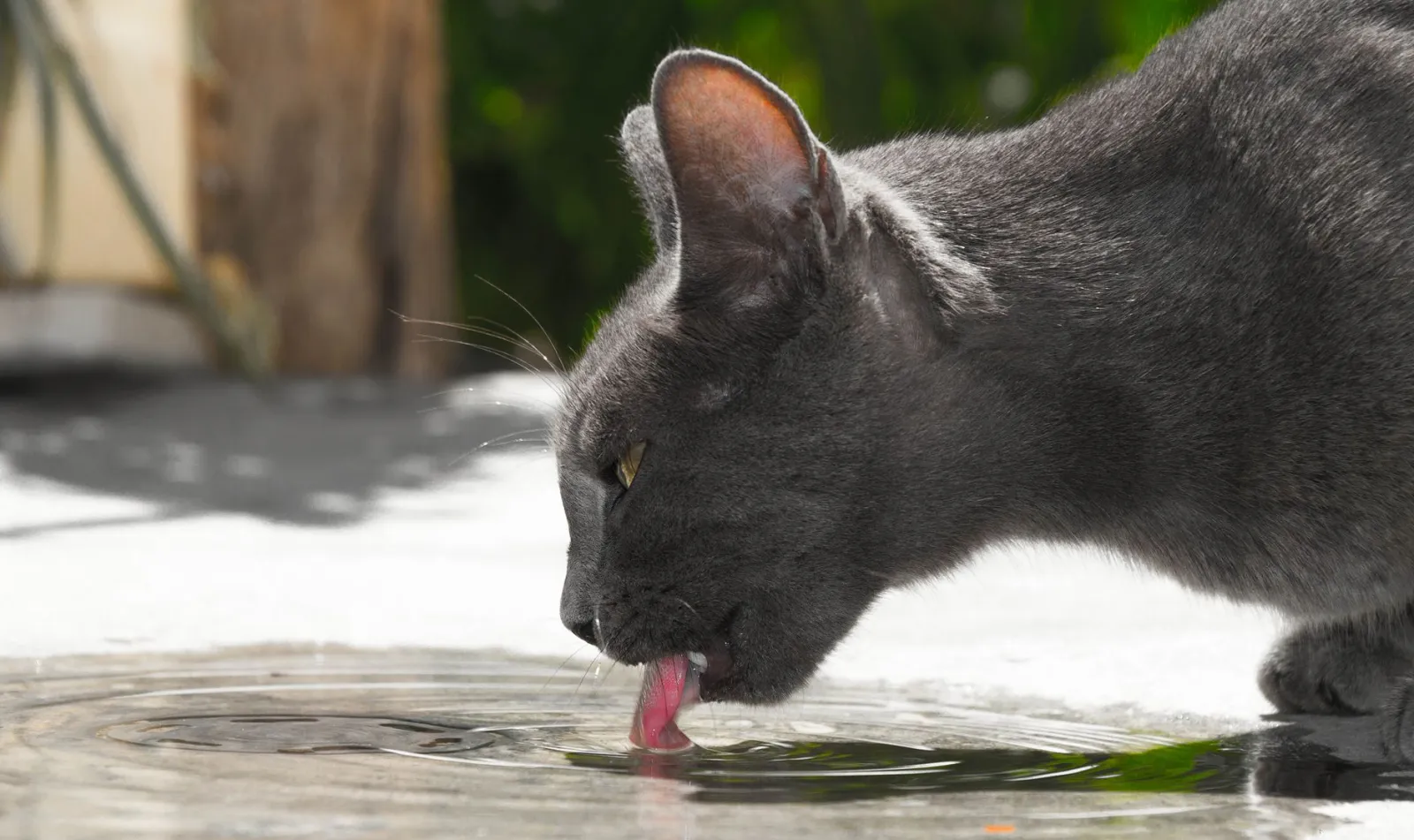
- Less chin contact. Many cats drink from the falling stream or the spout rather than pressing their face into a bowl. Their chin stays drier, and the skin isn’t constantly rubbing against a rim.
- Better hydration. Cats are notoriously bad at drinking enough still water. Moving water triggers their instinct—in the wild, still water can be stagnant and unsafe, while moving water signals freshness.
The risk: A poorly maintained fountain can become a bacterial breeding ground. The pump, the filter, the reservoir walls, and the spout all accumulate biofilm—a slimy layer of microorganisms—if not cleaned regularly. If your cat’s chin touches that biofilm, you’re back to square one, or worse.
So the fountain isn’t inherently good or bad for acne. It’s a tool. Used well, it removes two common triggers. Used poorly, it adds a new one.
A concrete example
Consider a cat who develops acne after the owner switches from a narrow ceramic bowl to a wide plastic fountain. The fountain runs 24/7, but the owner only rinses it every few days and changes the filter monthly. Within two weeks, the cat’s chin is worse—red, crusty, and clearly uncomfortable. The problem isn’t the fountain concept; it’s the plastic reservoir and the neglected biofilm. Switching to a stainless steel fountain and cleaning it every other day resolves the issue.
What to look for if you’re considering a fountain
Not all fountains are created equal, and for a cat with chin acne, the material and design matter more than the bells and whistles.
| Feature | Why it matters for chin acne | What to prioritize |
|---|---|---|
| Material | Plastic scratches and harbors bacteria; ceramic and stainless steel are non-porous and easier to sanitize. | Stainless steel or glazed ceramic. Avoid unglazed ceramic and plastic. |
| Spout height and angle | A raised spout lets your cat drink without pressing their chin against a surface. | Adjustable or elevated spout that keeps the chin clear of standing water. |
| Ease of cleaning | If you can’t fully disassemble and scrub it, biofilm builds up. | Few parts, no hidden crevices, dishwasher-safe components if possible. |
| Water flow | A gentle stream is easier to drink from than a splashing torrent that soaks the chin. | Adjustable flow, or a design that produces a soft stream rather than splashing. |
| Filter type | Carbon filters reduce odors and organic matter but must be changed regularly. | Readily available filters with a clear replacement schedule. |
Beyond the fountain itself, think about placement. Put it away from the food bowl—cats prefer to keep drinking and eating areas separate, and it reduces the chance of food particles contaminating the water. Keep it out of high-traffic zones where stress might discourage drinking.
A concrete example
A cat owner notices their cat’s acne flares up every time they go on a weekend trip. The cat sitter tops up the fountain but doesn’t clean it. By the time the owner returns, the water smells slightly off and the chin is broken out. The fix isn’t to ditch the fountain—it’s to leave pre-measured cleaning supplies and a simple checklist for the sitter. Small consistency changes make a real difference.
Daily habits that matter more than the fountain
Here’s the honest truth: a fountain alone won’t cure chin acne. It’s one piece of a broader routine. If you’re dealing with a persistent case, these habits do more heavy lifting than any device.
- Wipe the chin daily. Use a clean, soft cloth dampened with warm water or a vet-approved antiseptic wipe. Gently dry afterward. This removes food residue, saliva, and bacteria before they settle into follicles.
- Wash bowls and fountains thoroughly. Hot water, mild dish soap, and a bottle brush for crevices. Every other day is a reasonable target for fountains; daily for food bowls.
- Keep the water fresh. Even with a fountain, replace the water fully every day or two. Recirculation doesn’t sterilize.
- Address underlying issues. If your cat is overweight, stressed, or has a compromised immune system, acne is more likely. Talk to your vet about whether a dietary or environmental change is needed.
- Gentle cleaning is the goal.
A concrete example
An owner with a long-haired cat notices the chin stays damp after every drink because the fur traps moisture. They trim the fur around the chin slightly (with blunt scissors, carefully) and switch to a fountain with a narrow stream. The combination of less moisture and less contact clears the acne within weeks. The fountain helped, but the fur trim was equally important.
FAQ
Can a water fountain make chin acne worse?
Yes, if it’s not cleaned regularly. The pump, filter, and reservoir develop biofilm—a slimy bacterial layer—that can irritate your cat’s chin if they touch it. Plastic fountains are especially prone to scratches that harbor bacteria. If you notice the acne worsening after introducing a fountain, check your cleaning routine first. Switch to stainless steel or ceramic, and clean every other day.
How often should I clean a cat water fountain to prevent acne?
For a cat with active chin acne, aim for a full disassembly and scrub every other day. That means taking apart the pump, removing the filter, and washing every surface that touches water. Replace the filter according to the manufacturer’s schedule—usually every two to four weeks—but check it weekly for slime. If you can’t commit to that, a simple stainless steel bowl changed twice daily may be the better choice.
Is it better to just use a bowl instead?
Not necessarily. A bowl can work well if it’s wide, shallow, and made of stainless steel or ceramic, and if you refresh the water at least twice a day. The advantage of a fountain is that it encourages drinking, which supports overall skin health. The disadvantage is maintenance. Choose based on your cat’s drinking habits and your willingness to clean. Some cats refuse fountains entirely—in that case, a well-maintained bowl is perfectly fine.
The bottom line
So, do cat water fountains help chin acne? They can—but only as part of a consistent routine. A fountain made of non-porous material, kept genuinely clean, and designed so your cat’s chin stays dry can reduce two major triggers: moisture and bacterial contact. A neglected fountain, on the other hand, can make things worse. The device itself isn’t the cure. The habits around it are.
If you’ve tried a fountain, cleaned it diligently, and your cat’s chin still isn’t improving, it’s worth a vet visit. Some cases of feline acne are stubborn and need medicated wipes or topical treatments. For a broader look at choosing and maintaining cat water fountains—including flow types, filter care, and how to transition a skeptical cat—there’s a more complete guide on the site that covers the topic in depth.