This article contains Amazon affiliate links. As an Amazon Associate we earn from qualifying purchases.
In short :
- Match your tools to your dog’s coat type first, since that’s the single biggest factor.
- Short double coats need undercoat rakes and rubber curry brushes, while curly coats need slickers and combs.
- Check the coat behind the ears, under the collar and at the tail base before you buy anything.
- Size, handle grip and build quality matter as much as the tool type itself.
- Stick to the essentials like a coat-appropriate brush, a metal comb and nail care, and skip the gadgets.
What should you check before buying dog grooming equipment for a dog that sheds heavily?
You should match grooming tools to your dog’s coat type, size and temperament, then check build quality, ease of cleaning and safety features before buying. A shedding Labrador needs different gear from a curly-coated breed, and the right combination of brush, comb and dryer matters more than any single gadget. This guide walks through the criteria that actually separate useful grooming equipment from clutter.
How do you match grooming tools to your dog’s coat type?
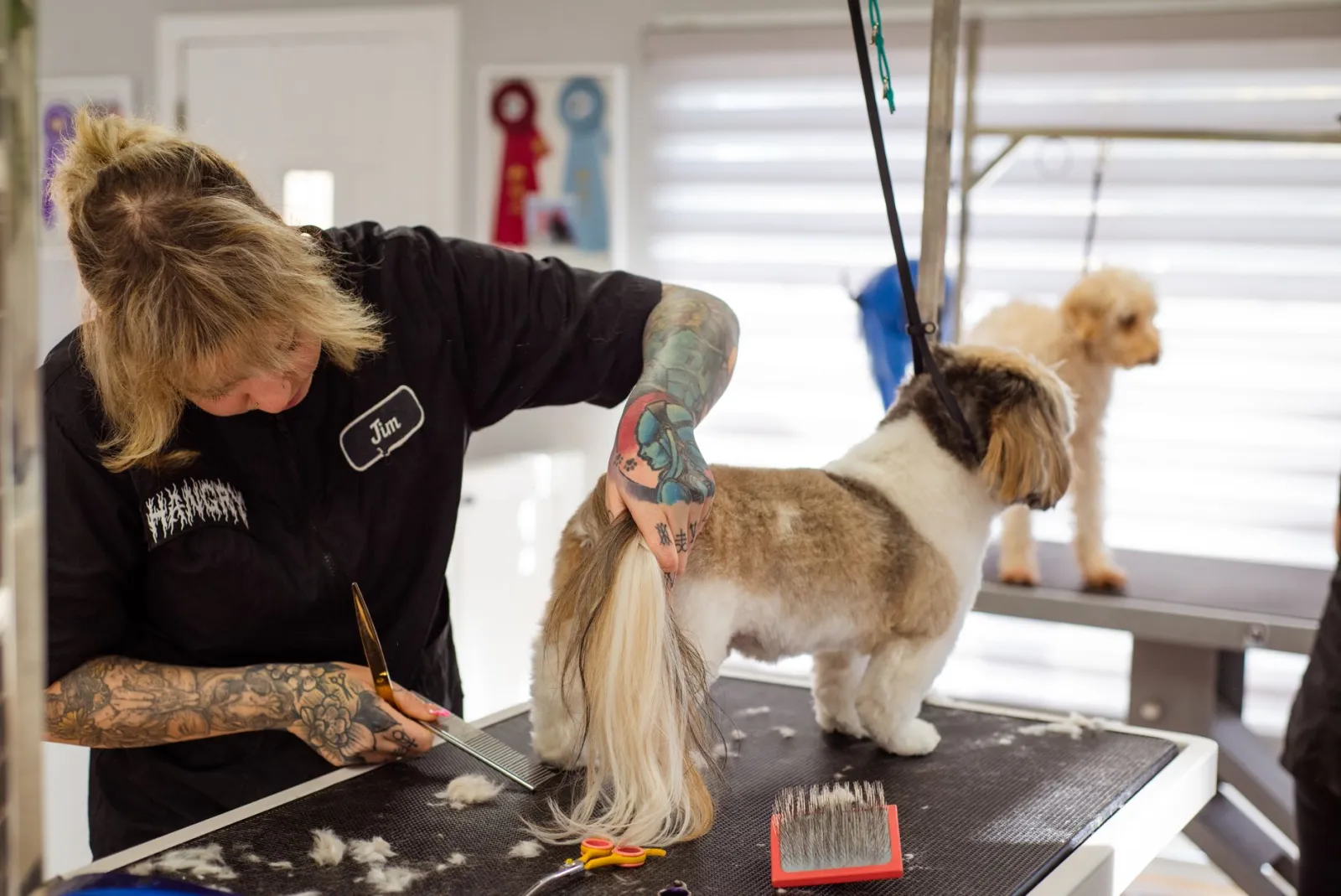
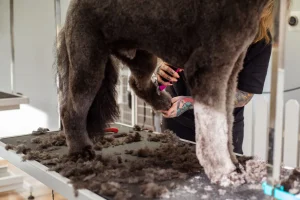
Coat type is the single most important criterion, because a tool that works wonders on a short double coat can be useless or even painful on a silky or curly one. Short, dense double coats (Labradors, retrievers, shepherds) shed constantly and blow their undercoat twice a year; they respond best to undercoat rakes, rubber curry brushes and deshedding blades with rounded teeth. Curly or woolly coats (poodles, doodle crosses) mat rather than shed and need slicker brushes, metal combs and regular clipping. Silky coats tangle easily and demand gentle pin brushes and detangling combs.
Before buying anything, run your fingers through the coat in three zones: behind the ears, under the collar and along the tail base. If you hit resistance or find small knots there, you need detangling tools first, not a deshedding blade. A common pitfall is buying a heavy-duty rake for a fine-coated dog — the teeth scratch the skin and the dog learns to hate grooming sessions.
Practical test: ask to handle the tool before purchase, or check the tooth spacing against your dog’s coat density. Teeth spaced too widely glide over a dense undercoat without grabbing anything; teeth too close together pull and snag.
Why does tool size and handle ergonomics matter so much?
Grooming a large dog takes 15 to 30 minutes per session, several times a week during shedding season, so the tool has to fit your hand and your dog’s body. A brush that is too small forces you to make hundreds of short strokes, which tires your wrist and irritates the skin. A brush that is too large is clumsy around the face, paws and belly.
Check the handle grip: it should feel secure with a dry hand and not slip when slightly damp. Look for a padded or contoured handle if you have joint issues or groom a strong, wriggling dog. Weight matters too — a heavy metal comb becomes exhausting after ten minutes on a big dog.
Real-world example: owners of large, thick-coated dogs often find that a mid-sized brush with a wide head covers the back and flanks efficiently, while a small, narrow tool is reserved for legs and face. Trying the tool on your own forearm gives you a quick sense of pressure and control before you commit.
What should you look for in a dog grooming dryer?
A dryer is the biggest investment in a grooming kit, and the criterion that matters most is adjustable airflow and heat control, not raw power. High-velocity dryers blow water out of the coat, but if the heat is not controllable you risk overheating the skin, especially on a dog with a thin coat or sensitive skin. Look for separate heat and speed settings, and a cool-shot option.
Noise level is the second key point. A dryer that sounds like a jet engine will terrify most dogs, and a frightened dog is impossible to dry properly. Check the decibel rating if listed, and ask whether the motor is designed to run quietly at low speed. Many owners start with the dryer switched off, let the dog sniff it, then run it on the lowest setting for a few seconds before a full session.
Pitfall to avoid: buying a dryer with a fixed nozzle that concentrates heat in one spot. A diffuse airflow and a flexible hose let you dry the undercoat evenly. Test at home by holding your hand in the airflow at the distance you would use on the dog — it should feel warm, never hot.
How do you judge build quality and safety features?
Build quality decides whether a tool lasts one season or five, and safety features protect your dog’s skin. Look for stainless steel or sturdy metal teeth on combs and rakes, securely set into a handle that will not crack. Plastic teeth on a deshedding tool bend and lose their edge quickly.
Check the joints and screws: a brush head that wobbles or a comb with loose rivets will fail under pressure. Run your thumb along the teeth; any roughness is a red flag. For clippers, look for a blade that can be removed and cleaned easily, and a guard comb system that stays firmly attached.
Common pitfall: buying a cheap multi-tool set where one component breaks and the whole set becomes unusable. Better to buy fewer, sturdier pieces. Test at home by pressing the teeth gently against your palm — they should flex slightly without bending permanently.
Which grooming tools are genuinely necessary versus optional?
A core grooming kit covers brushing, combing, nail care and drying; everything else is optional and depends on your dog’s coat and lifestyle. The essentials are: a brush suited to the coat, a metal comb for checking for knots, nail clippers or a grinder, and a dryer if you bathe at home. Optional items include deshedding blades (only for double coats), detangling sprays, paw balm and ear cleaner.
Ask yourself how often you will realistically groom. A dog that gets muddy daily needs a rinse-and-dry routine, so a dryer is worth the investment. A short-coated dog that rarely mats may only need a rubber brush and a comb. Overbuying leads to a drawer full of tools you never use.
Practical example: a family with a Labrador and two children typically needs a sturdy undercoat rake, a rubber curry brush for bath time, a metal comb for ears and tail, and a dryer for wet winter walks.
How do you test grooming equipment at home before committing?
You can test most grooming tools in a five-minute session before you rely on them for a full groom. Start with the dog calm and in a familiar spot. Run the tool over the back and flanks with light pressure; the dog should lean in or stay relaxed. If it flinches, pulls away or tries to bite, the tool is wrong for that coat or that dog’s sensitivity.
Check the debris the tool collects: a good brush pulls loose undercoat without scratching the skin. Look at the skin afterwards — redness or scratch marks mean the teeth are too sharp or the pressure too firm. For dryers, test the noise and heat on the lowest setting first, and watch the dog’s ears and tail for stress signals.
Pitfall: testing on a matted coat. Always remove knots with a comb first, then test the brush. Otherwise the tool snags and the dog associates grooming with pain.
What is the best way to store and maintain grooming equipment?
Storage and maintenance extend the life of your tools and keep them hygienic. After each session, remove hair from brushes and combs with a stiff brush or your fingers, then wipe metal parts with a damp cloth. Wash rubber and plastic handles occasionally with mild soap, and dry them fully before storing. Keep tools in a dry, ventilated box or drawer — damp storage rusts metal teeth and breeds bacteria.
For clippers and dryers, follow the manufacturer’s cleaning instructions: clean or replace filters regularly, oil blades after each use, and check cords for fraying. A blunt or clogged tool pulls hair and stresses the dog. Replace worn blades and brushes rather than forcing them.
Real-world example: a simple routine of cleaning the brush after every session and storing it in a dry cupboard keeps a good tool working for years, while a neglected one loses its edge within months.
FAQ
How often should you groom a heavy-shedding dog?
Brush two to three times a week for maintenance, and daily during shedding season. Bathing every four to six weeks is usually enough unless the dog gets dirty. Regular grooming reduces loose hair in the house and prevents mats.
Can you use human grooming tools on a dog?
No — human brushes and dryers are not designed for dog coats. Human hair dryers run too hot and can burn the skin, and human brushes lack the tooth shape needed for undercoat. Use tools made for dogs.
Is a grooming table worth it for a large dog?
Yes, if you groom regularly at home. A table raises the dog to a comfortable height, reduces back strain and keeps the dog still. Check the weight capacity and non-slip surface before buying.
Conclusion
Choosing dog grooming equipment comes down to matching tools to your dog’s coat, size and temperament, then checking build quality and safety before you buy. Focus on the essentials — a coat-appropriate brush, a metal comb, nail care and a dryer if you bathe at home — and test each tool on your dog before relying on it. For a broader overview of grooming routines and equipment categories, a more complete guide on the general theme is available on the site.
Go further : What dog breed should I get?
Was this guide helpful?
Share your experience with the WiseHomeGuides community.