In short :
- As an Amazon Associate we earn from qualifying purchases.
- The wrong tool makes the task harder, riskier and more stressful for both of you.
- The right one turns a dreaded chore into a two-minute routine.
- No brands, no prices, no shopping list — just the criteria that actually matter, the ones that separate a tool you’ll use confidently for years from one that sits forgotten in a drawer.
- Whether you have a Chihuahua or a Labrador, a puppy or a senior dog, the principles are the same.
This article contains Amazon affiliate links. As an Amazon Associate we earn from qualifying purchases.
Dog Nail Clippers: How to Choose the Right Tool for Your Dog
Trimming a dog’s nails is one of those jobs that looks simple until you’re actually holding a paw in one hand and a pair of clippers in the other. The wrong tool makes the task harder, riskier and more stressful for both of you. The right one turns a dreaded chore into a two-minute routine.
This guide focuses on one question: how do you choose a good pair of dog nail clippers? No brands, no prices, no shopping list — just the criteria that actually matter, the ones that separate a tool you’ll use confidently for years from one that sits forgotten in a drawer. Whether you have a Chihuahua or a Labrador, a puppy or a senior dog, the principles are the same.
Criterion 1: The Cutting Mechanism — Scissor, Guillotine or Plier
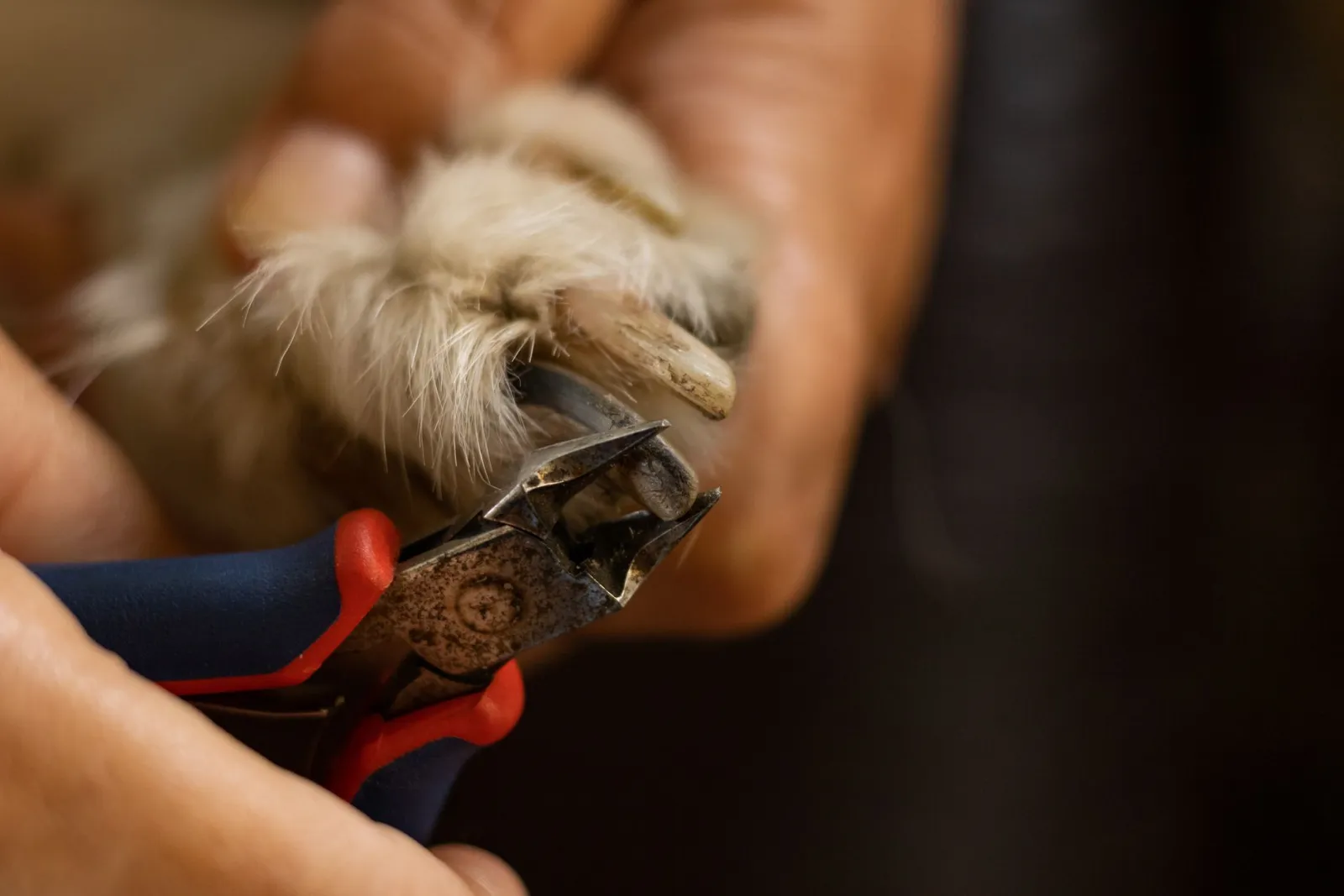
Most dog nail clippers fall into three families, and each suits a different situation. Scissor-style clippers work like a pair of shears: you squeeze the handles and the blade slices through the nail. They give good visibility and suit small to medium nails. Guillotine clippers have a ring through which the nail passes, and a blade that comes down to cut it. They’re powerful but can crush thick nails if the blade is dull. Plier-style clippers — the kind professionals reach for — have two curved blades that meet in the middle, offering the most control and leverage on thick, hard nails.
Here’s the practical test: open and close the tool in the shop (or when it arrives). The action should be smooth, with no grinding, no wobble at the pivot, and no gap between the blades when closed.
Real-world example: a Border Collie owner who trims every three weeks will be well served by a plier-style clipper with a good pivot. The same tool is overkill for a toy breed with fine, thin nails, where a small scissor-style pair gives more precision and less risk of taking too much at once.
Criterion 2: Blade Sharpness and Material Quality
Sharpness is the single most underrated factor. A dull blade doesn’t just make the job slower — it squeezes the nail before it cuts, which is uncomfortable for the dog and often causes them to pull away. Over time, a dog that associates nail trimming with discomfort becomes harder to handle, and the whole routine breaks down.
Look for blades made from hardened stainless steel or comparable quality metal. The cutting edge should be bevelled cleanly, with no burrs. You can check sharpness at home with a simple test: cut a piece of thick paper or a soft plastic straw. A sharp blade slices through cleanly; a dull one crushes or chews the material. If it struggles on paper, it will struggle on a nail.
A practical observation from grooming forums and vet advice: replaceable blades are worth considering if you trim frequently. A clipper with a fixed blade that dulls after a year becomes a paperweight. A clipper with a swappable blade keeps working for the life of the tool.
Criterion 3: Size and Handle Ergonomics for Your Dog and Your Hand
Clipper size should match the nail, not the dog’s overall size — although the two usually correlate. Small clippers with fine blades suit toy and small breeds. Medium clippers cover most medium breeds. Large dog nail clippers are built for thick, hard nails on big breeds, with longer handles for leverage.
But handle ergonomics matter just as much. You’ll be holding the tool at an awkward angle, often while crouched on the floor. Look for handles with a non-slip grip, a spring that returns the handles to open position (this saves hand fatigue), and a safety lock for storage. Test the grip: if your hand has to strain to close the handles fully, the spring is too stiff or the tool is too big for you.
Criterion 4: Safety Features — Guards, Stops and LED Lights
Safety features are where clipper design has improved most. A safety guard or stop prevents you from taking too much nail in one cut — it’s a physical block that limits how far the blade can travel. For beginners, this is genuinely useful. For experienced trimmers, it can get in the way, so look for a guard that’s removable.
LED lights built into the clipper illuminate the nail and help you see the quick — the sensitive blood supply inside the nail. On light-coloured nails, the quick is visible as a pink area; on dark nails, it’s much harder to see. An LED doesn’t make the quick magically visible on black nails, but it does improve contrast and help you judge where to stop. If you’re trimming a dog with dark nails for the first time, a light is a reasonable aid, not a gimmick.
One caution: a light adds weight and can make the tool bulkier. Try holding it before committing. If it feels unwieldy, a separate small torch held by a helper works just as well.
Criterion 5: Build Quality, Pivot and Longevity
A good clipper is a small piece of engineering. The pivot — the joint where the two halves meet — is the heart of it. A riveted pivot that loosens over time is a sign of cheap construction. A screwed pivot that can be adjusted is better, because you can tighten it if it develops play.
Check the weight and balance. A clipper that’s too light feels flimsy and may flex under pressure; one that’s too heavy tires your hand. The best tools feel solid but not cumbersome, with the weight balanced toward the blades rather than the handles.
Ask yourself how often you’ll use it. A dog trimmed every two weeks needs a tool built to last. A dog trimmed twice a year can get by with something simpler. Matching build quality to frequency is the smartest way to spend your money.
Criterion 6: Grooming Context — Professional vs Home Use
Professional dog nail clippers are designed for volume: they’re heavier, often with replaceable blades and a more robust pivot, and they’re built to be sharpened or serviced. If you trim multiple dogs regularly, or you’re considering grooming as a side activity, this category makes sense.
For most home owners, a well-made mid-range clipper is more than enough. The difference between a professional tool and a good home tool is mostly durability under heavy use — not cutting quality. Don’t over-buy for a dog you trim once a month.
One more context point: if your dog is large and strong, a second person to hold the paw steady is often more valuable than any clipper feature. Plan the routine around the dog’s temperament first, the tool second.
FAQ
Is it better to use a nail grinder or nail clippers on a dog?
Both work. Clippers are faster and quieter, but they leave a sharp edge that some owners file down. Grinders smooth the nail as they go and reduce the risk of cutting the quick, but they’re noisy and some dogs dislike the vibration. For nervous dogs, clippers are usually the gentler introduction. For dogs with thick nails, a grinder can be easier on the hands.
Why are Japanese nail clippers so good?
Japanese clippers have a reputation for precision engineering — sharp, well-aligned blades and tight tolerances. The reputation is deserved for quality, but the principle applies to any well-made clipper: sharp blades, a solid pivot, and a clean cut. You don’t need a specific origin to get a good tool; you need to check the blade alignment and build quality.
How to trim dog nails without cutting them?
Trim small amounts at a time — a millimetre or two per cut — and stop before the quick. On light nails, look for the pink centre and stop before it. On dark nails, look for a chalky white ring appearing at the cut surface; that’s your signal to stop. Have styptic powder on hand just in case, and reward the dog between paws.
What are some good dog nail clippers with LED lights?
LED clippers are widely available and can help with visibility, especially on dark nails. The key is to check that the light doesn’t make the tool bulky or hard to hold, and that the blade quality is good independent of the light. A light is an aid, not a substitute for careful trimming.
Conclusion
Choosing dog nail clippers comes down to matching the tool to your dog’s nail type, your hand strength, and how often you trim. Prioritise blade sharpness and pivot quality above all else — those two factors determine whether the tool cuts cleanly or crushes. Then consider size, safety features and ergonomics. For most owners, a well-made plier-style or scissor-style clipper with a solid pivot and a sharp, replaceable blade will serve for years.
For a broader look at nail care, grooming routines and handling nervous dogs, a more complete guide on the general theme is available on the site.
Go further : Is the Fresh Flow dog water fountain good?