In short :
- A Practical, No-Nonsense Guide That bitter, slightly burnt taste creeping into your morning shot?
- Nine times out of ten, it’s buildup — old coffee oils, mineral scale, and milk residue quietly coating the parts your espresso touches.
- An espresso machine is a small appliance with a big maintenance habit, and skipping it shows up fast in the cup.
- Cleaning an espresso machine isn’t complicated, but it is specific.
- Different parts need different treatment, and some shortcuts do real damage.
How Do You Clean an Espresso Machine? A Practical, No-Nonsense Guide
That bitter, slightly burnt taste creeping into your morning shot? It usually isn’t the beans. Nine times out of ten, it’s buildup — old coffee oils, mineral scale, and milk residue quietly coating the parts your espresso touches. An espresso machine is a small appliance with a big maintenance habit, and skipping it shows up fast in the cup.
Cleaning an espresso machine isn’t complicated, but it is specific. Different parts need different treatment, and some shortcuts do real damage. Below you’ll find a clear, practical routine you can follow whether you pull one shot a day or six — plus the mistakes worth avoiding.
Why Espresso Machines Need Regular Cleaning (and What Happens If You Skip It)
Espresso involves hot water forced through finely ground coffee at pressure. That process leaves two things behind: coffee oils that cling to surfaces, and mineral deposits (scale) from the water itself. Left alone, both cause problems.
Coffee oils turn rancid. They build up in the group head, on the shower screen, and in the portafilter, and they give every subsequent shot a dull, bitter edge. Scale is the slower, sneakier issue: it narrows the water pathways, reduces flow, and can eventually clog the machine or damage the heating element.
Here’s a concrete example worth picturing. If you make two espressos a day and only rinse the portafilter under the tap, within a few weeks the shower screen will feel tacky to the touch and the holes will start to clog. The machine still runs — but the shots get progressively worse, and most people blame the coffee instead of the equipment.
A sensible rhythm looks like this:
- After every use: flush the group head, rinse the portafilter and basket, wipe the steam wand.
- Weekly: backflush (if your machine supports it), clean the steam wand thoroughly, wash the drip tray and water tank.
- Monthly or every couple of months: descale, depending on your water hardness and how often you brew.
Daily and Weekly Cleaning: The Steps That Matter Most
Good espresso maintenance is mostly about small, quick habits. None of these take more than a minute, and together they prevent most of the problems people end up paying to fix.
After each session
- Flush the group head. Run a short burst of water without the portafilter to rinse loose grounds and oils off the shower screen.
- Rinse the portafilter and basket right away. Hot water and a soft brush are enough. Waiting until the grounds dry turns a five-second job into a scrubbing session.
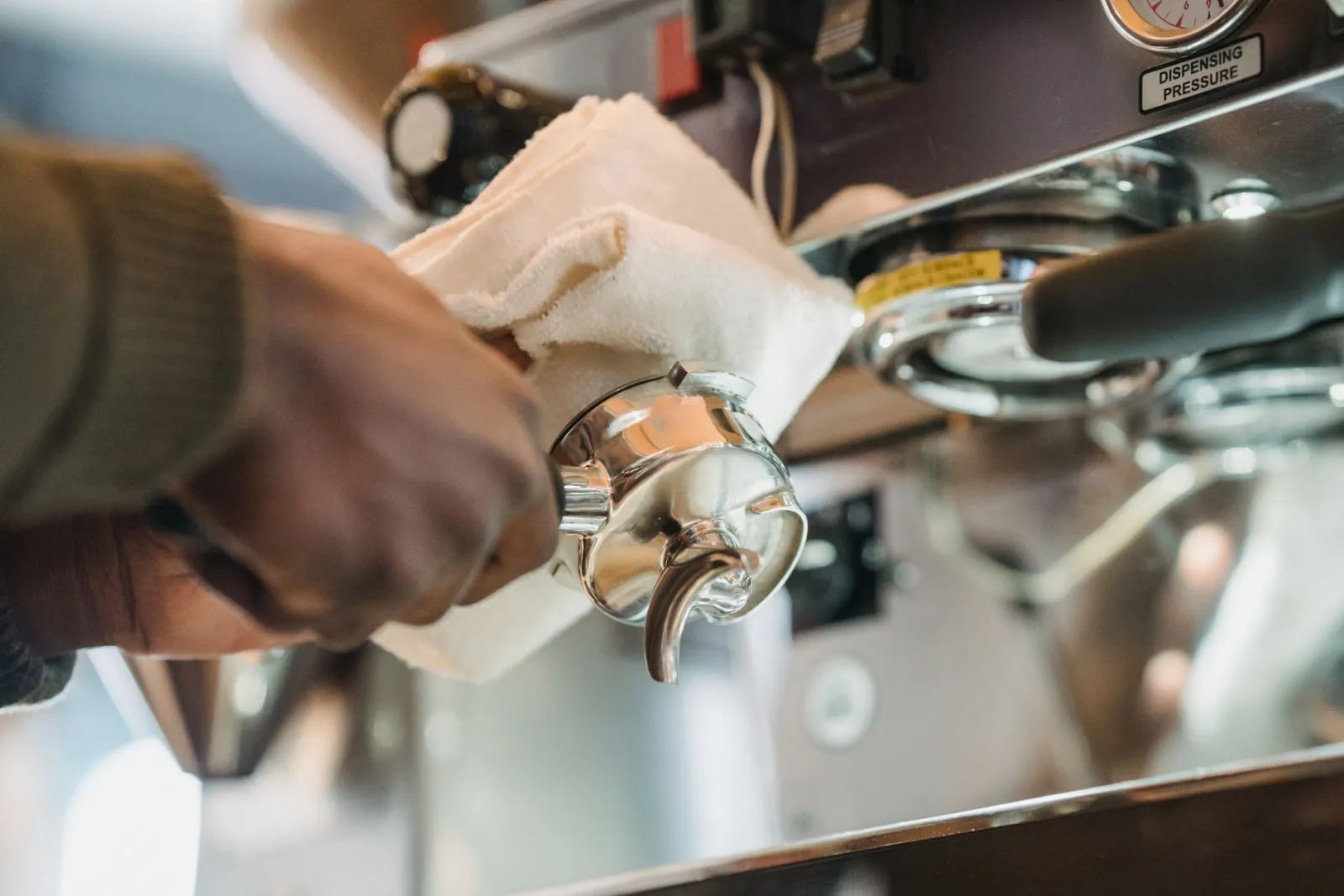
- Wipe the steam wand immediately. Milk residue sets quickly and bakes onto the wand. A damp cloth while it’s still warm removes it in one pass; dried milk needs soaking and scraping.
Once a week
Remove the shower screen if your machine allows it and rinse it under warm water, scrubbing gently with a soft brush. Wash the drip tray and water tank with warm soapy water — not just a rinse, since a thin film builds up inside the tank. If your machine supports backflushing, this is the moment to do it: a backflush cycle pushes water back through the group head to clear oils from the internal valve.
A real-world case: someone who backflushes weekly but never washes the water tank will still notice a stale smell in the cup. The tank is part of the water path, and it deserves the same attention as the brewing side.
Descaling: The Job Most People Put Off Too Long
Scale is the leading cause of espresso machine breakdowns, and it’s almost entirely preventable. The harder your water, the more often you need to descale. If you live in a hard-water area, monthly is realistic; with soft water, every two to three months may be enough.
How do you know it’s time? Watch for these signals:
- The machine takes longer to push water through, or the flow looks weak.
- The pump sounds louder or more strained than usual.
- White, chalky crust appears around the shower screen or in the tank.
- Your coffee tastes flat even with fresh beans.
Descaling means running a descaling solution (or a suitable mild acid) through the machine following the manufacturer’s instructions, then flushing thoroughly with clean water. Two rules matter more than anything else: use the dose and timing the manual specifies, and never skip the final rinse. Residual descaler in the water path will ruin the next few shots.
For a concrete comparison, consider two households with the same machine. One uses filtered water and descales every three months; the other uses tap water and descales once a year. After two years, the first machine still brews consistently, while the second has likely seen reduced flow and possibly a repair. Same equipment, different habit.
Common Cleaning Mistakes That Do More Harm Than Good
Some well-intentioned cleaning actually damages espresso machines. Worth knowing before you reach for the wrong thing.
- Vinegar as a routine descaler. It’s a popular home remedy, but vinegar is harsh on seals and rubber components over time and can leave a lingering taste. Use a proper descaling solution made for espresso machines instead.
- Scrubbing with abrasive pads. Steel wool and rough sponges scratch the shower screen and metal surfaces, creating tiny grooves where residue hides.
- Submerging the machine or the group head in water. Only removable parts — portafilter, basket, drip tray, tank — should go in the sink. The machine body and electrical components stay dry.
- Skipping the final rinse after cleaning. Cleaning residue in the water path is worse than the coffee oils you were removing.
One documented trap: putting the portafilter basket in the dishwasher. The high heat and strong detergent can dull the metal and, on some baskets, affect the finish. Hand-washing takes seconds and avoids the risk.
FAQ: Quick Answers to Espresso Cleaning Questions
How often should I clean my espresso machine?
Rinse and flush after every use, do a deeper clean weekly (including backflushing if supported), and descale every one to three months depending on your water hardness and brewing frequency. When in doubt, follow the manufacturer’s schedule — it’s built around your machine’s specific design.
Can I use vinegar to descale my espresso machine?
It’s widely done at home, but it’s not ideal. Vinegar can degrade rubber seals and gaskets over repeated use and leaves an odor that’s hard to rinse out. A descaling solution formulated for espresso machines is the safer, more predictable choice.
Why does my espresso taste bitter even after cleaning?
Cleaning solves residue and scale problems, but bitterness can also come from the grind, the dose, the water temperature, or beans that are past their best. If the machine is clean and the taste is still off, adjust your grind and dose before assuming the equipment is at fault.
The Bottom Line
So, how do you clean an espresso machine? You build a simple routine: flush and wipe after every use, clean thoroughly once a week, and descale on a schedule that matches your water. That’s it. No special talent required — just consistency.
The payoff is immediate: better-tasting coffee, a machine that lasts longer, and no surprise repair bills. Start with the daily habits today; they’re the ones that prevent most problems. For a broader look at keeping your whole kitchen running smoothly, a more complete guide on the general topic of home appliance care is available on the site.
To choose the right model : Dishwasher Cleaner: How to Choose the Best for Your Machine