This article contains Amazon affiliate links. As an Amazon Associate we earn from qualifying purchases.
In short :
- Start with your floor, not the mop: flat microfibre pads suit sealed tile and laminate, while string or sponge mops handle stone and grout better.
- Pick a wringing mechanism you’ll happily repeat, since that’s where sets differ most.
- Measure your storage space and check the bucket won’t tip when full.
- Skip the feature race and check build quality in your hands, like a washable, replaceable head and a smooth wringer.
- Do that and you’ll get a set you actually use, not one that gathers dust.
A mop and bucket set is a matched pairing of a cleaning head and a wringing container, designed to work together so you can wet, scrub, and dry a floor without soaking it. Choosing the right one comes down to four things: your floor type, the size of your space, how much effort you want to spend wringing, and how you’ll store it. Get those right and mopping stops being a chore you dread.
Here’s the practical, no-nonsense breakdown of what actually matters when you compare sets, with concrete guidance you can apply before you buy.
Start with your floor, not the mop
The floor decides almost everything. A flat microfibre pad glides over sealed tile and laminate; a string mop holds more water and suits rougher surfaces like stone or grout. Match the head to the surface first, and the rest of the decision gets much easier.
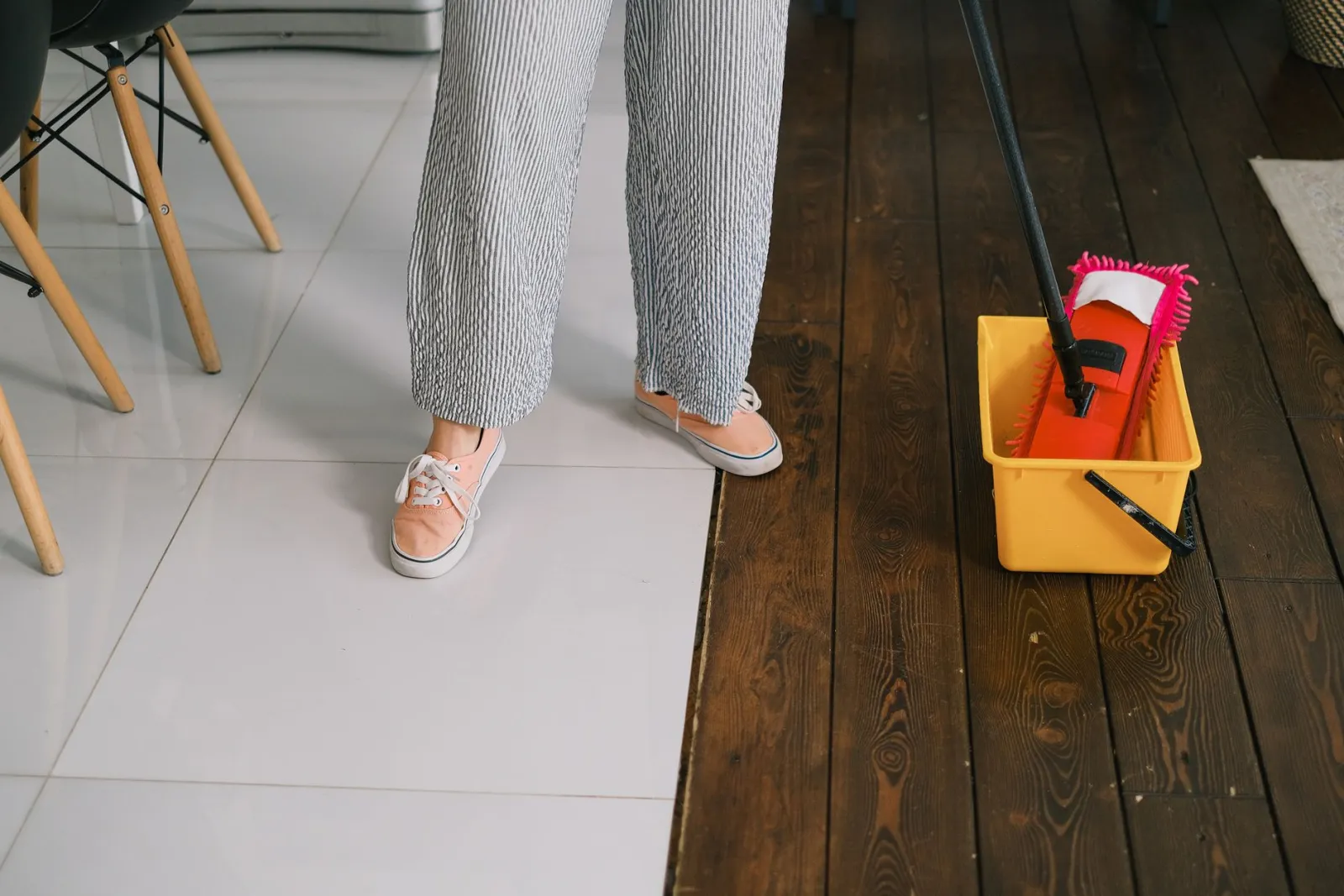
Consider a real case: a kitchen with large-format porcelain tiles and narrow grout lines. A flat pad cleans the tile quickly but leaves grout looking dull over time, while a string or sponge mop pushes water into the grout and lifts the dirt out. In a bedroom with engineered wood, the opposite applies — you want minimal water and a head that won’t scratch, so a well-wrung flat microfibre pad is the safer bet.
- Sealed tile and laminate: flat microfibre pads, wrung nearly dry.
- Natural stone and grout: string or sponge mops that carry more water.
- Hardwood and engineered wood: damp-only mopping with a flat pad, never soaked.
- Vinyl and linoleum: almost anything works; pick for comfort and wringing ease.
One quick test before you commit: press a damp cloth on an inconspicuous patch of your floor and let it dry. If a water mark remains, treat that surface as “damp mop only” and choose a set with good wringing control.
The wringing mechanism is where sets differ most
Wringing is the part people underestimate. A mop that’s too wet leaves puddles and streaks; one that’s too dry just smears dirt around. The bucket’s wringing design controls this, and it’s the single biggest difference between sets.
There are three common approaches. A foot-pedal spinner lets you spin the head dry without bending or touching it — handy if you have back or knee issues, though the basket takes up space. A hand-press or lever wringer squeezes the mop through a plate; it’s compact and simple, but you’re using arm strength each time. A flat-press or roller wringer works well with flat pads and gives consistent dampness.
Picture mopping a hallway every week. With a spinner, you step on the pedal, the head spins, and you’re back to the floor in seconds — the rhythm is fast. With a lever wringer, each dip means a deliberate press. Neither is “better”; the question is which motion you’ll happily repeat a hundred times.
| Wringing type | Best for | Trade-off |
|---|---|---|
| Foot-pedal spinner | Large areas, limited hand strength | Bulkier bucket, more storage space |
| Hand-press / lever | Small homes, tight storage | More arm effort per dip |
| Flat-press / roller | Flat pads, wood and laminate | Less water capacity for big jobs |
Size, storage, and the details that annoy you later
A bucket that’s too big for your cupboard becomes a bucket you avoid using. Measure the storage spot before you buy — the gap under a sink, a utility shelf, a closet corner — and check the set’s footprint, including the wringer basket if it protrudes.
Practical details worth checking on the spot:
- Handle and grip: a full bucket is heavy; a comfortable, wide handle matters more than it sounds.
- Pour spout: makes emptying without splashing much easier.
- Head attachment: can you swap or wash the mop head? Machine-washable heads last far longer in practice.
- Reach: a triangular or swivel head gets into corners and under low furniture; a fixed rectangular head doesn’t.
- Pole length: adjustable handles suit different people in the same home.
Here’s a common real-world scenario: someone buys a large spinner set for a small flat, then stores it in the bath because it won’t fit anywhere else. It works, but every mopping session now involves lugging it across the home. A compact lever-wringer set would have been the smarter choice for that space.
How to judge quality without brand names
You don’t need to know the label to spot a well-made set. Pick it up. A sturdy bucket doesn’t flex when you press the sides. The wringer should move smoothly, without catching or grinding. The mop head should feel dense and evenly stitched, not thin and loose at the edges.
Check the connection between pole and head — that joint takes the most stress and is the first thing to fail. Give it a gentle twist; it should feel solid, not wobbly. And look at the bucket’s base: a wider, flatter base is more stable when full and less likely to tip as you wring.
One general observation from how these sets wear: the mop head usually gives out long before the bucket does. That’s why replaceable, washable heads are worth prioritising — you extend the life of the whole set for the cost of a fresh head.
FAQ
What’s the best mop and bucket to buy?
There’s no single best set — the right one depends on your floor and space. For most homes with sealed tile or laminate, a flat microfibre pad with a press-style wringer gives the best balance of control, speed, and compact storage. For larger areas or if bending is difficult, a foot-pedal spinner is easier on the body.
What is the best bucket and mop set for household use?
Look for a set with a washable, replaceable head, a stable wide-based bucket, and a wringer that lets you control dampness. A set that fits your storage space and feels comfortable to carry will get used far more than a bulky one that lives in the way.
What is the best mop bucket for home use?
The best bucket is the one that matches your wringing preference and your storage. Spinners suit big floors and limited hand strength; lever and press wringers suit smaller homes. Prioritise a pour spout, a comfortable handle, and a base that won’t tip when full.
Where can I find a cheap bucket and mop set?
Budget sets are widely available in supermarkets, homeware shops, and online marketplaces. To get value rather than just a low price, check that the head is washable and replaceable and that the wringer moves smoothly — a slightly better-built set that lasts longer usually works out cheaper over time.
The bottom line
Choosing a mop and bucket set isn’t about finding the most features — it’s about matching the tool to your floor, your space, and the way you actually clean. Start with the surface, pick a wringing method you’ll happily repeat, measure your storage, and check the build quality in your hands. Do that and you’ll pick a set you use often, not one that gathers dust.
For a wider look at mop types, cleaning routines, and floor-care basics beyond this specific choice, a more complete guide on the general topic is available on the site.
To make your choice concrete : Cleaning Checklist: What to Include for a Spotless Home