This article contains Amazon affiliate links. As an Amazon Associate we earn from qualifying purchases.
In short :
- Floating shelves hide their fixings and look seamless, so they suit light decorative items like plants and prints.
- Bracketed shelves show their supports and carry real weight, so they’re the pick for books, jars and kitchen kit.
- Ask yourself one question: what’s going on the shelf?
- Decorative means go floating, functional means go bracketed.
- If you’re somewhere in the middle, use a bracketed shelf where you need strength and floating shelves around it.
Last updated 2026-10-15
? As an Amazon Associate I earn from qualifying purchases. This article contains Amazon affiliate links.
There’s a reason wall shelves never go out of style. They turn dead wall space into somewhere to put things, and they do it without eating a single centimetre of floor. Whether you’re drowning in paperbacks, collecting trailing plants, or just want somewhere for the keys, a wall shelf solves a problem that a bigger piece of furniture usually can’t.
But here’s the thing nobody tells you before you buy: not all wall shelves are built for the same job. Pick the wrong type and you’ll either end up with a shelf that sags under your books or a shelf that looks heavy and cluttered in a room that needed calm. So let’s walk through it together — two popular options, honest pros and cons, and a clear way to decide.
Quick answer
A wall shelf is a flat panel fixed to a wall to hold or display items. Floating shelves hide their fixings inside the panel. Bracketed shelves show their supports. Floating shelves suit light decorative items. Bracketed shelves suit heavier loads. The right choice depends on what you plan to put on the shelf.
Floating vs bracketed shelves at a glance
| Criteria | Option A: Floating wall shelf | Option B: Bracketed wall shelf |
|---|---|---|
| Look and style | Seamless and minimal — the shelf appears to grow out of the wall | Brackets are part of the design — industrial, rustic or Scandi |
| Weight it handles | Best for light to moderate loads: ornaments, small plants, a few books | Handles moderate to heavy loads: full book rows, jars, kitchen kit |
| Installation | Needs accurate fixing and a solid anchor point; less forgiving | More forgiving, easier to level and adjust after fitting |
Option A: Floating wall shelves
1. They make a small room feel bigger
Because there are no visible brackets, a floating shelf reads as a clean horizontal line rather than a piece of furniture. In a narrow hallway, a small bedroom or a cramped home office, that matters. Your eye follows the line of the shelf instead of stopping at metal brackets, so the wall feels longer and the room feels lighter. If your goal is decoration first and storage second, this is the type that quietly does the most work.
Browse floating wall shelves on Amazon
2. They’re ideal for styling, not just storing
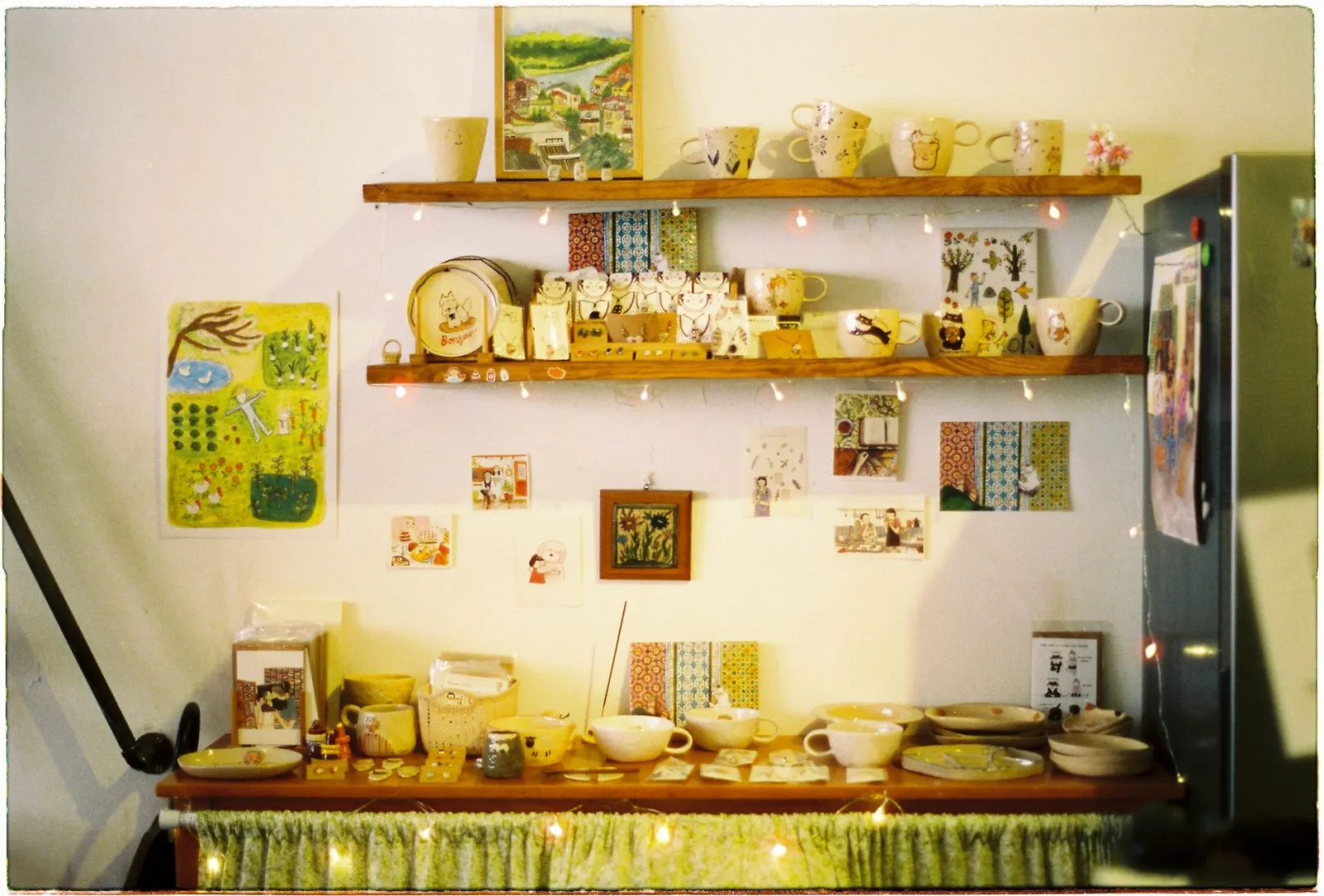
Floating shelves encourage you to be deliberate. You can’t pile them high, so you end up curating: a candle, a framed photo, a trailing pothos, three books leaning together. That constraint is actually a gift. It’s the difference between a shelf that looks styled and a shelf that looks like a shelf. Group items in odd numbers, vary the heights, and leave some breathing room.
See floating shelf options on Amazon
3. They work brilliantly in sets
One floating shelf is nice. Two or three staggered on the same wall is a proper feature. Because they’re visually quiet, you can stack them vertically, offset them, or run them in a column without the arrangement looking busy. That flexibility is hard to get from bracketed shelves, which tend to draw attention to themselves.
Shop floating shelf sets on Amazon
Option B: Bracketed wall shelves
1. They carry real weight
This is the honest advantage. Visible brackets support the shelf from underneath, which means the load is spread rather than hidden inside the panel. If you want a row of cookbooks, heavy jars, a stack of records or a chunky plant pot, a bracketed shelf is the safer bet. It won’t bow in the middle the way a slim floating shelf can when you overload it.
Browse bracketed wall shelves on Amazon
2. The brackets become part of the look
Black metal brackets against a white wall give you that clean industrial feel. Chunky wooden brackets suit a cottage or farmhouse room. Brass or antique-style brackets add a touch of character. Instead of hiding the structure, you’re using it. In a kitchen or utility space especially, that visible, functional look is exactly what you want.
See bracketed shelf styles on Amazon
3. They’re easier to fit and easier to live with
Bracketed shelves are more forgiving. You can mark, drill, fix the brackets, then sit the shelf on top and adjust. If a wall is slightly uneven, you can shim or tweak. And if you ever want to move the shelf, you’re patching a few small holes rather than a larger concealed fixing. For anyone renting, or anyone who changes their mind about layout every six months, that’s a real plus.
Shop bracketed wall shelves on Amazon
Frequently asked questions
How much weight can a wall shelf hold?
It depends on three things: the shelf itself, the type of bracket or fixing, and the wall behind it. Shelves fixed into solid masonry or into wall studs hold far more than shelves fixed into plasterboard with light plugs. For anything heavy, fix into studs or use proper masonry anchors.
Do I need to find studs to hang a wall shelf?
For light decorative items, no. For books, jars or anything with real weight, yes — or use a fixing designed for plasterboard. Finding studs is the single most reliable way to stop a shelf pulling out of the wall later.
Can I use a wall shelf in a bathroom or kitchen?
Yes, but choose a material and finish suited to moisture. Solid wood and sealed finishes cope better than untreated MDF. In a kitchen, keep shelves away from direct steam and splashes from the hob or sink.
So, which one should you buy?
Ask yourself one question: what’s going on the shelf?
If the answer is decorative — candles, plants, framed prints, a few paperbacks — go with a floating wall shelf. You’ll get the cleanest look and the most design flexibility, and you won’t miss the extra strength.
If the answer is functional — cookbooks, jars, records, tools, a full row of hardbacks — go with a bracketed wall shelf. It’ll hold up, it’s easier to fit, and the brackets will look intentional rather than like a compromise.
And if you’re honestly somewhere in the middle? Start with one bracketed shelf in the spot where you need the most strength, and add floating shelves around it for the decorative pieces. Most well-styled walls end up using both — and that’s not a cop-out, that’s just good design.
Written by our editorial team, home specialists since 2015. Learn more.