In short:
- A cat tree that looks like a real tree combines natural aesthetics with feline play structures: sisal-wrapped trunks, wooden or leaf-shaped perches, and botanical accents.
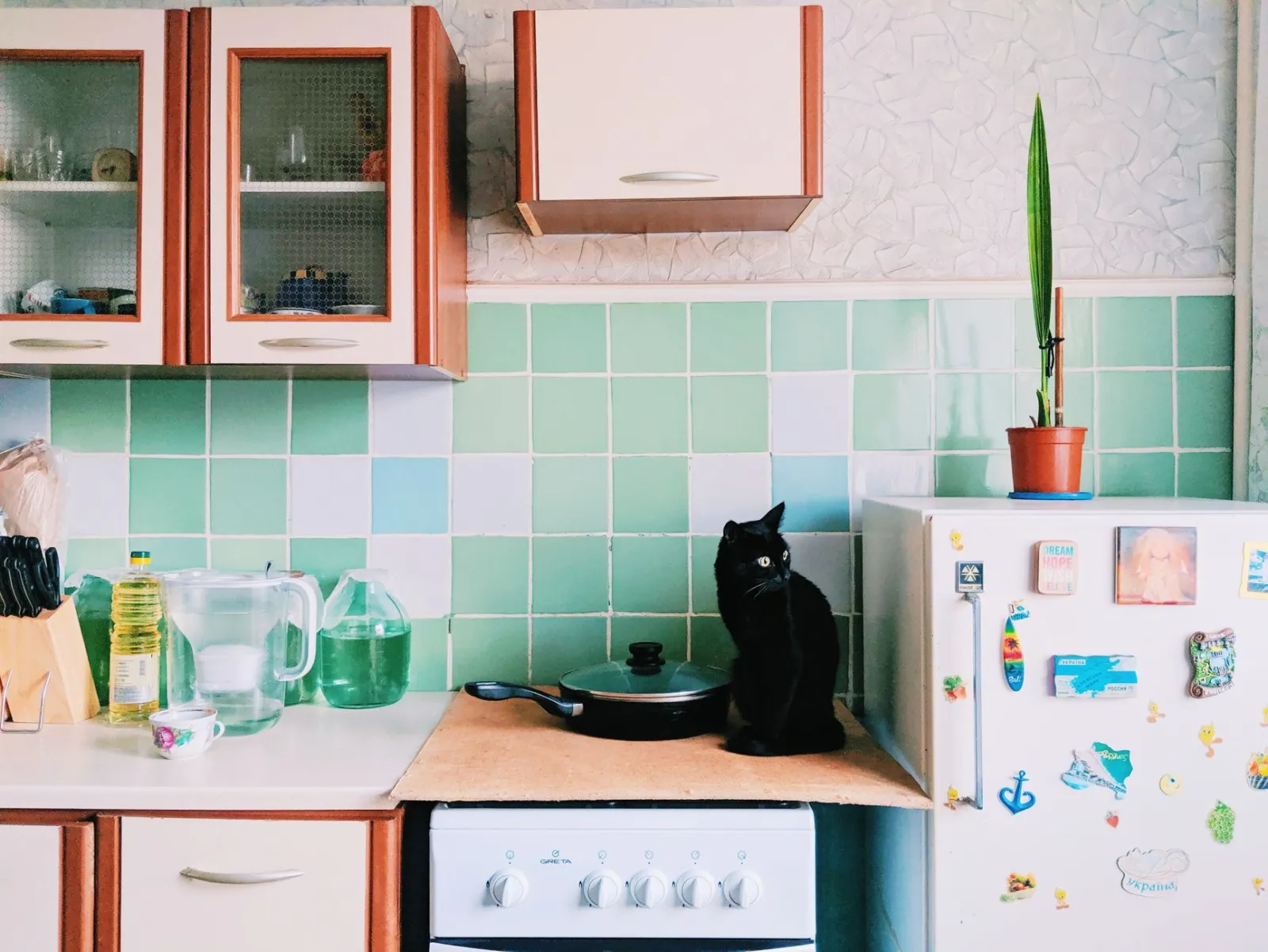
- Sleeping on a high shelf or the fridge isn’t automatically dangerous, but it does come with real risks like slippery surfaces, trapped heat, and long falls.
- Your cat picked that spot for good reasons: height, warmth, and a clear view of the household.
- A cat tree that looks like a real tree gives your cat the same height and territory without the hazards.
- If your cat is young and healthy, a simple non-slip mat up there is often enough.
- If your cat is older or struggling, build a better perch lower down instead.
There’s a particular kind of cat that treats your living room like a forest canopy. You know the one: every jump is calculated, every branch-like perch is a conquest, and the highest limb of a real-looking tree is apparently the finest mattress money can’t buy. If your cat has claimed the top of your bookshelf as its nightly throne, you’ve probably wondered whether that’s actually safe — and whether there’s a better option that still respects your cat’s obvious love of altitude and its instinct to climb something that looks like a tree.
The short answer: sleeping on a high shelf isn’t automatically dangerous, but it comes with real risks that a well-chosen cat tree that looks like a tree can eliminate. What follows is a practical look at why cats seek out that spot, what makes a cat tree genuinely safe for a high-climbing sleeper, and how to transition your cat without a standoff.
Why your cat picked the high perch in the first place
Cats don’t choose sleeping spots randomly. A tall perch checks several boxes at once: it’s high, it’s warm, and it’s usually in a room where the household gathers. From up there, your cat can monitor doorways, watch you cook, and stay out of reach of kids or dogs. That’s not stubbornness — it’s instinct. A cat tree that looks like a tree speaks directly to that instinct, offering trunk-like posts, branch-like platforms, and leafy hiding spots that mimic the outdoor vertical world cats evolved in.
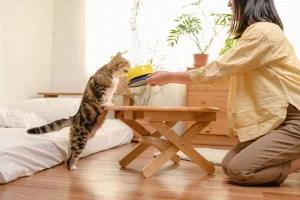
Take a real case. A reader once told me her tabby ignored three different beds on the floor but slept on the fridge every single night for two years. When she finally put a simple fleece mat on top of the fridge itself, the cat used it immediately — and stopped sliding around on the bare metal. The lesson: sometimes the location matters more than the bed. The same holds true for a cat tree that looks like a tree — if it sits in the right spot and offers the right height, your cat will choose it over the fridge every time.
So before you buy anything, ask yourself what your cat is actually getting from the high perch. Warmth? Height? Company? A cat tree that looks like a tree can replicate at least two of those three, often all three.
What “safe” actually means in this context
Safety here has less to do with the fabric and more to do with physics and placement. A high-climbing sleeper faces three concrete hazards:
- Slippery surfaces. Most shelves and appliance tops are smooth metal, plastic, or finished wood. A cat that shifts in its sleep can slide off, especially on a curved or narrow top. A cat tree that looks like a tree with textured bark-style platforms or carpeted perches solves this instantly.
- Heat and vibration. Appliances cycle on and off, and the top can get noticeably warm. A bed or platform with thick, insulating foam traps that heat and can make the surface uncomfortable — or worse, overheat a cat that can’t easily move away. A natural-looking cat tree with breathable materials and open branch-like levels lets heat dissipate.
- Fall distance. A standard fridge or tall bookcase is roughly 170–180 cm tall. That’s a long way down for an older cat or one with joint issues. A cat tree that looks like a tree with staggered, branch-like steps gives your cat a gradual descent instead of a single long drop.
A safe cat tree for this situation is therefore one that grips the surface, stays thin and breathable at the sleeping platform, and has a low or no rim so your cat can step off confidently. A deep, high-walled “cave” bed looks cozy but is a poor match here — it blocks your cat’s view, traps heat, and makes a quick exit harder. The best cat tree that looks like a tree combines open, leafy perches with sturdy trunk-like posts that let your cat climb and survey its territory without feeling boxed in.
The grip test
Here’s a practical check you can do in ten seconds. Turn the platform or bed upside down and press it against the surface. If it slides with light pressure, it will slide when your cat jumps onto it at 3 a.m. Look for a non-slip backing, or add a cut-to-size rubber shelf liner underneath. That single addition has solved the problem for more people than any fancy bed design. On a cat tree that looks like a tree, check that the perches have a textured, non-slip surface — many quality models use sisal or faux-bark wraps that naturally grip paws.
Matching the cat tree to your cat’s habits
Not every high-sleeper needs the same thing. Watch your cat for a few nights and you’ll see a pattern.
| Cat behavior | What it signals | Cat tree characteristics to look for |
|---|---|---|
| Stretches out flat, belly up | Wants warmth and openness | Flat branch-like platform, breathable fabric, no rim |
| Curls into a tight ball | Wants security and containment | Shallow bowl-shaped perch, low 5–8 cm rim, leafy enclosure |
| Hangs over the edge | Perch is too small | Wider platform or a cat tree that looks like a tree with multiple branch levels |
| Moves to the floor by morning | Gets too warm up there | Thin cotton cover, no memory foam, open-air design |
A concrete example: a friend’s elderly cat started sleeping on the fridge but kept waking up and crying. The culprit was a thick orthopedic bed she’d bought “for his joints.” Once she swapped it for a thin cotton mat, he slept through the night. The insulation was the problem, not the height. The same principle applies to a cat tree that looks like a tree — choose one with breathable, natural-feeling materials rather than heavy padded caves.
If the high perch isn’t the right answer at all
Sometimes the safest solution is to redirect. If your cat is senior, overweight, or has any history of joint problems, the jump down from a fridge or tall shelf is a genuine risk. You can offer an equally appealing alternative: a wall-mounted shelf at chest height, a tall cat tree that looks like a tree placed near a window, or the top of a sturdy bookcase.
The trick is to make the new spot better, not just safer. Put a worn t-shirt of yours on it, place it near a radiator or sunny window, and feed a few treats there for a week. Cats switch allegiances fast when the new territory comes with perks — and a cat tree that looks like a tree has a natural advantage because it already looks like the kind of place a cat would want to claim.
One more practical note: never place a bed on top of a fridge that sits against a wall with a heat source nearby, and avoid blocking the ventilation gap at the back. Compressors need airflow, and a bed pushed flush against the rear can shorten the appliance’s life. The same goes for a cat tree that looks like a tree — leave space around it for air circulation and easy cleaning.
Common mistakes to avoid
Most of the frustration people run into with cat trees that look like real trees comes down to a handful of predictable missteps. None of them are about the cat being difficult — they’re about the setup. Here are the ones that show up again and again in real homes.
- Buying for looks before stability. A tall, branch-shaped tower with a narrow base looks stunning in photos and wobbles the moment a cat lands on the top perch. A wobbly tree gets abandoned fast, because cats won’t trust a surface that moves under them. Before anything else, check that the base is wide and heavy relative to the height, and that the whole thing stays planted when you push the top platform sideways with one hand. If it sways, anchor it to the wall or choose a shorter model.
- Placing it against a wall in a quiet corner. The most beautiful tree in the world will sit unused if it’s tucked away where nothing happens. Cats want to watch the household, so put the tree where the traffic is — near a doorway, beside the sofa, or facing a window. Height plus a view is the whole point.
- Skipping the transition. Dropping a new tree into the room and expecting instant adoption is a gamble. Cats are cautious about new objects, especially large ones. Rub the perches with a cloth you’ve wiped along your cat’s cheeks, sprinkle a little catnip, and place a few treats on the lower levels so the first visits are rewarding. Give it a week before you decide it’s a failure.
- Ignoring the jump-down path. People obsess over how the cat gets up and forget how it gets down. A tree with a single high platform and no intermediate steps forces a long drop, which older or heavier cats avoid entirely. Staggered branch levels aren’t just decorative — they’re the descent route.
- Choosing materials that trap heat and hair. Deep plush and thick foam look luxurious but hold warmth and shed fur everywhere. In a warm room, a cat will abandon an overheated perch. Breathable covers and open platforms stay comfortable and are far easier to keep clean.
- Forgetting the scratching function. A tree that looks like a real tree usually has sisal-wrapped trunks, and that’s a feature, not a detail. If the trunk isn’t wrapped, or the wrap is thin, your cat will go back to the sofa. Check that the scratching surfaces are tall enough for a full stretch and positioned where the cat naturally climbs.
The common thread: a cat tree that looks like a tree works when it’s stable, well placed, and easy to use from the cat’s point of view. Aesthetics matter to you; stability, height, and access matter to your cat. Get both right and the tree becomes the default sleeping spot within days.
Care, lifespan, and when to replace it
A well-built tree that looks like a real tree can last for years, but it isn’t maintenance-free. How long it stays usable depends far more on how it’s cared for and how hard your cat works it than on any fixed number. Here’s what actually matters in daily use.
Routine care
- Vacuum the perches weekly. Loose fur and dust build up in fabric and faux-bark textures, and a dirty perch is a perch cats stop using. A quick pass with a brush attachment keeps the surfaces inviting.
- Spot-clean rather than soak. Most covers and wrapped surfaces are best wiped with a damp cloth and a mild, pet-safe cleaner. Avoid saturating foam or wood, since trapped moisture is what causes smells and, in wooden models, warping.
- Inspect the sisal regularly. Scratching posts wear from the middle outward. When the rope starts fraying into loose strands, cats can snag claws or swallow fibers. Many sisal wraps can be re-wrapped or replaced, which extends the life of the whole tree considerably.
- Check the hardware. Every few weeks, tighten the bolts that hold the platforms and posts together. A tree that was rock-solid at purchase loosens with repeated jumping, and a wobbly platform is the first sign. This is a two-minute job that prevents most accidents.
- Watch the base and the wall anchor. If the tree is anchored to the wall, confirm the fixing is still firm. If it stands free, check that the base hasn’t shifted on smooth flooring — a rubber mat underneath helps.
How long it realistically lasts
In practice, the fabric and the sisal are the parts that age first, not the frame. A sturdy wooden or thick-posted tree with replaceable scratching surfaces can stay in service far longer than a lightweight one with glued-on carpet, because the wear items can be renewed. The frame itself tends to outlast everything else as long as it stays dry and the joints are tightened. Think of it less as a disposable piece of furniture and more as something you maintain in stages: refresh the wrap, replace a worn perch cover, re-tighten the bolts.
When to replace rather than repair
Repair stops making sense at a few clear points. Replace the tree when the frame itself is cracked, when a post has snapped or the platform mounts no longer hold tight no matter how often you tighten them, when the base has become structurally unstable, or when fabric is so worn and soiled that cleaning no longer works. Also replace it if your cat has stopped using a tree it once loved and you’ve ruled out placement and cleanliness — sometimes the surfaces have simply degraded past the point of comfort. And if your household has changed — a new kitten, or an aging cat who now needs lower, closer steps — that’s a good moment to reassess the whole setup rather than patch it.
For a closer look at specific models and what to check before buying, see our guide to the best cat trees that look like real trees.
Frequently asked questions
Are fake trees better for cats?
Not inherently — what matters is stability, height, and access. A fake tree that looks like a real one gives cats the vertical territory and climbing surfaces they instinctively want, often with sisal trunks for scratching. But a wobbly or poorly placed fake tree is worse than a simple sturdy shelf. Choose based on build quality and location, not on whether it looks natural.
Is a cat tree good for cats?
Yes, when it matches the cat. Cat trees provide climbing, scratching, perching, and a sense of security from height — all natural feline needs. They also redirect scratching away from furniture. The benefits depend on the tree being stable, placed where the cat wants to be, and sized appropriately for the cat.
Where can I find cat tree UK in the UK?
In the UK, cat trees are widely available from pet specialist retailers, large general retailers, and independent makers, both in-store and online. For natural-looking designs, independent woodworkers and craft marketplaces are often worth checking alongside mainstream pet shops. Compare base stability and scratching-surface quality rather than shopping by photo alone.
What are some alternatives to a cat tree for my cat?
Wall-mounted shelves and steps, a sturdy bookcase with cleared top shelves, window perches, and secured floating platforms all give cats height without a full tree. Scratching posts, cardboard scratchers, and a simple shelf near a sunny window cover the scratching and perching needs. The key is providing stable, staggered access up and down.
Put it into practice : How do I teach my kitten to play with wand toys safely?
Sources
- International Cat Care — guidance on feline environment and behavioral needs
- The Humane Society of the United States — cat behavior and enrichment information
- American Society for the Prevention of Cruelty to Animals (ASPCA) — cat care and safety resources
Read next :Air Fryer Conversion: A Complete Guide to Cooking Times
Full guide :Pets
More from this guide :
Was this guide helpful?
Share your experience with the WiseHomeGuides community.