This article contains Amazon affiliate links. As an Amazon Associate we earn from qualifying purchases.
In short :
- Most cat bowl mistakes come down to size and material: pick a bowl wider than your cat’s whiskers and not too deep, so they don’t paw food onto the floor.
- Skip plastic if you can — stainless steel, ceramic or glass are easier to keep clean and don’t hold onto smells.
- Think about height and stability too: a raised bowl helps older or slower cats, and a non-slip base stops the bowl sliding mid-meal.
- Don’t use one bowl for everything — separate bowls and some portion control keep mealtimes calmer.
- Run through the checklist before you buy: width, height, stability, material and size.
Last updated 2026-10-18
? As an Amazon Associate I earn from qualifying purchases. This article contains Amazon affiliate links.
Here’s a ready-to-publish HTML article that walks UK cat owners through the five most common cat bowl buying mistakes, with a pre-purchase checklist and direct Amazon links included.
Cat Bowl: Pros, Cons and Buyer’s Guide — 5 Mistakes to Avoid
A cat bowl looks like the simplest purchase in the pet shop. That is exactly why so many owners get it wrong. Your cat cannot tell you that the bowl is too deep, that the plastic smells of yesterday’s salmon, or that their whiskers are brushing the sides at every mouthful. They simply eat a little less, drink a little less, or walk away — and the bowl gets blamed on “fussiness”.
This guide covers the five most frequent cat bowl mistakes, why each one matters, and how to avoid it. It also includes a short pre-purchase checklist and a quick look at the pros and cons of the main materials: stainless steel, ceramic, glass and plastic.
Mistake 1: Buying a bowl that is too deep or too narrow
What it is: Choosing a tall, narrow bowl because it holds more food or looks tidy in the kitchen. Many “cat bowls” on the market are actually small dog bowls.
Why it is a problem: Cats have highly sensitive whiskers. When the sides of a deep bowl press against the whiskers at every bite, many cats experience what owners and behaviourists call whisker fatigue or whisker stress. The result is a cat that paws food onto the floor, eats only from the centre, or leaves the bowl early. A bowl should be wider than your cat’s whisker span — roughly 12–15 cm across for most adult cats — and the food should sit shallow, not piled deep.
How to avoid it: Look for a wide, shallow dish with a flat base. A raised shallow cat bowl is the sweet spot: wide enough to clear the whiskers, with a gentle lip that keeps kibble in place.
Mistake 2: Choosing plastic because it is cheap and light
What it is: Buying a plastic bowl — often included free with a cat tree or carrier — and keeping it for years.
Why it is a problem: Plastic scratches. Those tiny scratches trap bacteria, oils and food residue that a normal wash will not remove. This is one of the most commonly cited culprits behind feline chin acne, and plastic also holds odours that some cats clearly dislike. A scratched plastic bowl is not really clean, no matter how often you rinse it.
How to avoid it: Switch to a non-porous material. Stainless steel is the most durable, the easiest to sanitise and usually dishwasher-safe; glazed ceramic is the most attractive and is heavy enough to stay put. Browse stainless steel cat bowls and check for food-grade steel and a weighted or rubber-ringed base.
Mistake 3: Ignoring height and ergonomics
What it is: Placing a bowl flat on the floor for every cat, regardless of age, size or mobility.
Why it is a problem: A floor-level bowl forces a cat to crouch and dip its head sharply. For a young, flexible cat that is fine.
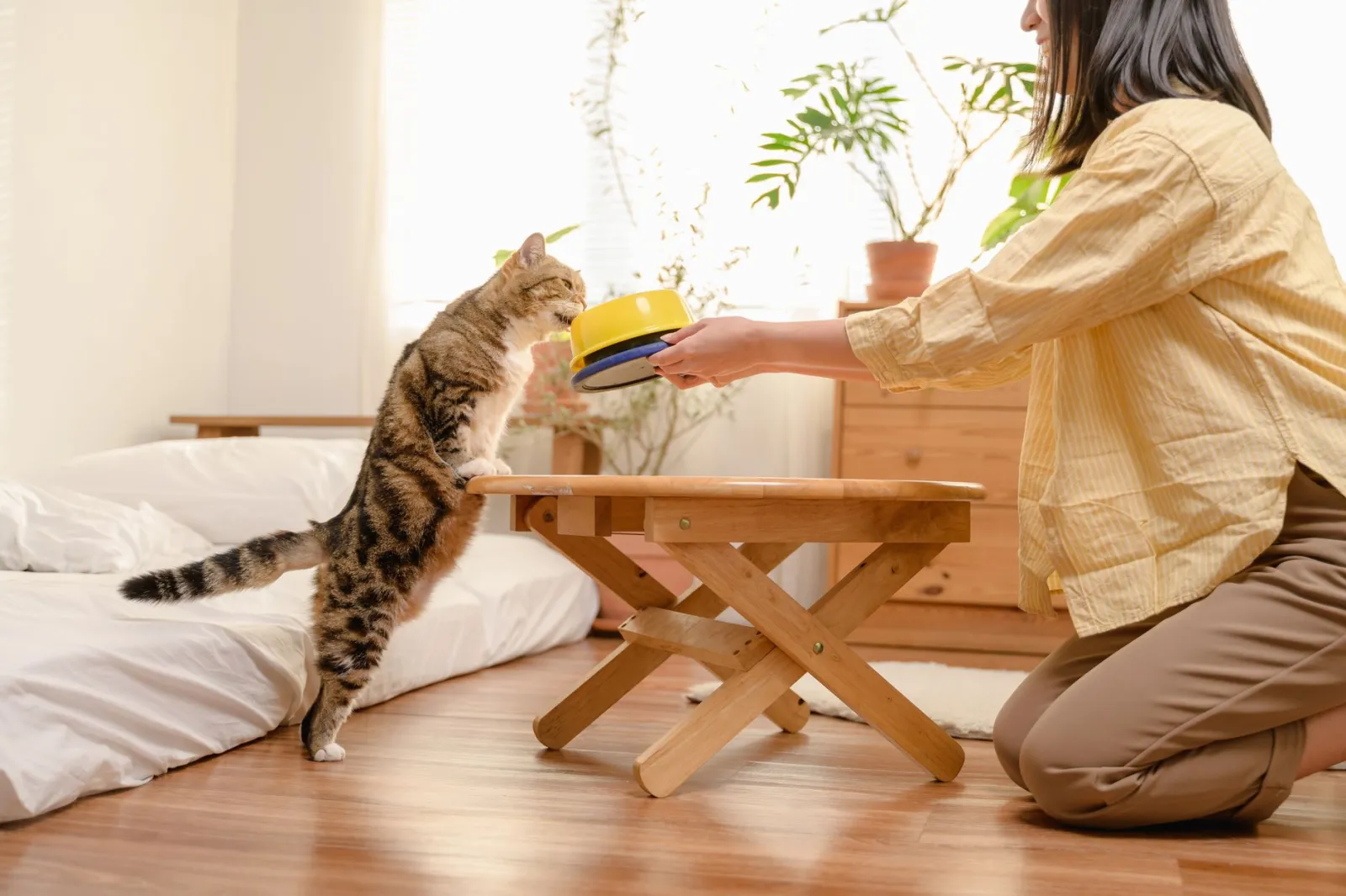
How to avoid it: Raise the bowl by roughly 5–10 cm so the cat can eat with the neck close to neutral. Elevated glass cat bowls are a popular option because glass is non-porous, easy to see through for monitoring water levels, and simple to clean. Avoid raising it so high that the cat has to reach up.
Mistake 4: Forgetting stability and non-slip grip
What it is: Buying a light bowl with a smooth base that slides across tile or wood flooring.
Why it is a problem: A sliding bowl is genuinely stressful for a cat. Many respond by eating faster and gulping, or by giving up and walking away. It also means spilled water, soggy kibble and a bowl that ends up under the radiator every morning. Stable bowls matter even more for cats that have had dental work or eat slowly.
How to avoid it: Choose a bowl with a silicone ring, a weighted base, or a stoneware/ceramic body. If you love a particular bowl, pair it with a silicone feeding mat. Check the listing for “non-slip” or “weighted base” before you buy — this is the single most overlooked spec in the category.
Mistake 5: Using one bowl for everything, with no portion control
What it is: Free-feeding from a single large bowl, with water right next to the food, and no thought given to how fast the cat eats.
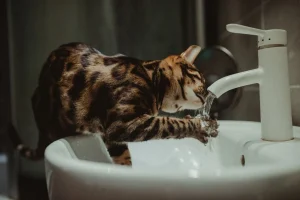
Why it is a problem: Cats that gulp are more likely to vomit straight after eating, and free-feeding makes weight control very difficult — feline obesity is one of the most common conditions vets see. Many cats also prefer to drink away from their food; a water bowl placed across the room often gets used far more.
How to avoid it: Use a measured portion, keep a separate water bowl in another room, and if your cat inhales their food, try a slow feeder cat bowl with ridges or a maze pattern. It stretches a meal from 30 seconds to several minutes, which is closer to natural feeding behaviour.
Quick answers: are ceramic bowls safe for cats?
Yes — glazed, lead-free ceramic bowls are safe and are a good choice for cats. Choose a fully glazed bowl, avoid hand-painted or unglazed interiors, and replace any bowl with chips or cracks, because damaged glaze can harbour bacteria.
Bonus: pre-purchase checklist
- Width: At least as wide as your cat’s whisker span (roughly 12–15 cm), and shallow rather than deep.
- Material: Stainless steel or glazed ceramic for hygiene; glass is a good, easy-to-clean option.
- Height: Raised 5–10 cm for seniors, large cats or any cat with mobility issues.
- Stability: Non-slip ring, weighted base or a silicone mat underneath.
- Dishwasher safe: A practical must if you want consistent hygiene.
- Size: Small enough that the bowl is not half-empty on every side — cats dislike eating from the bottom of a deep well.
- Number of bowls: Two minimum — food and water, ideally in different places.
- Your cat’s habits: A gulper needs a slow feeder; a messy drinker may prefer a wide, spill-resistant water bowl.
Conclusion
The right cat bowl is wide, shallow, stable and made of a non-porous material — stainless steel, glazed ceramic or glass. That combination solves whisker discomfort, hygiene and spillage in one go.
Start with the checklist above, replace any plastic bowl with a scratch-free alternative, and consider raising the bowl if your cat is older or slower to eat. Small changes, but they make mealtimes noticeably calmer for both of you.
Article Structure & Content Breakdown
This article follows a clear problem-solution format that mirrors how cat owners actually search for advice.
– Problem-led sections: Each mistake starts with a description, then explains why it matters for the cat, and ends with a practical fix using an Amazon search link.
– Built-in answers for quick readers: The “Quick answers” and “pre-purchase checklist” sections give skimmable, directly quotable advice — ideal for Google’s AI Overview citation.
– Material pros and cons woven throughout: Instead of a separate table, the guide compares stainless steel, ceramic, glass and plastic naturally inside the relevant mistake sections.
– Checklist as a decision tool: The pre-purchase checklist consolidates width, height, stability, material and sizing criteria so readers can evaluate any bowl before buying.
Optimization Tip: The four Amazon search links currently use the generic `cat+bowl` keyword. To improve relevance and conversion, consider replacing them with specific terms like `stainless+steel+cat+bowl`, `elevated+glass+cat+bowl`, or `slow+feeder+cat+bowl` where each solution is mentioned.
Written by our editorial team, home specialists since 2015. Learn more.