In short :
- For most houseplants, lukewarm water and a soft cloth are all you need.
- Wipe gently from base to tip and support the underside so you don’t crack the leaf.
- Add a drop of mild soap only for sticky or greasy grime, and use a dry brush on fuzzy or spiky leaves.
- Clean in the morning, check the undersides, and repeat every few weeks.
- Skip vinegar and harsh liquids, and remember a duster just moves dust around.
Dust settles on leaves the same way it settles on bookshelves and windowsills — quietly, steadily, and more than you’d expect. On a houseplant, that thin grey film is more than a cosmetic problem. Leaves are the plant’s solar panels, and a layer of dust blocks the light that photosynthesis depends on. Wipe them regularly and you’ll usually see a plant that looks sharper, grows more steadily, and resists pests better.
So what should you actually use? The honest answer is simpler than the shelves of plant-care products suggest: plain water, a soft cloth, and a little know-how cover most situations. What matters far more than the product is the method — the right technique, the right timing, and knowing which leaves to leave alone. Below is a practical walkthrough of what to reach for, how to use it, and where people commonly go wrong.
Start With Plain Water and a Soft Cloth
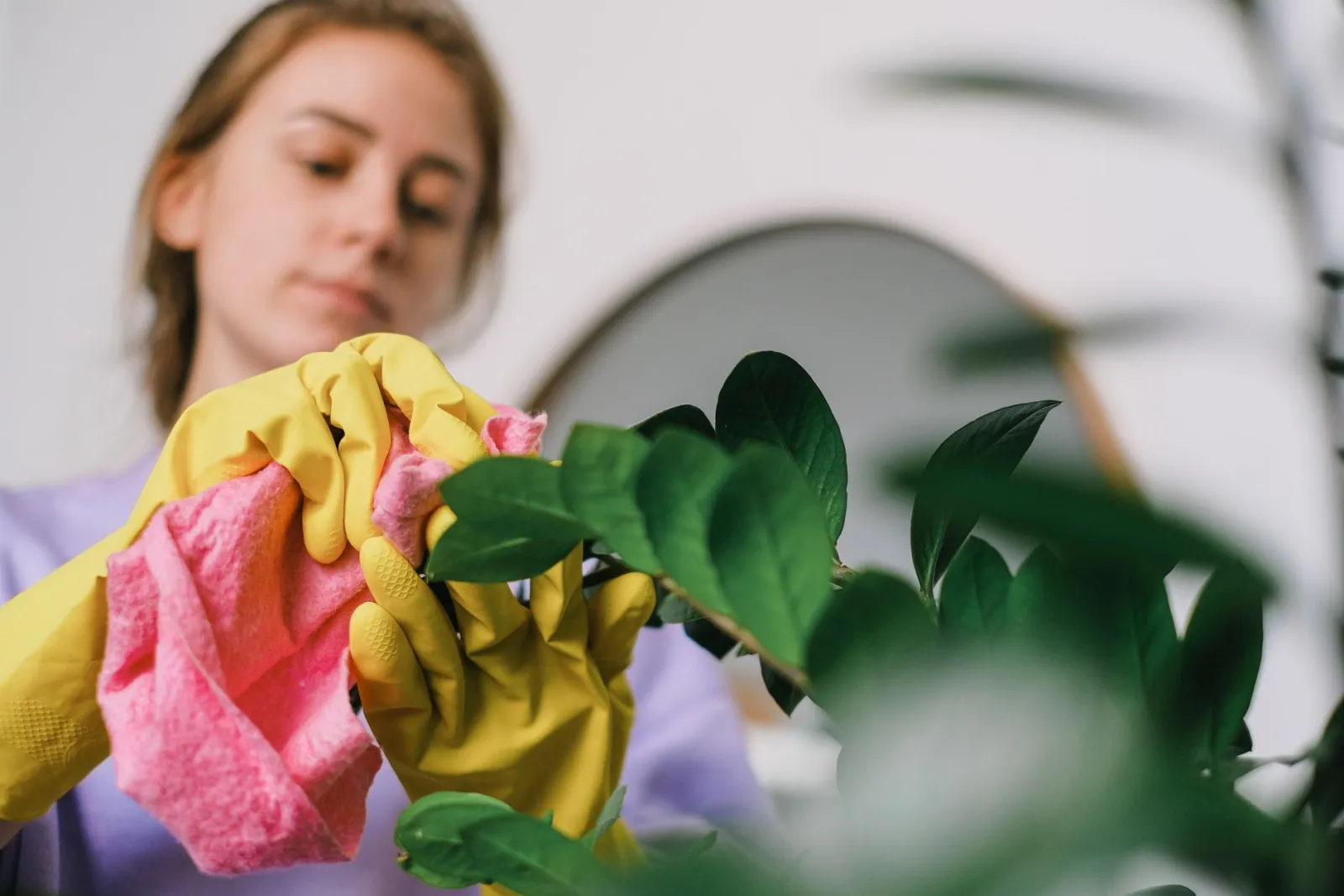
For the vast majority of houseplants, lukewarm water and a clean, soft cloth are all you need. A microfiber cloth or an old cotton t-shirt works well because both are gentle and trap dust rather than smearing it around. Dampen the cloth — don’t soak it — and wipe each leaf gently from the base toward the tip, supporting the underside with your free hand so you don’t crack the leaf or bend the stem.
Why lukewarm rather than cold? Cold water can leave spots on some leaves and shocks tropical plants more than you’d think. Room-temperature water is the safe default. If your tap water is very hard, a splash of distilled or filtered water for the final pass helps avoid mineral streaks, especially on glossy leaves.
A concrete example makes the method click. Picture a large rubber plant by a sunny window: the big, leathery leaves collect a visible dust layer within a few weeks. A single damp pass per leaf, top and underside, takes about five minutes and restores the shine immediately. The same five minutes every few weeks keeps it that way — far easier than letting months of grime build up and then scrubbing at it.
- Soft cloth or microfiber: the everyday workhorse for broad, smooth leaves.
- Lukewarm water: the default cleaning solution — nothing added.
- Support the leaf: always hold the underside while wiping the top.
When Water Alone Isn’t Enough: Mild Soap and Other Gentle Options
Some leaves carry more than dust — sticky residue from pests, water spots, or a stubborn film that plain water just pushes around. In those cases, a tiny amount of mild liquid soap diluted in water (a couple of drops in a bowl) cuts through the grime without harming the leaf. Wipe with the soapy cloth, then go over the leaf once more with a clean, water-dampened cloth to remove any residue. Never leave soap drying on the leaf.
What about the oils and leaf-shine products sold for glossy finishes? Use them sparingly, if at all. A light application of a plant-safe oil can add shine, but heavy or frequent use clogs the leaf’s pores and attracts dust — the opposite of what you want. For most plants, a clean damp wipe already delivers a natural sheen.
Here’s a real situation worth knowing: a plant near a kitchen often collects a fine greasy film that water alone won’t lift. The diluted-soap method handles it in one pass. The same approach works for a plant that’s been sitting near a radiator and picked up a dull, smudgy coating. Match the cleaning strength to the problem rather than reaching for the strongest option by default.
Quick comparison of common cleaning options
| Option | Best for | Watch out for |
|---|---|---|
| Plain lukewarm water | Routine dusting on most plants | Leaves mineral streaks if water is very hard |
| Diluted mild soap | Sticky residue, greasy film, pest cleanup | Must be rinsed off; never left to dry |
| Damp soft cloth / microfiber | Broad, smooth, glossy leaves | Too rough for fuzzy or delicate leaves |
| Soft brush or dry cloth | Fuzzy, textured, or spiky leaves | Water can trap moisture and cause rot |
Match the Method to the Leaf Type
Not every leaf wants a wet wipe. Fuzzy leaves — think of the velvety types — trap water, and moisture sitting on them invites rot and fungal problems. For these, use a soft dry brush (a clean makeup brush or a soft paintbrush works beautifully) to flick dust away, or gently pass a dry cloth. Cacti and other spiky plants are easier to clean with a soft brush too, which spares your fingers.
Delicate or small-leaved plants are a different challenge. Trying to wipe each tiny leaf is fiddly and risks damage. A gentle shower is often the smarter move: take the plant to the sink or shower, run lukewarm water over the foliage at low pressure, let it drain thoroughly, and keep it out of direct sun until dry. This rinses dust off the whole plant at once and doubles as a pest check.
One more practical case: a plant with a mix of leaf types, like a trailing vine with both large and small leaves. Clean the big leaves by hand and give the whole plant an occasional gentle rinse to handle the small ones. Adapting the method to the plant in front of you beats forcing one technique onto everything.
Timing, Frequency, and the Mistakes to Avoid
How often should you clean? There’s no fixed schedule — the honest answer is “when you can see the dust.” A good habit is to check leaves every couple of weeks and wipe when a light film appears. Plants near windows, radiators, or busy rooms collect dust faster; those in quiet corners need it less often. Cleaning in the morning gives leaves time to dry before the cooler evening, which reduces the risk of problems.
A few habits cause most of the trouble. Wiping with a dry, rough cloth scratches glossy leaves. Cleaning in bright direct sun can scorch a wet leaf. Drenching fuzzy leaves leaves them vulnerable. And skipping the undersides misses where pests like to hide — always check the underside while you’re there, since it’s the best early-warning system you have.
- Clean in the morning so leaves dry fully.
- Avoid direct sun while leaves are wet.
- Always check and clean the undersides.
- Keep fuzzy and spiky plants dry.
Frequently Asked Questions
Can I just use a feather duster instead of wiping?
Dusting helps between deeper cleans, but a duster mostly moves dust around rather than removing the film that clings to the leaf. Use it for a quick refresh, then follow with a damp wipe when a visible layer builds up.
Is it safe to clean leaves with vinegar or other household liquids?
Mild soap diluted in water is the safe household option. Stronger liquids like vinegar can damage leaf tissue and aren’t necessary for routine cleaning. Stick to water and a touch of mild soap, and rinse well.
What if the leaves stay dull even after cleaning?
Persistent dullness usually points to something beyond dust — often light, watering, or nutrient issues rather than dirt. Cleaning restores shine on healthy leaves; if they stay lackluster, look at the plant’s overall care.
The Bottom Line
For most indoor plants, the answer to “what should I use?” is reassuringly simple: lukewarm water, a soft cloth, and a gentle hand. Add a drop of mild soap only when there’s sticky or greasy grime to lift, and switch to a dry brush for fuzzy or spiky leaves. Match the method to the leaf, clean in the morning, and check the undersides while you’re at it. Do that every few weeks and your plants will reward you with cleaner leaves and steadier growth.
If you want to go further — covering watering, light, repotting, and pest prevention — a more complete guide to indoor plant care walks through the whole routine from start to finish.