This article contains Amazon affiliate links. As an Amazon Associate we earn from qualifying purchases.
In short :
- A long-haired cat’s thick coat blocks the direct contact most cooling mats need to work.
- Skip pressure-activated gel mats and look for water or phase-change options instead.
- Pick a smooth surface that won’t snag the fur, and size it so your cat can stretch out fully.
- Place it where your cat already naps and let them choose it on their own.
- No mat replaces cool rooms and fresh water, but the right one helps on hot days.
Why Long-Haired Cats Need a Different Cooling Approach
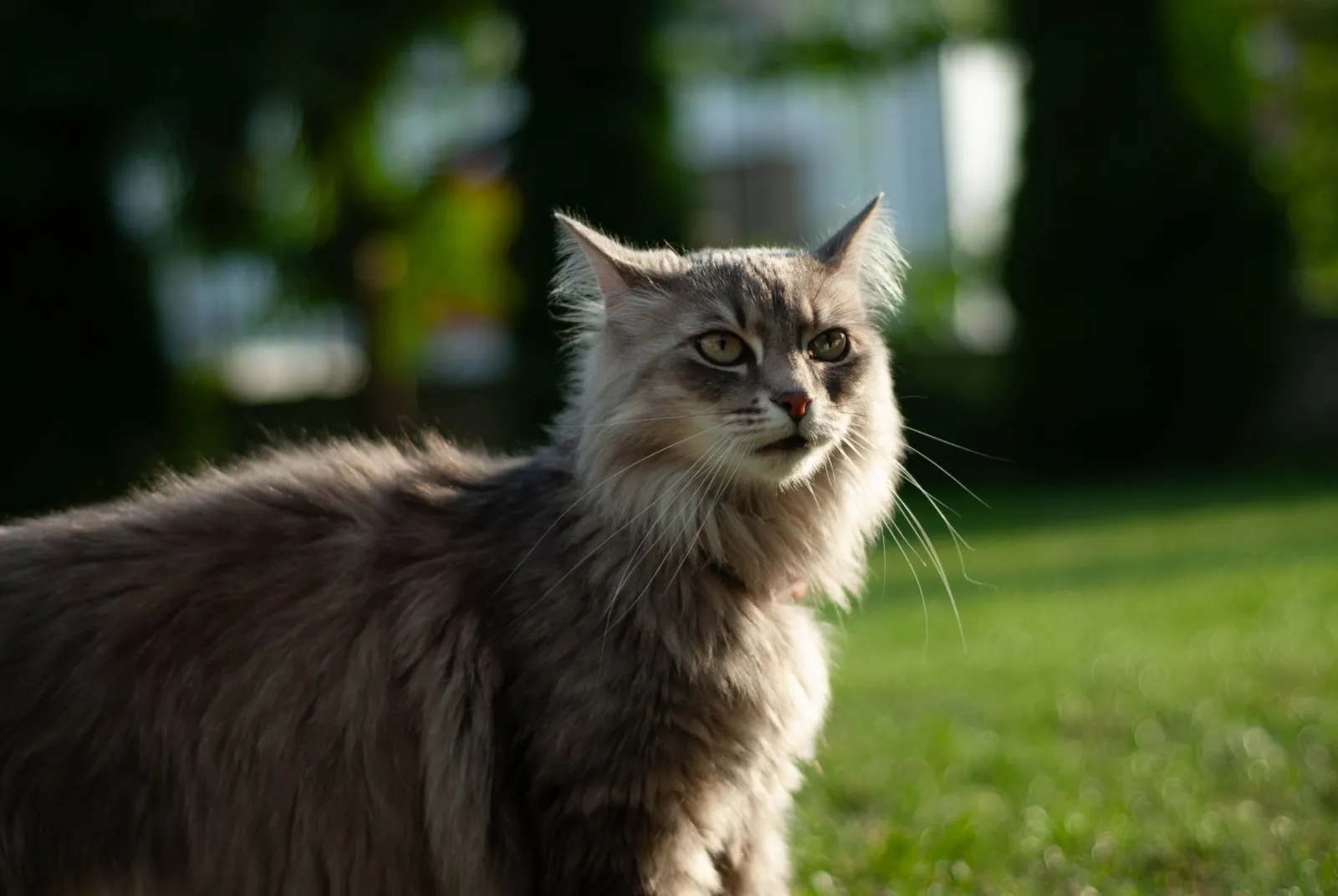
A long-haired cat carries its own insulated blanket everywhere it goes. That double coat — a dense undercoat plus a longer topcoat — traps air and regulates temperature beautifully in winter. In summer, it can work against your cat, especially in a flat that heats up by mid-afternoon.
Cats don’t sweat the way humans do. They lose heat mainly through their paw pads and by grooming saliva onto their fur, which cools as it evaporates. A thick coat slows that process. So when you see your cat sprawled belly-up on the bathroom tiles, or draped over the edge of the bathtub, it’s not being dramatic — it’s actively seeking a cooler surface.
Cooling mats are designed to give cats a surface that pulls heat away from the body. But not every mat suits a long-haired cat. Fur acts as a barrier between skin and mat, pressure-activated gels need direct contact to work, and some materials snag on long coats. This guide walks through the criteria that actually matter when choosing one.
Cooling Mechanism: Pressure-Activated Gel vs. Water vs. Phase-Change Material
Most cooling mats fall into three broad categories, and each behaves differently under a long coat.
Pressure-activated gel mats contain a gel that absorbs heat when the cat’s body weight presses down on it. The catch: the gel needs sustained, direct contact to stay cool. A cat lying on top of a thick coat may not trigger enough pressure, and the cooling effect can feel inconsistent. These mats also tend to warm up after 20–30 minutes of continuous use and need a break to reset.
Water-filled mats circulate cool water or simply hold a chilled liquid. They tend to stay cool longer but are heavier, can develop pinhole leaks, and a cat with claws may puncture the surface. They also need refrigeration or a cool water refill to stay effective.
Phase-change material (PCM) mats absorb and release heat at a stable temperature. They don’t need water or electricity, and they tend to stay cool for longer stretches than gel mats. They’re often the better fit for a long-haired cat because they don’t rely as heavily on direct skin contact.
Practical check: press your palm flat on the mat for 30 seconds. If it cools noticeably, the mechanism is working. If it stays room temperature, it won’t help a coated cat much.
Surface Texture and Coat Compatibility
Long fur and certain fabrics are a bad match. A mat with a woven, looped, or loosely knit surface can catch on the coat, causing tangles or pulling when your cat stands up. Slippery plastic surfaces, on the other hand, offer no grip — a cat will slide off and avoid the mat entirely.
Look for a smooth, tightly woven or coated surface with a slight grip. Oxford fabric with a waterproof coating, or a mat with a soft but non-looping top layer, tends to work well. Avoid anything with exposed seams, raised stitching, or a mesh top that claws can snag on.
Example: A cat with a thick Maine Coon-type coat lying on a mesh-topped mat will often get fur caught in the weave. The cat stands up, feels the pull, and never returns to that spot. A smooth-coated mat avoids that problem entirely.
Size and Shape: Give the Cat Room to Stretch
Cats don’t curl up neatly on a cooling mat the way a small dog might. They stretch, roll, and shift position. A mat that’s too small forces the cat to choose between cooling and comfort — and comfort usually wins.
As a rule, the mat should be at least as long as your cat from nose to tail base, plus a few inches. For a large long-haired cat, that often means a mat around 60–90 cm long. Wider mats (40–60 cm) let the cat stretch out fully.
Shape matters too. Rectangular mats fit neatly on a windowsill, a sofa seat, or the floor. Round or oval mats suit cats that like to curl. If your cat tends to sleep on your bed, a mat sized to fit a pillow or a section of the duvet is more likely to get used.
Test at home: place a folded towel the size you’re considering on your cat’s favourite sleeping spot. Watch whether the cat uses it without hanging off the edge. That tells you more than any product description.
Cooling Duration and Reset Time
A mat that cools for 15 minutes and then needs two hours to reset is not much use on a hot afternoon. The usable cooling window matters more than the peak coolness.
Pressure-activated gel mats typically hold a cool feel for 20–40 minutes before warming to room temperature. Phase-change mats can last one to three hours depending on the ambient temperature and the cat’s body heat. Water mats vary widely — some stay cool for hours, others lose effectiveness as the water warms.
Ask yourself how long your cat actually lies in one spot. Most cats nap for 1–3 hours at a stretch. A mat that resets quickly — by simply being left in a cool room or near a fan — is more practical than one that needs refrigeration.
Common pitfall: buying a mat that only works after being chilled in a freezer. That’s fine for occasional use, but on a 35°C day, the mat warms up fast and you’re back to square one.
Durability, Cleaning, and Claw Resistance
Long-haired cats groom more, shed more, and often have thicker claws that need regular trimming. A cooling mat for a long-haired cat needs to survive all three.
Check the outer material for puncture resistance. A mat with a thick, flexible cover and reinforced seams handles claws better than a thin plastic shell. Gel mats are especially vulnerable — a single puncture can leak gel, which is messy and potentially unsafe if ingested.
Cleaning matters too. Long fur and dander accumulate quickly on any surface a cat uses daily. A mat with a removable, machine-washable cover is far easier to keep hygienic than one that must be wiped down. If the cover isn’t removable, at least make sure the surface can be wiped with a damp cloth without damaging the cooling layer.
Example: A cat that kneads before lying down will put repeated pressure on the same spot. A mat with a thin cover and a gel core will show wear there first. A mat with a thicker, stitched cover lasts longer under that habit.
Safety: Non-Toxic Materials and Safe Use
Some cats chew or lick new surfaces. If the mat contains a gel or liquid, check that the filling is non-toxic and sealed behind a durable barrier. A mat that leaks a chemical-smelling gel is a sign to stop using it immediately.
Temperature is another safety factor. A mat that gets too cold — especially one that’s been in a freezer — can cause discomfort or even cold burns on a cat’s belly or paws. The mat should feel cool to the touch, not painfully cold. If your cat avoids it after a few minutes, that’s a signal.
Also consider whether the mat stays flat. A mat that bunches up or folds can trap a cat’s paw or cause a slip. Look for a mat that lies flat on its own, without curling at the edges.
Placement and How to Introduce the Mat
Even the best mat goes unused if it’s in the wrong spot. Cats choose their own sleeping places, and they rarely accept a new object placed in the middle of the room.
Start by putting the mat where your cat already rests — on a windowsill, a sofa cushion, or the foot of the bed. Let the cat investigate on its own. Don’t pick the cat up and place it on the mat; that usually backfires.
If your cat ignores it, try placing a worn t-shirt or a favourite blanket on top for a day or two, then remove it. The familiar scent makes the mat feel less foreign. You can also place the mat near a fan or in a shaded spot, which increases its cooling effect naturally.
Example: A cat that always sleeps on a tiled bathroom floor in summer may accept a cooling mat placed on that same tile. The location is already associated with coolness, so the mat fits the cat’s existing habit.
FAQ
Do cooling mats actually work for dogs?
Yes, cooling mats can work for dogs, but effectiveness depends on the type and the dog’s coat. Pressure-activated gel mats work best for short-haired dogs that make direct contact. Dogs with thick double coats may get less benefit because fur blocks the cooling surface. Water and phase-change mats tend to be more consistent for heavily coated animals.
What is the best cooling mat for a dog?
There is no single best mat — it depends on the dog’s size, coat, and habits. For a large, long-haired dog, a phase-change or water-filled mat with a durable, claw-resistant cover and a removable washable layer usually performs best. For a small, short-haired dog, a pressure-activated gel mat is often sufficient. Match the mat to the animal, not to a label.
Do vets recommend cooling mats?
Veterinarians generally consider cooling mats a useful supplementary tool for helping pets manage heat, provided the mat is non-toxic, doesn’t get excessively cold, and is used under supervision. They are not a substitute for shade, fresh water, and avoiding exercise during peak heat. If an animal shows signs of heat stress — heavy panting, drooling, weakness — contact a vet immediately.
Conclusion
Choosing a cooling mat for a long-haired cat comes down to a few practical points: pick a mechanism that doesn’t rely on direct skin contact, choose a smooth surface that won’t snag the coat, size it so your cat can stretch out, and make sure it’s durable and easy to clean. Place it where your cat already rests, and let the cat decide.
No mat replaces good summer management — cool rooms, plenty of water, and shaded sleeping spots. But the right mat can make a real difference on a hot day. For a broader look at cooling options across different pets and situations, a more complete guide on the general topic is available on the site.
Go further : What are the best cat trees for large cats?
Full guide :Pets
More from this guide :
Was this guide helpful?
Share your experience with the WiseHomeGuides community.