This article contains Amazon affiliate links. As an Amazon Associate we earn from qualifying purchases.
In short :
- Yes, a cat tree is genuinely good for most indoor cats.
- The one thing that decides everything is stability: if it wobbles, your cat will ignore it.
- Look for a wide, heavy base, solid materials, and scratching posts tall enough for a full stretch.
- Get a mix of enclosed and open resting spots, then place it near a window or your cat’s favourite spot.
- The real mistake isn’t buying a tree, it’s buying a flimsy one or putting it where your cat never goes.
Yes — for most indoor cats, a cat tree is genuinely good. Not a gimmick, not a luxury, but a piece of furniture that answers several deep feline needs at once: climbing, scratching, resting up high, and simply having a space that belongs to them.
Cats are both predators and prey animals. That dual nature explains almost everything about how they use a cat tree. They want height to feel safe, a rough surface to maintain their claws, and a soft, enclosed spot to sleep without being disturbed. A well-chosen tree delivers all three in one footprint.
That said, “good for cats” isn’t automatic. A wobbly tower with a flimsy base will be ignored — or worse, toppled. The real question isn’t whether cat trees are good, but whether the right cat tree is good for your cat. Here’s how to judge one before you commit.
Stability: the criterion that decides everything
If a cat tree sways when your cat lands on the top platform, the cat will stop using it. Cats abandon structures that feel unsafe — this is one of the most consistent behavioural observations owners report, and it makes sense: a predator-prey animal won’t relax on a surface that shifts underfoot.
Look at the base first. A wide, heavy base is the foundation of a stable tree. As a rule of thumb, the base should be at least as wide as the tallest platform is high — a rough proportional guide, not a strict rule, but a useful sanity check. A tree that stands two metres tall on a base barely wider than a shoebox is asking for trouble.
Weight matters too. Heavier materials — solid wood panels, dense board — resist tipping far better than thin composite. You can test this before buying: press firmly on the top platform with one hand. If it flexes noticeably or the base lifts, walk away. In a shop, a gentle nudge tells you more than any label. At home, if a tree already wobbles, anchoring it to the wall or adding weight to the base often rescues it.
Height and layout: match the cat, not the room
Height is where most buyers get it wrong. A tall tree looks impressive, but a cat that can’t comfortably reach the top will simply use the lower levels — or nothing. Kittens and senior cats do better with lower, easier-to-reach platforms. Agile adults and multi-cat households usually benefit from taller structures with several levels.
A practical benchmark: the top resting spot should sit at or above your own eye level when you’re standing. That gives the cat a genuine vantage point, which is what height is really for. If the highest perch is at knee height, you’ve bought a scratching post with extra steps.
Think about spacing between levels, too. Platforms placed too far apart force awkward jumps; too close together and the tree feels cramped. A good tree lets a cat move upward in easy, confident hops. Picture your cat’s natural movement — if you’ve ever watched them leap onto a wardrobe, you already know their range.
Scratching surfaces: material and placement
Scratching isn’t destructive behaviour — it’s maintenance. Cats scratch to shed the outer layer of their claws, to stretch, and to mark territory. A cat tree with the right scratching surfaces can redirect that instinct away from your sofa.
Material choice matters here. Sisal rope and sisal fabric are the most commonly recommended surfaces because they offer the right resistance — rough enough to catch and strip the claw sheath, durable enough to survive daily use. Carpet can work, but tightly woven carpet is often too soft, and loose loops can snag claws. Bare wood is a reasonable option for some cats, though not all take to it.
Placement is half the battle. Cats scratch most where they already spend time and where they wake up. If the scratching posts are tucked in a corner nobody visits, they’ll go unused. Position the tree near a favourite lounging spot or a window, and you’ll see far more activity. A common pitfall: buying a tree with scratching surfaces only on the lowest level, when most cats prefer to stretch and scratch at full height.
Resting spots: enclosed versus open
Cats rest in two distinct modes. Sometimes they want to curl up hidden — a cave, a box, a covered basket. Other times they want to sprawl in the open, ideally somewhere warm and elevated. A good cat tree offers both.
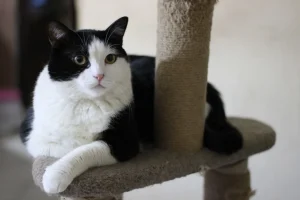
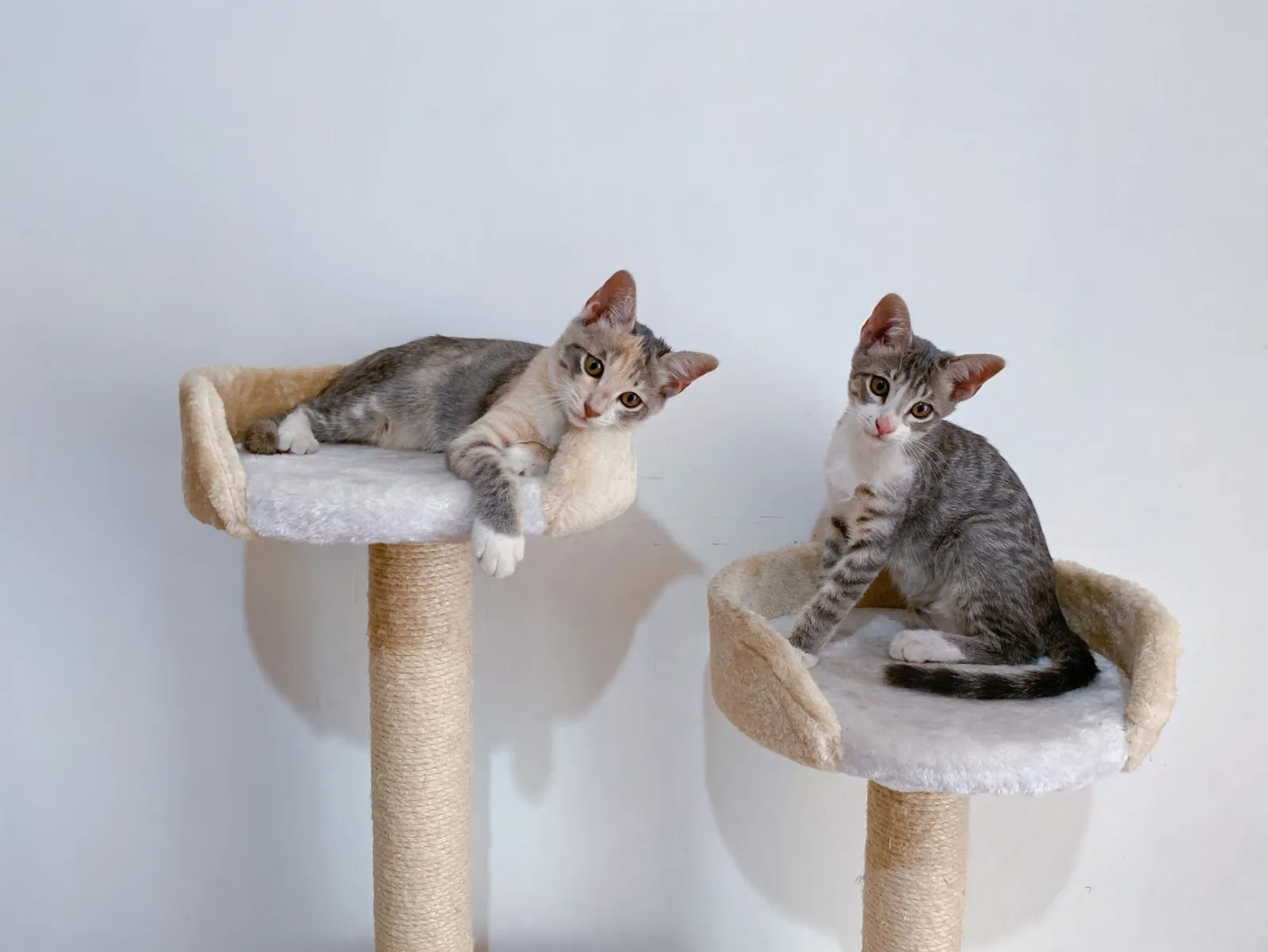
Look for a mix: at least one enclosed hideaway and one or more open platforms or perches with a raised edge. The raised edge matters more than people expect — it gives the cat something to lean against and a sense of containment without full enclosure. Flat, rimless platforms are often ignored.
Softness is secondary to shape. Cats will happily sleep on a firm surface if the position feels secure. What they won’t do is sleep somewhere exposed and unstable. So prioritise structure over plushness: a well-shaped perch in a quiet, elevated spot beats a fluffy bed at floor level every time.
Size and space: fitting the tree to your home and your cat
Bigger isn’t automatically better. A tree that dominates a small room can feel oppressive to live with — and if it’s crammed against a wall in a high-traffic area, the cat may avoid it entirely. Measure the floor space you can genuinely dedicate before you shop.
For multi-cat households, the equation changes. Cats sharing a tree need enough separate resting spots to avoid conflict — ideally one per cat, plus one. Two cats competing for a single top perch will create tension, and the loser may abandon the tree altogether. Multiple levels and multiple exit routes solve this.
Weight capacity is worth checking, especially for larger breeds. A platform that sags under a heavier cat won’t be used twice. If you’re unsure, look for specifications that state a maximum weight per platform, and compare it against your cat’s adult size — not their kitten size, since cats grow quickly.
Materials and durability: what survives real use
A cat tree takes a beating. Claws, jumping, body weight, and daily friction all wear it down. The materials determine whether it lasts years or months.
Solid wood frames and posts hold up far better than particleboard or thin veneer. Sisal surfaces should be tightly wound and firmly attached — loose wrapping unravels fast. Check how the platforms are joined: screws and bolts that go through the material are sturdier than staples or glue alone.
Fabric covers are a trade-off. Plush fabrics feel nice but trap hair and can pill quickly. Removable, washable covers are a practical bonus if you can find them, since cat trees get dusty and are awkward to clean. A quick test in-store: run your hand firmly over the scratching surface and tug gently at the fabric. If fibres come away easily, expect the same at home within weeks.
Safety and assembly: the details people skip
Two things get overlooked when buying a cat tree: how it’s assembled and whether it’s safe once built.
Assembly quality affects stability directly. A tree that’s awkward to put together often ends up loosely assembled, which means wobble. Check that the instructions are clear and that all fixings are included. If a tree arrives with vague guidance, that’s a warning sign about its engineering.
Safety checks are simple but worth doing. Look for sharp edges, exposed staples, or loose threads that could catch a claw. Avoid trees with small, detachable parts that could come loose. Once assembled, re-tighten the bolts after the first week — new joints settle, and a quick tighten prevents long-term wobble.
Placement matters for safety too. Keep the tree away from radiators, windows that get direct sun, and anything a cat could knock over on landing. A stable tree in a sensible spot is a safe tree.
FAQ
Are cat trees good for cats?
Yes, for most indoor cats. They provide height, scratching surfaces, and secure resting spots — three things that match core feline needs. The benefit depends on choosing a stable, well-sized tree and placing it where your cat actually spends time.
What is the best quality cat tree in the UK?
Quality comes down to stability, materials, and construction rather than any single brand. Look for a wide, heavy base, solid wood or dense board frames, tightly wound sisal scratching surfaces, and bolted joints. A tree that doesn’t wobble and offers both enclosed and open resting spots is a good tree, regardless of label.
Is it worth getting a cat tree?
For most indoor cats, yes. A cat tree channels scratching away from furniture, gives the cat a sense of security through height, and provides a dedicated resting space. It’s worth it if you can place it well and choose one suited to your cat’s size and energy level.
What is the 3-3-3 rule for cats?
The 3-3-3 rule describes a typical adjustment timeline for a cat in a new home: roughly three days to decompress, three weeks to settle into routine, and three months to feel fully at home. A cat tree can help at every stage — offering a safe high perch during the early days and a familiar resting spot as the cat gains confidence.
The bottom line
Cat trees are good for cats — when they’re stable, well-sized, and placed thoughtfully. The mistake most people make isn’t buying one; it’s buying the wrong one, or putting it somewhere the cat never goes. Prioritise a wide base, solid materials, a mix of enclosed and open resting spots, and scratching surfaces at full stretch height. Then place it near a window or a favourite lounging area, and give your cat time to claim it.
If you want the fuller picture — how to compare types, sizes, and setups across the whole category — there’s a more complete guide on the general theme of choosing cat furniture that walks through the wider decision from start to finish.
n