This article contains Amazon affiliate links. As an Amazon Associate we earn from qualifying purchases.
Short answer : Choosing the best bed sheets comes down to matching fabric, weave, and fit to how you sleep and how much upkeep you want. Natural fibers like cotton and linen breathe well and soften over time, while synthetic blends resist wrinkles but trap heat. Thread count is often marketed as a quality signal, yet beyond a moderate range it says little about durability or comfort; weave, yarn quality, and finishing matter more. Fit is equally important: deep-pocket sheets stay put on thick mattresses, and a secure elastic all around keeps corners from popping. Before buying, check the care label, confirm the return policy, and measure your mattress depth so the sheets you choose actually stay in place night after night.
In short
- Match fabric to sleep style: breathable cotton or linen for hot sleepers, brushed or flannel options for cooler rooms.
- Treat thread count as a rough guide only; weave type and yarn quality affect feel and longevity more than a high number.
- Measure mattress depth before buying and choose deep-pocket sheets with elastic all around for a secure fit.
- Check the care label for washing and drying instructions, since high-maintenance fabrics add effort over time.
- Confirm the return policy and look for reinforced seams and generous hems as signs of sturdier construction.
Understanding Thread Count and Fabric Quality
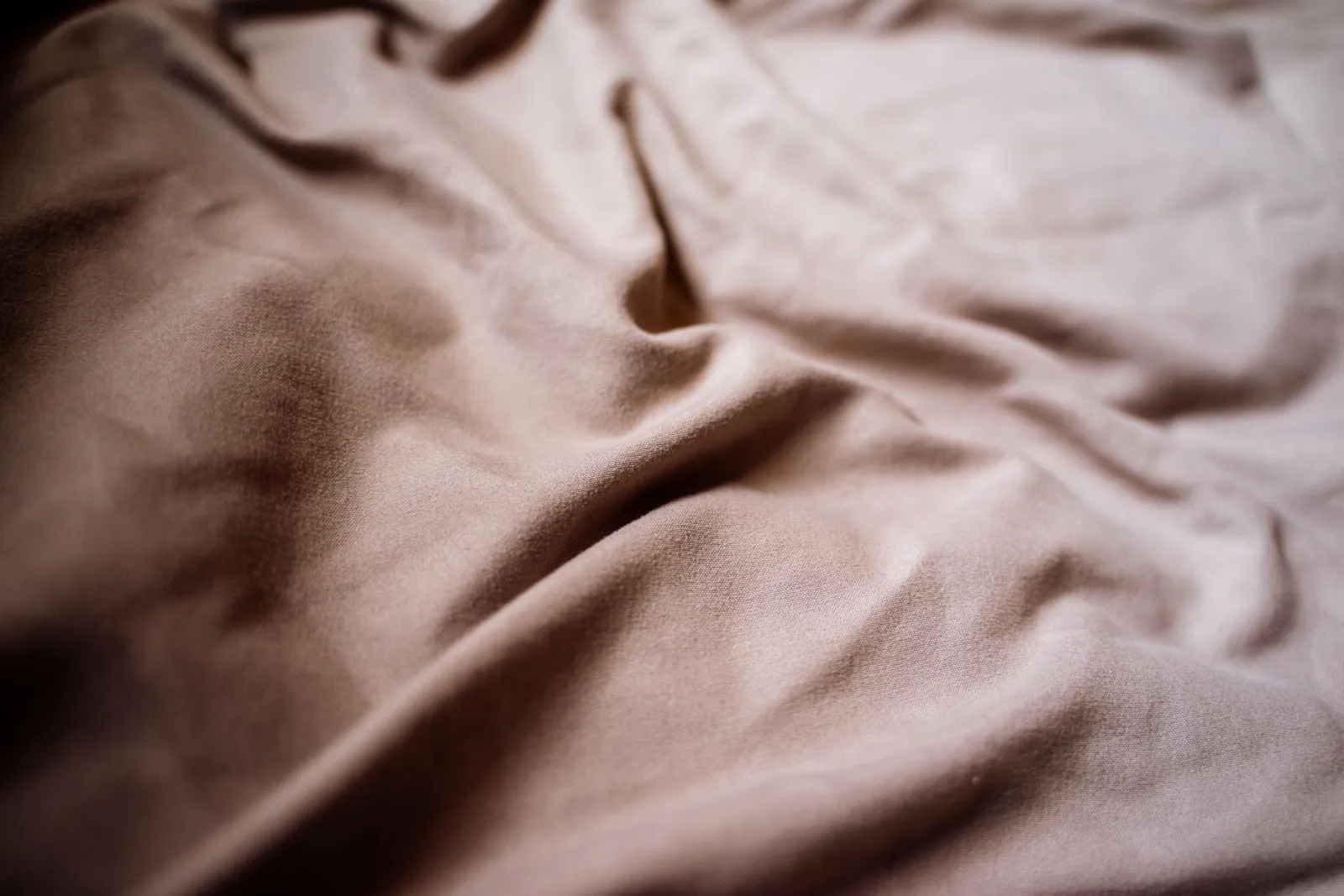
Thread count is one of the most misunderstood numbers in bedding. In principle, it refers to the number of threads woven into a single square inch of fabric, counting both the lengthwise (warp) and crosswise (weft) yarns. A higher count generally suggests a denser, smoother cloth, but the number alone tells you very little without knowing what the threads are made of and how they were spun. Two fabrics labeled with the same count can feel completely different depending on fiber length, yarn thickness, and weave.
The practical range worth understanding runs from roughly 200 to around 600. Sheets in the lower part of that range tend to feel crisp and breathable, with a slightly textured hand that many people find cool and refreshing in warm rooms. Mid-range counts offer a balance of smoothness and durability and suit most everyday bedrooms. Very high counts are often achieved by using finer yarns, which can produce a silky, dense surface, but past a certain point the added density mainly increases weight and cost rather than comfort. A well-made fabric in the middle of the range frequently outperforms a poorly made fabric at the top.
Fiber quality matters more than the raw number. Long-staple cotton produces stronger, smoother yarns that resist pilling and feel softer over time, while short fibers create a rougher surface that degrades faster with washing. Ply is equally important: a two-ply yarn, where two strands are twisted together, is stronger and more durable than a single-ply yarn of the same finished thickness. Some manufacturers inflate thread count by counting the individual plies of a multi-ply yarn, so a “high” count may simply reflect doubled strands rather than a genuinely finer weave.
Weave structure shapes how a sheet behaves in use. Percale, a simple over-under weave, feels matte, crisp, and airy, making it a good match for hot sleepers and warmer climates. Sateen uses a floating-yarn pattern that produces a smooth, lustrous surface with a heavier drape, which appeals to people who prefer a silky feel and extra warmth. Linen, woven from flax, starts slightly rough and softens with each wash, offering excellent breathability and a relaxed texture. Choosing among these is largely a matter of personal preference for temperature and hand-feel rather than a question of better or worse.
Finally, consider how the fabric will age. Dense, finely woven sheets can feel luxurious initially but may wear thin faster if the yarns are delicate, while moderately dense, well-spun cotton tends to hold up through many wash cycles. Look for clear fiber content, honest construction details, and a finish that doesn’t rely on heavy chemical treatments to feel soft. A sheet that feels good in the store and still feels good after a dozen washes is a more reliable indicator of quality than any single figure on the label.
Cotton vs. Microfiber vs. Linen: Material Comparison
Cotton remains the reference point for most buyers, and the main variable within cotton is staple length. Long-staple and extra-long-staple fibers can be spun into finer, stronger yarns, which allows a higher thread count without the fabric becoming dense and unbreathable. Short-staple cotton needs thicker yarns to hold together, so very high thread counts on inexpensive cotton often signal tightly packed, heavier fabric rather than a smoother surface. A practical test is to look at the yarn description rather than the thread count alone: a well-spun long-staple cotton in the 200 to 400 thread count range typically feels smoother and lasts longer than a short-staple sheet advertised at a much higher count. Cotton is the safest default for year-round use, holds up to frequent washing, and suits people who want bedding that softens over time rather than one that feels the same on night one and night five hundred.
Microfiber is a synthetic fabric, usually polyester, woven from extremely fine fibers. Its advantages are consistency and cost: it feels uniform and smooth from the first use, resists wrinkling, dries quickly, and holds color well, which makes it a common choice for guest rooms, rentals, and households where bedding is washed often and replaced on a shorter cycle. The trade-off is breathability. Because the fibers are so fine and tightly woven, microfiber tends to trap warmth and moisture more than cotton, so it suits cool sleepers or air-conditioned rooms better than hot sleepers in humid climates. It also has a flatter, slightly slick hand that some people find less comfortable against the skin than a natural fiber, and it does not develop the same soft, broken-in feel over time.
Linen is woven from flax and behaves differently from both. It is highly breathable and pulls moisture away from the body, which is why it is often chosen for warm bedrooms and for people who sleep hot. Its texture is crisp at first and becomes softer with each wash, so the fabric improves rather than degrades in feel. The trade-offs are wrinkles, which are inherent to the material rather than a defect, and a higher upfront cost for good quality. Linen also feels cooler to the touch on contact, which some sleepers love and others find less cozy in winter. It works best as a summer or warm-climate choice, or for anyone who values airflow over a smooth, uniform surface.
The practical decision usually comes down to sleep temperature and washing habits. Hot sleepers and warm rooms favor linen or a breathable long-staple cotton percale. Cool sleepers, guest beds, and high-turnover households do well with microfiber for its durability and easy care. For a single set meant to serve year-round, a mid-weight long-staple cotton is the most versatile compromise, balancing breathability, durability, and a soft hand that improves with use.
Weave Types: Percale, Sateen, and Their Feel
The weave determines how a sheet feels against your skin far more than thread count alone, because it governs how the yarns cross each other and how much air the fabric traps. Two sheets can share identical fiber and yarn size yet feel completely different depending on whether they are woven in a tight, matte percale or a loose, lustrous sateen. Understanding these two constructions, plus the plain weaves that sit between them, lets you match a sheet to how you sleep rather than to a marketing number.
Percale is a simple one-over, one-under weave that produces a crisp, matte, almost papery hand. Because the interlacing is balanced in both directions, the fabric is strong and breathable, and it tends to feel cool at first contact and stay that way. The trade-off is a slightly rougher initial texture that softens over many washes rather than feeling silky out of the package. Percale suits hot sleepers, warmer rooms, and anyone who likes the hotel-style snap of a freshly made bed; it also holds up well to frequent laundering, which makes it a practical choice for everyday use and for households that wash bedding often.
Sateen flips the ratio, floating several yarns over one before tucking under, which creates a smoother, denser surface with a soft sheen and a heavier drape. That construction feels silkier and slightly warmer, and it reflects light in a way percale does not. The longer floats make sateen more prone to snagging and to showing wear at friction points, so it rewards gentler handling and a bit more care in the wash. It is the better fit for cool sleepers, cooler bedrooms, and people who want a smooth, cocooning feel rather than a crisp one.
Between these poles sit plain and twill-style weaves, which behave like a middle ground: a bit more texture than sateen, a bit more drape than a tight percale, and generally durable. Flannel, meanwhile, is a brushed construction rather than a distinct interlacing pattern, and its raised surface traps warmth, making it a seasonal choice rather than an all-year default.
A practical way to decide is to start from your sleep temperature and your tolerance for texture. If you run warm or like a crisp bed, lean toward percale; if you sleep cold or want a smooth, weightier feel, sateen is the natural pick. Whichever you choose, judge the weave by hand and by how the fabric drapes rather than by a single spec number, since the same weave can feel quite different depending on yarn quality and finishing.
How to Match Sheet Size to Your Mattress Depth
Matching a sheet to mattress depth is less about the label on the packaging and more about the total height your bedding has to clear. Mattress depth is measured from the bottom of the mattress to its top surface, but the number that actually governs fit is the sum of that depth plus any topper you use. A standard mattress with a thin cotton pad may sit at one height, while the same mattress with a thick memory foam topper adds several inches that a fitted sheet must accommodate. Before shopping, measure the mattress at a corner with a tape measure and add the topper’s loft. That single figure, not the mattress category, is the number to compare against a sheet’s stated pocket depth.
Fitted sheets are typically described by their pocket depth, the vertical distance the corner seams can stretch to cover. A sheet whose pocket depth is close to your measured total will fit snugly; one that falls short will pop off at the corners, especially on thicker mattresses or after the elastic has relaxed with washing. Conversely, a sheet with substantially more pocket depth than you need will bunch and wrinkle under the body rather than lying flat. The practical target is a pocket depth that meets or slightly exceeds your measured height, leaving a small margin for shrinkage and for the sheet to tuck under the mattress edge.
Mattress depth categories help narrow the search. Low-profile mattresses and thin futons call for shallow-pocket sheets, where excess fabric is the main problem and a deeper sheet would sag. Standard-depth mattresses are the most common case and pair with conventional fitted sheets. Deep mattresses, and any setup with a topper added, need deep-pocket or extra-deep-pocket sheets with reinforced corners and stronger elastic, since the extra stretch puts more strain on the seams. If your total height lands between two categories, choose the deeper option and rely on the elastic to gather the excess rather than risk a corner slipping.
Flat sheets and pillowcases follow a related logic. A flat sheet needs enough width and length to tuck under the mattress on both sides and at the foot, so a deeper mattress effectively consumes more of the sheet’s dimensions, leaving less to tuck. When depth increases, size up the flat sheet or confirm its dimensions cover your mattress plus the tuck allowance on each side. Pillowcases are governed by pillow dimensions rather than mattress depth, but a deeper mattress often pairs with a thicker pillow, so check the case’s stated dimensions against the pillow rather than assuming a standard fit.
Finally, account for how the bedding will be used and washed. Sheets that are washed frequently and dried on heat will shrink, and a fitted sheet sized exactly to your measurement can become too tight over time; a modest margin protects against this. If the mattress sits on an adjustable base that flexes, prioritize sheets with generous pocket depth and secure corner elastic so movement does not pull the corners loose. Measuring once, then matching pocket depth and flat-sheet dimensions to that figure, prevents the most common fit failures.
Breathability and Temperature Regulation for Hot Sleepers
Breathability is the single most useful quality to understand if you tend to overheat at night, because it determines whether the heat and moisture your body releases can escape through the bedding rather than being trapped against you. Two properties work together here: air permeability, which is how readily air moves through the fabric, and moisture management, which is how well the material moves perspiration away from your skin. A fabric can feel cool the moment you touch it yet still sleep warm if it holds moisture and blocks airflow. When you shop, look at the weave structure and the fiber type before anything else, since those two factors drive both properties more than thread count does.
Weave structure is the clearest signal. Open, airy constructions such as percale, a plain one-over-one-under weave, and looser or more porous weaves let air circulate and tend to feel crisp and dry. Denser weaves and tightly compacted sateen surfaces feel smoother and heavier, which some sleepers love but which can hold warmth and slow moisture transfer. As a general rule, if you can hold the fabric up to a light and see it diffuse the glow, it is likely to breathe better than a fabric that blocks the light almost completely. Thread count matters less than this openness; an extremely high count packed into a tight weave can actually reduce airflow.
Fiber choice shapes moisture behavior. Cotton is the benchmark for breathable bedding because it absorbs moisture and releases it, and long-staple cottons tend to stay smooth and resist pilling as they age. Linen is even more breathable and dries quickly, with a naturally textured hand that many hot sleepers prefer in summer, though it wrinkles readily and feels rougher at first. Bamboo-derived and other regenerated cellulose fabrics can feel cool and drape well, but their breathability varies widely by construction, so judge the specific fabric rather than the fiber name alone. Synthetic fabrics and tight blends tend to trap heat and moisture and are usually a poor match for someone who runs warm.
Weight and layering matter as much as the fabric itself. A lightweight sheet set used on its own breathes far better than the same fabric under a heavy duvet, so hot sleepers often do best with a light top sheet and a breathable blanket they can push off, rather than one thick layer. Color and finish play a minor role: very dark dyes and heavy finishes can add warmth, while a simple, lightly finished fabric stays cooler. For couples with different temperature needs, separate layers or a lighter shared sheet lets one person stay cool without leaving the other cold.
Match the choice to your situation. If you sleep hot year-round, prioritize an open-weave cotton or linen in a light weight. If you overheat only in humid summer months, a breathable sheet plus a lighter blanket is often enough. If you sleep cold but your partner runs warm, choose a breathable sheet as the shared base layer and adjust the blankets individually. Whatever you choose, wash and dry it according to the care label, because residue from softeners and overly hot drying can coat fibers and reduce both breathability and moisture wicking over time.
Durability, Pilling, and Long-Term Care
Durability in bed sheets comes down to two things: the quality of the fiber and the way the fabric is constructed. Long-staple cotton fibers are longer and can be spun into finer, stronger yarns, which resist wear better than short-staple fibers that shed and break down faster. Weave density matters too: a tighter, more balanced weave holds its shape through repeated washing, while a loose weave abrades quickly and develops thin spots where you move most in your sleep. Thread count alone tells you little about longevity, and extremely high counts achieved by cramming fine threads into a loose weave often wear out sooner than a moderate count built from strong yarn.
Pilling is the most common complaint, and it is largely predictable. Short fibers work loose from the yarn surface and tangle into small balls, usually where friction is highest: the fitted sheet under your hips and shoulders, and the pillowcases. Fabrics with a brushed or flannel finish pill more readily because the surface fibers are already raised. A tighter weave and longer-staple fibers reduce the problem significantly. If pilling appears early, it usually signals a lower-grade fiber or an over-processed finish rather than a flaw in how you care for the sheets.
Washing practice has a real effect on lifespan. Wash in cool or warm water rather than hot, which stresses fibers and accelerates shrinkage and fading. Use a mild detergent and avoid overdosing, since residue stiffens fabric and traps soil. Skip fabric softener and dryer sheets on cotton and linen, as they coat fibers and reduce absorbency and breathability over time. Wash sheets separately from heavy items like towels and jeans, whose zippers and rough textures abrade the fabric. Turning pillowcases inside out and closing the fitted-sheet elastic helps limit surface wear.
Drying is where many sheets age fastest. High heat breaks down cotton fibers and causes shrinkage, so a lower dryer setting or line drying extends life noticeably. Remove sheets while slightly damp and smooth them onto the bed to reduce wrinkling and the need for ironing, which also wears fabric. Rotating between two or three sets spreads the washing and friction across more fabric, so each set lasts longer than a single set washed weekly.
Expect the useful life of a well-made cotton or linen set to be measured in years of regular rotation, with the fitted sheet typically showing wear first because it takes the most friction and stretch. Linen softens and grows more comfortable with age rather than degrading quickly. Watch for thinning, small tears at stress points, and persistent pilling as signals to replace a set, and treat stains promptly, since repeated spot-scrubbing damages the weave more than the original mark.
Certifications and Safety for Sensitive Skin
For anyone with reactive or sensitive skin, the certifications attached to a set of bed sheets matter as much as the fabric itself. Certifications are not marketing decoration; they indicate that a third party has checked the product against a defined standard for chemical residues, dyes, or manufacturing processes. Because sheets stay in close contact with skin for hours each night, and because that contact is prolonged and often warm and slightly damp, the chemical profile of the textile is worth reading carefully before you buy.
The most widely recognized textile safety standard is OEKO-TEX Standard 100. Products carrying it have been tested for harmful substances at the finished-article level, which is the stage that matters most to a sleeper. The standard is graded by use class, and bedding intended for direct skin contact falls into one of the stricter classes. When you see the label, look for the specific product class rather than the logo alone, since the classes correspond to different testing thresholds. A sheet set that carries the standard for direct skin contact gives you a more meaningful assurance than one that carries it only for decorative or outer materials.
For organic fibers, look for certification of the fiber itself rather than a vague “organic” claim on the packaging. GOTS (Global Organic Textile Standard) covers both the organic status of the fiber and restrictions on processing chemicals, dyes, and finishes, and it applies to the whole supply chain rather than a single stage. A product described as organic cotton without a recognized fiber certification may still be genuine, but you have no independent way to verify the claim. If organic status is central to your decision, treat the certification as the proof and the word “organic” as only a description.
Dyes and finishes deserve separate attention. Fiber-reactive dyes bond more tightly to cellulose fibers and tend to bleed and transfer less than older dye classes, which matters if you are sensitive to residual dye on the surface of the fabric. Finishes marketed as wrinkle-resistant, easy-care, or permanent-press often rely on chemical treatments applied to the cloth, and these are the treatments most likely to be flagged by sensitive sleepers. If you react to treated fabrics, a sheet described simply as washed or untreated, with no performance finish claimed, is usually the safer starting point.
Practical use cases help here. A guest room used occasionally needs less scrutiny than a bed slept in every night. Whatever you choose, check that the certification reference is printed on the product or its packaging rather than only mentioned in an online description, and keep the care label, since washing instructions and certification details usually live together.
Color, Style, and Coordinating with Your Bedroom
Color is where practical bedding shopping becomes a design decision, and the most useful starting point is the relationship between the sheets and what sits on top of them. If you use a duvet cover, quilt, or comforter most of the year, the sheets are a supporting layer: a white or soft neutral set gives you a clean line at the pillow and cuff, and it will work with almost any top layer you rotate through the seasons. If the sheets themselves are the visible surface—common with a simple coverlet in summer—then the sheet color carries the room, and it is worth choosing it with the same care as a wall paint.
Neutrals remain the safest investment because they coordinate across changing decor. White, ivory, oatmeal, stone, and pale grey read as calm and let texture do the visual work; a crisp white percale looks tailored, while a washed linen in the same white reads relaxed and slightly rumpled. Mid-tones such as sage, clay, dusty blue, and warm taupe sit comfortably between neutral and color, and they tend to flatter wood furniture and both warm and cool wall colors. Deep or saturated shades—navy, charcoal, forest, burgundy—make a stronger statement and can anchor a bedroom, but they show lint and light creasing more readily, so they suit people who enjoy a layered, hotel-like look and don’t mind a bit more attention at wash time.
Pattern deserves a practical test before you commit. Small-scale prints and subtle stripes are forgiving and easy to live with; large florals or bold geometrics are memorable but demand that the rest of the room stay quiet. A useful rule of thumb is to keep one statement element per bed: if the sheets are patterned, let the duvet and pillows be solid, and vice versa. Reversible designs and sets that pair a patterned flat sheet with a solid fitted sheet offer flexibility without buying two sets.
Coordination is less about matching exactly and more about repeating a color once or twice across the room. Pulling a single tone from artwork, a rug, or a headboard into the sheets—or echoing the sheet color in a throw or cushion—creates cohesion without a catalog look. Consider the light, too: north-facing rooms tend to feel cool, so warmer neutrals and earth tones soften them, while sunny south-facing rooms carry cool blues and greys well. For guest rooms and rentals, a white or light neutral set is the most versatile choice because it suits any occupant and photographs cleanly.
Finally, think about how color behaves over time and in use. Pale shades hide nothing but forgive fading; deep shades hide stains better but show wear at the edges sooner. If you plan to keep a set for years, a mid-tone or neutral is the lower-risk pick, and rotating two sets in complementary colors extends the life of both while giving you a simple way to refresh the room.
Budget vs. Premium Sheets: What You Get
The gap between a budget sheet set and a premium one rarely comes down to a single feature. It shows up across a cluster of small decisions: fiber length, weave density, finishing, and quality control. Understanding where manufacturers cut costs at the low end, and where premium pricing actually goes, helps you decide which tier matches how you sleep and how long you expect the bedding to last.
Fiber quality is the first dividing line. Budget sheets often use shorter cotton fibers, sometimes blended with polyester or other synthetics to add strength and reduce cost. These sheets can feel smooth at first but tend to pill and thin faster, because short fibers work loose from the yarn with washing and friction. Premium sheets typically use longer-staple cotton, which spins into a smoother, stronger yarn with fewer exposed fiber ends. The practical result is a fabric that resists pilling, feels softer against the skin over time, and holds its hand feel through repeated laundering rather than degrading after a season or two.
Construction and finishing account for much of the remaining difference. Entry-level sheets may use lower thread counts achieved through coarser yarns, lighter loom-state finishing, and minimal inspection, which is why you sometimes find irregular weave, skewing, or inconsistent sizing in inexpensive sets. Mid-range and premium bedding more often involves tighter weave consistency, more careful cutting and sewing, deeper pockets that actually stay on thicker mattresses, and stronger elastic or fuller hem treatments. These details are unglamorous but determine whether a fitted sheet stays put and whether seams survive years of washing.
Durability is where the price gap pays for itself, or doesn’t. A budget set is a reasonable choice for a guest room, a child’s bed, a rental property, or anyone who rotates bedding frequently and expects to replace it periodically. Premium sheets make more sense for a primary bed used nightly, for sleepers with sensitive skin who notice roughness and pilling, and for anyone who prefers to buy less often. If you wash bedding weekly, the cumulative wear on a low-cost set is significant, and the cost per year of use can narrow or even reverse the upfront savings.
The sensible approach is to match tier to purpose rather than defaulting to one end of the spectrum. Spend on the sheets you sleep on every night and where comfort matters most, and economize on spare sets, guest beds, and seasonal swaps. Pay attention to fiber content and long-staple cotton over marketing thread-count claims, check return policies so you can assess feel and fit, and treat premium pricing as justified only when it buys longer fibers, better construction, and consistent sizing, not merely a higher number on the label.
Washing and Maintenance Tips to Extend Sheet Life
Washing frequency matters more than most buyers expect. Weekly laundering is a reasonable baseline for sheets used every night, and twice-weekly is sensible during hot months or for anyone who sleeps warm. The goal is to remove body oils and sweat before they oxidize and yellow the fibers, because once oils set into cotton or linen they are difficult to lift without harsh treatment. Rotating two or three sets spreads wear evenly and gives each set a rest between washings, which slows thinning at high-friction zones like the fitted corners and the area under the pillow.
Sort by fabric and color before washing. Cotton and linen tolerate warmer water than silk, satin, or bamboo-derived viscose, which weaken and pill when exposed to heat. A practical rule is warm water for sturdy cotton percale and sateen, cool water for delicate weaves and dark dyes, and cold for anything with a sheen finish. Wash sheets separately from towels, since towel loops shed lint that clings to smooth bedding, and separate from garments with zippers or hooks that snag the weave. Close duvet and pillowcase zippers before washing to prevent them catching other items.
Use a mild, liquid detergent and measure it rather than pouring freely. Excess detergent leaves residue that stiffens fibers and dulls color over time, and it traps odors rather than removing them. Skip chlorine bleach on colored or patterned sheets; oxygen-based brighteners are gentler on dyes. Avoid fabric softener and dryer sheets on performance or moisture-wicking bedding, because the coatings block the very breathability you paid for. For linen, skip softener entirely; it softens naturally with each wash.
Drying is where many sheets are quietly ruined. High heat shrinks cotton, sets wrinkles, and degrades elastic in fitted sheets. Tumble dry on low and remove sheets while slightly damp, then smooth them onto the bed or fold promptly to minimize ironing. Line drying in shade preserves color and gives linen a crisp hand, though it leaves cotton stiffer. Shake sheets out before drying to reduce tangling, and clean the lint filter each load to maintain airflow.
Store sheets clean and fully dry in a cool, dry cupboard, folded loosely rather than compressed, and avoid plastic bins that trap moisture. Keep a spare set folded inside its matching pillowcase so pieces stay together. Inspect hems and seams periodically and mend small pulls early; a loose stitch becomes a tear after a few more wash cycles. With consistent care, quality sheets hold their hand and color far longer than neglected ones.
Frequently asked questions
What thread count is considered good for bed sheets?
Thread count refers to the number of threads woven into a square inch of fabric, but a higher number is not automatically better. Sheets in a moderate range tend to balance softness, breathability, and durability well. Very high counts are sometimes inflated by counting multi-ply yarns, so the fabric can feel dense rather than comfortable. Focus on the fiber quality and weave instead of chasing the biggest number printed on the label.
Are cotton sheets better than microfiber?
Cotton and microfiber suit different needs rather than one being universally better. Cotton is a natural fiber that breathes well, feels cool, and softens over time with washing. Microfiber is a synthetic fabric that tends to be smooth, wrinkle-resistant, and affordable, but it traps heat more and may pill with use. Choose cotton for breathability and a natural feel, and microfiber for budget and low maintenance.
How often should bed sheets be washed?
Most households do well washing sheets about once a week, and more often if you sweat heavily, sleep hot, or have pets on the bed. Regular washing removes oils, sweat, and dust that build up night after night. Wash in warm water with a mild detergent, avoid overloading the machine, and tumble dry on low or line dry to reduce wear. Rotating between two sets extends the life of each.
What is the difference between percale and sateen weave?
Percale and sateen are two ways of weaving the same yarns, and they produce different feels. Percale uses a simple over-under pattern that creates a crisp, matte, breathable fabric, which many people find cool for warm sleepers. Sateen floats more threads on the surface, giving a smoother, slightly lustrous fabric with a softer drape. Neither is superior; pick percale for a crisp feel and sateen for a silky one.
Do deep-pocket sheets fit thick mattresses?
Deep-pocket sheets are designed with taller corners and more generous fabric to accommodate thicker mattresses, mattress toppers, and deep foundations. The key is matching the pocket depth to your actual mattress height, including any topper. If the pocket is too shallow, corners pop off during the night; if it is far too deep, the fabric can bunch. Measure your mattress height before buying and check the stated pocket depth.
Are linen sheets worth the higher price?
Linen sheets cost more because the flax fiber and weaving process are labor-intensive, but they offer real benefits. Linen is highly breathable, wicks moisture, and feels cool in warm weather, and it grows softer with every wash. It also has a relaxed, slightly wrinkled look that some people love and others dislike. If you value breathability and durability over a crisp, smooth finish, linen can justify its price.
How can I prevent bed sheets from pilling?
Pilling happens when short fibers rub together and form small balls on the surface. To reduce it, choose sheets made from longer-staple fibers and a tighter weave, which shed fewer loose fibers. Wash sheets inside out on a gentle cycle with mild detergent, avoid mixing them with rough items like towels or zippers, and skip fabric softener, which can weaken fibers. Line drying or low-heat drying also helps limit friction and wear.
What certifications should I look for in bed sheets?
Certifications help confirm that sheets were produced with safety and environmental standards in mind. Look for labels indicating the textile was tested for harmful substances, and for organic content certification if you want verified organic fibers. These labels tell you the fabric has met third-party criteria for chemical safety and responsible production. Check that the certification applies to the finished product, not just the raw fiber.
Read next :Rain Barrel Stand: How to Choose the Right One · Cathay Pacific: What Do You Need to Know? · Best Duvet Tog: A Practical Guide to Choosing the Right Warmth · Lawn Mowers for Sale Near Me: A Homeowner’s Buying Guide · Best Garden Centre Guide for Home and Pet Owners
To make your choice concrete : Flat vs fitted sheets: key differences compared
Work out your own case in 30 seconds:
Methodology
This calculator produces an indicative estimate based on the parameters you enter. The ranges used reflect typical market tiers in the home textiles space and are neither a commercial offer nor a guarantee. Prices and availability may vary.
Full guide :Home Linens
More from this guide :
Was this guide helpful?
Share your experience with the WiseHomeGuides community.