In short :
- Cathay Pacific never lets cats in the cabin, so your cat flies in the hold as checked baggage on your flight or as air cargo.
- The trip goes smoothly or badly based on paperwork, booking timing and crate prep, not the aircraft itself.
- Work in a fixed order: destination import rules first, then microchip and vaccinations, then the airline booking, then the crate.
- Reverse that order and you’ll be rebooking flights you already paid for.
- For a multi-cat household, stagger the cats across different days and treat the returning cat as a brand-new introduction.
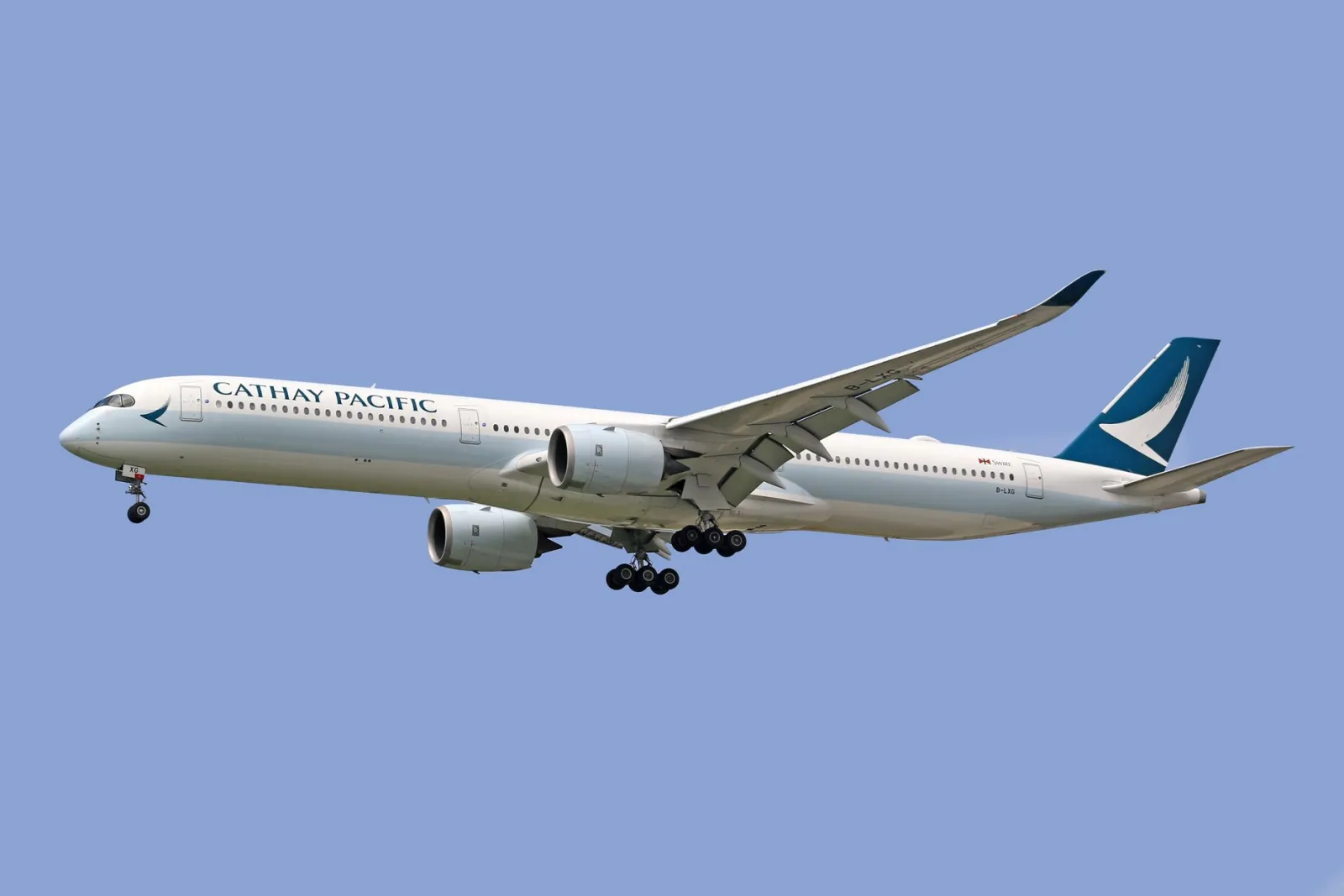
Cathay Pacific flies cats in the hold — as checked baggage on your own flight or as air cargo — never in the cabin. What decides whether the trip goes smoothly is paperwork, booking timing and crate preparation, not the aircraft. Get those three right and a long-haul move becomes a manageable logistics problem.
Most cat owners meet this question at the worst possible moment. The move is confirmed, the seats are being booked, and someone mentions that the cat cannot travel under the seat in front of you. The good news: the process is predictable. It runs on a fixed order — destination rules first, then the animal’s documents, then the airline booking, then the crate. Reverse that order and you end up rebooking flights you have already paid for.
Contents
- Does Cathay Pacific allow cats in the cabin?
- What paperwork does a cat need before the flight?
- How do you book a cat onto a Cathay Pacific flight?
- What happens on the day of travel, step by step?
- How do you prepare a cat for a long-haul flight?
- How do you handle a multi-cat household when only one cat flies?
- What are the biggest risks — and how do you reduce them?
- FAQ
Does Cathay Pacific allow cats in the cabin?

No. On Cathay Pacific, cats travel in the temperature-controlled hold, either as checked baggage accompanying a passenger or as manifested air cargo.
The cabin is reserved for assistance dogs, so the real decision is between two hold options — and they behave very differently in practice. Checked baggage means the cat flies on your flight, is booked through passenger reservations, and is collected at the oversize or special baggage area after you land. Air cargo means a separate air waybill, a drop-off at a cargo terminal several hours before departure, and a collection at the destination cargo facility that can happen well after you have cleared immigration.
Neither option is “better”. Checked baggage keeps the cat on your itinerary and simplifies the handover. Cargo is often the only route when you are not flying yourself, when the route does not accept animals as baggage, or when you are sending a cat ahead with a relocation service.
| Option | Where the cat travels | Who handles the booking | Where you collect |
|---|---|---|---|
| In-cabin (not offered here) | Under the seat | Passenger reservations | At the gate with you |
| Checked baggage | Hold, same flight as you | Passenger reservations | Oversize / special baggage belt |
| Air cargo | Hold, separate air waybill | Cargo team or agent | Cargo terminal, later in the day |
A concrete case: a couple relocating from Vancouver to Hong Kong assume their cat will fly as baggage because they are on the same plane. Two weeks before departure they learn that on their travel date the cargo route is the only one with space, and the cargo drop-off window closes long before their own check-in opens. The trip still works — a friend drives the cat to the terminal, they collect it on arrival — but only because they found out early enough to reorganise the day.
What paperwork does a cat need before the flight?
Four documents decide whether your cat boards: proof of microchip, a valid rabies vaccination, an export health certificate issued close to departure, and the destination’s import permit or veterinary certificate.
Sequence matters far more than most people expect. The microchip goes in before the rabies vaccine. Several destinations will not recognise a vaccination given to an unchipped animal, and the remedy is to redo the vaccine and wait out the interval again — weeks lost for a five-minute procedure. That single ordering error has derailed more relocations than any cancelled flight.
Here is how it looks when it goes wrong. A cat is vaccinated in March and microchipped in April, with travel planned for June. For that destination the March vaccination date is invalid, so the clock restarts and June is off the table. Same cat, chip first in March, vaccine a week later — June works without a single call to the airline.
Then comes the health certificate. A licensed vet issues it, usually within a short window before departure, and many countries require it to be endorsed afterwards by the national veterinary authority — a separate office visit or postal step with its own processing time. Book both appointments the moment your travel dates are fixed. Keep one paper set in the crate pouch, one in your hand luggage, and photographs of every page on your phone. Customs officers ask for originals; your phone is the backup, not the document.
How do you book a cat onto a Cathay Pacific flight?
Through the airline’s own reservations or cargo team — never through a third-party booking site — and as soon as your own travel dates are firm, because each aircraft has a limited number of animal positions.
Those positions are counted per aircraft type, not per cabin, and they fill up independently of passenger seats. A flight can show plenty of empty seats and still be closed to animals. This is why the airline’s own staff need to be on the phone: they can see animal capacity, embargoes on specific routes, and whether the aircraft scheduled for your connection actually accepts livestock in the hold.
Have these details ready before you dial: the cat’s age and weight, crate dimensions, whether the cat travels as baggage or cargo, your flight numbers, and the destination. If your itinerary involves a connection, ask explicitly whether the animal stays on the same through-flight or must be handled at the transit point — a change of aircraft can change the answer.
Example: a household moving two cats to Australia calls once, books both animals onto the same flight, and is told there is one position left on their preferred date. Splitting the cats across two consecutive days is unpleasant but workable; discovering it at the airport is not. Ask “how many positions are open on this flight?” rather than “can I bring my cat?”
What happens on the day of travel, step by step?
Travel day is a chain of handovers. Knowing the sequence removes most of the anxiety — for you and, indirectly, for the cat.
- Final check at home. Crate secured, door latched with a cable tie, labels with your name, phone number and destination attached to two sides. No food for several hours before departure; water available up to the handover.
- Arrival at the airport. Baggage bookings are processed at the passenger check-in counters, usually with extra time required. Cargo bookings go to a separate terminal, often with a drop-off window that closes hours earlier.
- Acceptance check. Staff verify the crate, the documents and the animal’s condition. A cat that looks unwell or a crate that fails inspection can be refused — this is the moment when preparation pays off.
- Security screening. The crate usually passes through screening with the cat inside, or the cat is briefly removed while the crate is scanned. Ask at check-in what the local procedure is so you are not surprised.
- Loading and flight. The hold is pressurised and temperature-controlled, but the animal spends time on the tarmac during loading. This is where heat matters.
- Collection. Baggage animals arrive at the oversize area; cargo animals are collected at the cargo terminal, sometimes after a wait. Bring the documents, your ID, and a bowl of water.
A real friction point: tight connections. If your itinerary involves a transit stop and the connection is on a separate ticket, the cat may need to be collected, cleared and re-exported at the transit point rather than transferred automatically. Build in a buffer of a full day before any onward commitment — a hire car, a lease signing, a ferry. One delayed leg should not cascade into an uncollected animal.
How do you prepare a cat for a long-haul flight?
Crate acclimation starts weeks before departure, not the night before — a cat that has slept in its travel crate for a month walks in voluntarily.
Leave the crate out, door removed or tied open, with bedding that smells of home and a meal inside. Feed near it, then in it. Add short car trips that end back at home, so the crate stops predicting a vet visit. By the final week the cat should be eating calmly inside with the door closed for a few minutes at a time.
Size matters more than most owners realise. The cat needs to stand upright, turn around and lie down stretched out. A crate that only allows curling up looks cosy and fails inspection. Line the floor with absorbent bedding, not loose shavings, and freeze a small water bowl so it melts slowly during the journey rather than spilling at takeoff.
Example: two cats from the same household, same flight. One has used its crate as a bed for six weeks and settles within minutes of the car starting. The other sees the crate for the first time on the morning of travel and pants, vocalises and claws for the entire drive. Same animals, same genetics — six weeks of preparation is the only difference.
On sedation: most veterinary guidance discourages it for air travel, because sedated animals cannot regulate their body temperature or right themselves in turbulence. Talk to your vet about the specific cat, but treat medication as a last resort and behavioural preparation as the primary tool.
How do you handle a multi-cat household when only one cat flies?
Plan the departure and the return as two separate events, and keep the stay-behind cats’ routine untouched through both.
On departure day, the house changes: one cat disappears into a car, a crate and a plane. The residents notice the absence and the altered routine more than they notice the flight. Keep feeding times, play sessions and litter locations exactly as they were, and give the remaining cats extra vertical space — shelves, cat trees, a quiet room they can retreat to. If a sitter is taking over, introduce them two or three days early so the disruption is not doubled.
The return is the trickier half. A cat that has spent fifteen hours in a hold comes home smelling of cargo, bedding and strangers. To the residents, that is a stranger. Expect hissing, hiding and a few days of tension. The fix is a slow reintroduction: separate room first, scent swapping with a cloth rubbed on each cat, brief supervised meetings, then full access. Rushing this step is how a peaceful household turns into a standoff.
Two practical rules. First, one cat per crate, always — two cats in one container is a welfare problem and usually a booking problem too. Second, do not fly two cats on the same day if you can avoid it. Staggering them by 24 hours means one human handles one animal, one set of documents, one collection.
What are the biggest risks — and how do you reduce them?
Heat embargoes, tight connections, paperwork errors and stress cover almost every failure mode, and all four are preventable with timing.
Heat. Airlines restrict animal transport when ground temperatures at either end are extreme, and a tarmac delay on a hot afternoon can push a flight into embargo at short notice. In summer months, choose the earliest departure of the day. It is cooler, delays compound less, and the animal spends less time in a loading vehicle.
Paperwork. The most common failure is a certificate issued too early, or an endorsement step skipped. Work backwards from your flight date and give each document its own deadline in a calendar.
Breed restrictions. Snub-nosed cats — Persians, Exotic Shorthairs, Himalayans and similar — face additional restrictions on many carriers because of breathing risk at altitude. Ask before you book, not after.
Example: an August departure from a hot city, booked as a late-afternoon flight. A mechanical delay pushes boarding back two hours, ground temperature climbs, and the animal is offloaded. Rebooked on the 6 a.m. service two days later, the same cat flies without incident. The variable was never the airline — it was the hour on the clock.
Finally, carry a backup plan. A phone number for a local pet boarding facility near the departure airport, a photocopy of every document, and a photo of the cat in its crate. If a flight cancels, you want options already in your pocket.
FAQ
Can two cats share one crate on a Cathay Pacific flight?
In practice, no. Air transport rules generally require one animal per container, even for littermates who sleep in a heap at home. Two cats means two crates and two animal positions on the flight — which also means checking capacity twice.
Should I sedate my cat for a long-haul flight?
Sedated animals cannot regulate body temperature or brace themselves in turbulence, and the effects wear off unpredictably at altitude. Discuss the specific cat with your vet, but invest the effort in crate training instead.
How far in advance should I book the cat?
As soon as your own dates are firm — weeks rather than days. Animal positions are limited per aircraft and fill independently of passenger seats. On popular long-haul routes in peak season, waiting can mean splitting the trip across two dates.
What if the flight is delayed or a connection is missed?
Go to the airline desk and ask specifically about the animal’s status, not just your own rebooking. If the cat is travelling as cargo, the cargo team handles rebooking and you may need to contact them separately. This is exactly why a full-day buffer at the destination is worth the inconvenience.
Is a cat too old or too young to fly?
Airlines set minimum ages, and very young kittens are usually excluded. Older cats can fly if they are healthy, but a vet check in the weeks before travel is the sensible gate — particularly for cats with heart or respiratory conditions.
The short version
Flying a cat on Cathay Pacific is a paperwork and logistics exercise, not a gamble. Confirm the destination’s import rules first, then the microchip and vaccination sequence, then the airline booking, then the crate. Work in that order and nothing gets redone.
For a multi-cat household, add two layers: stagger the animals across different days where possible, and treat the returning cat as a new introduction rather than a homecoming. The residents will need a few days to accept the smell before they accept the cat.
If you are at the start of the process, read up next on crate training for cats who hate carriers, introducing a cat to a resident household after time apart, and preparing a home for a move — the three skills that carry most of the weight once the flight is behind you.
Put it into practice : What to clean dog bowls with: what do you need to know?
Work out your own case in 30 seconds:
Methodology
This calculator produces an indicative estimate based on the parameters you enter. The ranges used reflect typical market tiers in the pets space and are neither a commercial offer nor a guarantee. Prices and availability may vary.
Read next :Rain Barrel Stand: How to Choose the Right One
Full guide :Pets
More from this guide :
Was this guide helpful?
Share your experience with the WiseHomeGuides community.