This article contains Amazon affiliate links. As an Amazon Associate we earn from qualifying purchases.
Short answer : The best fridge for 2025 is the one that matches your household’s storage habits, kitchen footprint, and energy priorities rather than the one with the longest feature list. Start by measuring the available space and confirming the door swing and clearance needed for drawers and shelves, then choose a configuration that suits how you shop and cook: a top-freezer model for straightforward value, a bottom-freezer for easier daily access, or a French-door or side-by-side layout for wider shelves and flexible organization. Capacity should reflect your typical weekly grocery volume plus a margin for entertaining and batch cooking. Look for adjustable shelving, humidity-controlled crisper drawers, and a temperature system that holds steady settings. Energy efficiency, noise level, and warranty terms matter as much as interior design, so compare those details before deciding.
In short
- Measure the alcove, doorway, and door-swing clearance before choosing any fridge size or layout.
- Match capacity to your weekly grocery volume, adding margin for batch cooking and guests.
- Top-freezer models suit tight budgets, while bottom-freezer and French-door layouts ease daily access.
- Prioritize adjustable shelves, humidity-controlled crispers, and stable temperature control over extras.
- Compare energy use, noise ratings, and warranty coverage alongside interior layout and finish.
Why the Right Fridge Matters for Your Household
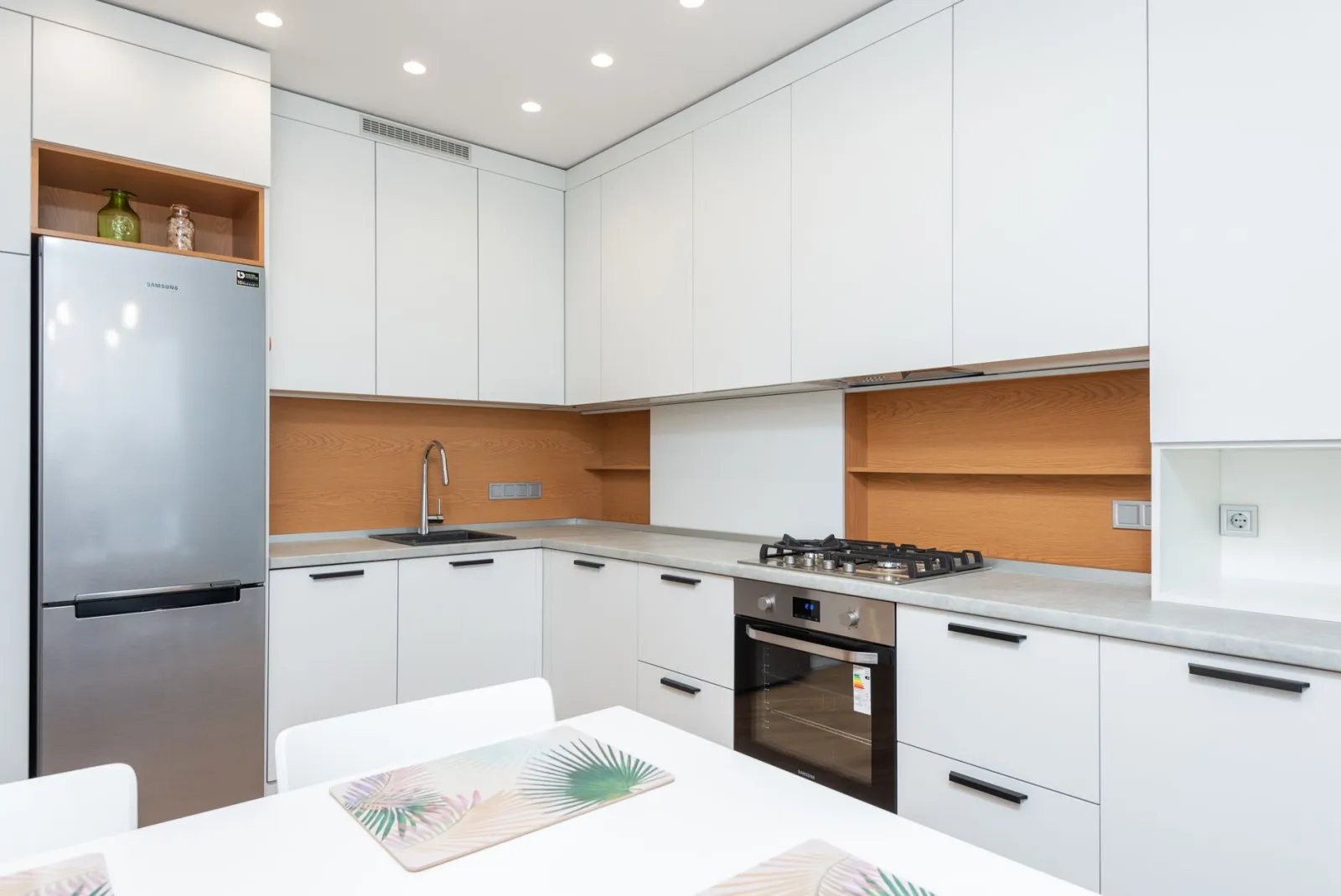
A fridge is one of the few appliances in a home that runs continuously, every hour of every day, for a decade or more. That constant operation is why the choice matters more than the purchase price alone suggests. The right fridge protects the food you have already paid for, reduces how often you throw groceries away, and fits the way your household actually shops, cooks, and stores food. The wrong one creates daily friction: shelves that don’t accommodate your containers, a freezer that fills up before the week is out, or a layout that forces you to crouch and dig for items that then get forgotten at the back.
Household size is the most practical starting point. A single person or a couple generally gets by with a compact model and a modest freezer compartment, while families with children typically need more fresh-food capacity and a freezer large enough for batch cooking, leftovers, and bulk purchases. Think about your weekly shop rather than an abstract number of litres: if you buy fresh produce several times a week, generous, adjustable shelving and clear drawers matter more than raw volume. If you shop less often and stock up, freezer space and consistent cooling become the priority.
How you cook and eat shapes the layout you need. Households that cook from scratch most days benefit from wide, flat shelves that hold large pots and platters, plus door bins deep enough for tall bottles and condiments. Homes where ready meals, drinks, and snacks dominate have different needs, with more flexible shelf positions and easy-to-reach compartments for frequently used items. Consider too who uses the fridge: children reaching for drinks and snacks need accessible lower shelves, while anyone who finds bending difficult will value drawers and bins placed higher up.
The way a fridge is organised directly affects food waste. When items are easy to see and reach, they get eaten before they spoil; when they are buried, they are forgotten and thrown out. Features that support visibility and airflow, such as transparent drawers, adjustable shelving, and sensible compartment sizes, help you keep track of what you have. Matching the interior to your habits is more useful than chasing the largest capacity available.
Finally, think about where the fridge will stand and how it will be used day to day. Measure the alcove, check door swing and clearance, and consider noise if the kitchen opens onto living space. A fridge that fits its spot, opens without blocking a walkway, and holds what your household actually buys will serve you far better than one chosen on size or styling alone.
How to Measure Your Space Before You Shop
Before you fall for a fridge’s finish or its interior layout, the tape measure has to come out. Most buying mistakes start with a unit that looks right in the showroom but won’t fit the opening, won’t clear the doorway, or can’t swing its door open against a wall. Measuring first turns a stressful purchase into a straightforward one, and it costs nothing but a few minutes.
Start with the cavity itself. Measure the width, height, and depth of the opening at its narrowest points, not at the widest, since baseboards, trim, and uneven walls can steal space. Height matters more than people expect: many modern fridges need clearance above for the door to tilt back during installation, and a unit pushed tight under a cabinet can be impossible to level or slide out later. Depth deserves equal attention, because a fridge that protrudes past the counter changes how the whole kitchen feels and can block a walkway. Note whether the opening sits against a side wall, since that limits how far the door can open.
Then measure the path from your front door to the kitchen. A fridge has to pass through doorways, hallways, stairwells, and around corners, and the tightest point on that route is what counts. Check doorway widths with the doors removed if needed, and look at ceiling height on stairs and landings. A large unit that fits the kitchen perfectly is useless if it can’t make the turn into the room. If the route is genuinely tight, a narrower or shallower model may be the only sensible choice.
Door swing is the next thing to plan. Measure the space in front of and beside the fridge, then think about how far each door opens and what it will hit. A door that opens against a wall or a cabinet run may only reach part of its arc, which makes drawers and bins hard to reach. For tight kitchens, a model with a reversible door or one designed to open flush against a wall solves the problem without shrinking your storage. Also account for the clearance needed to pull out drawers and bins fully once the doors are open.
Finally, leave room to breathe. Fridges need a little air circulation around the back and sides to run efficiently, and the amount varies by model, so check the manufacturer’s guidance rather than guessing. Confirm the floor can carry the weight of a loaded fridge, and check that a power outlet sits within reach of the cord without an extension lead stretched across the floor. Write every measurement down and take the numbers shopping with you; a fridge that fits the cavity, clears the doorway, and opens freely is the one worth buying.
Fridge Configurations Explained: Top Freezer, Bottom Freezer, French Door, and Side-by-Side
The configuration you choose shapes how you use the fridge every day, so it is worth understanding the trade-offs before you shop. The four main layouts each solve a different problem, and the right one depends on your kitchen footprint, how often you open the door, and how you organize food.
Top freezer models place the freezer compartment above the fresh-food section and remain the most space-efficient and affordable layout. Because the two sections share a single door opening, they tend to use less floor space for the volume they offer, which suits smaller kitchens and tighter budgets. The main drawback is ergonomics: you bend or reach for items, and the freezer sits at eye level where it is easy to overlook food. This layout works well for households that use the freezer lightly and prioritize value and a compact footprint.
Bottom freezer models flip that arrangement, putting the fresh food at eye level and the freezer below as a drawer or door. This is a practical choice for anyone who opens the fridge far more often than the freezer, since everyday items stay within easy reach. The freezer drawer pulls out rather than swinging, which can be convenient in a narrow galley. The trade-off is that deep freezer drawers require some digging, and the layout can cost more than a comparable top freezer.
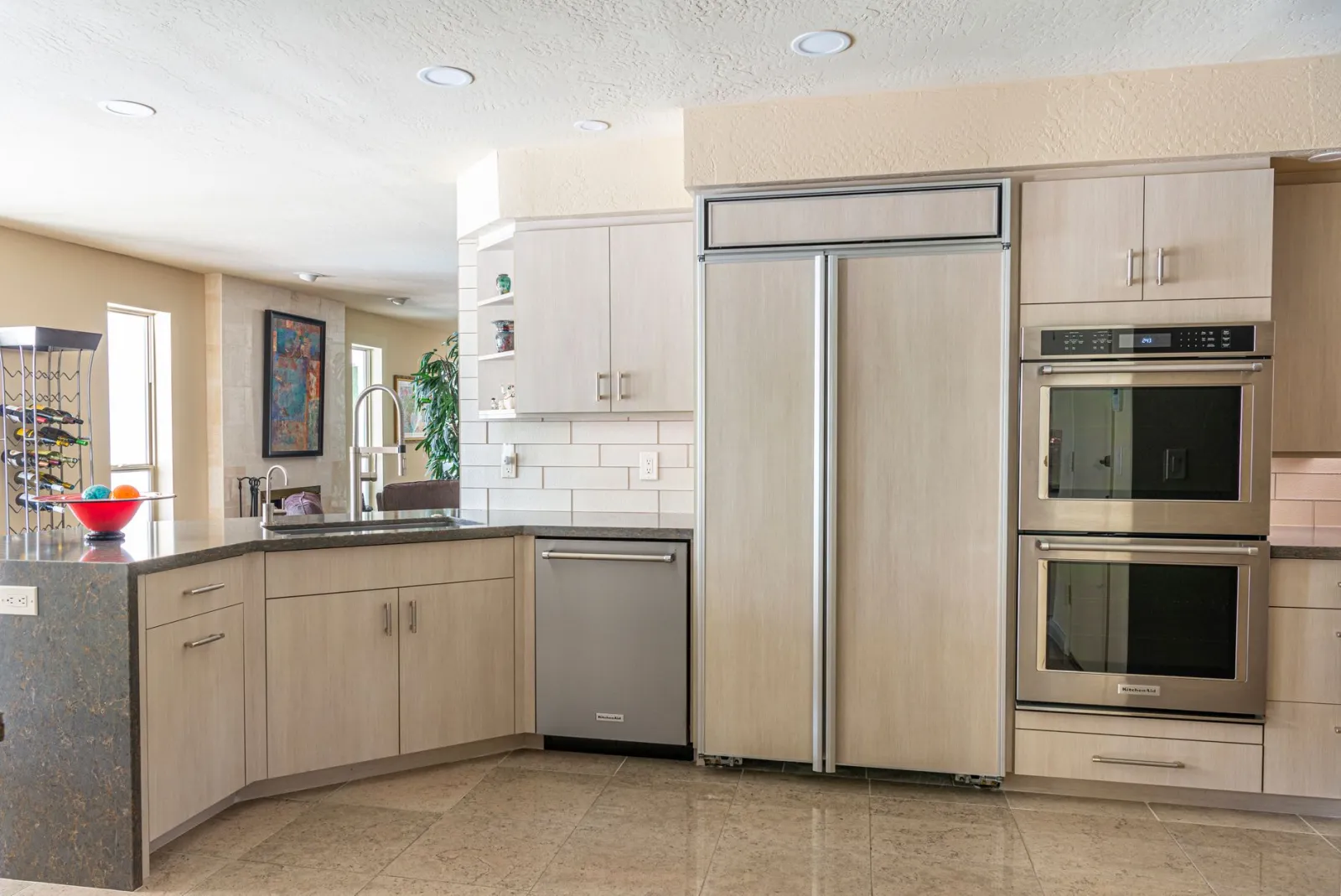
French door configurations pair a wide, side-by-side fresh-food section on top with a full-width freezer drawer below. The wide upper compartment accommodates large platters and wide items that would not fit in a narrow column, and the drawer keeps frozen goods organized and accessible. This layout suits families and anyone who cooks with bulky ingredients, though it generally occupies more width and commands a higher price than simpler designs.
Side-by-side models split the full height into two tall, narrow columns, one for fresh food and one for the freezer. They are a good fit for narrow kitchens where a wide swing door would be awkward, and they keep both fresh and frozen items at a consistent, reachable height. The compromise is width: neither column is very wide, so wide items like pizza boxes or large trays can be difficult to store, and the freezer column is tall but shallow.
As a rule of thumb, choose a top or bottom freezer for efficiency and value, a French door for wide-item flexibility and family use, and a side-by-side when kitchen width is the constraint.
Capacity Planning: Matching Litres to Your Family Size
Capacity planning is where most fridge purchases go wrong, because shoppers tend to buy by physical dimensions and finish rather than by usable volume. The first thing to understand is that the litre figure on a spec sheet describes the total interior volume, not the space you can actually fill. Shelving, door bins, drawers, the compressor housing and the gaps needed for cold air to circulate all consume part of that total. As a working rule, treat the advertised capacity as an upper limit and expect to use noticeably less of it once the fridge is loaded sensibly rather than packed tight.
For a single person or a couple, a compact to mid-sized fridge is usually sufficient, provided you shop fresh a few times a week. The constraint is less about volume than about shape: tall bottles, a few stacked containers and a freezer compartment for batch cooking all compete for the same space. Couples who cook most evenings, freeze leftovers and keep a stocked pantry of condiments tend to outgrow the smallest sizes quickly, and stepping up one capacity band often costs little more in floor space than the entry model.
Families with two adults and one or two young children sit in the middle of the range, where the practical questions become weekly shopping rhythm and freezer use. A household doing one large shop per week needs enough shelf depth for bulky items and a freezer that can hold a week of proteins and prepared meals without everything being wedged together. Households that shop several times a week can manage with less total volume but benefit from flexible shelving and a generous fresh-food section, since turnover is high and the fridge is rarely full.
Larger families, or households that regularly host, should plan around peak demand rather than average use. The test is not whether the fridge copes on a quiet Tuesday but whether it holds a week’s groceries plus a celebration meal’s worth of ingredients without blocking airflow. When a fridge is overfilled, cold air cannot circulate, cooling becomes uneven and the appliance works harder than it should. Leaving roughly a tenth of the space free as buffer is a sensible target, and buying a size up is usually wiser than buying a size down and adding an overflow freezer later.
Finally, match capacity to your storage habits, not just your headcount. Households that rely on batch cooking, buy in bulk or keep a deep pantry of drinks need more freezer and door-bin space than the raw litre figure suggests, while households that eat out often or shop daily can choose a smaller, better-organised unit. Measure the space you have, subtract for clearance and door swing, then choose the capacity band that leaves a genuine buffer at your busiest week.
Energy Efficiency and Running Costs to Consider
Energy efficiency is one of the few fridge specifications that keeps paying you back for as long as the appliance runs, so it deserves more attention than a quick glance at the label. A refrigerator runs continuously, cycling its compressor on and off day and night, which means small differences in efficiency compound over years. When comparing options, look at the energy consumption figure expressed in kilowatt-hours per year rather than relying on a vague efficiency rating alone, since the annual kWh figure lets you estimate running costs directly against your local electricity tariff. Two fridges of similar capacity can differ meaningfully in annual consumption, and that gap is what you are really choosing between.
The single biggest driver of real-world consumption is how well the appliance is insulated and how efficiently it manages temperature. Models with thicker, better-sealed insulation and improved door gaskets hold the cold more effectively, so the compressor runs less often. Frost-free and automatic-defrost systems add convenience but typically consume somewhat more energy than manual-defrost designs because of the heaters used during defrost cycles. Inverter or variable-speed compressors generally run more efficiently than older fixed-speed designs by matching output to demand instead of switching fully on and off. None of these features should be judged in isolation, but together they explain why two similarly sized fridges can land in different efficiency bands.
Your usage pattern matters as much as the appliance itself. A fridge that is opened frequently, packed too tightly to allow air circulation, or placed next to an oven, radiator, or in direct sunlight will work harder and consume more than its rated figure suggests. Setting the thermostat colder than necessary, or leaving the door ajar, quietly raises running costs. For a household of one or two people, a smaller, well-insulated model will usually cost less to run than a large multi-door appliance that is mostly empty; for a busy family that opens the door constantly, a model with strong insulation and an efficient compressor earns its keep.
When you weigh purchase price against running costs, think in terms of total cost of ownership over the appliance’s expected lifespan rather than the sticker price alone. A slightly higher upfront price for a more efficient unit can be recovered through lower electricity bills over several years, especially where electricity is expensive. Check the energy label’s annual consumption, compare it across the models on your shortlist, and factor in the size and features you actually need. Choosing the right capacity and avoiding features you will not use is often the simplest route to lower running costs.
Cooling Technology and Temperature Zones
Cooling technology determines how evenly a fridge holds temperature, how quickly it recovers after the door opens, and how well it protects food from drying out or freezing in the wrong place. The two dominant systems are static (direct cool) cooling and fan-assisted (no-frost) cooling. Static cooling relies on natural convection: cold air sinks from the evaporator and circulates slowly, which keeps moisture levels higher and suits drawers for produce, but it creates noticeable temperature differences between shelves and requires manual defrosting. Fan-assisted cooling moves air actively through the cavity, evening out temperatures and preventing frost buildup, at the cost of a drier environment that can pull moisture from uncovered food. For a household that opens the door frequently or lives in a warm climate, the faster recovery of a fan-assisted system is usually the more practical choice.
Temperature zones matter as much as the cooling method. A single-compartment fridge with one thermostat gives you one set point and a gradient around it, so the coldest spot sits near the evaporator and the warmest near the door. Multi-zone designs split the cabinet into independently controlled areas, typically a main fresh-food compartment, a colder zone for meat and fish, and a humidity-controlled drawer for fruit and vegetables. The practical benefit is that you can hold a cold zone near freezing for proteins while keeping the produce drawer a few degrees warmer and more humid, instead of compromising on a single average temperature for everything.
Dual cooling, where the fridge and freezer have separate evaporators and air circuits, is worth understanding if you store strong-smelling foods or bake often. Because the two compartments no longer share air, odours and moisture do not migrate between them, and the freezer stays drier, which reduces frost and stops the transfer of smells onto ice and frozen goods. In a single-circuit no-frost design, air is shared, so wrapping pungent items tightly becomes more important.
For everyday use, think about where you actually put food. Door shelves are the warmest and most temperature-variable spot, so they suit condiments, drinks and butter rather than milk or raw meat. The lower shelves and the zone above the crisper are typically the coldest, making them the right place for poultry, fish and leftovers. Humidity-controlled drawers should be set high for leafy greens and low for fruits that release ethylene. If your routine involves large weekly shops, a system with strong recovery and clearly separated zones will keep temperatures stable when the fridge is loaded and the door is opened repeatedly.
Smart Features Worth Paying For (and Ones to Skip)
Smart features in refrigerators tend to fall into two categories: those that solve a real problem in daily use, and those that exist mainly to justify a higher price tag. The most useful way to judge any connected feature is to ask whether it saves you time, money, or food waste during a normal week. If the answer is unclear, it is probably a feature you can live without. A fridge’s core job is keeping food cold and stable, and no app changes that.
Features that tend to earn their cost are the ones tied directly to temperature management and energy use. Compressor and inverter technology that adjusts cooling output to actual demand helps hold temperatures steady and reduces the cycling that wears food down; this matters most in households that open the door frequently or live in warm climates. Independent cooling circuits for the fridge and freezer compartments are genuinely valuable, because they prevent odors migrating between sections and keep freezer air drier. Door alarms and open-door alerts are simple but effective, particularly in busy homes where a door left ajar can quietly spoil a whole shelf. Energy-monitoring readouts, where the appliance reports its own consumption, are useful for households watching running costs, though the benefit is informational rather than transformative.
Some smart features are worth having only if they match how you actually shop and cook. Camera-based interior views that let you check contents from your phone can reduce duplicate purchases and last-minute trips, but only for people who genuinely plan meals around what is already at home. Wi-Fi diagnostics that let a technician assess a fault remotely can shorten repair visits and are a reasonable convenience. Ice and water dispensers with filtration appeal to households that drink a lot of chilled water, though they add components that need periodic filter changes and cleaning.
Features to approach with skepticism are those that duplicate what a phone already does well, such as built-in screens for recipes, shopping lists, or streaming. They add cost, introduce another device that can fail or become outdated, and rarely change behavior. Voice assistants built into the door fall into the same category: convenient in principle, seldom used in practice. Likewise, features that require a subscription or an account to unlock basic functions deserve scrutiny, since the appliance may outlive the service.
A practical rule is to prioritize features that operate automatically and invisibly, then treat connectivity as optional. Temperature stability, separate cooling circuits, and reliable door sealing do more for food quality than any screen. Before paying for smart capability, confirm the basics are strong: consistent temperatures, sensible layout, and a warranty that covers the electronics as well as the compressor.
Frost-Free vs. Manual Defrost: What to Expect
Frost-free and manual defrost refrigerators handle ice buildup in fundamentally different ways, and the choice affects how much maintenance you take on. A frost-free model circulates cold air through the compartment and runs a periodic heating cycle to melt any frost that forms on the evaporator, so ice never accumulates visibly inside the cabinet. A manual defrost model has no such cycle: moisture from food and from the air condenses and freezes directly on the evaporator surfaces, and you remove that ice yourself. Understanding this distinction matters most in the freezer compartment, where the difference is felt week to week.
With a frost-free design, the practical benefit is that you never schedule a defrosting day. Food doesn’t get glued to the walls, packages stay easy to slide out, and the freezer keeps usable capacity because ice isn’t eating into the space. The trade-offs are real, though. The fan and heater cycle uses more energy than a simple manual system, the moving air can dry out unwrapped food faster, and the fan adds a background sound you’ll notice in a quiet kitchen. The air circulation also tends to create slightly more even temperatures throughout the compartment, which helps when the freezer is packed full.
A manual defrost model asks more of you but rewards that effort in a few concrete ways. Because there’s no fan and no defrost heater, these units typically run quieter and use less electricity, and the still, humid air is gentler on foods that suffer from drying, such as ice cream, bread, and meat stored for longer periods. The catch is the ice itself. Frost builds up gradually, and once the layer on the evaporator gets thick, the appliance has to work harder to stay cold and loses usable space. You’ll need to empty the compartment, let the ice melt, and dry it out before reloading, which is a task best planned for a day when the freezer is already low.
The right choice comes down to how you use the appliance. If you want set-and-forget convenience, keep the freezer well stocked, and don’t mind a bit of fan noise, frost-free is the easier ownership experience. If the refrigerator is a secondary unit, sits in a garage or quiet space, or you mainly chill drinks and short-term items, a manual defrost model can be the simpler, more frugal option, provided you’re willing to defrost it on a regular schedule before the ice gets thick. Either way, the habit that protects performance is the same: keep food covered to limit moisture, leave a little breathing room around packages, and check the freezer walls periodically so small frost never becomes a big job.
Noise Levels and Open-Plan Kitchen Living
Noise is one of the most overlooked specifications when choosing a fridge, yet it matters most in exactly the layouts where the appliance is hardest to hide. In an open-plan kitchen that flows into a dining area or living room, the fridge runs around the clock, and its compressor, fans, and defrost cycles become part of the background of daily life. A unit that seems quiet in a showroom can feel intrusive at night when the house is still, so it is worth treating sound as a genuine selection criterion rather than an afterthought.
Manufacturers usually publish a noise figure in decibels, and the relative differences are meaningful even without precise measurement. Models marketed as quiet tend to sit in the lower range of what is commonly available, while standard units run noticeably louder, and older or budget appliances can be louder still. Rather than chasing an exact number, use the published figure to compare candidates against each other: a fridge rated clearly below the typical mid-range will be perceptibly calmer in a living space, especially when the kitchen sits close to seating or sleeping areas.
The character of the sound matters as much as its level. Compressor hum is steady and easy to tune out, but cycling on and off, fan noise, and the gurgle of refrigerant moving through the system are more noticeable because they change. Frost-free models periodically run a defrost cycle that can be briefly louder than normal operation, and some units produce audible clicks or drips. In an open-plan room, intermittent sounds draw attention far more than a constant low background level, so consider how a fridge behaves across its full cycle, not just at its quietest moment.
Placement and installation strongly influence what you actually hear. A fridge set into cabinetry with proper clearance for ventilation tends to run more smoothly, while a tightly enclosed unit works harder and transmits vibration into surrounding surfaces. Keeping the appliance away from shared walls with a bedroom or a favourite reading spot, and ensuring it stands level on a solid floor, reduces both mechanical noise and the rattles that come from an unbalanced cabinet. Hard flooring and bare walls reflect sound, whereas rugs, soft furnishings, and full cabinets absorb it, so the same fridge can seem quieter in a furnished room than in an empty one.
For open-plan living, match the fridge to how close it sits to the spaces you use most. If the kitchen island doubles as a workspace or the sofa faces the appliance, prioritise a model with a low published noise rating and steady rather than cyclical operation. Where the fridge is tucked into an alcove or separated by a half-wall, a standard unit is usually fine. Reading the noise figure alongside capacity and layout, and thinking about where the fridge will actually stand, keeps the choice grounded in the room it will live in.
Installation, Delivery, and Long-Term Maintenance Tips
Before your fridge arrives, confirm the delivery path is actually viable. Measure every doorway, stairwell turn, and hallway corner along the route to the final location, then compare those clearances against the fridge’s dimensions with the doors removed and the handles off. A fridge that fits the kitchen alcove but cannot clear a tight stair landing is a common and expensive problem. Check that the chosen spot has a dedicated grounded outlet within reach of the cord, and leave a small gap on the sides, top, and back for airflow, since fridges that run cramped work harder and wear out sooner. If the unit will sit on a floor that can flex or slope, plan to level it precisely; an unlevel fridge lets the doors drift shut or hang open and stresses the compressor over time.
On delivery day, inspect the exterior for dents, scratches, and bent hinges before signing anything, and photograph any damage while the driver is still present. Ask whether the retailer offers placement and haul-away of your old unit, since moving a heavy fridge yourself risks injury and floor damage. Once positioned, resist the urge to plug it in immediately. If the fridge was laid flat during transport, let it stand upright for several hours so the compressor oil settles back into place before you power it on. Then let it run empty until it reaches temperature before loading food, which gives you a chance to confirm the doors seal properly and the interior cools evenly.
Placement matters as much as installation. Keep the fridge out of direct sunlight and away from ovens, radiators, and dishwashers, because external heat forces the compressor to work harder. In an open-plan kitchen, a fridge tucked beside a heat source will cycle more often and use more energy than one with breathing room. If your model has a water line for an ice maker or dispenser, have the connection made by someone competent with plumbing, and check for slow leaks in the days after installation rather than assuming a dry floor means a sound connection.
Long-term maintenance is mostly small, regular habits. Clean the door gaskets every few months with mild soapy water and check they grip a sheet of paper firmly all the way around; a worn seal lets cold air escape and drives up running costs. Vacuum or brush the condenser coils, usually at the back or beneath a front grille, a couple of times a year, and more often in homes with pets or dusty air. Keep the interior organized so air can circulate, wipe up spills promptly, and replace water filters on the schedule your model specifies. Finally, listen to your fridge: new rattles, a compressor that runs almost constantly, or unexpected pooling water are early signals worth acting on before they become repairs.
Frequently asked questions
What size fridge do I need for a family of four?
For a family of four, look for a total capacity of roughly the mid-to-high twenties in cubic feet, though the right figure depends on how often you shop and whether you cook most meals at home. Fridge capacity, not just total volume, matters because freezer space is often wasted. Measure your available opening first, including door swing and clearance for handles, then match capacity to your space rather than chasing the largest unit.
Is a French door fridge better than a side-by-side model?
Neither is universally better; the choice depends on your kitchen layout and how you use the fridge. French door models put a wide, full-width shelf at eye level, which suits wide items like platters and pizza boxes, and the bottom freezer drawer is easy to reach. Side-by-side models give narrow doors that work well in tight spaces but split shelves into two narrow columns, limiting what fits.
How much does it cost to run a fridge each year?
Running costs vary widely with the model’s energy rating, its size, your local electricity tariff and how often the door is opened. Rather than relying on a single figure, compare the annual energy consumption printed on the appliance’s energy label and multiply it by your electricity price per unit. A more efficient model usually costs more upfront but narrows that gap over its lifetime.
Do I need a plumbed water dispenser in my fridge?
You only need a plumbed dispenser if you want chilled water and ice on demand without refilling anything. It requires a water line near the fridge, which can mean extra installation work and a filter that needs periodic replacement. If plumbing is awkward or you rarely use ice, a fridge without a dispenser is simpler, cheaper to buy and has fewer parts to fail.
How often should I clean the condenser coils?
Clean the condenser coils at least once or twice a year, and more often if you have pets or a dusty home. Dusty coils make the compressor work harder, which wastes energy and shortens the appliance’s life. Unplug the fridge, then vacuum or brush the coils, which are usually behind a grille at the base or on the back. Keep the surrounding area clear for airflow.
Can I install a fridge in a garage or unheated room?
Only if the fridge is rated for it. Standard fridges are designed for a specific ambient temperature range, and in a cold garage the compressor may struggle to run, causing poor cooling or freezer thawing. Check the climate class on the rating plate and confirm the manufacturer allows garage use. If not, choose a model explicitly rated for outbuildings or keep the fridge indoors.
What is the difference between frost-free and manual defrost?
A frost-free fridge circulates air to prevent ice building up, so you never have to defrost it manually, though it can dry out some foods and uses slightly more energy. A manual defrost model builds ice on the inner walls over time and must be switched off and cleared periodically. Manual models are simpler and often cheaper, but they demand regular attention to stay efficient.
How long should a new fridge last before replacement?
Most fridges are built to last well over a decade with proper care, though actual lifespan depends on usage, ventilation and maintenance. Keeping coils clean, leaving space around the unit for airflow and not overloading it all help extend its life. Replace it when repairs become frequent, parts are unavailable or energy use climbs noticeably rather than at a fixed age.
Read next :Best Cat Breeds for Your Home: A Practical Guide for Pet Owners · Solar Panels for Campervan: Complete Buyer’s Guide · DIY Kitchens UK: A Practical Planning Guide · Best Dog Tracker: How to Choose the Right GPS Collar · What Dog Breed Is Best for Me? A Guide for Your Home and Lifestyle
Work out your own case in 30 seconds:
Methodology
This calculator produces an indicative estimate based on the parameters you enter. The ranges used reflect typical market tiers in the space and are neither a commercial offer nor a guarantee. Prices and availability may vary.
Read next :Best Lawn Mower Robot: A Complete Buying Guide for Homeowners
Full guide :Appliances
More from this guide :
Was this guide helpful?
Share your experience with the WiseHomeGuides community.