This article contains Amazon affiliate links. As an Amazon Associate we earn from qualifying purchases.
In short :
- For a lawn under 400 m², go for a corded electric rotary mower with a metal deck and a brushless motor.
- Got a bigger lawn?
- Pick a petrol or cordless model with a metal deck and a well-supported engine.
- Reliability comes down to three things: the deck material, the motor type, and whether you can still buy spare parts.
- Steel decks hold up to knocks but rust if you leave grass on them, while polymer decks never rust but can crack in the cold.
- Before you buy anything, check that blades and belts are sold separately and that you can change them yourself.
What is the most reliable lawn mower in the UK?
The most reliable lawn mower in the UK is a corded electric rotary mower with a metal deck and a brushless motor, used on a lawn under 400 m². For larger lawns, a petrol or cordless mower with a metal deck and a well-supported engine is the more dependable choice. Reliability comes from the deck material, the motor type, and spare-part availability — not from the badge on the front.
Reliability is often confused with power or with a long warranty. In practice, a mower that starts every Saturday for a decade shares a handful of unglamorous traits: a deck that does not flex, a motor that runs cool, and parts you can still buy five years later. This guide focuses on those traits so you can judge any mower on the shelf, whatever the season and whatever your lawn looks like.
What actually makes a lawn mower reliable?
A reliable mower is one whose weakest component is easy and cheap to replace. That single principle explains most long-term ownership stories.
Start with the deck. Steel decks resist impact and hold their shape, but they rust if grass is left on them. Plastic and polymer decks never rust, yet they can crack in cold weather or after a hard knock against a stone. For a small, flat lawn, a polymer deck is perfectly serviceable. For rough ground, uneven borders, or a mower shared between households, steel is the sturdier bet.
Then look at the motor. Brushless electric motors have fewer wearing parts than brushed ones, run cooler, and typically outlast them. On petrol machines, the engine’s reputation for cold-starting is the real reliability test — a mower that needs ten pulls in March will keep needing them.
Finally, check the consumables: blades, belts, cables, and wheels. A mower whose blade you can swap with two bolts is a mower you will actually maintain. One that requires a dealer visit for a blade change quietly becomes unreliable, because it stops being serviced.
A concrete case: a household with a 250 m² lawn and two mature trees will hit sticks and cones every season. A steel-deck mower with a bolt-on blade survives that routine; a lightweight plastic-deck model with a pressed-in blade assembly often does not.
Which mower type suits which lawn?
Match the mower to the lawn’s size, shape, and obstacles, and reliability follows almost automatically.
| Lawn situation | Mower type to favour | Why it holds up |
|---|---|---|
| Small, flat lawn under 200 m² | Corded electric rotary | Few parts, no battery to age, simple motor |
| Medium lawn, borders and shrubs | Cordless rotary | No cable to cut, battery shared with other tools |
| Large or rough lawn over 500 m² | Petrol rotary | Sustained power, robust deck, serviceable engine |
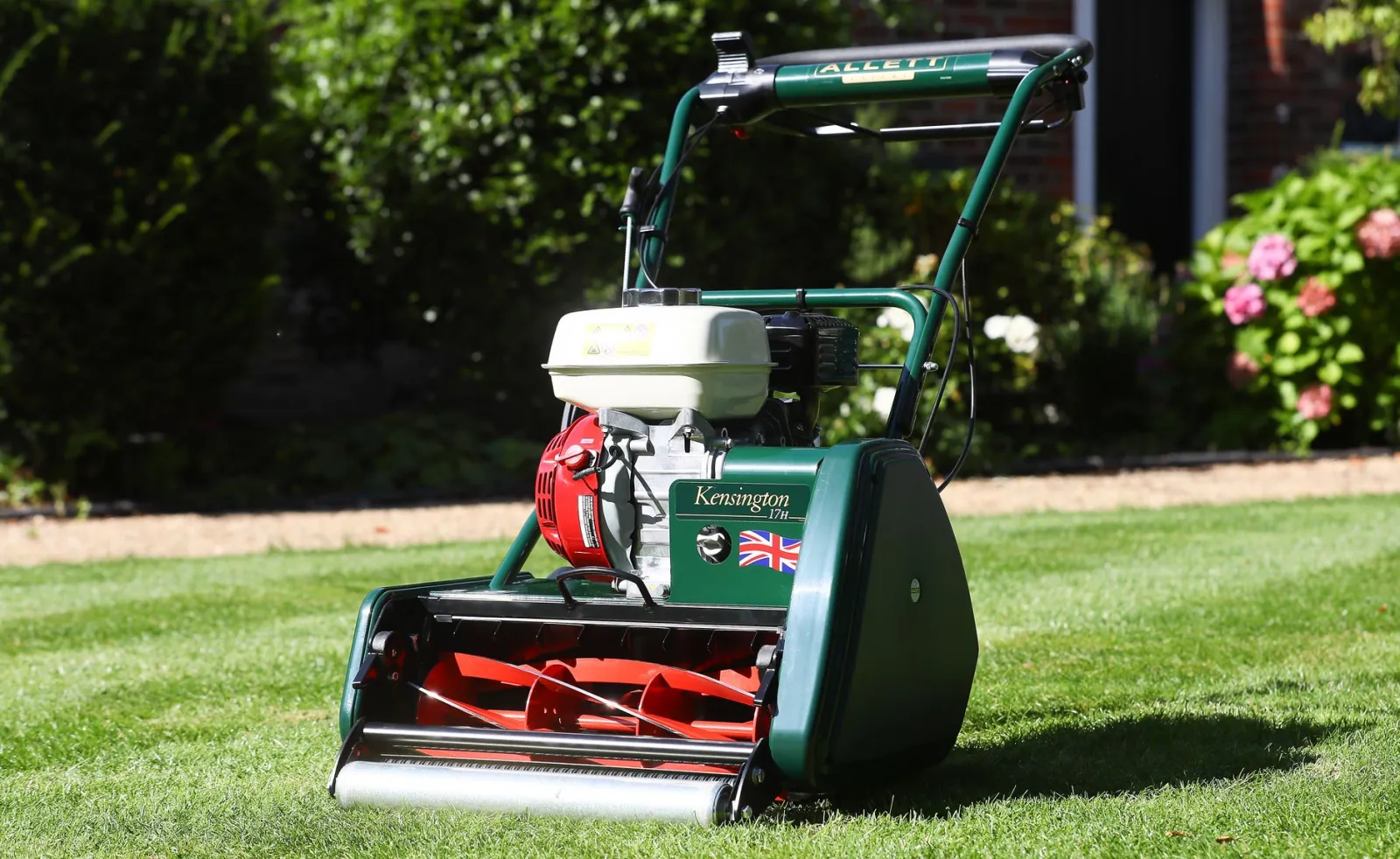
| Formal lawn cut short | Cylinder (roller) mower | Mechanical simplicity, few electronics |
| Steep or irregular ground | Self-propelled rotary | Drive system reduces strain and stalling |
Be honest about the cable. A corded mower is the most mechanically simple option and therefore among the most reliable, but only if your lawn has no island beds and no cable-crossing paths. If you spend more time moving the cable than mowing, you will mow less often — and a neglected mower is an unreliable one.
Cordless mowers trade one risk for another: no cable, but batteries age. A battery kept charged through winter and stored indoors will serve for years; one left flat in a cold shed will not. If you already own compatible batteries for other garden tools, a bare cordless mower is often the most dependable value per season.
How do you check reliability before buying?
You can assess most of a mower’s reliability in the shop or from the specification sheet, in about ten minutes.
- Weigh it. A deck that feels flimsy underfoot will flex over time. Lift the mower by the handle — flex means thin material.
- Look for exposed bolts on the blade housing. Serviceable blades are bolted, not riveted.
- Check the wheels. Solid wheels with proper bearings outlast push-fit plastic wheels, especially on gravel edges.
- Ask about spare parts. Blades, belts, and cables should be orderable as separate items. If they are not, walk away.
- Read the manual’s maintenance section. A manual that lists oil changes, blade sharpening, and storage steps signals a machine designed to be kept.
A practical observation: the most common cause of a mower failing to start in spring is stale fuel or a flat battery, not a broken engine. Any mower you can easily drain and store dry scores higher on real-world reliability than one that hides its fuel system behind panels.
Frequently asked questions
What is the most reliable lawn mower in the UK?
For most UK gardens, a corded electric rotary mower with a metal deck and a brushless motor is the most reliable choice, because it has the fewest wearing parts and no battery to degrade. On larger or uneven lawns, a petrol or cordless mower with a steel deck and available spare parts is more dependable in practice.
Which brand of lawn mower is the most reliable?
No single brand is universally most reliable; reliability tracks the model’s design and the availability of spare parts more than the logo. Judge any brand by three things: whether blades and belts are sold separately, whether the deck is steel or polymer, and whether the motor is brushless. A well-supported mid-range model usually outlasts a feature-heavy one with hard-to-find parts.
What are the top 10 lawn mower brands?
Brand rankings shift yearly and vary by country, so a fixed top ten is misleading. Instead, shortlist by type: corded electric, cordless, petrol, and cylinder. Within each type, compare deck material, motor type, wheel quality, and spare-part availability. That shortlist will serve you better than any league table.
What is the best value for money lawn mower?
The best value is the mower with the lowest cost per season, not the lowest purchase price. A simple corded mower with a steel deck and bolted blade often wins: it costs little to run, needs no fuel or batteries, and a replacement blade is a small annual expense. Add up blade, belt, and battery costs over five years before deciding.
The bottom line
The most reliable lawn mower is the one matched to your lawn and built to be serviced: a steel or well-made polymer deck, a brushless or proven engine, and blades you can change yourself. Check those three points before anything else, and you will avoid most breakdowns. For a full breakdown of mower types, maintenance routines, and seasonal care, see the complete lawn mower buying guide on WiseHomeGuides.
To make your choice concrete : Lawn mower: best picks for tight corners
Was this guide helpful?
Share your experience with the WiseHomeGuides community.