In short :
- Measure your room and the delivery route first, before you fall for any sofa.
- Then sit and test the seat depth and height against your own body.
- Match the frame and cushion materials to how your household really uses the room.
- For pets or kids, a tight-weave fabric with removable covers is the more forgiving choice.
- Do it in that order and your sofa will fit your space, your posture, and your daily life.
To choose the right sofa, match four things to your daily life: the seat depth and height to your body, the frame and cushion materials to how the room is used, the dimensions to your actual floor plan (measured with doorways included), and the cover fabric to your household. A sofa that fits your posture and your space will outlast one chosen on looks alone.
Most sofa mistakes happen before you ever sit down. Someone falls for a shape in a photo, orders it, and discovers the seat is too deep for their height or the arms won’t clear the doorway. The fix is unglamorous but reliable: measure first, sit second, and judge materials third. Below is how to do each step in the right order.
How do you measure a room and a doorway before buying a sofa?
You measure the floor plan first, then the delivery path, then the sofa itself — in that order — because a sofa that fits the wall but not the stairwell is a sofa you can’t have.
Start with a simple paper plan of the room. Mark doors, radiators, power outlets, and the walking routes people actually use. Then place a rectangle of tape on the floor at the sofa’s intended footprint. Live with that tape for a day or two. You’ll quickly notice if it blocks the path to the window or crowds the coffee table.
Leave breathing room. A sofa pushed hard against a wall or a radiator looks cramped and can damage the fabric over time from heat. Aim for a gap of a few centimetres behind and beside it, and check that the front legs don’t sit on a floor vent.
Then walk the delivery route with a tape measure in hand: front door, hallway corners, stair turns, lift dimensions, and the final doorway. A helpful trick is to cut a cardboard template at the sofa’s height and width and carry it along the same path. If the template clears every turn, the sofa will too. Remember that many sofas arrive with legs detached or in two sections — ask about that, because it changes what fits.
Example: a narrow Victorian hallway with a tight 90-degree turn is the classic blocker. A long three-seater that’s fine on the floor plan can be impossible to pivot there, while a two-seater with removable arms goes in without drama.
How do you judge seat depth and height for your body?
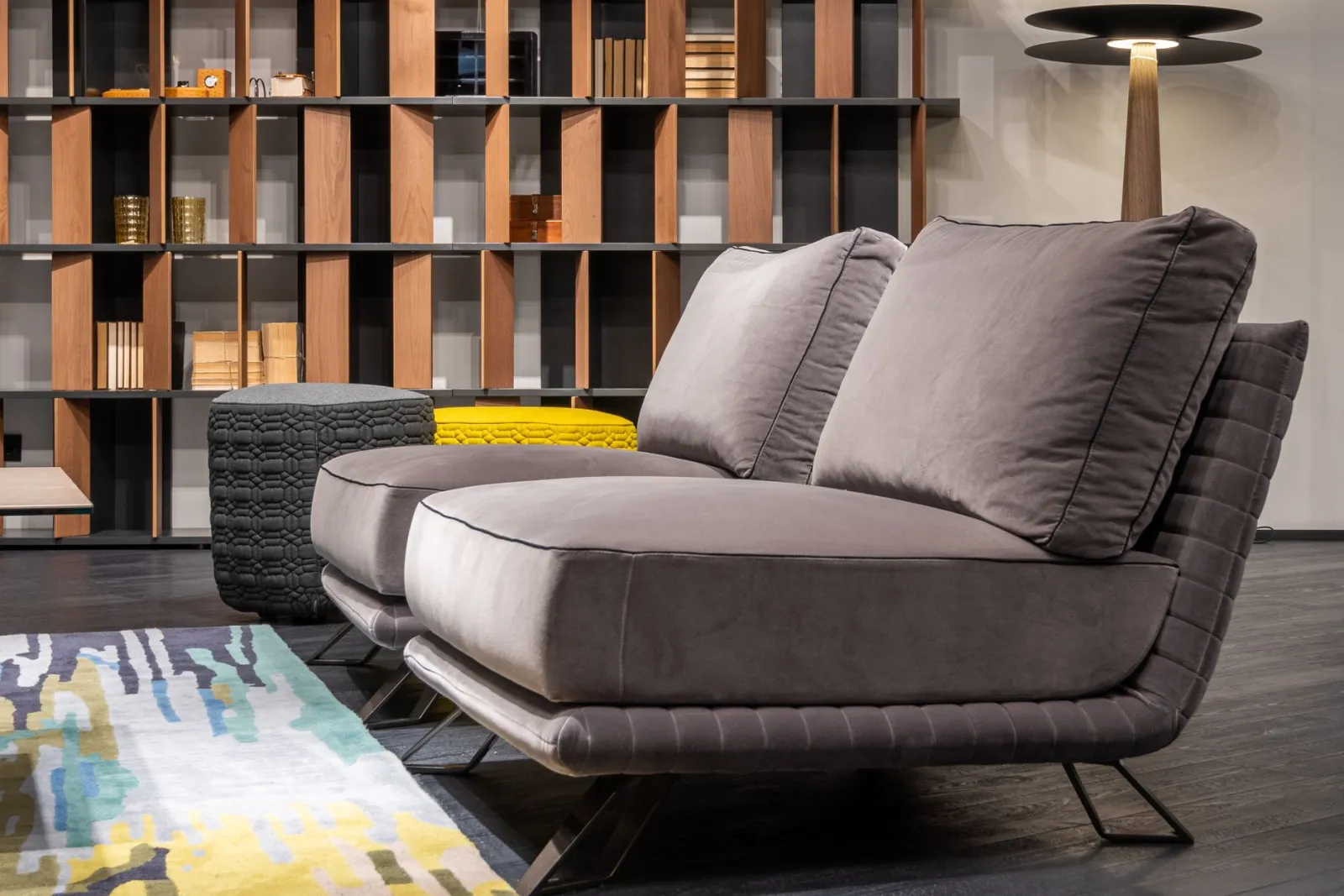
You judge seat depth by sitting with your back against the backrest: your feet should rest flat on the floor and the seat edge should leave a small gap behind your knees, roughly a hand’s width.
Seat depth is the single most personal number on a sofa. Deep seats invite lounging but leave shorter sitters perched forward with unsupported backs. Shallow seats feel upright and formal but cramped for tall people. The test is simple: sit down, press your back to the cushions, and look at where your knees land. If the seat edge digs into the back of your knees, it’s too deep. If there’s a big empty gap, it’s too shallow for comfortable lounging.
Seat height matters just as much, especially for anyone with knee or hip concerns. A seat that’s too low is hard to rise from; one that’s too high leaves feet dangling. Sit and check that your thighs are roughly level and your feet touch the floor.
Don’t forget the arms and back. Low arms make a sofa feel bigger and let you lean sideways; high arms feel cosier but limit how many people can sprawl. A low back looks elegant but offers less neck support for long evenings.
Example: a tall reader loves a deep, low-slung sofa; a shorter partner finds it uncomfortable after twenty minutes. Testing together, back against the cushion, feet on the floor, settles the disagreement faster than any photo.
Which frame and cushion materials suit your household?
You match materials to use: solid hardwood frames and high-resilience foam for daily family use, softer feather-wrapped cushions for occasional lounging, and removable, washable covers for homes with pets or children.
Frames are the skeleton, and they’re rarely visible — so ask directly. Solid hardwood (beech, ash, oak) holds up far better than particleboard or softwood, and joints that are glued and screwed or dowelled outlast staples alone. A frame that flexes or creaks when you lean on one corner is a warning sign.
Cushions come in three broad families:
- Foam — firm, supportive, holds shape, good for everyday seating.
- Foam wrapped in feather or fibre — softer, more “sink-in,” needs regular plumping.
- Pure feather — very soft, needs frequent fluffing, less supportive for long sitting.
Suspension matters too: sinuous springs, pocket springs, or webbing each behave differently. Sit near the edge — if it collapses or feels hollow, the support underneath is weak.
Then think about who lives there. Children and pets mean removable, washable covers are worth their weight in calm. A sunny room fades fabrics fast, so ask how a cover handles light. And a sofa in a busy family room wants a tighter, denser weave than one in a quiet reading corner.
Example: a household with a dog and two young children will regret fixed, dry-clean-only covers within a month; the same sofa with zip-off, machine-washable covers survives muddy paws and juice spills.
How do you test a sofa before committing?
You test a sofa by sitting in it the way you actually live — for at least ten minutes, in your usual posture — and by checking the details that reveal build quality.
In a showroom, don’t perch politely for thirty seconds. Sit back, cross your legs, lie down if you can, and imagine your real evenings: reading, watching, napping. Ten uninterrupted minutes tells you more than any label.
Then run a quick quality checklist:
- Lift one corner — does the frame feel solid, or does it twist?
- Press the seat cushions — do they spring back, or stay dented?
- Check the seams and stitching — even, tight, no loose threads.
- Look underneath — dust covers, leg fixings, and frame joints should look tidy.
- Ask what’s included — delivery, assembly, and whether covers are replaceable.
Example: a sofa that feels wonderful for a minute but leaves you shifting after five is telling you the seat depth or firmness is wrong for your body — trust the discomfort, not the first impression.
Quick comparison: matching sofa type to lifestyle
| Household situation | What to prioritise | What to avoid |
|---|---|---|
| Young children | Washable, removable covers; firm foam; tight weave | Fixed pale fabrics; loose feather cushions |
| Pets | Dense, scratch-resistant weave; removable covers | Delicate textures; fixed upholstery |
| Small room | Compact two-seater; low arms; light colours | Oversized deep seats; bulky high arms |
| Daily lounging | Medium depth; high-resilience foam; supportive back | Very low backs; pure feather seats |
| Occasional formal use | Slim frame; elegant lines; fixed covers fine | Overly soft cushions that sag |
Frequently asked questions
How long should a sofa last, and what should I check to make it last?
A well-made sofa with a solid hardwood frame and quality foam can serve a household for many years, while a cheap particleboard build may sag within a few. The frame, the suspension, and the cushion density are the three things that decide longevity — check all three before buying, and rotate or plump cushions regularly to keep them even.
Should I choose fabric or leather?
Fabric is softer, warmer, and easier to re-cover; leather is durable, wipes clean, and ages with character but can feel cold and shows scratches differently. For homes with pets or children, a tight-weave fabric with removable covers is often the more forgiving choice; leather suits households that want low-maintenance cleaning.
How do I know if a sofa is the right size for my room?
Mark the footprint with tape and walk around it for a day. If you can move freely, reach the coffee table, and open nearby doors, the size works. As a rule of thumb, leave a comfortable walking gap around the sofa rather than filling the wall edge to edge.
The bottom line
Choosing the right sofa comes down to sequence: measure the room and the delivery route, sit and test seat depth and height against your own body, then match frame and cushion materials to how the room is really used. Do those three things in order and the sofa you bring home will fit your space, your posture, and your daily life — not just a photograph. For the bigger picture, including layout planning and long-term care, a more complete guide on choosing and living with a sofa is available on the site.
To choose the right model : Sofa Sizes: How to Choose the Right Dimensions
Was this guide helpful?
Share your experience with the WiseHomeGuides community.