This article contains Amazon affiliate links. As an Amazon Associate we earn from qualifying purchases.
In short :
- There’s no single best storage bed — it all comes down to your room layout.
- Drawer beds work great when both sides are accessible, since you get daily access without lifting anything.
- Ottoman beds win when space is tight or you need to stash bulky items like suitcases and spare bedding.
- Before anything else, check the walking space around your bed — a drawer bed needs roughly 40–60 cm of clear floor to open properly.
- Judge quality by the frame, runners and gas struts, not the finish, and only buy storage if you can name three things you’d actually put under the bed.
A storage bed combines a sleeping surface with built-in drawers or a lift-up base to free up floor space. The best type depends on your room: drawers suit bedside access and daily use, while an ottoman base holds bulkier items. Quality comes down to the frame material, the base mechanism and the joinery — not the finish.
What is the best type of storage bed?
There is no single best type — the right choice depends on where the bed sits in the room and what you need to store. Drawer beds win when both sides are accessible; ottoman beds win when the bed is boxed into a corner or you need to store large, bulky items.
Think about the walking space around your bed before anything else. A drawer bed needs roughly 40–60 cm of clear floor on the side where the drawers open, plus room for the drawer to pull out fully. If your bed is pushed against a wall or squeezed between a wardrobe and a window, half your drawers become decorative. That’s the single most common storage-bed regret.
Ottoman beds solve that problem. The whole mattress platform lifts on gas struts or a manual mechanism, giving you one large, uninterrupted cavity. A standard double ottoman base typically offers around 300–400 litres of usable space — enough for spare bedding, suitcases and out-of-season clothing. The trade-off: you lift the entire mattress every time you want something, so it suits things you store, not things you use daily.
A practical example: a couple in a small flat with the bed against one wall should choose an ottoman or a bed with drawers on one side only. A guest room with space all around is better served by four drawers, because guests can reach their things without lifting a heavy mattress.
The three main configurations
- Two or four drawers: best for daily access, easy to open, but limited to the depth of the drawer box.
- Full ottoman lift: maximum volume, no floor clearance needed, but requires strength and clear headroom.
- Hybrid (drawers plus a lift-up section): flexible, though usually the most complex mechanism to check before buying.
Which beds with storage are of good quality?
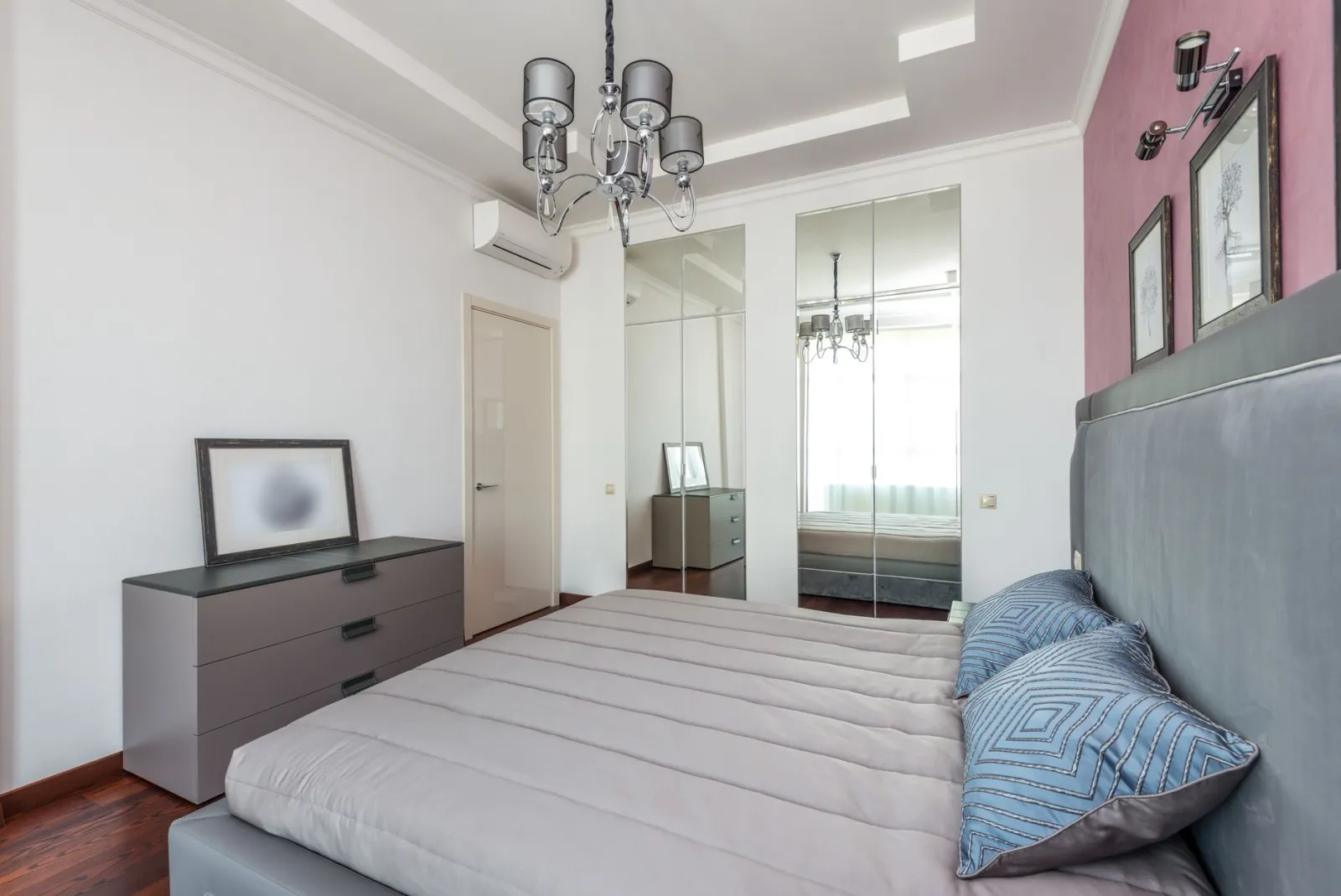
Good quality comes down to three things: a solid frame, a well-engineered base mechanism and joinery that won’t loosen. Ignore the fabric and the styling until you’ve checked those.
Start with the frame. Solid pine, beech or oak frames hold their shape for years; particleboard and MDF frames are lighter and cheaper but more prone to sagging and screw loosening over time, especially around drawer runners. Ask what the frame is made of, not just what the bed is upholstered in.
Then look at the base. A slatted base with closely spaced, reinforced slats distributes weight better than a thin, flexible one. For ottoman beds, the gas struts matter enormously: a well-matched pair should hold the mattress platform safely at any angle and lower it in a controlled way. Cheap struts fail early and can drop a heavy mattress without warning — check the stated weight rating against your mattress weight.
Drawer quality is where budget beds quietly cut corners. Good drawers run on metal runners or solid wooden guides, open smoothly when full, and have a base panel thick enough not to bow. Run your hand along the drawer base: if it flexes easily under light pressure, it will sag once loaded with bedding.
One concrete check anyone can do in a shop: open and close every drawer and the lift mechanism several times. Listen for creaks, feel for wobble, and watch whether the drawer front stays aligned with the frame. A well-built bed feels the same on the tenth movement as the first.
Quick quality checklist
| Element | What good looks like | Warning sign |
|---|---|---|
| Frame | Solid wood or sturdy engineered frame | Thin panels, visible flex |
| Drawer runners | Metal runners or solid wood guides | Plastic runners, drawer sticks |
| Drawer base | Rigid panel, no bowing | Flexes under light pressure |
| Ottoman struts | Rated for your mattress weight | Drops quickly, feels weak |
| Joinery | Tight, aligned, no gaps | Loose screws, misaligned fronts |
What are the best quality storage beds built from?
The best-quality storage beds are built from solid wood frames, reinforced slats and metal hardware — materials that hold their shape under daily load. Materials tell you more about longevity than any label.
Solid wood frames — pine, beech, oak — resist the constant small stresses of getting in and out of bed. Engineered woods are perfectly serviceable when used well: a thick, well-made engineered panel can be strong, but thin panels in high-stress areas (drawer fronts, the lift mechanism mount) are where failures start.
Upholstery matters too, but for a different reason. Fabric-covered bases hide the frame, so you can’t inspect it directly. That makes the retailer’s material description and the feel of the bed in person more important. Press the side rail: if it gives noticeably, the frame underneath is probably light.
Hardware is the quiet hero. Metal drawer runners, solid hinges and correctly rated gas struts are what keep a storage bed working after years of use. A real-world pattern: beds returned for faults are far more often let down by a failed mechanism than by a failed frame.
Are beds with storage worth it?
Yes, for most small and medium bedrooms — a storage bed typically replaces a chest of drawers or a storage box, freeing floor space. They’re less worthwhile in large rooms where a separate wardrobe and drawers already cover your needs.
The value is spatial, not just practical. In a room under about 12 square metres, the space under the bed is the largest unused volume you own. Converting it into drawers or an ottoman cavity can remove the need for a bulky chest of drawers entirely — and that changes how the whole room feels.
Consider the cost of complexity, though. Ottoman mechanisms and drawer systems add moving parts, and moving parts need maintenance. If you rarely need extra storage, a simple bed frame with a separate storage solution may serve you better and last longer.
A useful rule of thumb: if you can name three things you’d store under the bed right now — spare duvets, suitcases, winter coats — storage is worth it. If you can’t, you’re paying for a mechanism you won’t use.
FAQ
What is the best type of storage bed?
Drawer beds are best when both sides of the bed are accessible and you want daily access; ottoman beds are best when space is tight or you need to store bulky items. Match the type to your room layout, not to a trend.
Which beds with storage are of good quality?
Look for a solid wood or sturdy engineered frame, metal drawer runners, rigid drawer bases and gas struts rated for your mattress weight. Test every mechanism in person before buying.
Are beds with storage worth it?
Yes in small and medium bedrooms where floor space is limited. In larger rooms with plenty of separate storage, the extra mechanism may not earn its keep.
Conclusion
The best storage bed for you is the one whose type fits your room layout and whose frame, runners and struts hold up under real use. Check the mechanism, not the styling, and choose drawers for daily access or an ottoman for volume. For a fuller breakdown of sizes, mattress compatibility and long-term care, a more complete guide on storage beds covers everything in one place.
Was this guide helpful?
Share your experience with the WiseHomeGuides community.