
This article contains Amazon affiliate links. As an Amazon Associate we earn from qualifying purchases.
In short :
- Start with the plant, not the caterpillar.
- Most species eat only one or two plant families, so the host plant is your best clue.
- Then look at four traits: body covering, markings, size, and what it eats.
- That’s usually enough to narrow it to a family.
- For raising, pick bare-skinned species on common plants.
- They’re easier to feed and safer to handle.
How do you choose a caterpillar species to raise or identify?
You choose a caterpillar species by matching its traits to your goal: identification, classroom raising, or garden observation. Key traits are body covering (bare, hairy, spiny), markings, size, and the host plant it feeds on. Host plant is the single most reliable clue—most caterpillars eat only one or two plant families.
Caterpillars are the larval stage of moths and butterflies, and there are thousands of species. They differ enormously in appearance and behavior, yet a handful of traits separates most of the ones you’ll actually encounter. This guide focuses on reading those traits so you can tell species apart, decide which are safe to handle, and pick a manageable species to raise. It’s a companion to the fuller overview of caterpillar care and identification principles.
Which traits matter most when comparing caterpillar species?
Four traits do most of the work: what the body is covered with, how it’s marked, how big it gets, and what it eats. Learn to read these and you can narrow almost any caterpillar to a family.
Body covering
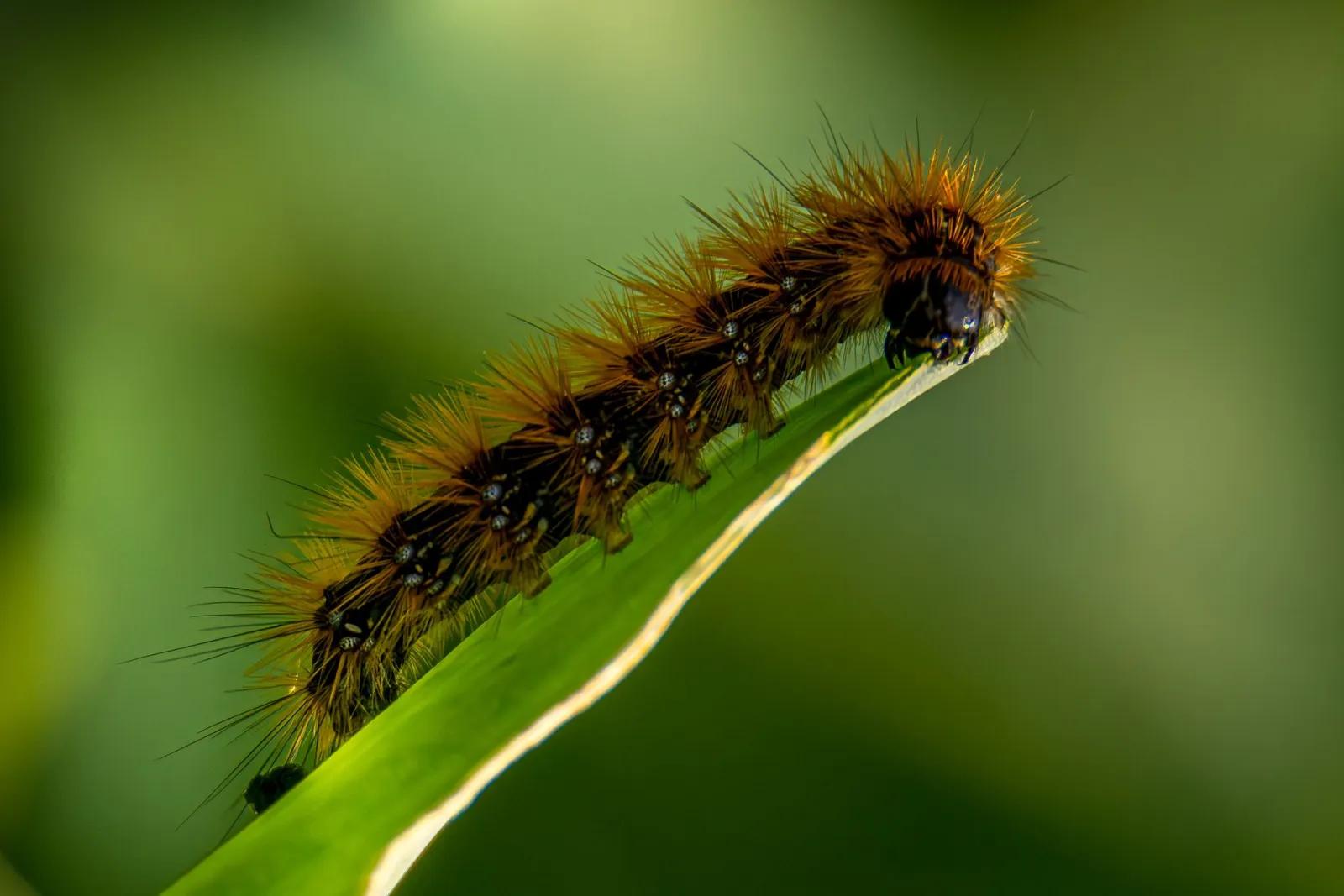
Bare, smooth-skinned caterpillars (often green or brown) tend to be butterfly larvae and some moth larvae. Dense hair or fur points toward tiger moths, tussock moths, and woolly bear types. Fleshy spines or tubercles suggest swallowtail larvae and certain silk moths. Covering is also a safety signal: spiny and heavily haired species are more likely to cause skin irritation if handled.
Markings and color
Look for stripes (lengthwise or crosswise), eyespots, tail horns, and contrasting patches. A bright warning color—yellow, red, black—usually signals that the caterpillar is distasteful or irritating. Green camouflage with faint diagonal lines is common on species that feed on leaves in open foliage.
Size and growth stage
Size alone is unreliable because caterpillars molt several times and grow between stages. A small green caterpillar and a large green caterpillar may be the same species at different ages. Compare size together with markings, never on its own.
Host plant
This is the strongest clue. A caterpillar found on dill, fennel, or parsley is very likely a swallowtail. One on milkweed is almost certainly a monarch. One on cabbage or related brassicas points to the cabbage white butterflies. Note the plant before you move the caterpillar—it tells you what to feed it and often what it is.
Concrete example: you find a green caterpillar with black and yellow bands and two thin black filaments near the head, chewing a carrot top. The plant plus the banding plus the filaments point to a black swallowtail larva. Move it to a similar plant and it will keep feeding; put it on grass and it will refuse to eat.
How do you decide which species are safe to handle or raise?
Choose bare-skinned species for handling and raising; treat hairy and spiny species as look-only. Most irritation comes from hairs or spines that break off on skin.
Smooth caterpillars such as swallowtail larvae and many butterfly larvae can usually be picked up gently on a leaf or a soft brush. Hairy caterpillars—woolly bears, tussock types—shed hairs that can lodge in skin and cause itching; some people react more strongly than others. Spiny caterpillars with hollow, stinging spines deserve real caution; a few species deliver a painful sting. When in doubt, don’t touch. Slide a leaf or a card under the caterpillar and move it that way.
For raising, pick species with a clear, easy host plant and a short development time. A caterpillar that feeds on a common garden herb or weed is far easier to provision than one that needs a specific tree. Consider these practical comparisons:
| Trait | Easy to raise | Trickier to raise |
|---|---|---|
| Host plant | Common herb, weed, or vegetable leaf | Single tree or shrub species |
| Body covering | Bare, smooth | Hairy or spiny (handling risk) |
| Feeding | Accepts cut leaves readily | Fussy, needs fresh growth |
| Development | Completes in a few weeks | Long dormancy or overwintering |
Concrete example: a classroom that wants quick, visible results does better with a species feeding on parsley or dill than with one that only eats oak leaves. The herb is easy to supply fresh, the caterpillars grow fast, and the whole cycle fits a school term.
How do host plants and habitat narrow down a species?
Match the caterpillar to the plant it was on, then to the habitat around it. This two-step check eliminates most wrong guesses before you ever look at markings closely.
- Identify the plant the caterpillar was feeding on, not just the one it was sitting near. Feeding damage—chewed edges, holes, stripped leaves—confirms it.
- Note the habitat: garden bed, meadow, woodland edge, wetland, or roadside. Many species are tied to one type of place.
- Check the season. Different species appear at different times of year, so the month you found it is a useful filter.
- Then compare markings against species known to use that plant in that habitat.
Concrete example: a striped caterpillar on a tomato plant in a summer vegetable garden is a very different candidate from an identical-looking one on a wild woodland vine. The plant and the setting together point you to the right family before you compare a single stripe.
Frequently asked questions
Can two very different-looking caterpillars be the same species?
Yes. Many species change appearance dramatically between growth stages, and some have color forms—green and brown versions of the same caterpillar are common. Judge by the combination of host plant, habitat, and body structure, not color alone.
Is it safe to pick up a hairy caterpillar?
Better not to. Hairs can break off and irritate skin, and reactions vary from person to person. Use a leaf or a card to move it. If you must handle a smooth species, wash your hands afterward and keep it away from your face.
What should I feed a caterpillar I’ve found?
Feed it the exact plant you found it on. Most caterpillars are specialists and will starve rather than switch to a new food. Offer fresh leaves daily, keep them dry, and remove wilted material.
Conclusion
Choosing a caterpillar species comes down to reading four traits—covering, markings, size, and host plant—with the host plant carrying the most weight. For raising, favor bare-skinned species on common plants; for handling, treat hairy and spiny types as hands-off. Start with the plant, add the habitat and season, and only then compare markings. For the broader picture on identification, housing, and care across the full life cycle, a more complete guide on the general topic is available on the site.
To make your choice concrete : Garden Fencing for Dogs: How to Choose the Best
Work out your own case in 30 seconds:
Methodology
This calculator produces an indicative estimate based on the parameters you enter. The ranges used reflect typical market tiers in the pets space and are neither a commercial offer nor a guarantee. Prices and availability may vary.
Read next
Read next :Coffee Machine Descaler: A Complete Buying Guide
Read next :Bathrobe Women: A Cozy Guide to Choosing and Caring for Your Robe
Read next :Dining Table Centerpiece: Ideas, Sizes and Care Tips
Read next :Fridge Organisers: A Practical Guide to a Tidy Kitchen
Read next :Coffee Machines for Home: A Complete Buying Guide
Full guide :Pets
More from this guide :
Was this guide helpful?
Share your experience with the WiseHomeGuides community.