Short answer : Dog games for dogs work best when they match your dog’s energy level and the space you actually have, so start by choosing activities that fit your home rather than forcing a single routine. Indoor games such as hide-and-seek with treats, scent games using cardboard boxes, and simple obedience challenges keep a dog mentally busy on rainy days or in small apartments. Outdoor games like fetch, tug, and treasure hunts in the yard or a safe park burn physical energy and strengthen the bond between dog and owner. Rotate a few different games each week so your dog stays curious and doesn’t get bored with the same activity. Short, frequent sessions are easier to fit into daily life than one long play period, and they suit dogs of all ages and breeds.
In short
- Hide treats around a room and let your dog sniff them out for a simple scent game.
- Use cardboard boxes or paper bags as puzzles your dog can nose through to find kibble.
- Play fetch or tug in a safe outdoor space to burn physical energy quickly.
- Teach a new trick in short sessions to keep your dog mentally engaged and focused.
- Rotate games weekly and match intensity to your dog’s age, size, and energy level.
Why Interactive Games Matter for Dogs
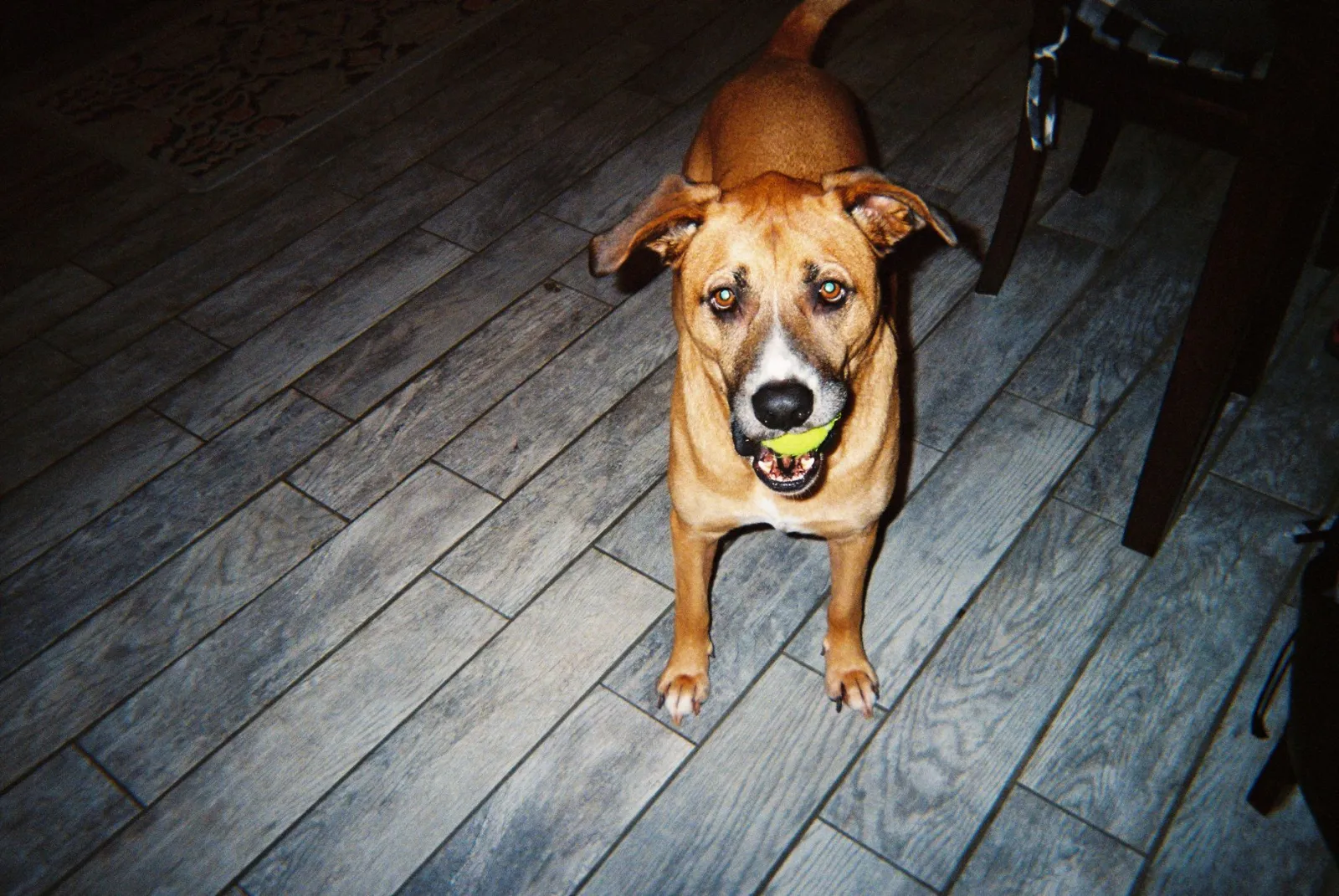
Interactive games give dogs a job to do, and that job is often the difference between a dog that settles calmly at home and one that paces, chews, or barks for attention. Games work because they tap into natural canine behaviour: sniffing, chasing, problem-solving, and working for a reward. When you turn those instincts into structured play, you give your dog an outlet that is both mentally engaging and physically satisfying. The result is a dog that is more tired in the good way, more focused on you, and less likely to invent its own entertainment.
The most useful distinction is between physical games and mental games, because they tire a dog out differently. A game of fetch or tug burns energy quickly but mostly works the body. A game that asks the dog to think, such as finding hidden treats, working out how to get a reward out of a puzzle, or following a sequence of cues, drains mental energy and often leaves a dog calmer for longer. In practice, a short session of problem-solving can do more to settle a restless dog than a longer run, which is why mental games are especially valuable on rainy days, in apartments, or when the weather or your own schedule limits outdoor activity.
Interactive games also strengthen the relationship between dog and owner. Dogs that learn to play with their people, rather than only around them, tend to check in more, respond better to cues, and handle frustration more gracefully. Games give you a shared language: a release word, a hand signal, a routine that says play is starting and play is over. That structure matters, because it teaches impulse control. Waiting for a cue before chasing a toy, dropping a tug on request, or taking turns in a game all build the same skills a dog needs to stay calm in everyday life.
Different homes call for different games, so match the game to the space and the dog. In a small apartment, scent games and puzzle-style challenges work well because they need little room. In a garden or a park, fetch, hide-and-seek, and chase games let a dog stretch its legs. For a puppy or an older dog, gentler games with shorter sessions suit better than long, high-intensity play. For a high-drive dog, games that combine movement with a task, such as searching for a toy or working through a sequence, keep the mind busy while the body moves.
A practical way to build games into the day is to treat them as short, frequent sessions rather than one long block. A few minutes of a thinking game before a walk, a quick scent challenge while dinner is prepared, or a short tug session in the evening can each serve a purpose. The goal is not to exhaust the dog but to give it regular, predictable chances to use its brain and its body. Over time, these small sessions add up to a dog that is easier to live with and more fun to be around, which is the real reason interactive games are worth the effort.
Choosing Games That Match Your Dog’s Energy
Matching a game to your dog’s energy level matters more than the game itself. A high-drive herding breed and a flat-faced companion dog can both enjoy a game of fetch, but the shape of that game should look very different. The goal is to give your dog enough physical and mental engagement to feel satisfied without pushing them into overarousal or leaving them restless. Think of energy as a dial with three broad settings — low, moderate, and high — and choose the intensity, duration, and structure of play accordingly.
For a low-energy dog, the priority is gentle, low-impact engagement that keeps the body moving without demanding explosive effort. Scent-based games suit this profile well: hiding treats or a favorite toy around a room and letting the dog work slowly to find them gives the brain a job while keeping the body calm. Short, slow games of “find it” on a snuffle mat or a simple shell game with cups reward patience and focus rather than speed. Sessions can be brief — a few minutes at a time, repeated a couple of times a day — because the mental effort tires these dogs more than distance or speed would. Watch for the dog disengaging or lying down mid-game; that is a signal to stop rather than push on.
Moderate-energy dogs are often the easiest to read and the most flexible. They tend to enjoy a mix of movement and thinking: a game of fetch with a pause to “sit” or “wait” before the throw, a short tug session followed by a calm trick, or a backyard search for a toy tossed into light cover. These dogs usually want a clear beginning and end to play, and they settle well afterward. A useful rule of thumb is to alternate bursts of activity with brief pauses so the dog practices switching between excited and calm states — a skill that pays off indoors as much as outdoors.
High-energy dogs need games that burn real effort and give their mind a challenge at the same time. Fetch with a long throw, flirt-pole style chasing, hide-and-seek across several rooms, or a structured game of tug with clear release cues all channel drive productively. For these dogs, duration alone is rarely enough; a shorter, more intense session with rules and cues often satisfies more than a long, unstructured run. Build in impulse-control moments — waiting before a retrieve, dropping a toy on cue — so the game works the brain alongside the body.
Whatever the energy level, judge the fit by the dog’s behavior after play. A well-matched game leaves a dog relaxed, settled, and ready to rest; a poorly matched one leaves them wound up, pacing, or still seeking attention. Adjust intensity up or down based on those signals rather than a fixed schedule, and remember that mental challenge can tire a dog as effectively as physical exertion.
Indoor Games for Small Living Spaces
Small-space living doesn’t rule out active play; it simply shifts the design brief toward games that keep the dog’s movement footprint compact while still working the mind and body. The guiding principle is to favor vertical or stationary activity over long sprints. A dog that can pivot, sniff, and problem-solve within a few square feet tires in a satisfying way without ever needing a hallway-length runway. Think of these games as occupying a footprint roughly the size of a yoga mat, with the handler seated or standing in one spot.
Hide-and-seek with a toy or treat is one of the most space-efficient options. While the dog holds a stay in one room, you tuck a reward under a cushion, behind a door, or beneath an upturned bowl a few paces away, then release the dog to search. The search itself is slow and contained, and you can scale difficulty by choosing more concealed spots or layering two hiding places. It suits apartments and single rooms well because the dog moves in short, deliberate bursts rather than wide arcs.
Stationary impulse games work in even tighter quarters. A “which hand” game, where the dog must choose between two closed fists holding a treat, requires no floor space at all and builds focus and patience. Similarly, a stay-and-release routine at an open doorway, with the dog holding position while you step back a few feet, exercises self-control without any running. These are ideal for narrow rooms, balconies, or moments when furniture crowds the floor.
For physical engagement indoors, a flirt pole used in short, controlled sweeps lets a dog chase and pounce within a small radius, and a game of tug on a soft toy channels energy into a stationary pull rather than a sprint. Puzzle feeders and snuffle-style search games occupy the dog in one spot for an extended stretch, making them a strong choice when you want calm engagement rather than arousal. Rotating among these formats keeps a small-space routine varied without adding equipment clutter.
A practical rule of thumb is to match the game’s movement radius to the room: choose sniffing and puzzle games for the tightest corners, impulse games for doorways and hallways, and chase-style play only where there’s a clear, safe patch of floor. Short, frequent sessions tend to fit apartment life better than one long burst, and ending on a calm note helps the dog settle afterward. The aim is steady mental and physical engagement that respects the boundaries of the room.
Outdoor Games for Yards and Gardens
A yard or garden gives a dog room to sprint, sniff, and problem-solve in a way that indoor play rarely allows. The key is matching the game to the space you actually have and to your dog’s energy level, age, and build. A large, securely fenced lawn suits long-distance fetch and chase games, while a small courtyard or a shared garden works better with short-range games built around sniffing, searching, and gentle movement. Before choosing any game, walk the space and check for hazards: gaps in fencing, sharp edging, garden chemicals, and plants that could be chewed. A dog that can see or smell the boundary of the play area tends to stay more focused on the game itself.
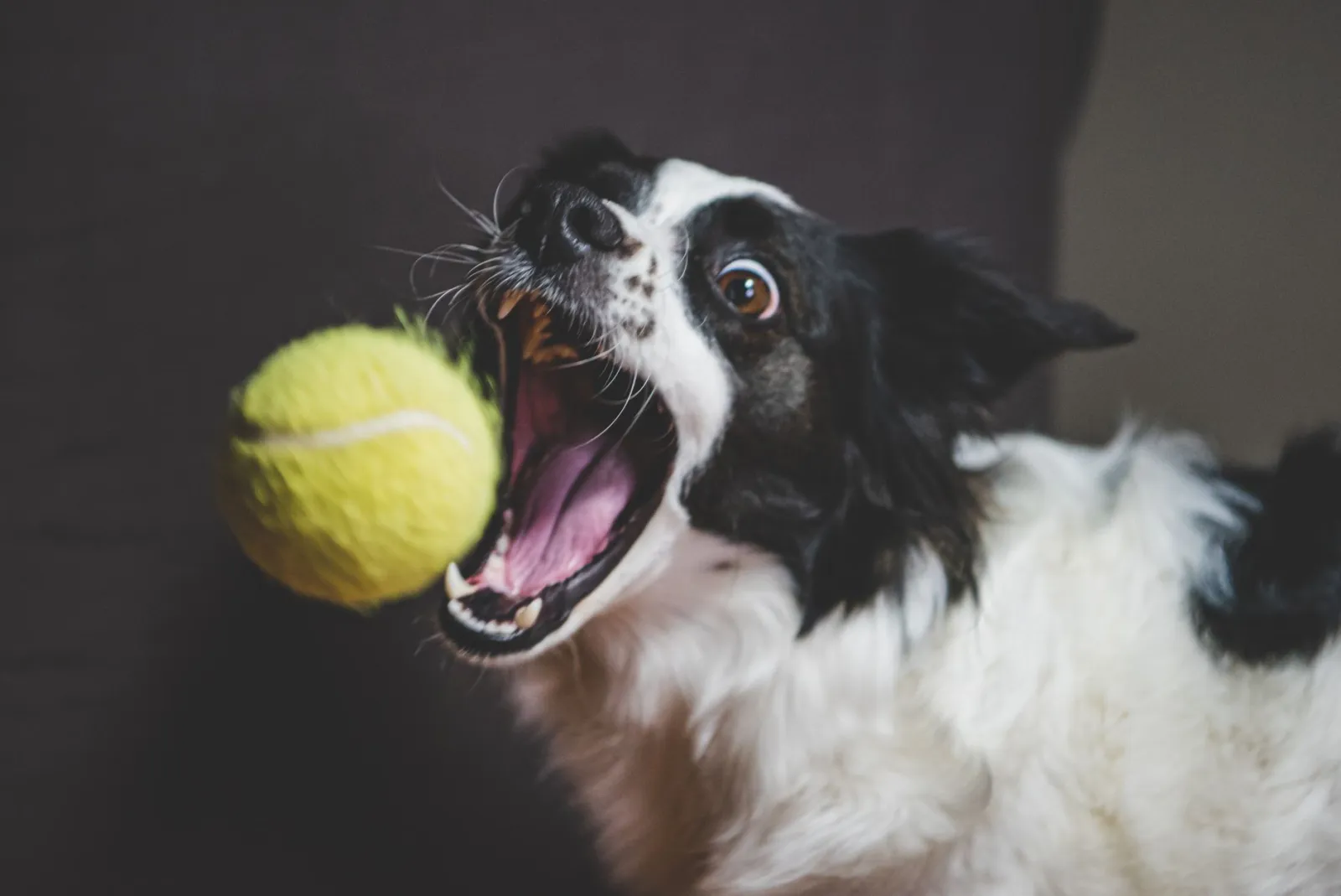
For open spaces, fetch and retrieve games remain the most efficient way to burn energy. Vary the throw so the dog has to track a rolling ball or a flying disc rather than simply running in a straight line, and use a long line if recall is still developing. Flirt poles and tug toys add a chase-and-catch element that suits high-drive dogs, but keep sessions short and end while the dog is still eager. A common mistake is throwing repeatedly until the dog is exhausted; a handful of good retrieves with pauses in between keeps the game controlled and reduces the risk of overexertion, especially in warm weather.
Sniffing games turn the garden into a mental workout. Scatter a portion of the dog’s regular food or a few treats across the grass and let the dog hunt for them, or hide a toy under a plant pot, behind a bush, or beneath an upturned bucket and encourage the dog to find it. These games are ideal for older dogs, dogs recovering from a quiet period, or any dog that finds running games too intense. They also work well in small gardens, because the difficulty comes from the hiding places rather than the distance covered.
Obstacle and movement games use the garden’s natural features. A simple course of weaving between shrubs, stepping onto a low, stable platform, and walking along a broad path gives the dog a physical challenge without special equipment. You can also build a “find the path” game by placing a few treats along a route through the garden and letting the dog follow the trail. For dogs that like water, a shallow paddling pool or a sprinkler offers a low-impact way to play on hot days. Always supervise water play and offer shade and fresh water nearby.
Finally, garden games are only as good as the boundaries around them. A reliable recall and a “leave it” cue are what let you relax and enjoy the game rather than chase the dog. If your garden is not fully secure, use a long line and keep games close. Rotate the games across the week so the dog does not become bored with one routine, and finish each session with a calm activity such as a sniff-and-settle search. That way the garden becomes a place your dog associates with varied, satisfying work rather than a single repetitive game.
Puzzle and Brain Games for Curious Dogs
Puzzle and brain games suit dogs that need more than physical exercise to stay settled. Herding breeds, terriers, and working lines in particular tend to get bored quickly, and boredom often shows up as chewing, barking, or pacing. A brain game gives that mental energy a job to do. The key is matching the difficulty to the dog: a puzzle that is too easy gets abandoned in seconds, while one that is too hard causes frustration and loss of interest. Aim for a challenge the dog can solve with some effort but without giving up.
The most accessible entry point is a food-dispensing toy that the dog has to roll, nudge, or lift to release kibble. These work well for beginners because the reward is immediate and the dog learns the cause-and-effect quickly. For dogs that already understand the concept, adjustable puzzles with sliding panels, flaps, or drawers raise the difficulty by hiding treats behind several steps. Look for puzzles with a way to increase difficulty as the dog improves, since a dog that has mastered a puzzle will often ignore it entirely on the next attempt. A useful rule of thumb is to start with one or two steps and add complexity only once the dog solves the current level reliably.
Sniffing games are a natural bridge between physical activity and problem-solving. Scattering a portion of the dog’s regular food across a lawn, a snuffle mat, or a room full of safe household objects turns mealtime into a search task. This is especially useful for dogs that eat too fast or for rainy days when outdoor exercise is limited. Hiding treats in cardboard boxes, under cups, or inside folded towels gives a similar effect with materials most homes already have. The dog has to use its nose and its memory, and the payoff is a calmer dog afterward.
For dogs that enjoy learning, simple shaping games and trick training count as brain work. Teaching a dog to target an object with its nose, to put a toy in a basket, or to follow a short sequence of cues requires focus and memory. Short sessions of a few minutes are more effective than long ones, and ending while the dog is still engaged keeps motivation high. These games also build communication between dog and handler, which pays off in everyday situations.
A few practical points keep puzzle play productive. Supervise puzzle toys, especially those with small removable parts, and remove them once the treats are gone so the dog does not chew the plastic. Rotate puzzles every few days so the dog does not memorize the solution and lose interest. Finally, count brain games as part of the dog’s daily enrichment rather than an add-on: a short puzzle session can tire a dog mentally in a way a walk alone may not, and combining both gives a more balanced routine.
Games That Build Training and Obedience Skills
Play is one of the most effective ways to teach obedience, because it lets a dog rehearse the behaviors you want in a context that feels rewarding rather than forced. The key is to choose games that naturally require the exact skills you’re training—attention, impulse control, recall, and positioning—so the dog practices them without the pressure of a formal drill. Short, frequent sessions work better than long ones, and ending while the dog is still eager keeps the game something it wants to return to.
Hide-and-seek is a strong recall builder. Have one person hold the dog while another hides nearby—first in an obvious spot, then progressively farther or behind a door—and then call the dog once by name. The dog learns to search for and run toward a person on a single cue, which reinforces coming when called even when you’re out of sight. Keep the hiding distances modest at first and reward generously on arrival; the game teaches the dog that finding you is the win. This transfers directly to real-world recall in the house, yard, or a fenced space.
The “wait and release” game trains impulse control and a reliable stay. Place a treat or toy on the floor or hold it in your hand, ask the dog to wait, and only release it with a clear cue once the dog holds position. Start with a wait of a second or two and extend gradually as the dog succeeds. The same principle applies to a toy held just out of reach: the dog earns the toss by holding still rather than lunging. These small delays build the self-control that underpins sit-stays, door manners, and calm greetings.
Tug and fetch can be structured to teach “take it,” “drop it,” and “leave it.” With tug, ask for a release cue and only resume the game once the dog lets go—turning a high-energy activity into a lesson in cooperation and giving up an object on request. With fetch, ask for a sit or a drop before throwing again, so the dog learns that listening is what keeps the game going. These are useful for dogs that get overexcited, because the game itself becomes the reward for calm, responsive behavior.
For positioning and focus, a simple “find your spot” game works well: send the dog to a mat or bed, reward it for going there, and build up to sending from across the room. This sharpens directional cues and gives you a portable settle behavior for visitors or mealtimes. Pair it with a name-and-eye-contact game—say the dog’s name, reward the moment it looks at you—to strengthen attention. Across all of these, keep criteria clear and consistent, reward the behavior you asked for rather than the one you happened to get, and treat the games as training that happens to be fun.
How to Keep Games Safe and Fair
Safety starts with matching the game to the dog in front of you rather than to the game you find most entertaining. A short-legged, flat-faced dog will struggle with sustained chasing and sudden direction changes, while a herding breed may need more mental and physical challenge to stay engaged without getting overexcited. Age matters too: a puppy tires quickly and has loose joints, so brief, low-impact sessions work better than long ones, and a senior dog often prefers sniffing games and gentle food searches to jumping or sprinting. The practical rule is to stop while the dog is still enjoying it, not after it has already flagged.
Fairness in a game means the dog can actually win. If you hide a treat or a toy, place it where the dog has a realistic chance of finding it, and start easy before making the hiding spots harder. In tug, let the dog win regularly and end the game on a win rather than pulling the toy out of its mouth every time. In fetch, avoid teasing by holding the toy out of reach or pretending to throw. Games where the human always wins or the dog never gets the reward stop being fun and start being frustrating, and frustration is where rough grabbing, barking, and loss of focus come from.
Manage arousal before it tips over. Signs that a game is getting too intense include a stiff body, hard staring, frantic spinning, ignoring your voice, or a dog that won’t release a toy. When you see these, pause the game, ask for a simple behaviour the dog knows well, and only resume once it is calm. Short sessions with clear breaks work better than one long, escalating game. Rotating between active games and calm ones, such as a food search after a round of tug, helps the dog settle instead of staying wound up.
The environment and equipment need a quick check every time. Clear the floor of small objects that could be swallowed, make sure toys are the right size for the dog’s mouth so they can’t be choked on, and inspect ropes and plush toys for tears before use. Outdoors, choose enclosed or quiet areas away from traffic and unfamiliar dogs, and keep games on a long line where recall isn’t reliable. Indoors, avoid slippery floors for chase games and keep rough play away from stairs and furniture edges.
Finally, keep the rules consistent between people in the household. Everyone should use the same release cue, the same start and stop signals, and the same limits on mouthing and jumping. Children in particular need to be shown how to play without snatching, chasing the dog around, or grabbing at its face, and games should be supervised. A simple, predictable structure, with a clear beginning, a few short rounds, and a calm ending, is what keeps play safe, fair, and something the dog looks forward to.
Cleaning Up After Playtime
Cleaning up after playtime is part of the game, not a separate chore. The faster you reset the space, the sooner the next round can start, and a consistent routine keeps toys from disappearing under furniture or getting chewed into pieces that end up in the wrong place. Treat cleanup as the closing move of every session: the same way a game has a beginning, it should have an end that signals to the dog that play is over for now.
Start with the floor, because that is where most of the mess lands. Squeaky toys, rope tugs, and treat-dispensing puzzles all migrate toward the same corners, so a quick sweep of the room after each session catches them before they become a hazard. Check for loose squeakers, torn fabric, and shredded rope strands, since these are the parts most likely to be swallowed. If a toy has started to come apart, retire it rather than leaving it in the rotation. A simple storage bin near the play area makes the reset quick enough that you will actually do it.
Surface type changes the job. On carpet, crumbs and treat dust work into the fibers, so a quick vacuum pass after puzzle games keeps the area from getting gritty underfoot. On hard floors, a damp mop handles drool, water bowl splashes, and the residue from treat toys that leave sticky spots. Outdoor play brings in mud, grass, and grit, so a mat or towel at the door catches most of it before it spreads through the house. Keep a dedicated cloth or mop head for pet areas so the rest of your cleaning supplies stay separate.
Pay attention to the toys themselves, not just the floor. Washable rubber and fabric toys benefit from a regular rinse, especially those used for fetch outdoors or for treat-stuffing, since residue builds up in the crevices. Toys that cannot be washed should be wiped down and left to air dry. Rotating toys in and out of storage also cuts down on clutter and gives you a natural moment to inspect each one for wear.
Finally, build cleanup into the dog’s routine rather than doing it out of sight. A short “all done” cue followed by putting the toys away teaches the dog that the session has ended, which reduces the whining or nudging that often follows an abrupt stop. Involving the dog in the wind-down, even just by having them settle nearby while you tidy, turns cleanup into part of the game’s rhythm instead of a disruption.
Common Mistakes When Playing With Dogs
One of the most common mistakes is treating every game as a free-for-all with no structure. Dogs thrive on clear beginnings and endings, so a game that starts abruptly and fizzles out leaves the dog uncertain about what is expected. Establish a simple cue to start play and another to stop, and use them consistently. A short, focused session of a few minutes, repeated a couple of times a day, is far more effective than one long, unstructured romp that leaves the dog overstimulated and unable to settle afterward. Ending on a calm note, with a chew or a quiet settle, helps the dog learn that play has a clear boundary.
Another frequent error is choosing games that don’t match the dog’s natural drives or physical build. A scent-driven dog given only chasing games will often lose interest or redirect that energy into unwanted behavior, while a dog built for short bursts of speed may find long, slow puzzle work frustrating. Watch which games your dog leans into, then build sessions around those strengths. Mixing a physical game with a mentally demanding one in the same session works well, but the balance matters: too much physical intensity without a thinking component tends to wind dogs up rather than tire them out in a satisfying way.
Hands are too often used as toys, which teaches a dog that grabbing at fingers and sleeves is part of the game. That habit is hard to undo and becomes a problem around guests or children. Always route play through a toy, and if teeth meet skin, pause the game immediately and briefly withdraw attention before resuming. Similarly, teasing a dog with a toy and snatching it away repeatedly builds frustration rather than fun. Let the dog win regularly, and allow a genuine tug or chase to conclude with a reward so the game feels fair.
Ignoring the environment is another quiet mistake. Playing in a cluttered room, near food, or in a space shared with another dog invites accidents and conflict. Clear a defined area, remove breakable or small objects, and separate dogs if their play styles clash. Also watch for signs of over-arousal, such as frantic circling, hard staring, or a dog that stops responding to its name. Those signals mean the game has tipped past fun, and a short break to reset is more useful than pushing through.
Finally, many owners skip the wind-down entirely. A dog that goes from full-speed play straight into being left alone often struggles to relax. Build a brief transition into every session, and keep the overall rhythm of play predictable across the day. Consistency in how games begin, unfold, and end is what turns play into a reliable, enjoyable routine rather than a source of confusion.
Budget-Friendly Ways to Keep Dogs Entertained
Keeping a dog entertained does not require a cupboard full of purchased toys. The most reliable budget-friendly approach is to work with what a household already has and to rotate it deliberately. A dog’s interest in an object fades with familiarity, so storing a handful of items out of reach and swapping them every few days restores novelty at no cost. Everyday objects do much of the work: a cardboard box with treats tucked inside, a muffin tin with a few rewards hidden under tennis balls, or a plastic bottle with the cap and ring removed and a few kibbles rattling inside. These satisfy the same chewing, problem-solving, and foraging urges that expensive puzzles target, and they cost nothing beyond what would otherwise be thrown away. The main criterion is safety: anything small enough to be swallowed, sharp-edged, or easily shredded into chunks should be supervised or skipped entirely.
Scent work is the cheapest enrichment available because it uses the dog’s nose rather than equipment. Scattering a portion of the daily food across a lawn or a room turns a meal into a hunt, and hiding treats around furniture or under cushions creates a search game that tires a dog mentally in a short time. For dogs who already know a basic stay, a simple find-it game, where the dog waits while a reward is hidden and is then released to search, builds focus and impulse control alongside the fun. These games need no gear at all and scale to any space, from a small apartment to a garden.
Homemade enrichment does not have to mean elaborate craft projects. A towel rolled up with kibble inside, a paper bag loosely crumpled around a few treats, or a cardboard tube folded at the ends all create a short, satisfying puzzle. The trade-off is durability: these items are meant to be destroyed, so they suit dogs who shred gently and should be offered under supervision rather than left alone. For dogs who dismantle things quickly, the better value is often a single sturdier item that survives repeated use rather than a stream of cheap disposables.
Play with the owner is free and often more engaging than any object. A short session of tug, a game of chase in a hallway, or a round of hide-and-seek where a family member hides and calls the dog provides exercise and mental stimulation without spending anything. The useful criterion here is intensity rather than duration: two or three brief, focused sessions spread through the day tend to hold attention better than one long, tiring one, and they fit easily around work and household routines.
Finally, the household itself is an underused resource. Teaching a new trick, practicing a few known cues in a new room, or simply changing the route of a daily walk gives a dog fresh information to process at no cost. The common thread across all of these ideas is that the value lies in novelty, scent, and interaction rather than in price, so a modest rotation of simple materials, combined with regular human attention, keeps most dogs busy and content.
Frequently asked questions
What are the best dog games for beginners?
Start with simple games that need little equipment and clear rules. Fetch with a favourite toy, hide-and-seek where you hide and call your dog, and basic find-the-treat games are easy to teach. Name recognition games, where you say a toy’s name and reward your dog for touching it, also work well. Keep sessions short and reward often so your dog understands what earns praise. Choose games your dog already enjoys, then add small challenges as confidence grows.
How often should I play games with my dog?
Short, frequent play sessions work better than one long one. A few brief games spread through the day fit easily around walks, meals and rest, and keep your dog engaged without tiring it out. Puppies and high-energy dogs often benefit from more frequent short bursts, while calmer dogs may be happy with one or two sessions. Watch your dog’s interest: if it loses focus or walks away, end the game and try again later.
Can I play indoor games with a large dog?
Yes, provided you adapt the games to your space. Clear breakable items and choose low-impact activities such as scent games, hide-the-toy, or teaching a settle on a mat. Tug can work indoors if your dog has good impulse control and you use a soft toy. Avoid games that involve jumping or fast turns on slippery floors. A hallway or a fenced yard gives a large dog more room to move safely.
Which games help keep dogs mentally stimulated?
Games that ask your dog to think rather than just run are best for mental stimulation. Scent games, where your dog searches for hidden treats or a toy, use its nose and focus. Puzzle toys that require pawing, nosing or lifting flaps make dogs work for food. Teaching new tricks, name-the-toy games, and simple obedience challenges also keep the brain busy. Rotate these activities so your dog faces fresh problems rather than repeating the same one.
How do I stop my dog getting bored of games?
Boredom usually comes from repetition, so vary the game, the location and the reward. Play in different rooms or outdoor spots, change which toy you use, and alternate between active games and thinking games. End sessions while your dog is still eager, not when it has lost interest. Rotate toys so they feel new, and occasionally make a familiar game harder by hiding rewards in less obvious places. Praise and treats keep motivation high.
Are food puzzle games suitable for all dogs?
Food puzzles suit most dogs, but you need to match the puzzle to the dog. Easy puzzles with large openings work for puppies and beginners, while more complex ones challenge experienced dogs. Some dogs become frustrated and give up, so start simple and increase difficulty gradually. Always supervise the first attempts, choose sturdy puzzles, and count puzzle food as part of your dog’s daily food so you do not overfeed. If your dog has special dietary needs, ask your vet for guidance.
How long should a play session last?
Keep sessions short enough that your dog stays focused and eager. A few minutes of active play is often enough for a training game, while scent games or puzzle toys may hold attention longer. Stop while your dog is still enjoying itself and end on a success. Puppies and older dogs tire faster, so watch for signs of fatigue such as slowing down, panting heavily or losing interest, and finish before your dog gets overtired.
What games suit older or less active dogs?
Choose low-impact games that keep your dog thinking without demanding speed or jumping. Nose work, where your dog searches for treats hidden at floor level, is gentle and engaging. Slow treat-scatter games, gentle tug with a soft toy, and simple name-the-toy games suit many older dogs. Puzzle toys with easy settings also work well. Keep sessions brief, use soft flooring, and let your dog set the pace so play stays comfortable and enjoyable.
Put it into practice : How do I groom my dog at home?
Work out your own case in 30 seconds:
Methodology
This calculator produces an indicative estimate based on the parameters you enter. The ranges used reflect typical market tiers in the pets space and are neither a commercial offer nor a guarantee. Prices and availability may vary.
Full guide :Pets
More from this guide :
Was this guide helpful?
Share your experience with the WiseHomeGuides community.