Short answer : A dining table centerpiece should anchor the table without crowding plates, glasses, or serving dishes, so measure your table first and leave at least a hand’s width of clear space around each place setting. Low arrangements work best for everyday meals because guests can see each other across the table, while taller pieces suit sideboards or buffet settings. Choose materials that match how you actually use the room: washable or wipeable surfaces for families with children, sturdy bases that resist tipping, and seasonal or natural elements you can refresh easily. Keep the centerpiece proportional to the table, roughly one-third of its width for a single arrangement, and treat it as the last layer you add after linens and dishware are in place.
In short
- Measure table width and length first, then keep the centerpiece to about one-third of the width.
- Keep arrangements low enough that seated guests can see over them during conversation.
- Leave a clear hand’s width around each place setting so plates and glasses fit comfortably.
- Choose wipeable or washable materials for homes with children, pets, or frequent casual meals.
- Use a stable, weighted base so the arrangement stays put when the table is bumped or reset.
How to Choose a Dining Table Centerpiece
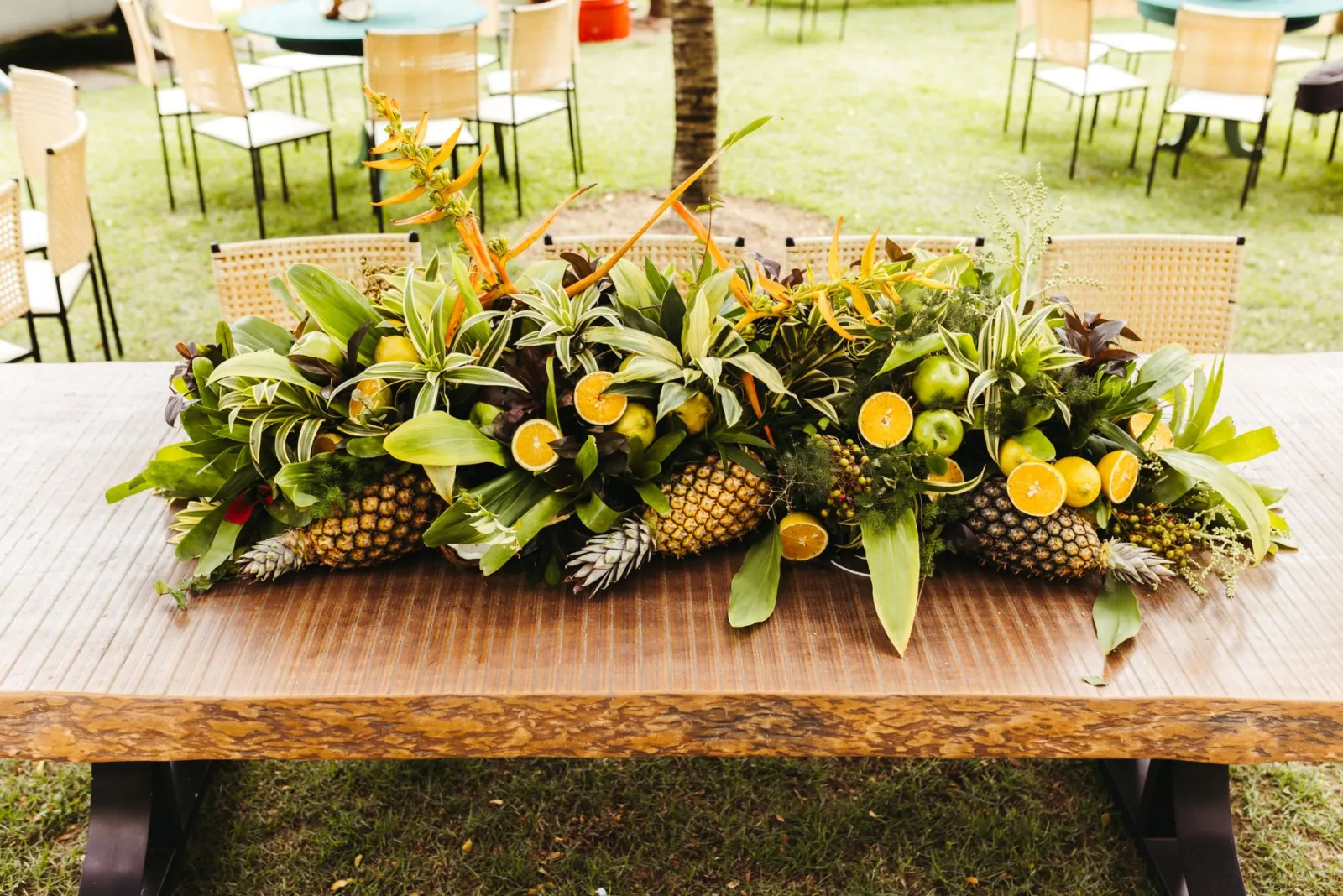
Choosing a dining table centerpiece starts with the table itself rather than with the objects you place on it. The first practical question is how much usable surface you need to keep clear. On a table used for family dinners, each diner needs enough room to set down a plate, a glass, and cutlery without crowding a neighbor, so a centerpiece that spreads across the middle third of the table tends to work well, while anything wider starts to interfere with serving dishes. On a narrow table, a single low, compact arrangement or a slim runner preserves more eating space than a broad bowl or a cluster of tall vases.
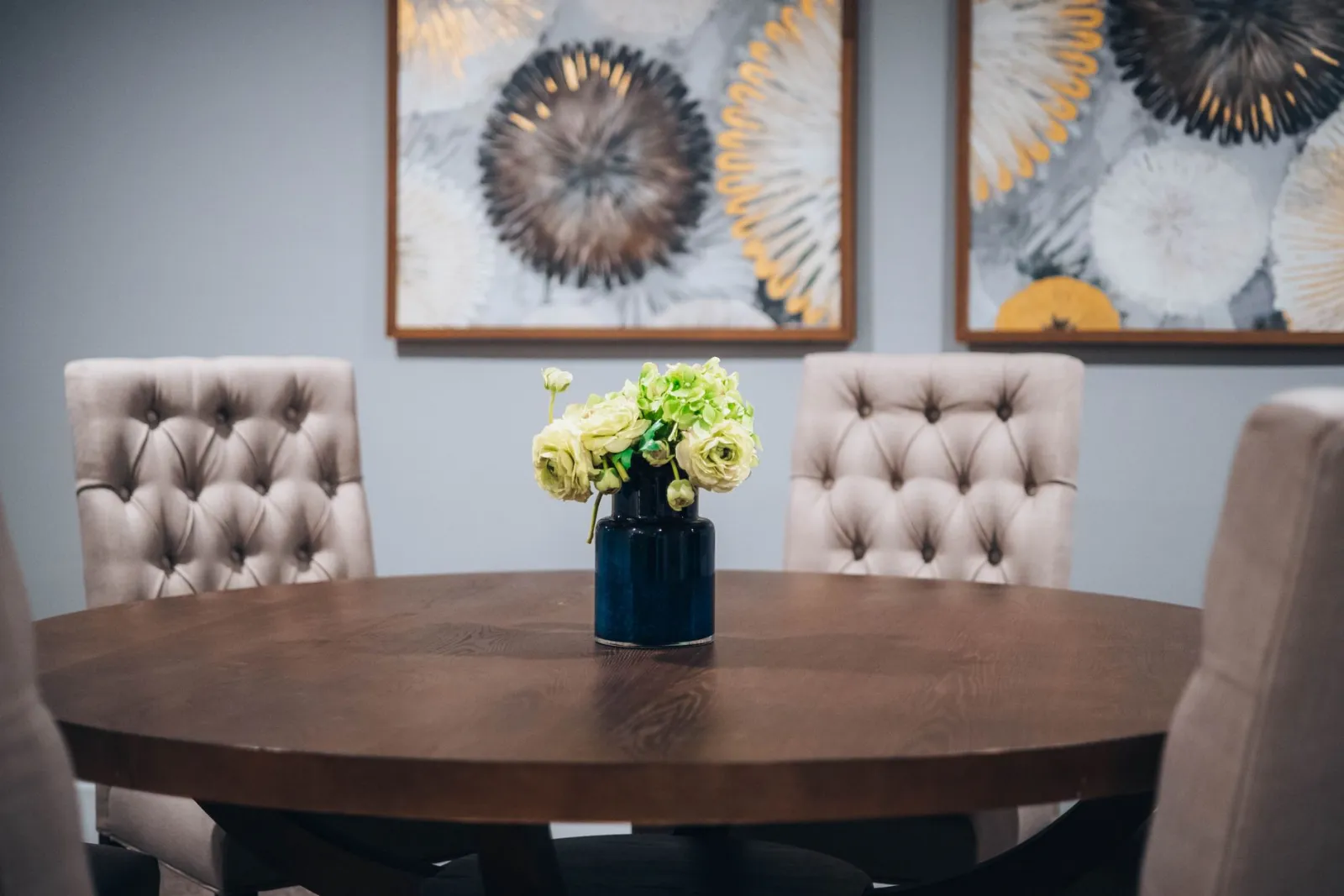
Proportion matters as much as footprint. A centerpiece that is too small for a long table looks lost and fails to anchor the room, while one that is too tall blocks sightlines and forces guests to lean sideways to talk. As a rule of thumb, arrangements that stay below eye level when people are seated keep conversation open, and taller elements belong at the ends of the table or on a sideboard rather than in the middle. Length should follow the table’s shape: a long rectangular table usually suits a linear arrangement or a series of small repeated elements, while a round or square table calls for one centered focal piece that reads well from every seat.
Function shapes the choice as much as appearance. A table used daily for homework, mail, and quick meals benefits from a centerpiece that is easy to lift off in one motion, such as a tray, a shallow bowl, or a single sculptural object. A table reserved for dinner parties can carry something more elaborate, since it will be cleared before serving. Households with young children often prefer low, stable, unbreakable pieces that can be moved without risk, while a formal dining room that sits unused most of the week can support a taller arrangement that is appreciated mainly on special occasions.
Style and care should be decided together. Materials that suit the room’s palette and the table’s finish will look intentional, and pieces that are simple to dust, wipe, or refresh with a change of stems and stems of greenery are far more likely to stay in place than fussy arrangements that demand constant attention. Consider how much maintenance you will realistically do: a bowl of fruit or a pair of candlesticks is refreshed in seconds, whereas a complex floral display needs water changes and replacement. Finally, think about versatility across the year. A neutral base, such as a woven runner, a stoneware bowl, or a set of simple candleholders, can be dressed up with seasonal elements and dressed down for everyday use, giving you one centerpiece strategy that works for ordinary weeknights and celebrations alike.
Best Centerpiece Styles for Everyday Dining
For everyday dining, the centerpiece has to earn its place at the table without getting in the way. The most practical styles share a few traits: they sit low enough to see over, they hold up to being moved aside for serving dishes, and they don’t demand daily fussing. A good rule of thumb is to keep the arrangement below eye level when seated, so guests can converse across the table. Styles that rise tall and narrow, or spread wide and flat, tend to work best because they leave clear zones for plates, glasses, and passing platters.
The low, linear arrangement is the workhorse of daily dining. A shallow bowl or a narrow tray running down the center holds a few stems, some greenery, or seasonal elements while staying compact enough that people can still reach across. This style suits rectangular and oval tables especially well, where a long, slim centerpiece echoes the table’s shape rather than fighting it. It also tolerates being shifted to one end when a large dish needs the middle. For round tables, a single low bowl placed dead center achieves the same effect without crowding the edges.
A single sculptural object or a small cluster of three is another reliable everyday approach. One well-chosen vessel, a low bowl, a simple vase, or a textured object, gives the table a focal point with almost no maintenance. Grouping three items of varying heights in a tight triangle adds visual interest while keeping the footprint small. This works particularly well on smaller tables where a sprawling arrangement would leave no room for serving. The key is scale: the cluster should occupy roughly the middle third of the table’s width, leaving generous margins on each side.
For households that eat at the table several times a day, a tray-based centerpiece offers the most flexibility. A tray corrals a few small items, a candle, a tiny plant, salt and pepper, into one movable unit that can be lifted away in a single motion when the table needs clearing. This is the most forgiving style for busy families, because it keeps loose objects contained and makes resetting the table quick. Trays also protect the table surface from scratches and spills, which matters on wood finishes.
Finally, consider a living or natural style: a small potted plant, a bowl of fruit, or a few sprigs in water. These bring color and texture with minimal effort and can be refreshed seasonally. Fruit bowls double as functional serving, and a small plant adds greenery without requiring cut-flower upkeep. Whatever style you choose, the test is simple: can you set a full place setting, reach the salt, and see the person opposite without moving the centerpiece? If the answer is yes, the style is right for everyday dining.
Sizing Your Centerpiece to the Table
Sizing a centerpiece correctly comes down to three relationships: the footprint it occupies on the tabletop, its height relative to seated eye level, and the visual weight it carries against the size of the room. Get these roughly right and the arrangement feels intentional; get them wrong and it either disappears or dominates the meal.
Start with the footprint. As a working rule, the centerpiece should leave each diner a clear, unobstructed place setting and enough room to rest a plate, glass, and cutlery without crowding. On a compact two- or four-seat table, that usually means a single narrow arrangement running along the center line rather than a wide, round display. On a long dining table, a runner-style arrangement or a series of smaller grouped elements distributes interest without blocking sightlines across the table. A useful test is to mentally set places around the table: if the centerpiece forces place settings outward or leaves no room for serving dishes, it is too large for that table.
Height is the second criterion, and it is where most sizing mistakes happen. The practical target is to keep the arrangement either low enough to see over comfortably or tall and slender enough to see around. A low arrangement that sits below the natural line of sight lets guests converse across the table, which suits everyday family meals and informal gatherings. A tall, narrow centerpiece works for formal occasions where the drama matters and the arrangement is slim enough that people can still see one another. The awkward middle ground is a medium-height, wide arrangement that sits directly in the line of sight and forces people to lean and peer around it.
Consider the use case. For a table used daily, favor a low, compact centerpiece that can stay in place without being moved for every meal, or one that lifts off easily. For holiday and dinner-party tables, you have more freedom to go taller or more elaborate because the table is set for a single occasion and guests are seated around a defined arrangement. For a buffet or console table, height and width constraints relax considerably, since no one needs to see across it.
Finally, weigh the centerpiece against the room. A very large arrangement on a small table in a small dining room can overwhelm the space, while a tiny accent can look lost on a generous table beneath a high ceiling. Match the visual mass of the arrangement to the scale of the table and the room around it, and the centerpiece will read as part of the setting rather than an object placed on top of it.
Seasonal Centerpiece Ideas for Every Home
Seasonal centerpieces work best when they follow the same principle as any good table arrangement: the scale of the piece should match the size of the table and the occasion, not overwhelm it. A generous arrangement that suits a long dining table on a holiday will crowd a small round table on an ordinary weeknight. Before choosing materials, measure the usable center of your table and leave each diner enough elbow room; a centerpiece that forces guests to lean sideways to see one another has already failed, however attractive it looks. A useful rule of thumb is to keep the arrangement low enough that people can see across it while seated, or narrow enough that it occupies a defined strip down the middle.
Spring and summer centerpieces can lean on fresh, light materials that echo the season without much expense. A shallow bowl of cut stems, a cluster of small potted herbs, or a simple vase of garden flowers suits a bright table and can be refreshed often. For casual outdoor dining, a tray holding a few small pots of herbs doubles as a practical piece, since guests can pinch leaves as they eat. Keep water sources covered or shallow if the table is wood, and choose containers with a wide, stable base so a breeze or a passing arm does not tip them.
Autumn arrangements benefit from texture and warmth: dried branches, seed heads, small gourds, and candles grouped on a tray. The tray matters, because it defines the footprint of the arrangement and makes it easy to lift off the table when the food arrives. For a harvest meal, a long, low runner of foliage and a few candles placed at intervals reads as abundant without blocking sightlines. Unscented candles are the safer choice at a dining table, since strong fragrance competes with the smell of the food.
Winter and holiday centerpieces can be the most architectural: evergreen clippings, bare branches, and a few well-placed ornaments or candles. A narrow evergreen runner suits a long table, while a compact arrangement in a low vessel suits a smaller one. If the table is used daily, choose a piece that can stay put without constant rearranging, such as a simple bowl of ornaments or a cluster of candles on a stable base.
Across all seasons, the practical criteria stay the same: match the footprint to the table, keep the height low enough for conversation, protect the surface underneath, and choose materials that suit how often the table is actually used. Rotating a few core vessels and trays through the year, rather than buying new pieces each season, keeps the table looking considered and the storage manageable.
Materials That Suit Busy Households
Materials that suit busy households share a few practical traits: they tolerate being moved often, wiped down quickly, and occasionally bumped without showing permanent damage. For a dining table centerpiece, the surface you touch most is the one that matters first. Solid wood, sealed stone, and matte ceramic all handle daily handling well, but they differ in how they age. Sealed wood develops small marks over time that read as character rather than damage, while unsealed wood will stain from a wet glass ring left too long. If the household includes children or frequent entertaining, a sealed or oiled finish is the safer default, and a quick wipe with a damp cloth should be enough for routine cleaning.
Weight and stability are the next criteria. A centerpiece that tips when someone reaches across the table is a daily annoyance and a spill risk. Heavier bases, whether stone, filled ceramic, or weighted metal, stay put when elbows and serving dishes brush past. Lightweight decorative pieces look elegant but tend to slide on smooth tabletops, so consider a thin felt or cork pad underneath to add grip without changing the look. For households where the table doubles as a workspace, a piece that can be lifted with one hand and set aside is more practical than a large, heavy arrangement that has to be cleared entirely.
Surface texture affects maintenance more than most people expect. Smooth glazed ceramic and sealed stone wipe clean in seconds, which matters when crumbs and sticky fingers are part of the routine. Textured or porous materials, by contrast, trap dust in crevices and can absorb spills, so they demand more frequent attention. If you choose a textured piece for its look, keep it away from the main traffic path across the table and plan on a soft brush for routine cleaning. Metals vary widely here: polished finishes show fingerprints readily, while brushed or matte finishes hide them and resist smudging through the week.
Consider how each material behaves around heat and moisture, since centerpieces often sit near serving dishes and drinks. Sealed stone and glazed ceramic tolerate warm platters set down nearby, though a trivet is still wise. Unsealed wood and porous materials should be kept clear of condensation and hot items. For households that eat at the table every day, a material that shrugs off occasional moisture is worth prioritizing over one that requires careful handling. The best choice is the one that fits your cleaning routine, not the one that looks best in a photograph.
Keeping Centerpieces Safe Around Pets
The first practical step is to treat the centerpiece as a hazard assessment before it becomes a design decision. A cat will test whether a tall arrangement topples with a single paw, and a dog’s tail at table height can sweep a low bowl clean. Think in terms of stability first: a centerpiece that sits on a broad, heavy base or a weighted vessel is far harder to knock over than a slender vase on a narrow foot. If the arrangement is tall and top-heavy, either anchor it with a non-slip pad underneath or move it toward the center of the table where it is harder to reach from a chair. For households with climbers, a low, wide bowl of dried elements or a shallow tray of greenery removes the temptation entirely.
Plant choice matters as much as structure. Some common cut flowers and foliage are best kept off a dining table that pets can reach, so it is worth checking each ingredient against a reliable pet-safety reference before arranging it. Lilies are a well-known concern for cats, and several popular spring bulbs and ornamental greens are likewise unsuitable around animals that chew. If you are unsure about a stem, substitute it rather than risk it. Dried arrangements, preserved grasses, and fabric or wooden faux elements sidestep the question altogether and hold their shape for months, which suits busy households.
Candles and open flames deserve their own rule. A taper in a low holder is an easy target for a curious nose, and a cat jumping onto the table can send a lit candle rolling. Battery-operated candles give the same warm glow without the risk, and if you prefer real wax, choose a heavy, enclosed holder set well back from the table edge and never leave it burning unattended. The same logic applies to small decorative objects: glass marbles, loose berries, pinecones, and tiny figurines are choking hazards and are best avoided in a centerpiece that sits within a pet’s reach.
Placement and routine do a lot of quiet work. A centerpiece set slightly off-center, away from the seat a pet uses to launch onto the table, is less exposed than one placed directly in the middle. During meals, a simple habit of lifting the arrangement to a sideboard or shelf removes the risk for the hour when tails are wagging and chairs are pulled in and out. For households with young, energetic animals, a removable centerpiece that lives on a high shelf between meals is often the most realistic solution, and it keeps the table clear for serving.
Finally, match the centerpiece to the pet you actually have. A calm older dog may never notice a low arrangement, while a young cat will investigate anything new within minutes. Observe how your pet responds to a new piece for the first day or two, and adjust height, weight, and materials accordingly. A centerpiece that survives contact with a wagging tail and a curious paw is one you can leave out with confidence, and that durability is worth more than any single styling choice.
Low-Maintenance Centerpiece Options for Beginners
For beginners, the safest centerpiece is one that asks almost nothing of you between occasions. The practical test is simple: if a piece needs daily adjusting, weekly replacing, or careful dusting around fragile parts, it will likely end up pushed to the side. Favor arrangements that hold their shape for weeks and tolerate being moved when the table is cleared for a meal. Durable materials such as ceramic, stone, dried botanicals, wood, and metal generally outperform fresh flowers and delicate glass in this respect, because they don’t wilt, chip easily, or demand water changes.
Dried and preserved elements are the most forgiving starting point. A bundle of dried grasses or a bowl of preserved seed heads keeps its form for a long stretch and needs only an occasional light dusting or a gentle shake outdoors. The trade-off is brittleness: dried stems can snap if handled roughly, so keep them out of the path of elbows and serving dishes. For a family that clears the table nightly, a low bowl of dried material set slightly off-center works better than a tall arrangement that must be lifted and relocated each time.
Structural, single-object centerpieces suit beginners who want zero upkeep. A wide, shallow ceramic bowl, a sculptural stone piece, or a simple wooden tray with a few large objects reads as intentional without requiring arrangement skills. The rule of thumb is to keep the object low enough that people can see across the table and to leave a clear margin around the edges for plates and glasses. A piece that occupies roughly the central third of the table’s length tends to leave comfortable room for place settings on either side.
Candle-based setups are low-effort but need a moment of thought for safety and practicality. A cluster of candles on a heat-resistant tray contains drips and protects the surface, and unscented or lightly scented candles are the considerate choice for a dining table where food is served. Keep flames clear of dried material and fabric runners, and choose a tray wide enough that a knocked candle won’t tip onto the table. For households with young children or pets, battery-operated candles give the same warm look without the open flame.
A useful beginner strategy is to build around one anchor object and add only what you can maintain. Start with a durable base, such as a tray or bowl, then introduce one or two elements that are easy to swap. This keeps the centerpiece stable while letting you refresh it seasonally without rebuilding from scratch. Whatever you choose, confirm it can be wiped clean, lifted with one hand, and stored flat when the table is needed for serving. Those three qualities separate a centerpiece that stays in place from one that gets retired to a shelf.
Cleaning and Caring for Centerpiece Pieces
Cleaning and caring for centerpiece pieces starts with knowing what each item is made of, because the same cloth or spray that protects one material can dull or damage another. As a working rule, treat the most delicate element on the table as the reference point for the whole arrangement: if a centerpiece combines glazed ceramic, untreated wood, and dried stems, choose the gentlest method that suits all three rather than cleaning each piece aggressively in isolation. Dust is the most frequent culprit, and it accumulates fastest on textured surfaces such as woven runners, carved wood, and matte ceramics, so a soft, dry cloth or a brush with fine bristles used regularly does more good than occasional deep cleaning.
Glass, glazed ceramic, and sealed stone tolerate a barely damp cloth and a mild soap solution, followed by a dry buff to prevent water spots. Unsealed wood, rattan, and other porous natural materials should stay mostly dry: wipe with a barely damp cloth and dry immediately, and avoid leaving condensation rings from vases or pitchers sitting directly on the surface. Metal elements depend on their finish, since polished and brushed surfaces respond differently to abrasion, and a soft cloth is always the safer choice over anything scouring. For dried botanicals and fabric accents, gentle dusting or a low setting on a vacuum with a soft brush attachment is preferable to washing, which can distort shapes and fade dyes.
Frequency matters more than intensity. High-traffic dining tables benefit from a quick dusting or wipe-down roughly once a week, with a more thorough clean at the change of seasons or before hosting. Items exposed to direct sun, such as colored glass or natural fibers, can fade over time, so rotating pieces or shifting them slightly helps distribute exposure. Candles deserve their own routine: trim wicks before each use, keep melted wax off surrounding surfaces, and never leave a burning flame unattended near dried arrangements or fabric runners.
Storage between uses protects the investment. Wrap fragile glass and ceramic pieces individually, keep natural materials in a dry space rather than a damp basement or attic, and store textiles folded with acid-free tissue to avoid creasing and yellowing. When you reset the table, check for chips, loose fittings, or water marks early, since small issues are far easier to address before they spread. A simple care routine, matched to each material and applied consistently, keeps a centerpiece looking intentional rather than tired season after season.
Common Centerpiece Mistakes to Avoid
The most frequent mistake is oversizing the arrangement relative to the table. A centerpiece that occupies too much of the surface leaves no room for serving dishes, glasses, or elbows, and guests end up shifting plates to the edge. As a working rule, the arrangement should leave each diner a comfortable place setting on both sides and still allow serving bowls to be passed without lifting the centerpiece. On a narrow table, a tall, wide bouquet is the usual culprit; a low, horizontal arrangement or a pair of smaller pieces spaced along the length works better because it distributes visual weight without blocking the middle.
Height is the second common error, and it cuts both ways. A centerpiece tall enough to sit in the line of sight forces people to lean sideways to talk across the table, which fragments conversation. The practical test is simple: sit down and check whether you can see the person opposite you without moving your head. Anything that interrupts that sightline should either be lowered or replaced with something slender, such as a single stem in a narrow vase, so the eye passes around it rather than through a solid mass.
Choosing the wrong scale for the table’s shape is another recurring problem. A long rectangular table calls for a linear arrangement or a repeated rhythm of small elements, while a round table suits a single centered piece with roughly even clearance on all sides. Placing a compact round bouquet in the middle of a long table leaves the ends looking bare, whereas stretching a garland-like arrangement across a small round table crowds every setting. Match the footprint of the centerpiece to the footprint of the table rather than to the room.
Forgetting the practical side of dining is easy to overlook until the meal begins. Scented flowers or strongly perfumed elements compete with the food, and candles placed where sleeves or serving platters pass are a hazard. Anything fragile, top-heavy, or easily knocked over should be weighted or moved aside before dishes arrive. If the table will be used for serving from platters, keep the centerpiece compact enough that bowls can be set down without rearranging the decoration.
Finally, many people treat the centerpiece as a permanent fixture rather than something that changes with the occasion. A formal dinner, a casual family meal, and a working session at the same table each call for different solutions, and a piece that suits one can feel excessive or obstructive in another. Rotating between a low arrangement, a simple bowl, and a minimal single element keeps the table usable and prevents the decoration from becoming an obstacle people quietly work around.
Setting a Realistic Centerpiece Budget
Setting a realistic centerpiece budget starts with deciding what the centerpiece is actually for, because the spending logic changes completely between a one-off dinner and a table that gets dressed every week. For a single occasion, it usually makes more sense to think in terms of a total amount you are comfortable spending on the table as a whole, then divide it mentally between the centerpiece, candles, linens and any small accents. For an everyday table, the smarter approach is a modest recurring amount spread across the year, so you can replace worn stems, refresh candles and add one seasonal element without a single large outlay.
The next criterion is longevity. A centerpiece built around durable, reusable components such as a solid vessel, a tray, candlesticks or a bowl earns its cost back over many settings, while anything perishable is a consumable that disappears after a few days. A practical rule is to put the larger share of the budget into the pieces you will keep and a smaller share into what you replace, so the table improves over time instead of resetting to zero after each event. If you are starting from nothing, buying one good base piece first and building around it later is usually more economical than assembling a full look in one go.
Scale matters too. A very large table needs a centerpiece with enough visual weight to hold the space, which often means a bigger vessel or a wider runner, and those items cost more than small accents. On a compact table, an oversized arrangement both looks crowded and wastes money on volume nobody can see. Matching the spend to the table’s real proportions keeps you from overbuying, and it also means fewer pieces doing more work.
Frequency of use is the clearest dividing line. If the table is dressed only for holidays and celebrations, it is reasonable to concentrate the budget on a few statement pieces that store well and come out year after year. If the table is set daily or weekly, prioritize easy care and durability over drama, because items that are fiddly to clean or fragile tend to get used less and end up costing more per appearance. Seasonal swaps are the cheapest way to make a fixed centerpiece feel new: a change of stems, candles or a small accent refreshes the look for a fraction of the cost of a new arrangement.
Finally, leave a margin. A budget that accounts only for the centerpiece itself tends to overrun once candles, a runner or replacement stems are added, so set aside a small reserve for those supporting elements. Reviewing the budget once a season, rather than after every purchase, keeps spending deliberate and keeps the table looking considered rather than accumulated.
Frequently asked questions
How big should a dining table centerpiece be?
A centerpiece should leave each diner enough room to eat comfortably, so aim for a footprint that occupies only the central third of the table and stays low enough to see over. Tall arrangements belong only where the table is wide, and they should be narrow at the base. Before committing, set your plates and glasses in place, then check that the arrangement does not crowd elbows or force anyone to lean sideways to reach food.
What is the best centerpiece for everyday use?
Low, simple, and easy to move: a shallow bowl of fruit, a small cluster of candles, a single vase of stems, or a tray holding salt, pepper, and a small plant. Everyday pieces should survive being pushed aside for serving dishes and wiped clean after meals. Avoid anything fragile, top-heavy, or fussy to rearrange. The best daily centerpiece is one you can lift with one hand and set back down without thinking.
Can I use a centerpiece with pets at home?
Yes, with sensible choices. Skip arrangements that invite chewing or batting: trailing vines, low dangling stems, loose berries, and anything that can be knocked over and shattered. Choose stable, weighted containers, secure candles so they cannot be tipped, and keep edible-looking items like fruit bowls out of reach when you are not at the table. Washable surfaces and closed containers make life easier, and placing the piece toward the table’s center reduces temptation at the edges.
How do I keep a centerpiece from blocking conversation?
Keep the arrangement below eye level when people are seated, or make it tall and narrow enough that faces remain visible on both sides. Wide, bushy pieces are the usual culprits. Test it by sitting at the table across from someone and checking sightlines. If the piece fails, lower it, split it into two smaller arrangements at either end, or move it to a sideboard during meals and return it afterward.
Which materials are easiest to clean and maintain?
Glass, glazed ceramic, metal, and sealed stone wipe clean with a damp cloth and resist stains. Smooth finishes shed dust and crumbs, and non-porous surfaces handle spills from gravy or wine. Avoid unsealed wood, porous terracotta, and untreated natural fibers near food, since they absorb moisture and mark easily. For greenery, choose plants in closed pots with saucers rather than open soil, and refresh cut stems in fresh water so the arrangement stays presentable without daily fuss.
How can I change centerpieces with the seasons?
Keep one base container and swap only the contents: bare branches and evergreens in winter, bulbs and fresh stems in spring, simple greenery or stone in summer, dried elements and warm-toned foliage in autumn. Store off-season pieces together so switching takes minutes. Match the palette to your table linens rather than overhauling everything, and let the container carry the style so each change feels deliberate instead of cluttered.
What centerpiece works for small dining tables?
Go vertical and narrow, or keep it very low. A single slim vase, a small bowl, a pair of short candles, or one small potted plant takes little surface area while still anchoring the table. Avoid wide trays and multiple objects that eat into place settings. If space is truly tight, place the piece slightly off-center or on a nearby sideboard and bring it to the table only between meals.
How much should I spend on a centerpiece?
Spend according to how often the table is used and how much handling the piece will get. An everyday centerpiece benefits from durable, washable materials, while a seasonal or occasional arrangement can be simpler and less expensive. Reusing one good container and changing only the contents usually costs less over time than buying complete new arrangements. Set a budget you are comfortable replacing or repairing, and prioritize stability and easy cleaning over ornament.
Put it into practice : How do I choose the right dining table size?
Work out your own case in 30 seconds:
Methodology
This calculator produces an indicative estimate based on the parameters you enter. The ranges used reflect typical market tiers in the decor and storage space and are neither a commercial offer nor a guarantee. Prices and availability may vary.
Read next :Fridge Organisers: A Practical Guide to a Tidy Kitchen
Read next :Coffee Machines for Home: A Complete Buying Guide
Full guide :Decor & Storage
More from this guide :
Was this guide helpful?
Share your experience with the WiseHomeGuides community.