This article contains Amazon affiliate links. As an Amazon Associate we earn from qualifying purchases.
In short :
- Start by listing the jobs you actually do, not the bottles you see on the shelf.
- A small core kit covers almost everything: a degreaser, a descaler, a disinfectant, a surface cleaner and something for floors.
- Read labels by job and chemistry so you spot duplicates before you pay for them.
- Buy in bulk only for concentrates, refills and things you use weekly.
- Keep your cupboard lean and your money goes where it counts.
Walk down any supermarket aisle dedicated to cleaning and you’ll see shelves stacked with sprays, powders, wipes, foams and concentrates, all promising to make your home spotless in record time. The trouble is that most of them overlap. Buy too eagerly and you end up with a cupboard full of half-used bottles, duplicated products and a nagging feeling that you’ve wasted money. Choose wisely and a small, well-thought-out kit can handle almost everything a home throws at it.
This guide focuses on one precise question: how do you pick cleaning supplies that actually earn their place in your cupboard? Rather than listing products, it walks you through the logic of building a kit — what each item is for, where the overlaps hide, and how to avoid the classic mistakes. By the end, you’ll be able to look at a shelf of cleaning products and know, in seconds, whether you need what’s in front of you.
Start with the jobs, not the products
The single most useful habit is to think in terms of tasks rather than bottles. Most household cleaning boils down to a handful of recurring jobs: degreasing (kitchens, hobs, splashbacks), descaling (bathrooms, kettles, taps), disinfecting (toilets, bins, high-touch surfaces), dusting and general surface wiping, plus floor cleaning. Each job has a different chemistry behind it, and that’s where the real decisions live.
Degreasing, for example, needs something that cuts through fat — alkaline formulas do this well. Descaling needs an acid to dissolve limescale. Mixing the two logics in one bottle rarely works well, which is why a single “all-purpose” spray often disappoints on a greasy hob. Understanding this saves you from buying five products that all do the same mediocre job.
Here’s a practical case. Imagine a kitchen after a Sunday roast: the hob is greasy, the sink has water marks, and the floor has a few sticky patches. A degreaser handles the hob, a mild acid or dedicated descaler sorts the sink, and a simple floor cleaner finishes the job. Three products, three distinct purposes — no mystery, no waste.
Actionable advice: before your next shop, list the five cleaning jobs you do most often. Then check which products in your cupboard map onto them. Anything that doesn’t map onto a real job is clutter.
What basic cleaning supplies should I have? Building a core kit
A genuinely useful core kit is smaller than most people expect. Think of it as a foundation you can extend later, not a complete collection from day one.
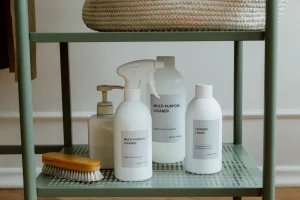
- A multi-surface cleaner for everyday wiping of tables, worktops and handles.
- A degreaser for the kitchen — hobs, extractor hoods, splashbacks.
- A descaler for bathrooms, kettles and shower heads.
- A disinfectant for toilets, bins and surfaces where germs matter.
- A floor cleaner suited to your flooring type.
- Microfibre cloths in a few colours, so you can keep bathroom and kitchen cloths separate.
- A couple of scrubbing tools — a soft brush and a non-scratch sponge cover most needs.
Notice what’s missing: specialist sprays for every conceivable surface. A real-life example makes the point. Many households own a glass cleaner, a stainless-steel cleaner, a granite cleaner and a general spray — yet a diluted multi-surface product plus a clean microfibre cloth handles most of those surfaces perfectly well. The extra bottles add shelf space, not results.
Colour-coding your cloths is a small habit with an outsized payoff. Using one colour for the bathroom and another for the kitchen prevents the classic mistake of spreading bathroom germs across food-prep surfaces. It costs nothing and takes seconds to set up.
Reading a label like someone who knows what they’re doing
Labels are where the real information hides, and learning to read them is the fastest route to buying well. Three things matter most: the intended surface, the dilution instructions, and the safety warnings.
Dilution is the most commonly ignored. Concentrates are designed to be mixed with water at a specific ratio; using them neat wastes product and can damage surfaces. A concrete example: a concentrated floor cleaner used at full strength can leave a sticky film that attracts dirt faster than before. Follow the ratio and the floor stays clean longer.
Surface suitability matters just as much. Acidic descalers are brilliant on limescale but can dull certain natural stones and damage some metals if left to sit. Abrasive powders work wonders on stubborn stains but scratch glossy finishes. Checking the label’s surface list before you spray takes five seconds and prevents costly mistakes.
Finally, look at the hazard symbols and ventilation advice. Products with strong fumes belong in well-aired rooms, and mixing certain cleaners — particularly anything containing bleach with acidic products — releases harmful gases. Storing products out of reach of children and pets isn’t optional; it’s part of choosing well.
Buying in bulk without drowning in bottles
Bulk buying can be genuinely smart — or a fast track to a cupboard full of products you’ll never finish. The difference comes down to a simple test: will you realistically use this quantity before it loses effectiveness or goes off?
Concentrates are the sweet spot. A single bottle of concentrated cleaner diluted correctly can replace several ready-to-use sprays, saving both money and plastic. Refill formats work the same way: you keep the spray bottle and top it up. For high-use items like cloths and sponges, buying a larger pack makes sense because they wear out regularly.
Where bulk buying goes wrong is with specialist products. A huge container of a niche cleaner you use twice a year will likely sit unused until it degrades. A useful rule of thumb: buy in bulk only what you use weekly, and buy small what you use rarely.
Storage deserves a thought too. Heavy containers belong on low shelves, and anything with strong fumes should live away from food and heat. A simple labelled box for cleaning supplies keeps everything findable and safe.
Comparison at a glance
| Supply type | Best for | Watch out for |
|---|---|---|
| Multi-surface cleaner | Daily wiping, light soils | Weak on grease and limescale |
| Degreaser | Kitchen hobs, extractor hoods | Can be harsh on some finishes |
| Descaler | Bathrooms, kettles, taps | Acidic — check surface suitability |
| Disinfectant | Toilets, bins, high-touch spots | Needs contact time to work |
| Concentrate | Refilling, saving space and money | Must be diluted correctly |
FAQ
What are the top 10 cleaning products for home?
There’s no universal top ten, because the right list depends on your home. That said, most well-stocked cupboards include a multi-surface cleaner, a degreaser, a descaler, a disinfectant, a floor cleaner, microfibre cloths, a soft scrubbing brush, a non-scratch sponge, a glass cloth and a pair of cleaning gloves. That covers the vast majority of everyday jobs without filling your shelves with duplicates.
Where can I bulk buy cleaning supplies?
Bulk buying works best for concentrates, refills and consumables like cloths and sponges. Look for refill stations, larger-format packs and concentrate ranges in ordinary shops — you don’t need a specialist supplier. The key question is whether you’ll use the quantity before it degrades. Buy big on what you use weekly; buy small on what you use rarely.
What should a cleaner do in 2 hours in the UK?
In a typical two-hour visit, a cleaner focuses on the highest-impact areas: kitchens and bathrooms first, then floors, dusting and tidying high-touch surfaces. Kitchens and bathrooms take the bulk of the time because they involve degreasing and descaling. Bedrooms and living areas get a quicker pass. If you’re hiring, agree priorities up front — a clear list of what matters most to you makes those two hours far more effective.
The bottom line
Start with a small core kit, colour-code your cloths, dilute concentrates correctly, and buy in bulk only what you’ll genuinely use. Do that, and your cupboard stays lean, your surfaces stay clean, and your money goes where it counts.
This guide focuses on the essentials of choosing supplies. For a broader look at home cleaning routines, storage and room-by-room strategies, a more complete article on the general theme is available on WiseHomeGuides.