This article contains Amazon affiliate links. As an Amazon Associate we earn from qualifying purchases.
In short :
- Measure your closet’s width, height, and depth before you buy anything — depth is the one people get wrong most.
- Standard hanging needs about 60 cm of clearance, and shallow closets under 45 cm work better with shelves and drawers.
- Match the system type to your closet’s shape, then check load capacity and hardware quality before you commit.
- Plan separate zones for clothes, shoes, and accessories so nothing gets buried.
- Skip the brand names and fancy features — fit, function, and flexibility are what actually matter.
You open the closet door, and the avalanche begins. A shoe tumbles out, a sweater slumps off its hanger, and somewhere in the back there’s a shirt you haven’t seen since last winter. Sound familiar? Most closets aren’t too small — they’re just badly organized. A good storage system doesn’t magically add square footage, but it can double the usable space you already have. The trick is knowing what to look for before you buy anything, so you don’t end up with a tangle of mismatched pieces that solve nothing.
This guide walks you through the criteria that actually matter when choosing a closet organizer. No brand names, no shortcuts — just the practical checkpoints that separate a system that works for years from one you’ll regret within a month.
Measure Your Space Before Anything Else
Every good closet decision starts with a tape measure, not a shopping cart. Before you look at a single organizer, record the width, height, and depth of your closet interior. Pay special attention to depth: standard hanging space needs about 60 cm (24 inches) of clearance for clothes to hang without brushing the back wall. Shallow closets under 45 cm often work better with shelves and drawers than with hanging rods.
Don’t forget the details that trip people up. Measure around door frames, baseboards, and any sloped ceilings in attic closets. A common pitfall is buying a modular system that fits the width perfectly but leaves no room for the door to close. Check the swing of the door and the position of light switches too.
Here’s a simple test: stand in front of your open closet and mark with painter’s tape where you’d want each zone — long hanging, short hanging, shelves, drawers. If the tape layout feels cramped, your system will too. Adjust on the wall before you adjust your budget.
Match the System Type to Your Closet’s Shape
Closet organizers generally fall into three families: wall-mounted rail systems, freestanding units, and modular panel systems. Each suits a different situation. Wall-mounted rails are ideal for reach-in closets with solid walls — they hang everything off a single track and free up floor space. Freestanding units, often called closet organizer stands, work well in rentals or spaces where drilling isn’t an option, though they sacrifice some stability under heavy loads.
Modular panel systems offer the most flexibility. They let you reposition shelves and rods as your needs change — handy if you share the closet with a partner whose storage habits differ from yours. A real-world example: a couple with one tall partner and one short partner often benefits from a split system, with double hanging on one side and a single long-hang section on the other.
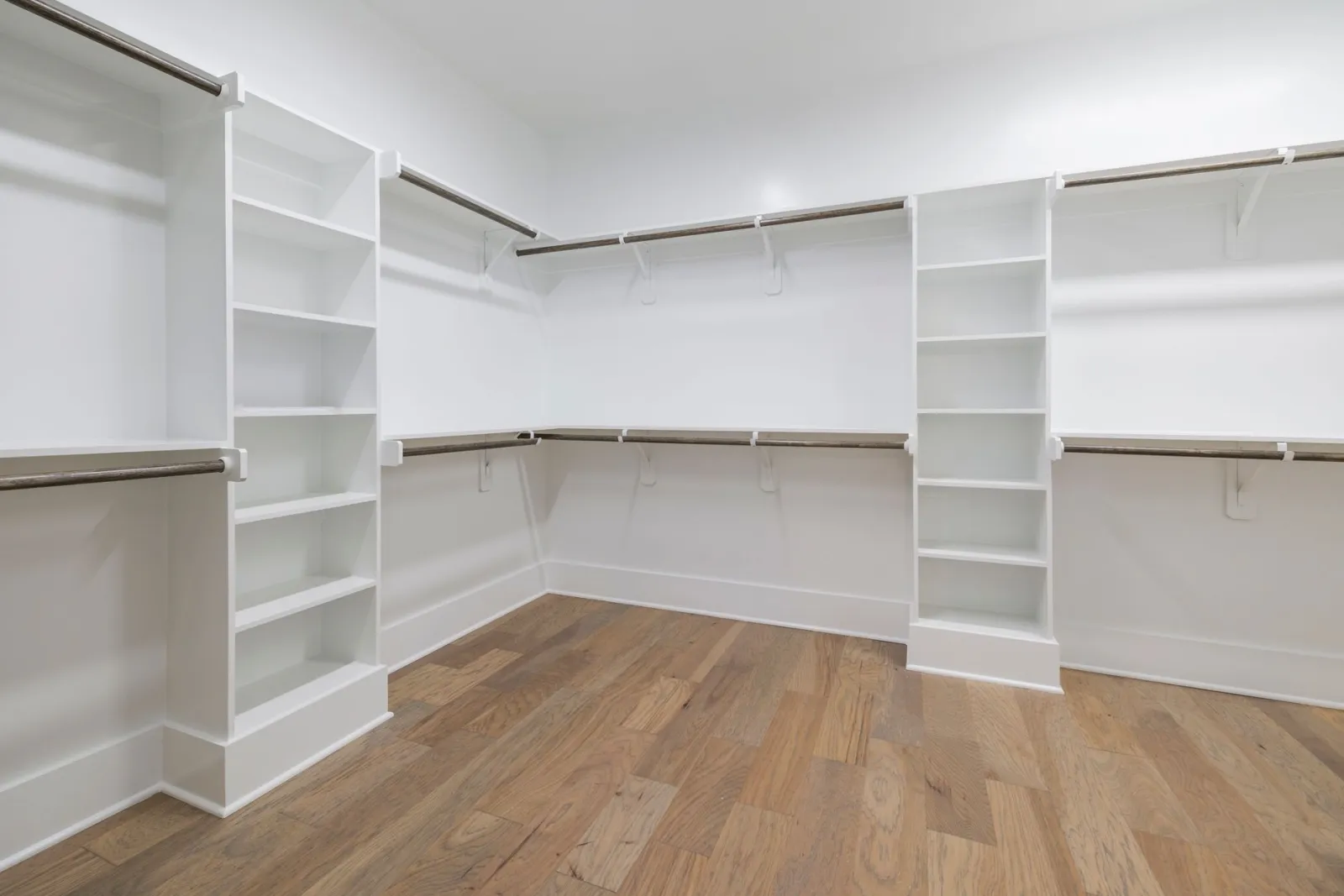
Walk-in closets can handle more elaborate configurations, including island drawers or corner shelving. But don’t overbuild. A common mistake is filling every inch with structure, leaving no breathing room. Leave at least one open section for flexibility — you’ll thank yourself when your storage needs shift.
Check the Load Capacity and Hardware Quality
A closet organizer is only as good as the hardware holding it up. Look for rods that are at least 2.5 cm (1 inch) in diameter — thinner rods sag under the weight of heavy coats. Shelf brackets should be rated for the load you plan to put on them; a shelf holding sweaters needs more support than one holding folded t-shirts.
Test the hardware in person if you can. Pull on a display rod. Open and close a drawer. Wiggle a shelf. If it flexes or squeaks, it will only get worse once it’s loaded with your belongings. Online, look for descriptions that mention weight ratings and mounting hardware included — vague listings often mean flimsy materials.
One practical observation: adjustable shelving with metal pins tends to hold up better than plastic clips over time, especially in humid bathrooms or basements. If your closet shares a wall with a bathroom, consider moisture-resistant materials to avoid warping.
Plan Zones for Clothes, Shoes, and Accessories
Good storage isn’t about cramming more in — it’s about giving each category a home. The classic zoning approach divides a closet into hanging, shelving, and drawer zones, with shoes and accessories assigned dedicated spots. Hanging space should account for roughly 60–70% of a typical wardrobe, split between long hanging (dresses, coats) and double hanging (shirts, trousers).
Shoes need about 15–20 cm (6–8 inches) of shelf height per pair, and a shoe rack or angled shelf keeps them visible. Wardrobe organiser boxes work well for folded items, accessories, and off-season clothing — clear or labeled boxes save you from digging. For shelves, stack folded clothes in vertical columns rather than horizontal piles; you’ll see everything at a glance and avoid the dreaded topple.
Consider a simple test: empty your closet completely and sort everything into categories on your bed. Count how many items fall into each group. That count tells you exactly how much hanging, shelf, and drawer space you need — no guesswork required.
Decide Between DIY, Modular, and Professional Services
You have three routes: build it yourself, buy a modular kit, or hire a closet organizer service. DIY gives you total control and can be surprisingly affordable if you’re handy with a drill, but it demands accurate measurements and patience. Modular kits split the difference — they come pre-cut and often include everything you need, though you’ll still assemble them yourself.
A professional service makes sense if your closet has awkward angles, if you want a built-in look, or if you simply don’t want to spend a weekend with a level and a screwdriver. Expect a consultation where a designer measures your space and proposes a layout. Ask for a detailed plan before committing — a good service will walk you through the zones and materials.
Whichever route you choose, compare at least two options. A modular kit that looks perfect online may not fit your exact dimensions, and a custom build may cost more than the value it adds. The right choice depends on your budget, your timeline, and how long you plan to stay in your home.
FAQ
Which closet system is the best?
There’s no single best system — the right one depends on your closet’s dimensions, your storage habits, and whether you rent or own. Wall-mounted rail systems suit most reach-in closets, while modular panel systems offer the most flexibility for changing needs. Focus on fit and hardware quality rather than a specific type.
What are some good storage options for clothes and shoes?
For clothes, double hanging rods, vertical shelf stacks, and wardrobe organiser boxes cover most needs. For shoes, angled shelves, shoe racks, and clear boxes keep pairs visible and protected. Assign a dedicated zone to each category so nothing gets buried.
How can I organize my closet with no money?
Start by emptying everything and sorting into keep, donate, and store-elsewhere piles. Repurpose what you already own — shoeboxes as drawer dividers, sturdy cardboard boxes wrapped in paper as shelf bins. Rearrange hanging rods to create double-hang sections, and use the vertical space above the top shelf for off-season items.
What are some effective storage ideas for shelves in my wardrobe?
Stack folded clothes vertically in columns, use shelf dividers to keep piles upright, and reserve the top shelf for infrequently used items. Clear containers with labels make it easy to find what you need without pulling everything out.
Conclusion
Choosing the best closet organizer comes down to fit, function, and flexibility — not brand names or fancy features. Measure carefully, match the system type to your space, check the hardware, and plan zones before you buy. Do that, and your closet will stop being a source of frustration and start working for you. For a deeper look at the full range of closet organization strategies, from seasonal rotation to long-term maintenance, a more comprehensive guide on the general topic is available.