In short :
- Cool water, gentle friction and a bit of attention is all you really need here.
- Separate leafy greens leaf by leaf so the grit can escape, and scrub root vegetables properly.
- Rinse before peeling too, or soil on the outside ends up on the flesh.
- Skip the fancy products and wash close to when you’ll eat, then dry well.
- For tiny insects, soak the leaves in a bowl, swish gently and lift them out instead of pouring the water off.
You’ve just pulled a handful of carrots from the ground, and they’re wearing a coat of soil. The lettuce looks crisp and inviting, but there’s a speck of grit hiding between the leaves. Whether your harvest comes from your own backyard or a local pick-your-own field, the question is the same: how do you wash garden vegetables so they’re genuinely clean and safe to eat? It’s a simple task with a few important nuances. Rinse too casually and grit, soil, and tiny insects linger. Overdo it with the wrong technique and you bruise delicate leaves or waste water. This guide walks you through a clear, reliable method tailored to the realities of home-grown produce — the kind that arrives in your kitchen with a little of the garden still attached.
Why Garden Vegetables Need More Than a Quick Rinse
Vegetables from a garden aren’t like the pre-washed greens from a supermarket bag. They come with soil particles, dust, and often small insects clinging to stems and leaf crevices. Soil itself isn’t the enemy — but it can carry unwanted microorganisms, and grit is unpleasant on the plate. The goal of washing is twofold: remove visible debris and reduce surface contamination without damaging the produce.
Consider a head of homegrown lettuce. The outer leaves look clean, but water and soil splash from rain or watering often lodges near the base where leaves overlap. A quick pass under the tap won’t reach those inner folds. Separating the leaves and rinsing each one individually is the difference between a salad that crunches cleanly and one that surprises you with a mouthful of grit.
Another factor: timing. Washing right before eating or cooking is generally better than washing at harvest time and storing wet. Moisture left on produce encourages spoilage. So plan to wash when you’re about to use it, not the moment it comes indoors.
A Step-by-Step Method for Most Vegetables
The core routine works for the majority of garden produce — tomatoes, peppers, beans, root vegetables, and sturdy greens. Follow these steps in order:
- Start with dry hands and a clean sink or large bowl. A basin of cool water is gentler than a high-pressure tap and lets you soak items briefly.
- Remove outer leaves and trim damaged spots. For leafy greens, discard the outermost leaves and cut away bruised or muddy sections before washing.
- Rinse under cool running water while rubbing gently with your fingers. Friction is what lifts soil from the surface. For firm vegetables like carrots or potatoes, a soft brush helps dislodge dirt from crevices.
- Soak only if needed. For gritty root vegetables, a brief soak of a few minutes loosens soil. Don’t leave produce sitting in water for long — it can become waterlogged and lose texture.
- Dry with a clean towel or a salad spinner. Removing excess moisture improves texture and helps dressing cling to leaves.
Here’s a real-world example: a bunch of homegrown spinach often carries fine sand in the leaf axils. Swishing the leaves in a bowl of water, then lifting them out (rather than pouring the water off) lets the sand settle to the bottom. Repeat with fresh water until no grit remains at the bottom of the bowl.
Adjusting Your Approach to Different Vegetables
Not all garden produce behaves the same way. Delicate items need a light touch; sturdy ones can take more handling. The table below gives a quick reference.
| Vegetable type | Best approach | Watch out for |
|---|---|---|
| Leafy greens (lettuce, spinach, chard) | Separate leaves, swish in a bowl of cool water, lift out, repeat until water is clear | Bruising from rough handling; trapped grit near stems |
| Root vegetables (carrots, beets, potatoes) | Scrub under running water with a soft brush; brief soak for stubborn soil | Over-soaking makes them watery; don’t peel before washing |
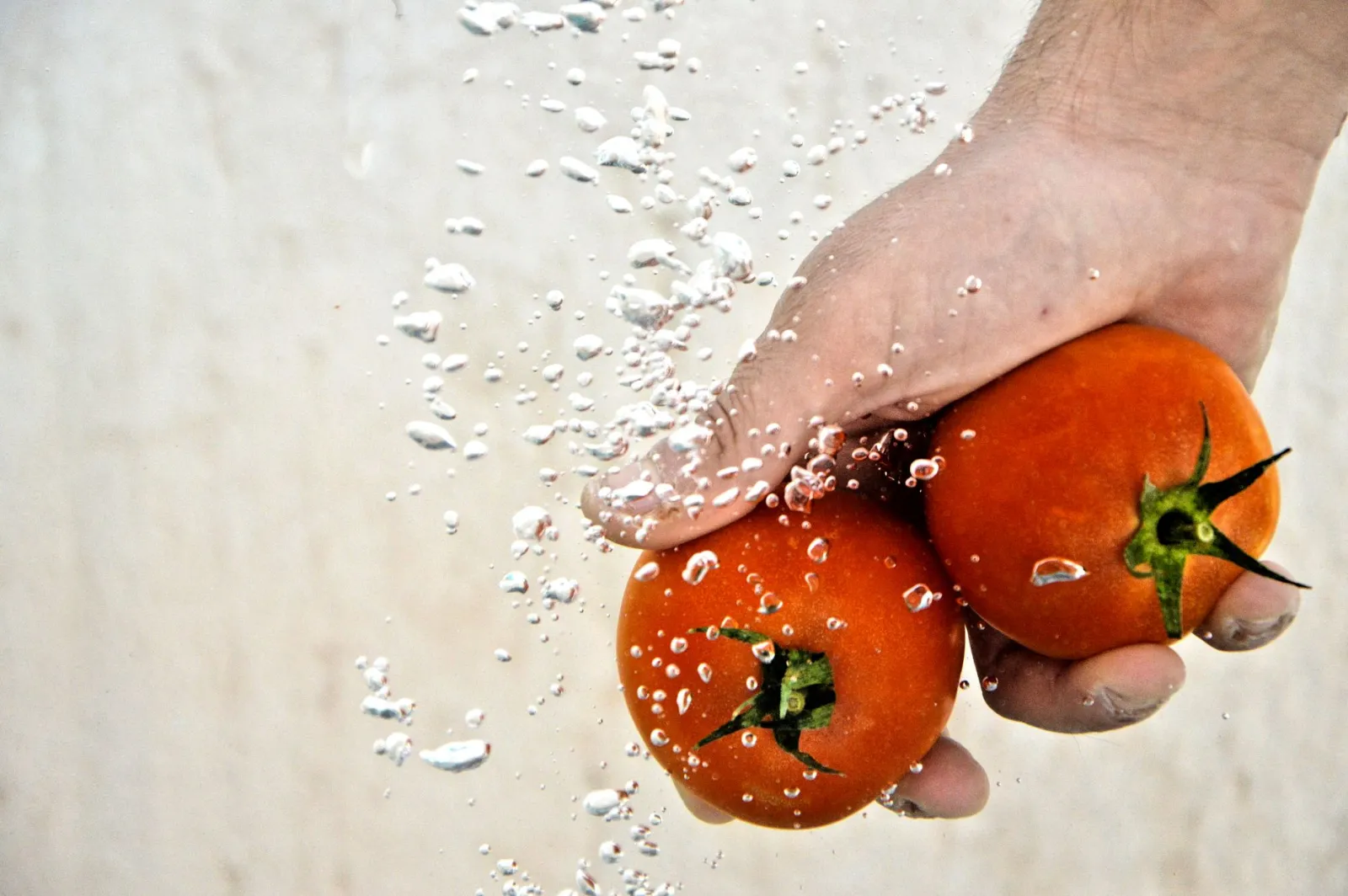
| Fruiting vegetables (tomatoes, peppers, cucumbers) | Rinse under running water and rub gently; dry before storing | Stem scars can harbor dirt — rinse around the stem area |
| Herbs (basil, parsley, cilantro) | Swish gently in a bowl, lift out, pat dry | Bruising and wilting from direct strong spray |
Think about a tomato fresh from the vine. It looks pristine, but dust and insect residue sit on the skin, especially near the stem. A quick rub under cool water handles it. Conversely, a bunch of basil treated to a hard spray will bruise and darken. Same principle, different handling.
Should You Use Anything Beyond Water?
For most home-grown vegetables, plain cool water and gentle friction are enough. Specialty produce washes aren’t necessary, and soap isn’t recommended — residues can linger and affect taste. A diluted vinegar rinse (a splash of white vinegar in a bowl of water) is sometimes used for extra peace of mind on sturdy produce, followed by a thorough plain-water rinse. It’s optional, not a requirement.
One common observation: people sometimes soak vegetables in salted water to draw out insects. For broccoli or cauliflower with hidden pests, a brief salt-water soak can help, but it also affects texture if left too long. Keep it short and rinse well afterward. The guiding principle stays the same — water does the heavy lifting.
FAQ
Do I need to wash vegetables I’m going to peel?
Yes. Soil on the outside of a carrot or potato can transfer to the flesh when your knife moves through it. Rinsing before peeling keeps the inside clean and your cutting board free of grit.
How do I get rid of tiny insects on leafy greens?
Submerge the leaves in a bowl of cool water and swish gently. Insects float free and sink or rinse away. Lift the leaves out rather than pouring the water off, then repeat with fresh water until none remain.
Can I wash vegetables ahead of time and store them?
It’s possible, but moisture speeds spoilage. If you wash ahead, dry thoroughly and store in a breathable container. For best results, wash just before eating or cooking.
The Bottom Line
Washing garden vegetables comes down to cool water, gentle friction, and a little attention to the quirks of each type. Separate leafy greens so grit can escape, scrub root vegetables, and handle delicate herbs with care. Wash close to when you’ll eat, dry well, and skip the fancy products — water and your hands do the job. For a broader look at handling, storing, and preparing everything from the garden, a more complete guide on the general topic is available on the site.