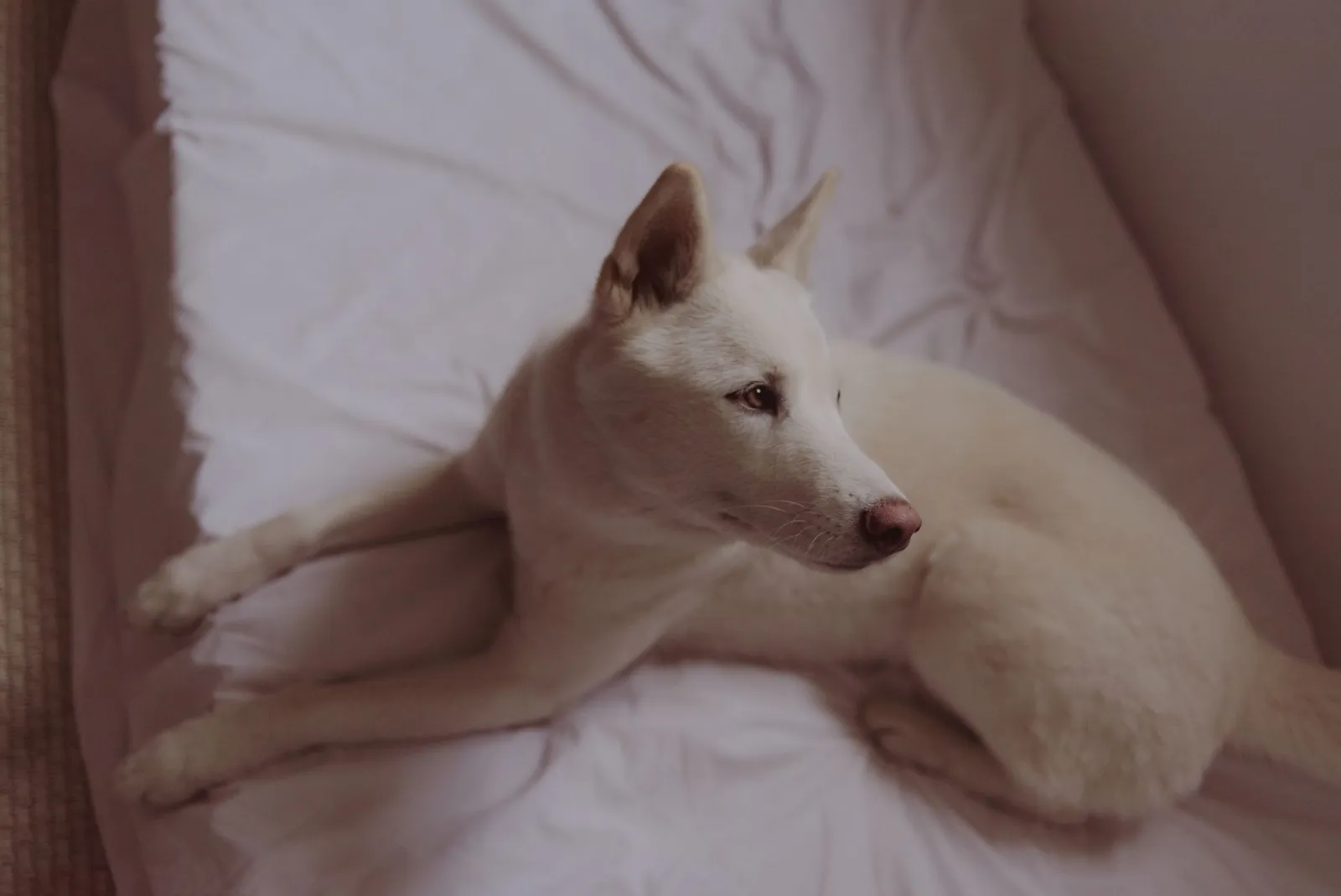
In short :
- You can’t machine-wash a non-washable dog bed, but you can still get it clean.
- Start dry: vacuum both sides with a brush attachment to lift hair and dirt before anything gets wet.
- Then spot-clean stains with a damp cloth and mild soap, and deodorise with baking soda before vacuuming it up.
- Never soak the filling — trapped moisture is what causes mould and that smell that keeps coming back.
- Dry it thoroughly, and a quick weekly routine keeps the deep clean rare.
Clean a non-washable dog bed by removing loose hair and debris first, then spot-treating stains with a damp cloth and mild soap, and finally deodorising with baking soda before vacuuming it away. Work in thin layers, dry thoroughly, and never soak the filling — moisture trapped inside is what causes mould and lingering smells.
Why Can’t You Just Throw It in the Machine?
Because many dog beds contain foam, memory filling, rigid frames or glued seams that break down in water and heat. A machine cycle can turn a solid foam core into a lumpy, damp brick that never dries properly — and that damp interior is exactly where bacteria and mildew settle in.
Think of the bed as having two lives: the cover, which is often removable and washable, and the core, which is not. Before you do anything, unzip or unfasten the cover if there is one. Read the care label sewn into the seam — it tells you the fibre content and whether water, heat or solvents are off-limits. If the label says “surface clean only,” respect it.
A concrete case: a foam-filled orthopaedic bed with a stitched, non-removable outer shell. You cannot submerge it, but you can still lift surface dirt, neutralise odour and refresh the fabric. That’s the whole method below.
What Should You Do Before Any Liquid Touches the Fabric?
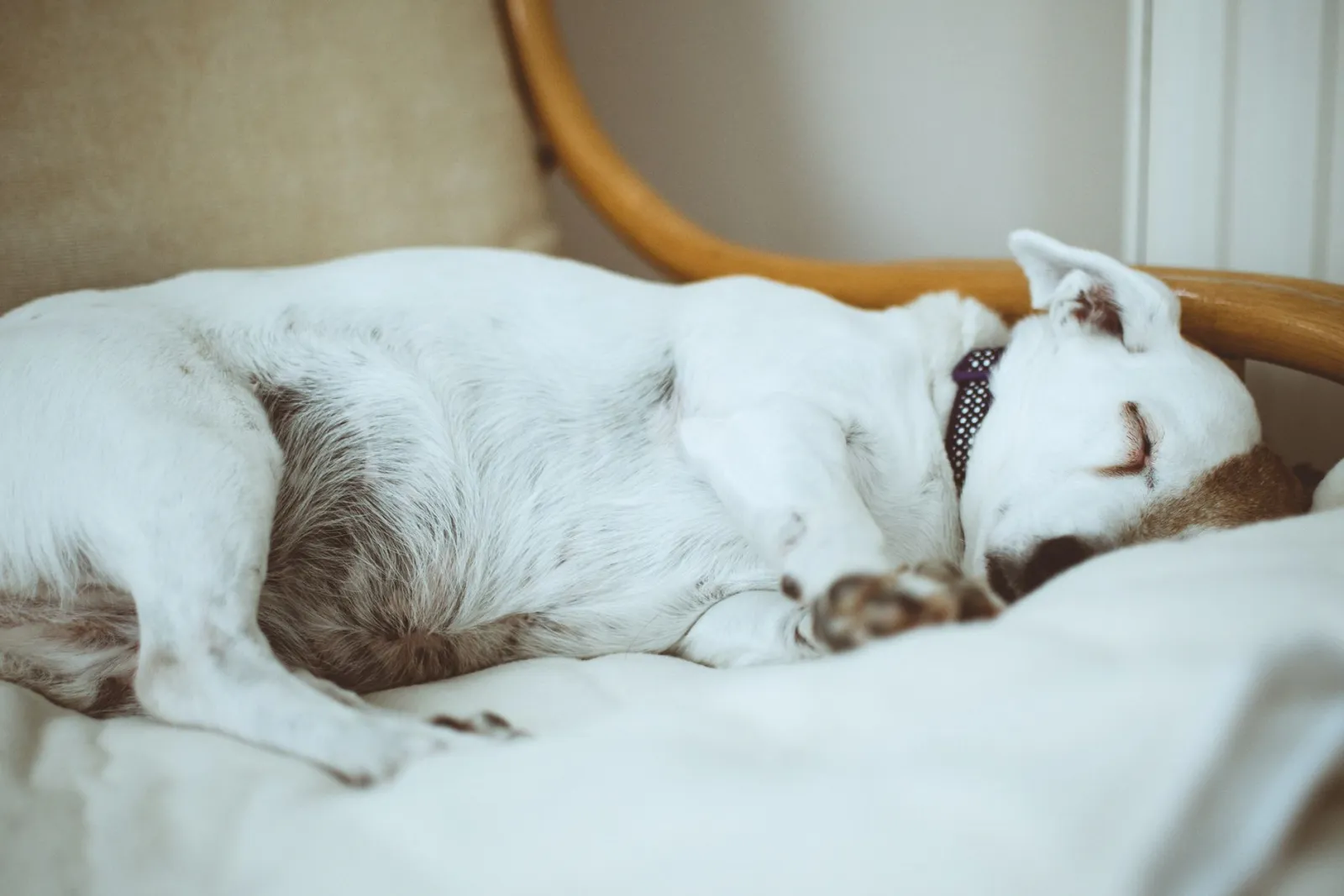
Remove all dry soil first, because wetting dirt only pushes it deeper into the fibres. This dry phase takes about ten minutes and does most of the work.
- Vacuum both sides. Use a brush attachment and go over the whole surface, including seams and corners. Short, overlapping passes lift embedded hair better than one slow sweep.
- Lift stubborn hair. A rubber glove, a damp squeegee or a stiff brush pulls woven-in fur out of the fabric. Work in one direction, then the other.
- Shake and air. Take the bed outside and shake it, then leave it in the shade for an hour. Sun is fine for a short time, but prolonged direct sun can fade covers and degrade foam.
- Check the seams. Run your fingers along every seam. A small split will let water into the filling — patch or avoid that area entirely.
Example: a bed that smells faintly “doggy” but has no visible stain often just needs this dry step plus a baking-soda treatment. Odour usually clings to hair and skin flakes, not to the fabric itself.
How Do You Spot-Clean Stains and Odours Without Soaking the Bed?
By treating small areas with a barely damp cloth and a mild, low-foam cleaner, then blotting rather than rubbing. The rule is simple: the fabric should feel slightly damp to the touch, never wet through.
For stains
Mix a few drops of mild dish soap or a gentle laundry detergent in a bowl of lukewarm water. Dip a cloth, wring it out until it stops dripping, and dab from the outside of the stain inward so you don’t spread the ring. Blot with a dry towel, then repeat with a cloth rinsed in clean water to lift soap residue. Leftover soap attracts dirt and holds odour.
For urine, dab rather than scrub, then follow with a 50/50 mix of white vinegar and water on a cloth. Vinegar neutralises the alkaline compounds in urine. Let it sit for a few minutes, blot dry, and finish with a light sprinkle of baking soda.
For odour across the whole surface
Sprinkle a thin, even layer of baking soda over the fabric, leave it for at least 30 minutes (an hour is better), then vacuum it up thoroughly. Baking soda absorbs odour molecules rather than masking them. For a bed that’s been in a hot room all summer, this one step often makes the biggest difference.
For the filling
If the core itself smells, you can’t wash it — but you can air it. Stand the bed on its side near an open window or a fan for a full day, turning it once. Moving air dries and refreshes the interior far more effectively than heat.
How Do You Dry and Maintain a Bed You Can’t Wash?
Dry it completely, then keep up a light routine so it never gets bad enough to need deep cleaning. Dampness is the enemy — a bed that feels dry on the surface can still be holding moisture in the core.
| Task | How often | Time needed |
|---|---|---|
| Vacuum and remove hair | Weekly | 5–10 minutes |
| Air outside in the shade | Monthly | 1–2 hours |
| Baking-soda deodorising | Monthly or after a wet dog | 30–60 minutes plus vacuuming |
| Spot-clean stains | As they happen | 10–15 minutes |
| Full surface clean | Every 2–3 months | 1–2 hours plus drying time |
Two habits make a real difference. First, use a removable, machine-washable cover or a thin blanket over the bed if you can — it catches the dirt and takes the washing. Second, deal with accidents the same day. A stain left overnight sets into the fibres and the odour travels into the filling, which is the one thing you can’t fix without washing.
Example: a dog that comes in wet from a muddy walk. Towel-dry the dog before it lies down, and lay a spare blanket on the bed for the evening. That single habit cuts cleaning time dramatically over a season.
FAQ
Can I use a steam cleaner on a non-washable dog bed?
Only on the outer fabric and only if the label allows it. Steam pushes moisture into the material, so use it lightly, keep the nozzle moving, and dry the bed fully afterwards. Never steam a foam core — it traps water inside.
How do I get rid of a smell that keeps coming back?
Recurring odour usually means moisture or bacteria is trapped in the filling. Air the bed on its side near moving air for a full day, then repeat the baking-soda treatment. If the smell survives that, the core is likely saturated and the bed may need replacing.
Is it safe to use vinegar on every fabric?
Diluted white vinegar is fine on most durable covers, but test a hidden spot first — some dyes and delicate weaves react to acid. Keep it away from leather, suede and any fabric with a special coating.
The Short Answer
You clean a non-washable dog bed through dry removal, targeted spot-cleaning, deodorising and thorough drying — never by soaking it. Follow the order: vacuum, dab, deodorise, dry, and keep a light weekly routine so the deep clean stays rare. For the full picture on choosing, protecting and maintaining beds over their whole life, a more complete guide on dog bed care covers everything beyond this single cleaning task.
Work out your own case in 30 seconds:
Methodology
This calculator produces an indicative estimate based on the parameters you enter. The ranges used reflect typical market tiers in the pets space and are neither a commercial offer nor a guarantee. Prices and availability may vary.
Was this guide helpful?
Share your experience with the WiseHomeGuides community.