In short :
- Look for a garden chair with good lumbar support and a seat high enough that your hips stay above your knees.
- Firm cushions beat soft, thick ones every time.
- Match the chair to what you actually do outside, whether that’s eating, gardening, or reading.
- If you slide forward to stand up, the seat is too low.
- Get these basics right and you’ll actually want to stay in the garden.
\n
\n\n
Picture this: it’s a mild Saturday morning, the garden is calling, and you’ve got a cup of coffee in hand. You settle into a garden chair on the patio. Ten minutes later, your lower back is already complaining, and getting up feels like a small negotiation with gravity. Sound familiar?
\n\n
For older adults living with back pain, garden chairs aren’t a minor detail — they’re the difference between enjoying an afternoon outdoors and avoiding the garden altogether. The wrong garden chair forces you into a slumped, twisted posture that strains the lumbar spine. The right one supports you, lets you stand up without a struggle, and quietly encourages you to stay outside a little longer. This guide walks through what to look for in garden chairs, why it matters, and how to match them to real needs rather than glossy showroom looks.
\n\n
Why Standard Garden Chairs Often Make Back Pain Worse
\n\n
Most garden chairs are designed for lounging, not for spinal support. Deep, low-slung garden chairs with soft, unsupportive cushions feel wonderful for five minutes and then become a trap. The seat is too low, so the hips drop below the knees. The backrest reclines so far that the lumbar curve flattens. Getting out requires pushing off the armrests while twisting — a movement that’s particularly unkind to an already sensitive back.
\n\n
There’s also the question of duration. A garden chair isn’t used for a quick sit; it’s often occupied for an hour or more, through meals, reading, or simply watching the birds. Sustained poor posture accumulates. What feels tolerable for ten minutes becomes genuinely painful after forty.
\n\n
Within a season, those garden chairs sit empty, and the person migrates to a hard kitchen chair carried outside. That’s a clear signal — comfort and support aren’t the same thing.
\n\n
What to check before anything else
\n
- Seat height: roughly level with, or slightly above, the back of the knee. This lets you sit down and stand up without deep bending.
- Backrest angle: a gentle recline, not a deep one. Too upright is tiring; too flat is destabilising.
- Lumbar support: a curve or cushion that fills the natural inward arch of the lower back.
- Armrests: sturdy and positioned so you can push yourself up vertically rather than sideways.
\n
\n\n
Matching Garden Chair Type to How You Actually Use the Garden
\n\n
Not every garden chair needs to do the same job, and treating them as interchangeable is where people go wrong. A garden chair for a long lunch is a different animal from a garden chair for potting seedlings.
\n\n
For lingering and socialising
\n
Look for a garden chair with a firm seat, a supportive back, and a seat height that lets your feet rest flat on the ground. A slight forward tilt of the seat pan — even a few degrees — reduces pressure on the lower spine and makes standing up noticeably easier. Cushions should be firm rather than squashy; a cushion that compresses to nothing offers no support at all.
\n\n
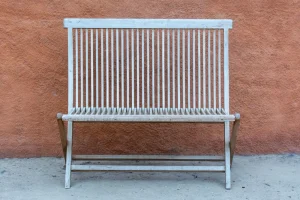
Real-world example: a garden bench with a straight, high back and a firm cushion suits someone who wants to sit with a neighbour and chat for an hour. The same person in a hammock-style garden chair would be miserable within twenty minutes.
\n\n
For gardening and bending work
\n
Kneeling and bending are the worst positions for many back conditions. A raised planting table or a garden stool with a backrest lets you work at waist height instead of at ground level. A simple garden stool with a small back support and a slightly forward-leaning seat is far kinder than crouching over a flowerbed.
\n\n
For resting and reading
\n
Here, a recliner-style garden chair can work — but only if it has proper lumbar support and a mechanism that doesn’t require you to fight it. Adjustable backrests that lock into position are more reliable than those that slide back the moment you relax.
\n\n
| Activity | Key feature to prioritise | Feature to avoid |
|---|---|---|
| Long chats and meals | Firm seat, high supportive back, good armrests | Deep, low, squashy cushions |
| Gardening tasks | Stool or raised table at waist height | Ground-level kneeling without support |
| Reading and resting | Adjustable backrest with lumbar curve | Free-swinging or hammock-style seats |
| Getting up easily | Seat at knee height, vertical armrests | Very low seats with no arms |
\n\n
Materials, Weight, and Practical Details That Matter
\n\n
Support is only half the story. If a garden chair is too heavy to move, it won’t be moved — and a garden chair stuck in the shade when you want sun is a garden chair you won’t use. Lightweight but stable frames strike the best balance. Look for garden chairs that can be shifted with one hand or slid rather than lifted.
\n\n
Weather resistance matters for safety too. A frame that wobbles after a season outdoors becomes a fall risk, especially when you’re pushing down on the armrests to stand. Check joints and fittings; a garden chair that flexes under your weight is not a garden chair to trust.
\n\n
Cushion covers that can be removed and washed are a small detail with a big payoff. Damp, compressed, mildewed cushions lose their support and their appeal. Quick-drying foam holds its shape better than standard filling.
\n\n
One more thing worth thinking about: shade. Prolonged sun exposure is uncomfortable and can cause dizziness in older adults, particularly when standing up. A parasol, awning, or simply positioning garden chairs under a tree makes the whole setup more usable.
\n\n
Frequently Asked Questions
\n\n
Is a reclining garden chair better for back pain?
\n
Not automatically. A reclining garden chair helps if it supports the lumbar curve and locks into position, because it takes pressure off the spine. But a deep recliner that’s hard to get out of can cause more problems than it solves. The test is simple: can you stand up from it without twisting or pushing hard? If not, it’s the wrong garden chair, however comfortable it feels while seated.
\n\n
How high should a garden chair seat be?
\n
A good rule of thumb is a seat height roughly level with the crease behind your knee, or a touch higher. This lets your feet rest flat and your knees sit at about hip level, which makes standing up far easier. If you find yourself sliding forward to the edge of a garden chair to get up, the seat is too low.
\n\n
Do cushions help or hurt?
\n
They help when they’re firm and supportive, and hurt when they’re soft and thick. A cushion that compresses completely gives no lumbar support and can actually increase the seat’s depth, pushing you into a slumped position. Choose a firm cushion with a contoured back if possible, and replace it once it flattens.
\n\n
The Bottom Line
\n\n
For an older adult with back pain, the best garden chairs are the kind that support the lower back, sit at a height that makes standing easy, and are light enough to move to the shade. Prioritise seat height and lumbar support over looks, choose firm cushions over plush ones, and match the garden chair to the activity. Get those basics right, and the garden becomes a place to linger again rather than a place to avoid.
\n\n
If you’d like a broader overview of outdoor furniture for comfort and accessibility — including tables, storage, and layout ideas — there’s a more complete guide on the general theme of garden furniture for older adults.
\n\n