In short :
- Waterproof doesn’t mean much if water can’t escape, so focus on drainage instead.
- Go for slatted or perforated surfaces and skip flat tops and cupped shapes that hold puddles.
- Leave clearance underneath for airflow, and bring cushions inside or pick ones that dry fast.
- A cheap slatted bench beats an expensive solid-top table once the rain starts.
- Get the geometry right and gravity handles the rest.
A summer downpour can turn a cozy patio into a small lake in minutes. And when the water finally recedes, you’re left with soggy cushions, puddles pooling on tabletops, and that faint musty smell that lingers for days. If you’ve ever flipped a chair upside down to pour out rainwater, you already know the real question isn’t just “is this furniture waterproof?” It’s “does this furniture drain?”
Those are two very different things. A surface can be perfectly water-resistant and still trap a shallow pool on top, because water needs somewhere to go. Drainage is about geometry, materials, and airflow working together. Get those three right, and heavy rain becomes a non-event. Get them wrong, and you’ll be bailing out your seating every time the sky opens up.
This guide walks through what to look for, what to avoid, and the small design details that quietly decide whether your furniture survives the wet season looking the same as the day you set it out.
Why Drainage Matters More Than “Waterproof”
Here’s the counterintuitive part: the most waterproof material in the world still fails if water can’t escape. Think of a shallow bowl left on a table. The plastic is impervious to rain, yet that bowl holds a puddle for hours, breeding algae and staining whatever sits beneath it. Furniture with the same geometry behaves identically.
Standing water creates three problems. It accelerates wear on joints and fasteners, it feeds mold and mildew, and it makes surfaces slick and unsafe. A chair that sheds water quickly will outlast an identical chair that holds it, even if both are made of the same material.
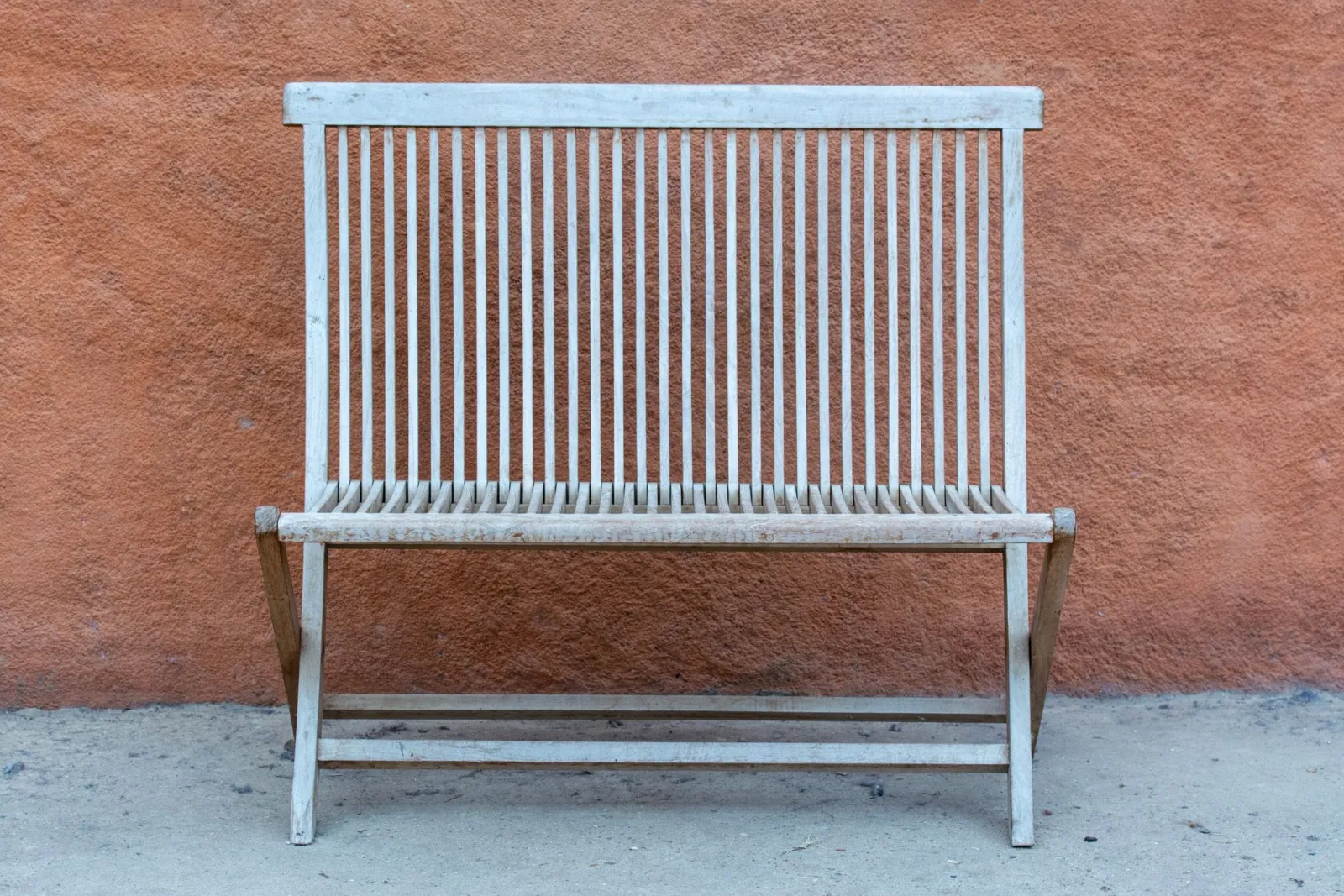
Consider a classic slatted wooden bench. Rain hits it, slips between the gaps, and the wood dries within an hour in open air. Now picture a solid, flat bench top with no gaps. The water sits, seeps into the grain at the edges, and stays there. Same wood, same finish, wildly different outcomes. That’s the whole game.
So when you’re evaluating anything for a rainy climate, ask a single question: where does the water go once it lands? If there’s no clear answer, that piece will disappoint you.
Materials That Handle Rain Gracefully
Not all materials drain equally, and the differences show up fast in real weather.
Slatted and perforated designs
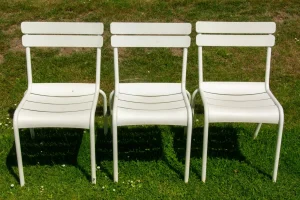
Open slats are the gold standard for drainage. Whether the material is wood, metal, or a composite, gaps let gravity do the work. The wider the spacing, the faster the water clears. A practical rule: if you can see daylight through the seat or tabletop, water will find its way out.
Mesh and perforated metal take this further. A perforated metal tabletop, for instance, drains almost instantly and dries in the breeze. The trade-off is that tiny holes can clog with leaves and pollen, so a quick rinse now and then keeps them working.
Wood and wood-composite
Hardwoods with natural oils resist water absorption better than softwoods, and slatted construction lets them breathe. Left untreated, even good wood will grey and crack over years of wet-dry cycling, so a periodic oil or sealant refresh pays off. Composites behave similarly and generally need less maintenance, though they can feel hotter in direct sun.
One real-world example: a slatted teak bench left out through an entire rainy season typically dries within an hour of the rain stopping, while a solid-topped table beside it can hold a film of water well into the next day.
Metal frames
Powder-coated aluminum and steel frames are popular because they don’t absorb water at all. The catch is the joints and any hollow tubing. If water gets inside a sealed tube and can’t escape, it sits there and corrodes from within. Look for frames with drainage holes at the lowest points, or open designs that let air circulate.
Cushions and textiles
This is where most setups fall apart. Standard foam cushions act like sponges. Even “quick-dry” versions need airflow to actually dry, so they should never sit flat on a solid surface. The fix is simple: choose cushions with open-cell foam and mesh undersides, and store them or prop them up when rain is forecast.
| Type | Drainage behavior | Best for |
|---|---|---|
| Slatted wood or composite | Excellent — water falls through gaps | Seating, tables, benches |
| Perforated or mesh metal | Excellent — near-instant shedding | Tables, lightweight chairs |
| Solid tabletops | Poor — pools on the surface | Sheltered areas only |
| Standard foam cushions | Poor — absorbs and holds water | Covered patios |
| Open-cell quick-dry cushions | Good — dries with airflow | Exposed seating, if stored when wet |
Design Details That Decide Everything
Two chairs can look nearly identical and behave completely differently in the rain. The difference usually hides in the small stuff.
Slope and tilt. A slight backward tilt on a seat, or a subtle crown on a tabletop, nudges water toward the edges instead of letting it pool in the middle. Flat is the enemy. If a surface is dead level, water has no reason to leave.
Leg design and ground clearance. Legs that sit flush on a hard surface trap moisture at the base. Feet with a small gap, or a design that lifts the frame a few centimeters off the ground, let air move underneath and speed drying. This matters enormously on decks and stone patios where water lingers.
Hidden water traps. Watch for decorative recesses, cupped armrests, and tray-style tabletops. They look elegant and behave like birdbaths. A real example: an armchair with a scooped armrest collects a small pool after every storm, and that pool is exactly where the finish fails first.
Fasteners and joins. Water always finds the seam. Screws, bolts, and glued joints should sit where they can dry, not in a pocket that stays damp. Stainless hardware handles wet conditions far better than untreated metal.
Before buying, tilt the piece in your mind: where would a cup of water go if you poured it on? If the answer is “nowhere good,” walk away.
FAQ
Is metal furniture better than wood in heavy rain?
Not automatically. Metal sheds water instantly on the surface but can trap it inside hollow tubes or at joints, where it causes corrosion. Wood absorbs a little but dries well when slatted and treated. The deciding factor is drainage design, not the material itself. A well-built slatted wooden piece often outperforms a poorly designed metal one.
Can I leave cushions outside during the rainy season?
Only if they’re quick-dry and you can prop them up so air circulates underneath. Standard foam cushions should come inside or go into a storage box whenever rain is likely. Once soaked, they can take days to dry fully, and that’s when mold takes hold. If in doubt, store them — it’s a two-minute habit that saves a lot of grief.
How do I stop water pooling on a solid tabletop?
You can’t fully, but you can minimize it. Choose a table with a slight crown or a small central drainage gap, or simply tilt it when not in use. A fitted cover helps too, as long as it slopes so water runs off rather than collecting in a sagging pocket. Never let a cover trap a puddle against the surface.
The Bottom Line
Garden furniture that drains well in heavy rain shares a few traits: open slats or perforated surfaces, a gentle slope that guides water off, clearance underneath for airflow, and cushions that either dry fast or come inside. Materials matter, but geometry matters more. A modest slatted bench will beat an expensive solid-top table every time the weather turns.
So the short answer to the question: choose slatted or perforated designs, avoid flat surfaces and cupped shapes, keep textiles out of the rain, and let gravity do the rest. Get those basics right and you’ll spend your rainy days indoors watching the water run off, instead of outside mopping it up.
If you want the bigger picture — covering materials, storage, seasonal care, and how to plan a whole patio setup for wet climates — there’s a more complete guide on the general theme of weatherproof outdoor furniture worth reading next.