In short :
- Check the soil 5 cm down at root depth first, not the surface.
- Limp new shoots in the morning plus dry soil means it’s thirsty.
- Yellowing leaves and soft, dark stems mean you’re overwatering instead.
- Water deeply but less often, and skip the daily schedule.
- Potted roses dry out fast, so check them every couple of days in summer.
Roses signal thirst through specific, observable signs: drooping new growth, dull leaves, crispy leaf edges, and soil that feels dry 5 cm down. Checking the soil at root depth, not the surface, is the single most reliable test. A rose needing water shows wilting that reverses overnight, while overwatering produces yellowing and mushy stems.
Wilting roses look dramatic, and the instinct is to grab the watering can immediately. That instinct is right roughly half the time. The other half, you are standing in front of a plant that is drowning, and adding more water pushes it closer to the edge. Learning to read the difference takes about thirty seconds of hands-on checking, and it saves both plants and water.
What does a rose look like when it is thirsty?
A thirsty rose shows wilting that recovers overnight, dull grey-green foliage, and dry soil at root depth — three signs that together confirm a genuine water deficit.
Look at the newest growth first. Young shoots and flower buds are the most water-hungry parts of the plant, so they sag before anything else does. On a healthy rose in full sun, those tips should point upward in the morning. If they are hanging limp at 8 a.m. and the soil is dry underneath, you have your answer.
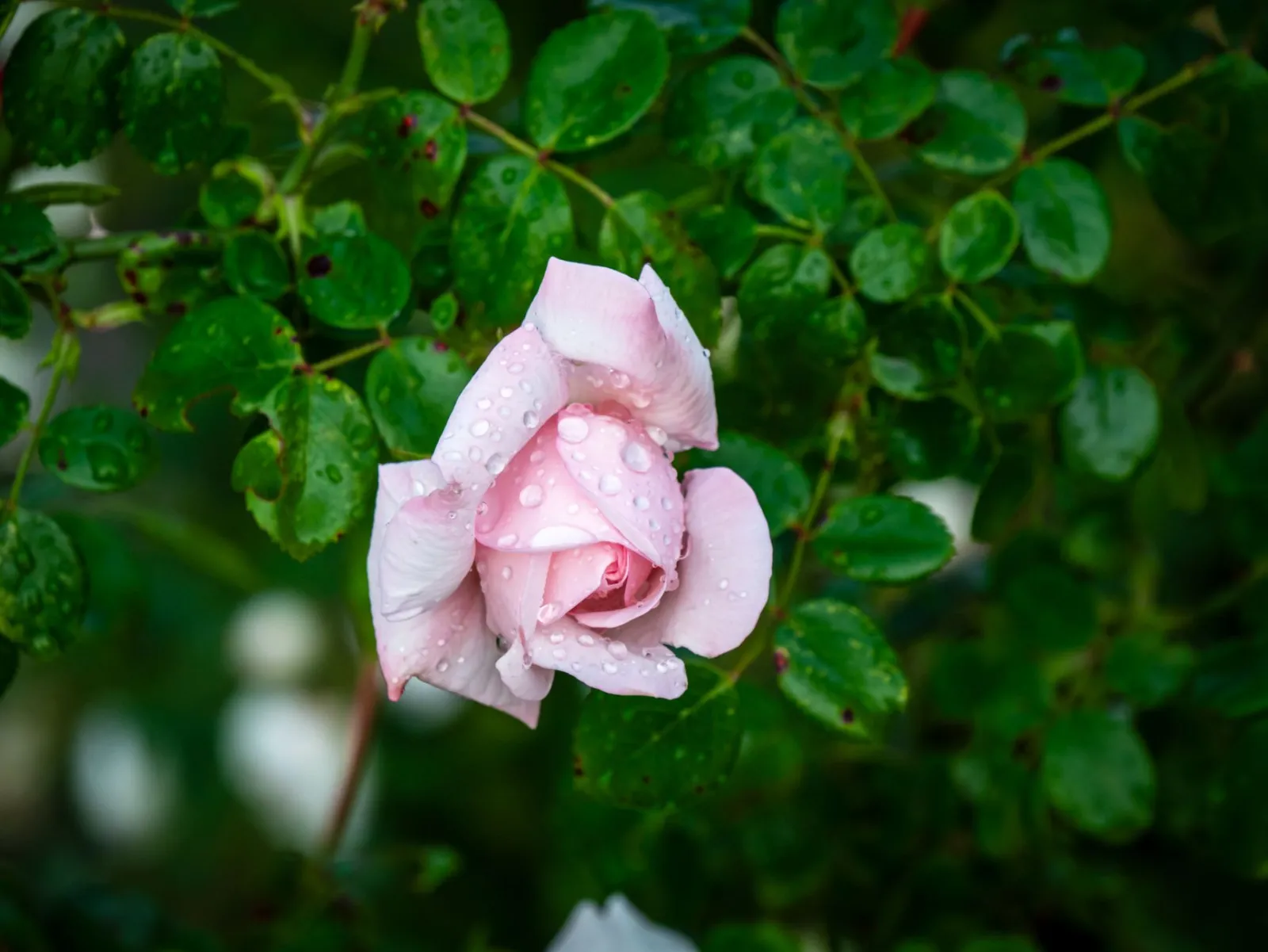
Leaf colour tells a second story. Well-watered roses hold a deep, slightly glossy green. A thirsty plant turns a flat, dusty olive tone, and the leaf edges — especially on the lower and outer leaves — curl inward or crisp up. Those crispy margins are the plant sacrificing older foliage to protect the growing tips.
Flower behaviour matters too. Buds that stall half-open for several days, or petals that drop unusually fast after opening, often point to a plant running short. Here is a concrete case: a shrub rose in a south-facing border that produced tight, papery buds through a dry July, while an identical plant in partial shade opened normally. The difference was soil moisture, not variety.
The test itself is simple. Push a finger or a small trowel about 5 cm into the soil beneath the canopy, avoiding the crown. If it comes up dry and crumbly, water. If it is cool and slightly damp, wait.
How can I tell if my roses need more water?

You can confirm a rose needs water by combining three checks: soil moisture at 5 cm depth, the overnight wilting test, and the weight of the pot for container-grown plants.
Start with the soil. Surface dryness means almost nothing in summer — a mulch layer can look bone-dry while the root zone stays moist. Dig slightly deeper with a trowel and feel the soil against your skin. Cool and damp: leave it alone. Dry and warm: water deeply.
Then run the overnight test. Check the plant in the evening and again early the next morning. A rose that perks back up overnight is telling you it ran short during the day’s heat and needs a deeper soak, not a daily sprinkle. A rose that stays wilted around the clock has a bigger problem — likely root damage, disease, or waterlogged soil.
For potted roses, lift the container. A well-watered pot feels noticeably heavy; a dry one feels light enough to tip with one hand. This single habit catches problems faster than any gadget.
Finally, watch the pattern across the week. Water demand rises sharply during flowering, in windy weather, and in containers. A rose that was fine in June can be struggling by mid-July without anything changing in your routine.
How much water does a rose actually need?
An established garden rose needs roughly one generous soak per week — enough to wet the soil 20 to 30 cm deep — rather than several light sprinklings.
Deep watering is the principle that matters most. Light daily sprinkling wets only the top centimetre or two, encouraging shallow roots that dry out fast and leave the plant fragile in heat. A slow, thorough soak pushes moisture down to where the roots can reach it and keeps the soil cool longer.
Rough guidelines by situation:
- Established garden roses: one deep soak weekly in dry weather, twice weekly during heatwaves.
- Newly planted roses: every two to three days for the first few months, so roots establish before drought stress sets in.
- Container roses: often daily in summer, since a pot heats up and dries far faster than open ground.
- Climbing and tree-form roses: larger root systems and more leaf area, so they need proportionally more per watering.
A practical way to judge depth: water slowly at the base, pause, then check with a trowel. If moisture has reached 20 cm down, stop. If it is still dry two fingers deep, keep going. Early morning is the best window — less evaporation, and foliage dries before evening, which reduces fungal problems.
What is the difference between underwatered and overwatered roses?
Underwatered roses wilt, crisp at the leaf edges, and recover after watering; overwatered roses yellow from the bottom up, drop leaves while still soft, and stay limp even in wet soil.
This distinction saves lives, because the two problems look similar from a distance and demand opposite responses. The table below lays out the practical differences.
| Sign | Underwatered | Overwatered |
|---|---|---|
| Wilting pattern | Recovers overnight or after watering | Persists even when soil is wet |
| Leaf colour | Dull, grey-green, crispy edges | Yellowing, often from the base upward |
| Leaf drop | Dry, brittle leaves fall | Soft leaves drop while still green-yellow |
| Soil feel | Dry and crumbly at 5 cm | Damp, sometimes sour-smelling |
| Stems | Firm but drooping at the tips | Soft, dark, or mushy near the base |
A real-world example makes it stick. A potted rose left in a saucer of standing water after rain often shows exactly the same droop as one that missed a week of watering. The difference is the soil: in the first case it is soaking wet and the roots are suffocating; in the second, it is dry. Feeling the soil settles the question in seconds.
Frequently asked questions
Should roses be watered every day?
No — established garden roses do better with one deep soak a week than with daily light watering. Daily sprinkling keeps roots shallow and makes plants more vulnerable to heat. Exceptions exist: container roses and newly planted roses often need water every day or two in hot, dry weather.
How to tell if roses are overwatered or underwatered?
Check the soil first. Dry soil plus wilting that recovers overnight means underwatering. Wet, sour-smelling soil plus yellowing leaves that drop while still soft means overwatering. Stems help confirm it: firm stems point to thirst, soft or dark stems point to excess water and possible root damage.
How can I tell if my roses need more water?
Three quick checks: push a finger 5 cm into the soil beneath the canopy — dry means water; look at the newest shoots in the morning — limp tips mean thirst; and lift potted roses — a light pot means a dry root ball. Combine all three before reaching for the watering can.
How long can roses go without being watered?
Established garden roses in open ground typically cope with one to two weeks of dry weather if they were deeply watered beforehand, though flowering and growth will slow. Container roses are far less forgiving and can show stress within two or three days in summer heat. Newly planted roses should never be left more than a few days without moisture in their first season.
Reading a rose’s water needs comes down to three habits: feel the soil at root depth, check the newest growth in the morning, and water deeply but less often. Those habits answer the question faster than any schedule. For the full picture on planting, feeding, pruning, and seasonal care, a more complete guide to growing roses covers everything beyond watering.
Was this guide helpful?
Share your experience with the WiseHomeGuides community.