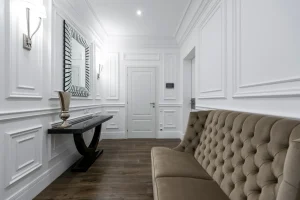
In short :
- Start with what you can’t change: your floor, walls, and built-ins set the rules.
- Then decide if you want the sofa to blend in, anchor the room, or stand out.
- Test a large sample in your own light for several days before you commit.
- Favour mid-tones and textured fabrics — they hide everyday marks and won’t date.
- Do those three things and the choice stops feeling like a gamble.
Choose a sofa colour by matching it to your room’s fixed elements first — floor, walls, and the largest piece of furniture — then decide whether you want the sofa to blend in, anchor the space, or stand out. Test the shade in your own light before committing, and favour mid-tones and textured fabrics that hide everyday marks.
A sofa is one of the few purchases you live with every single day, and the wrong colour becomes a small, constant irritation. The right one makes the whole room click into place without you changing anything else. The good news: this is a decision you can make calmly, with a method, rather than by staring at fabric swatches until your eyes blur.
What should you look at before picking a colour?
Start with what you cannot easily change. The floor, the wall colour, and any built-in elements set the rules your sofa has to play by.
Look down first. A warm oak floor and a cool grey wall pull a room in two directions, and your sofa will either bridge that gap or make it louder. If your floor is warm and your walls are cool, a neutral with a warm undertone — a soft greige, a sand, a muted camel — tends to settle the room. A cool charcoal on top of warm wood can look sharp and deliberate, but it needs a reason to be there, such as matching artwork or a rug.
Then count how many strong colours already exist in the room. A patterned rug, a bold wall, a statement curtain: each one is a voice. If three voices are already talking, a quiet sofa lets the room breathe. If the room is a calm sea of beige, a deeper sofa gives the eye something to land on. A useful rule of thumb: the sofa should be either the calmest thing in the room or the boldest — the muddled middle is where rooms start to feel unfinished.
A concrete case: a living room with a terracotta tiled floor, white walls, and a large patterned rug. Adding a second bold colour on the sofa creates visual noise. A soft stone or oatmeal sofa lets the rug and floor carry the warmth, and the room reads as intentional rather than busy.
How do you test a colour before you commit?
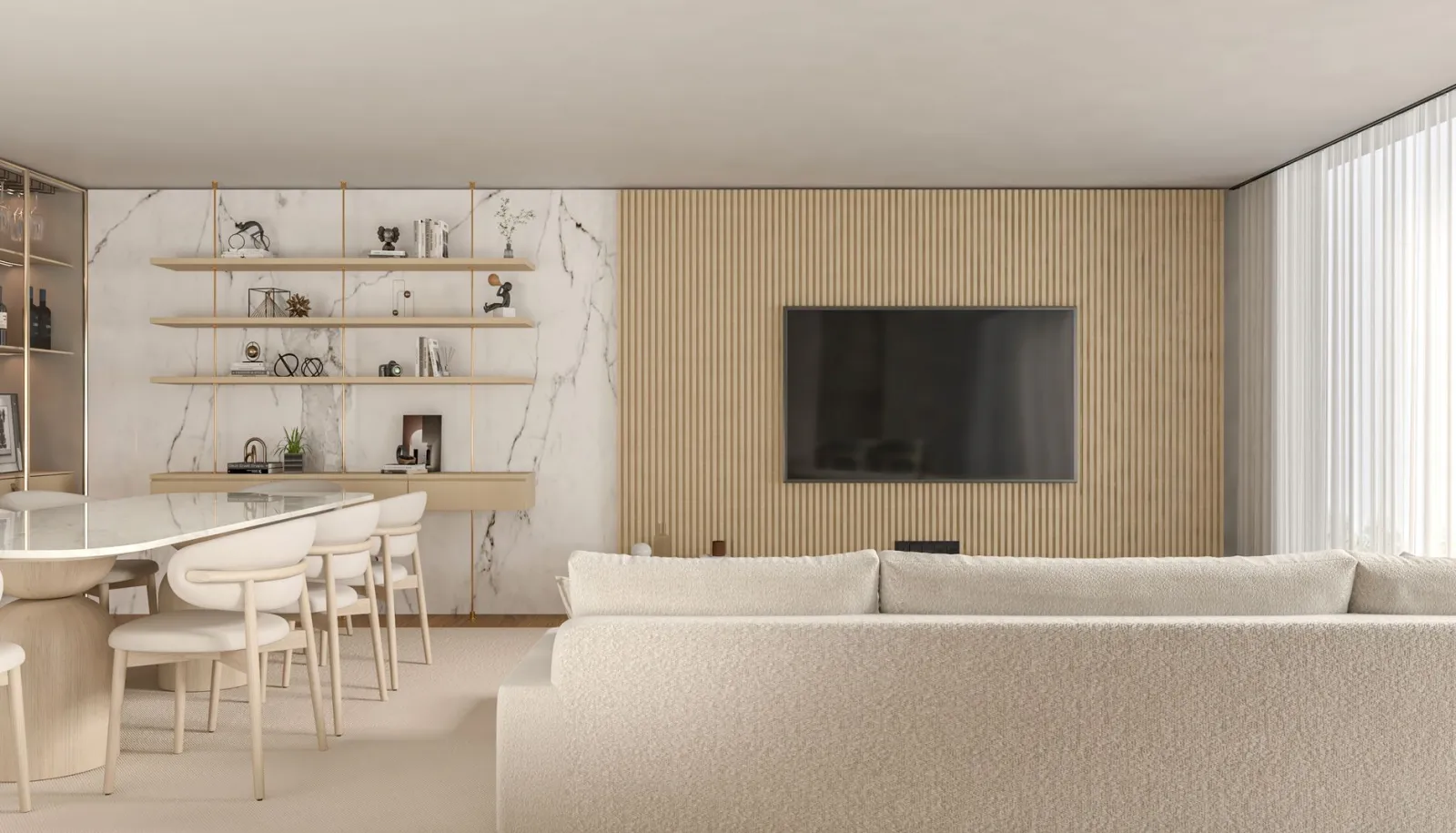
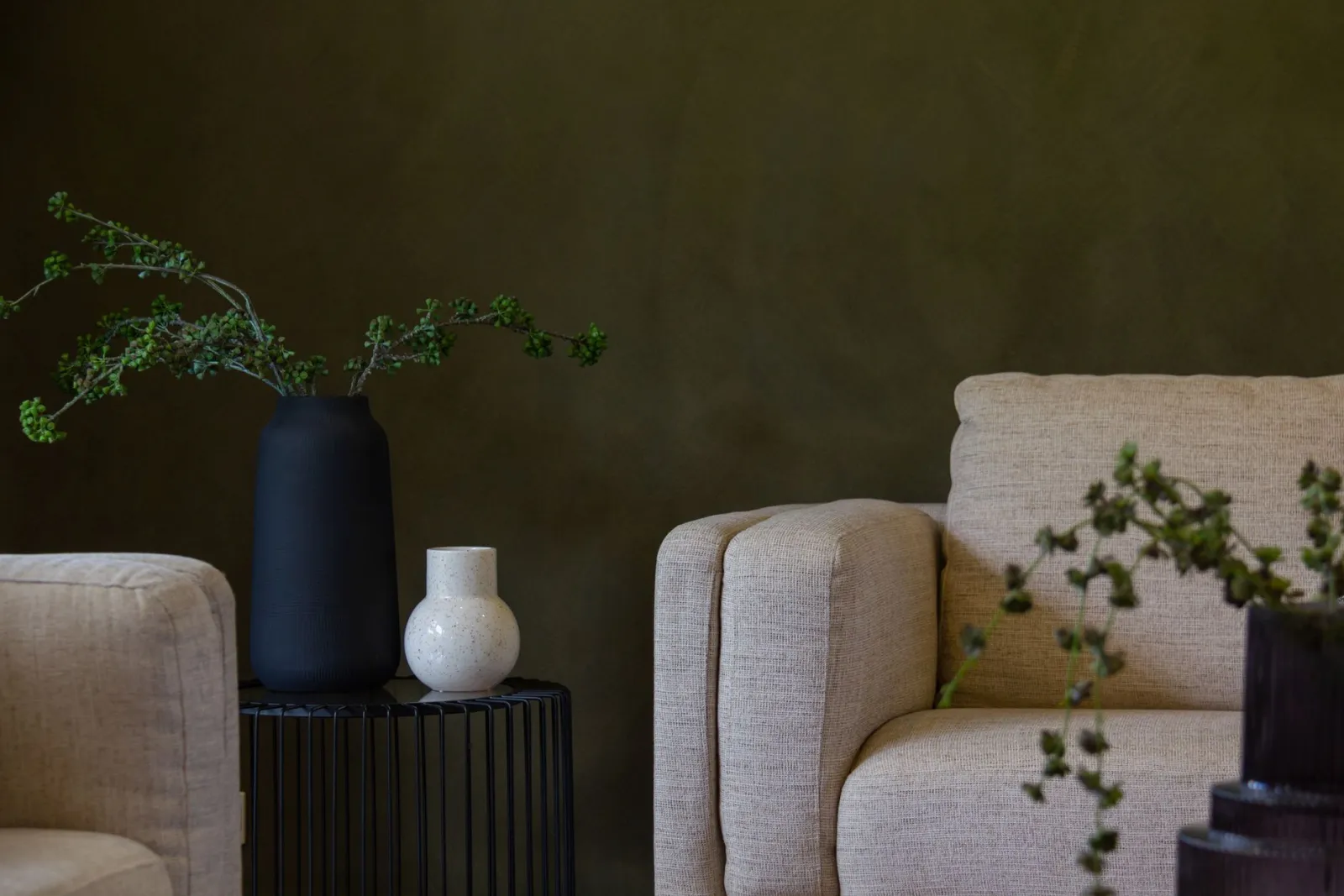
Test in your own room, in your own light, at different times of day — because fabric looks different under a shop’s spotlights than it does in a north-facing living room at 5pm.
Ask for a large sample, ideally the size of a dinner plate or bigger. Small squares are misleading: a 5cm chip shows you the colour, not the effect. Tape the sample to the back of a chair or drape it over an existing sofa and live with it for a few days. Watch it in the morning, in the evening, and under artificial light.
Three things to check while the sample is up:
- Undertone in daylight. Hold it near a white sheet of paper. Does it lean yellow, pink, green, or blue? That undertone is what you will actually live with.
- Behaviour next to your floor. Place the sample on the floor itself. Some colours fight wood; others flatter it.
- How it handles shadow. Corners of a room are darker. A very deep colour can turn into a black hole in a low-light corner; a very pale one can look grey and dull there.
If you are choosing between two close shades, pick the one that looks better in the light you use most — usually evening, with lamps on.
Which colours hold up best in real life?
Mid-tones and textured fabrics forgive everyday life far better than extremes, and that matters more than any trend.
Very light sofas show every crumb, every faint denim transfer, every mark from a dog’s paw. Very dark sofas show lint, dust, and light-coloured pet hair with equal enthusiasm. The quiet middle — mid-greys, taupe, muted greens, warm browns, soft blues — hides the small stuff and stays forgiving. Texture helps too: a woven or bouclé-style surface breaks up marks in a way a flat, smooth fabric cannot.
Think about who uses the room. A household with young children and a busy hallway traffic pattern benefits from a mid-tone in a fabric with visible weave. A rarely used formal room can carry a pale or deep shade that would be impractical elsewhere. And consider the light: a room that gets little natural light tends to feel heavier with a very dark sofa, while a sun-drenched room can handle deeper colours without going gloomy.
A common observation: people who choose a very pale sofa for a family living room often end up covering it with a throw within a year — which tells you the colour was right for the photo and wrong for the life.
How do you make the sofa work with the rest of the room?
Use the sofa as either a bridge or an anchor, and decide which role it plays before you buy.
A bridge sofa sits between two existing colours and ties them together — for example, a muted sage that connects a grey wall with a warm wooden floor. An anchor sofa is the room’s visual base: a deep navy or rich brown that everything else is arranged around. Both work; mixing them up mid-decision is what causes regret.
Here is a quick comparison to help you place your choice:
| Role | Best when | Watch out for |
|---|---|---|
| Bridge (mid-tone neutral) | Room already has two or three strong elements | Can feel safe or forgettable if nothing else adds character |
| Anchor (deep, saturated) | Room is calm, pale, or short on visual weight | Can dominate a small or dim room |
| Statement (bold or bright) | Room is neutral and you want one focal point | Harder to redecorate around later |
| Pale (cream, light grey) | Bright room, light traffic, adults only | Shows marks quickly; needs more care |
One more practical move: pull the sample against your curtains and rug, not just the wall. The sofa sits in the middle of the room, so it needs to get along with everything around it, not only the paint behind it.
Frequently asked questions
Should the sofa match the walls or contrast with them?
Either works, but the effect differs. A sofa close to the wall colour makes a small room feel larger and calmer. A contrasting sofa gives the room definition and a focal point. If your walls are a strong colour, a contrasting sofa usually looks more considered than trying to match the exact shade.
Is a dark sofa a bad idea in a small room?
Not automatically. A dark sofa in a small room can look elegant and grounded, provided the room gets decent light and the surrounding walls stay pale. The risk is a dim, north-facing room where a very dark sofa absorbs what little light there is. Test the sample in the room’s darkest corner before deciding.
How do I choose a sofa colour that won’t date?
Favour mid-tones with a visible texture and avoid shades tied to a single passing trend. Neutrals with a clear undertone — warm taupe, soft grey-green, muted blue — tend to stay comfortable for years, and they are easy to refresh with cushions and throws rather than a new sofa.
The bottom line
Choosing a sofa colour comes down to three moves: read the fixed elements of the room, decide whether the sofa bridges or anchors, and test a large sample in your own light for several days. Do those and the decision stops feeling like a gamble. For the wider picture — fabric durability, size, layout, and how a sofa fits into a full room scheme — a more complete guide on choosing a sofa covers everything beyond colour.
Was this guide helpful?
Share your experience with the WiseHomeGuides community.