This article contains Amazon affiliate links. As an Amazon Associate we earn from qualifying purchases.
In short :
- There’s no single best robot vacuum in 2026 — the right one depends on your home.
- Start with your floors: hard floors need better mopping, carpet and pets need high suction and a tangle-resistant brush.
- A self-emptying, mop-washing dock changes daily life more than a small bump in suction ever will.
- Check that mapping and obstacle avoidance actually fit your layout, especially if pet bowls and toys sit on the floor.
- Write down your floor mix, count your pets, and decide if you’ll hand-wash mop pads — that alone narrows the market fast.
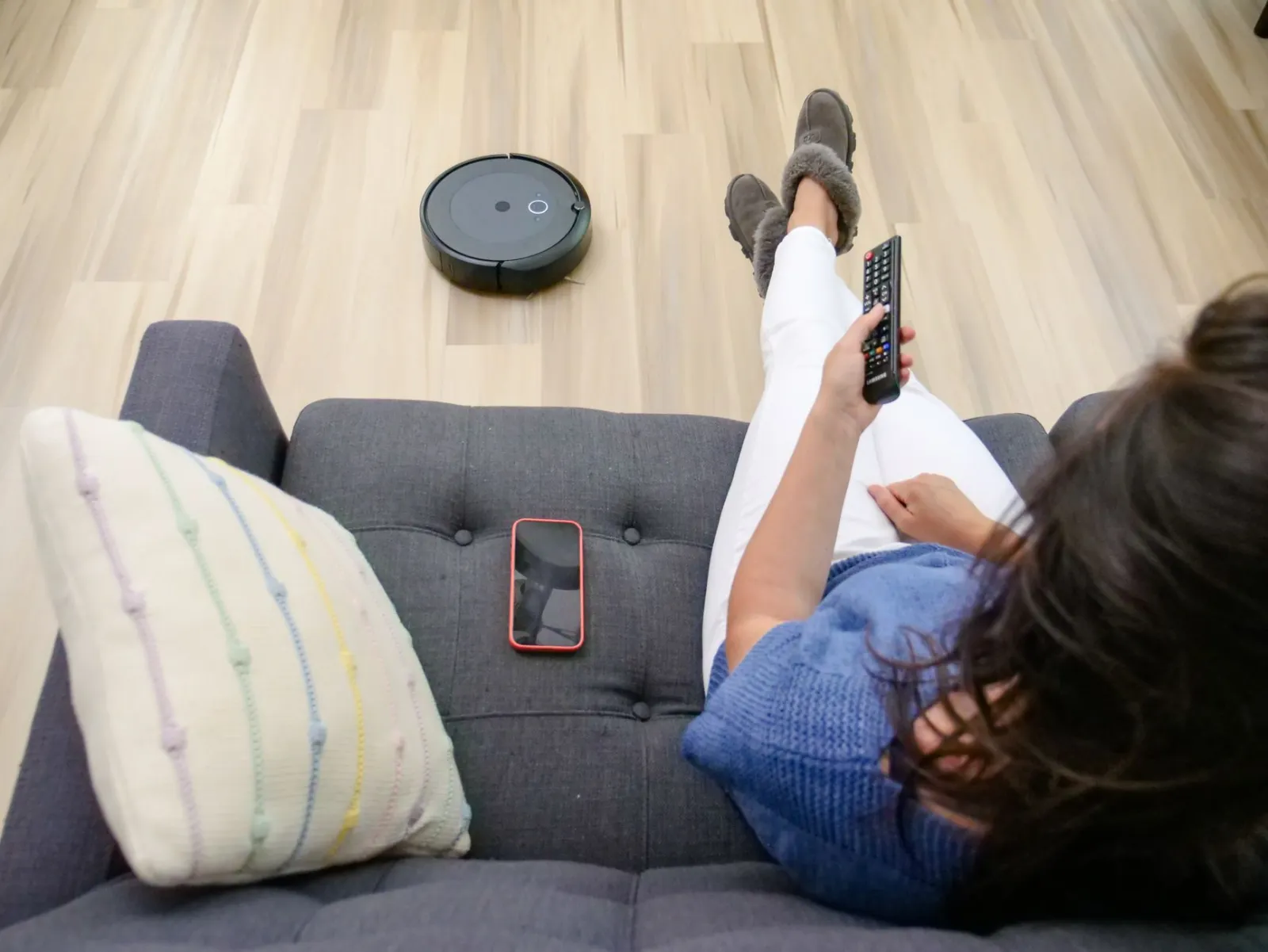
The best robot vacuum in 2026 balances strong suction, a dual-mopping system and reliable obstacle avoidance. The top picks share three features: a self-cleaning dock, intelligent mapping and a low-clearance sensor that slips under furniture. What separates a good purchase from a frustrating one is not the marketing sheet — it is how those features match your floor plan, your pets and your tolerance for maintenance.
Which robot vacuum is the best in 2026?
There is no single best robot vacuum in 2026 — the right one is the model whose suction, dock automation and navigation fit your home. A powerful unit on thick carpet with a weak dock quickly becomes a chore; a modest unit in a small apartment with hard floors can be perfect.
Start with your floor composition. Homes that are mostly hard flooring need less raw suction and more mopping quality, ideally a dual-pad or rotating-mop system that scrubs rather than wipes. Homes with wall-to-wall carpet and pets need high suction plus a brush roll that resists hair tangling. Mixed homes need a model that detects floor type and lifts its mop automatically.
Then look at the dock. A fully automated station that empties the bin, washes and dries the mop pads and refills the water tank changes the ownership experience far more than an extra suction increment you will never notice. Concrete example: a household with two shedding dogs and a 90 m² apartment will feel the difference between a self-emptying dock and a manual bin every single day, while a couple living on tiles in a 45 m² flat may never fill the bin within a week.
Finally, check obstacle avoidance. Cameras and structured-light sensors handle cables, socks and pet waste better than basic bumpers. If your floors are usually clear, you can deprioritise this and spend the budget on mopping performance instead.
What suction power and brush design actually matter?
Suction matters most on carpet and for embedded dust; on hard floors, airflow at the edge and brush design matter more than the headline number. Manufacturers quote peak suction in pascals, but that figure is measured in a lab, not in your hallway.
What to check: whether the unit offers several power levels and an automatic boost on carpet. A robot that ramps up over rugs and drops back on tiles saves battery and noise. Useful ranges sit in the mid-to-high band for mixed homes; entry-level suction is fine for sealed hard floors only.
Brush rolls deserve more attention than they get. Rubber or hybrid rollers resist hair wrapping; pure bristle brushes tangle fast with long hair and pet fur. Concrete example: in a home with one long-haired resident, a bristle brush can need cutting free every few days, while a rubber roller often runs weeks without intervention.
How to test at home: sprinkle a teaspoon of fine sand and a few grains of rice near a wall edge, run the robot on its standard setting, then inspect the skirting. Edge pickup reveals more about real performance than any spec sheet.
How do self-cleaning docks change daily use?
A self-cleaning dock removes the three recurring tasks — emptying, washing and refilling — and that is where most of the perceived value of a 2026 robot vacuum sits. Dust bins on board are small; without a dock you empty them every one to three days in a pet household.
Check what the station actually does. Some empty the bin only. Better ones wash the mop pads with clean water, dry them with warm air to limit odours, and refill the robot’s tank. Mop drying is the feature people underestimate: pads left damp in a closed dock develop a smell within days.
Also verify the consumables and plumbing. Bags, if used, run out silently. Water tanks need refilling roughly weekly in a mid-size home. Concrete example: a dock placed in a hallway without a nearby socket forces an extension lead across the floor — plan the dock location before purchase, not after.
What mapping and navigation features should you verify?
Mapping determines whether the robot cleans your whole home efficiently or wanders into the same room three times. LiDAR-based mapping builds a reliable floor plan and supports room-by-room cleaning and no-go zones; camera-only systems work but struggle more in low light.
Look for saved multi-floor maps if you live across several levels, and for virtual walls you can draw in the app. Scheduling per room is genuinely useful: kitchen after dinner, bedrooms in the morning.
Obstacle avoidance is a separate skill from mapping. Structured-light or camera systems detect low objects such as cables and shoes; basic bumper navigation will nudge them around. Concrete example: a home office with a tangle of charging cables under the desk is the classic test — a robot with good avoidance circles them, a basic one drags them across the room.
How do you judge mopping performance before buying?
Mopping quality depends on contact pressure, pad rotation or vibration, and water control — not on the size of the tank alone. A robot that merely drags a damp cloth smears stains; a dual-pad system that presses and rotates lifts dried coffee and light grease.
Check whether the mop lifts automatically on carpet. Without that, a wet pad crosses rugs and leaves damp patches. Water flow settings matter too: too much water on laminate causes swelling at the seams, too little leaves streaks.
How to test at home: let a drop of soy sauce dry on a tile for an hour, then run a single mopping pass. A good system removes it in one go; a weak one spreads the stain into a wider halo. That single test tells you more than any claim about scrubbing speed.
What new robot vacuums will be available in 2026?
The 2026 generation converges on three trends: retractable or low-clearance sensors to reach under low furniture, extendable side brushes that reach into corners, and docks that wash and dry mops while storing spare water. Simultaneous vacuuming and mopping at full power is also becoming standard on upper-tier units.
Expect more models with threshold-climbing ability for balcony doors and small steps, and more app-level automation that adapts cleaning order to room usage. The practical takeaway: these features are worth paying for only if they solve a problem you actually have.
| Criterion | What to check | Common pitfall |
|---|---|---|
| Suction | Multiple levels, auto-boost on carpet | Buying on the peak figure alone |
| Brush roll | Rubber or hybrid roller | Bristle brush tangling with long hair |
| Dock | Bin emptying, mop washing and drying | Damp pads left in a closed dock |
| Mapping | LiDAR, saved maps, no-go zones | No multi-floor support |
| Avoidance | Structured light or camera | Cables dragged across the floor |
| Mopping | Rotation or vibration, mop lift | Wet pads crossing carpets |
FAQ
What are the top 5 robotic vacuum cleaners?
No fixed top five exists, because rankings change with each launch and with your floor type. A sensible shortlist is built from five profiles instead: a value flagship with a full dock, a raw-performance model for carpet, a mopping specialist for hard floors, a compact unit for small flats, and a pet-focused model with a tangle-resistant brush. Compare candidates against those profiles rather than against a list.
What is the number one rated robot vacuum?
Ratings differ between testers because they weight criteria differently — some prize suction, others dock automation or navigation. The most reliable approach is to identify which criterion your home depends on most, then check how each candidate performs on that specific point in independent tests. A model rated first overall can rank mid-table on mopping.
Which robot vacuum is the best in 2026 for pets?
For pets, prioritise a rubber brush roll, high suction with automatic carpet boost, and a self-emptying dock. Hair and fur fill small bins fast, so dock capacity matters more than in a pet-free home. Add good obstacle avoidance if pet bowls and toys live on the floor.
Practical conclusion
Choosing a robot vacuum in 2026 comes down to matching three things to your home: floor composition, dock automation and navigation quality. Write down your floor mix, count your pets, note where the dock can sit near a socket, and decide whether you will tolerate washing mop pads by hand. Those four answers eliminate most of the market in minutes. For a wider comparison of the general criteria and how they interact across categories, a more complete guide on the main topic is available on the site.
Go further : Robot vacuum for carpet
Was this guide helpful?
Share your experience with the WiseHomeGuides community.