
In short :
- Velvet is tougher than it looks, so don’t be afraid to clean it.
- Check the care label first, because natural velvet needs a gentler touch than synthetic.
- Brush and vacuum gently in the direction of the nap, and always use low suction without a rotating brush.
- Blot spills fast instead of rubbing, and even out water marks by misting the whole panel.
- A professional clean every year or two is plenty for most homes.
Velvet is one of those fabrics that makes a room feel instantly richer. It catches the light, softens sound, and invites you to sink in. But the moment a crumb, a coffee drip, or a dusty paw print lands on that plush surface, panic tends to set in. Many people assume velvet is delicate to the point of being untouchable, so they avoid cleaning it altogether — which is exactly how a beautiful sofa starts looking tired.
The good news: velvet is far more forgiving than its reputation suggests. The secret lies in understanding one thing — the nap, that directional pile that gives velvet its sheen and depth. Treat the nap with respect, work gently, and you can keep a velvet sofa looking fresh for years. This guide walks you through the practical steps, the tools that actually help, and the mistakes that cause lasting damage.
First, Know What Kind of Velvet You’re Dealing With
Not all velvet behaves the same way, and your cleaning approach should follow the fabric, not the other way around. Before you touch a cloth to the cushion, check the care label sewn under the seat or behind the frame. That little tag tells you more than any online advice ever could.
Broadly, you’ll encounter two families. Natural-fiber velvet — cotton, silk, or wool blends — tends to be more sensitive to water and needs a gentler hand. Synthetic velvet, usually polyester-based, is tougher and often responds well to a lightly damp cloth. There’s also performance velvet, engineered to resist spills and stains, which gives you more room to maneuver.
Here’s a concrete example that plays out in real homes: a family with a synthetic velvet sectional can usually blot a juice spill with a damp microfiber cloth and move on. The same spill on a silk-blend velvet armchair calls for a dry approach first and professional advice if a mark remains. Same fabric name, very different rules.
Quick reference by fabric type
| Velvet type | Water tolerance | Best routine | Watch out for |
|---|---|---|---|
| Synthetic (polyester) | Moderate | Lightly damp cloth, gentle brushing | Over-wetting, harsh rubbing |
| Natural (cotton, silk, wool) | Low | Dry brushing, blotting, spot care | Water rings, sun fading |
| Performance velvet | Higher | Damp cloth, mild soap for spots | Assuming it’s indestructible |
The Weekly Routine That Keeps Velvet Looking New
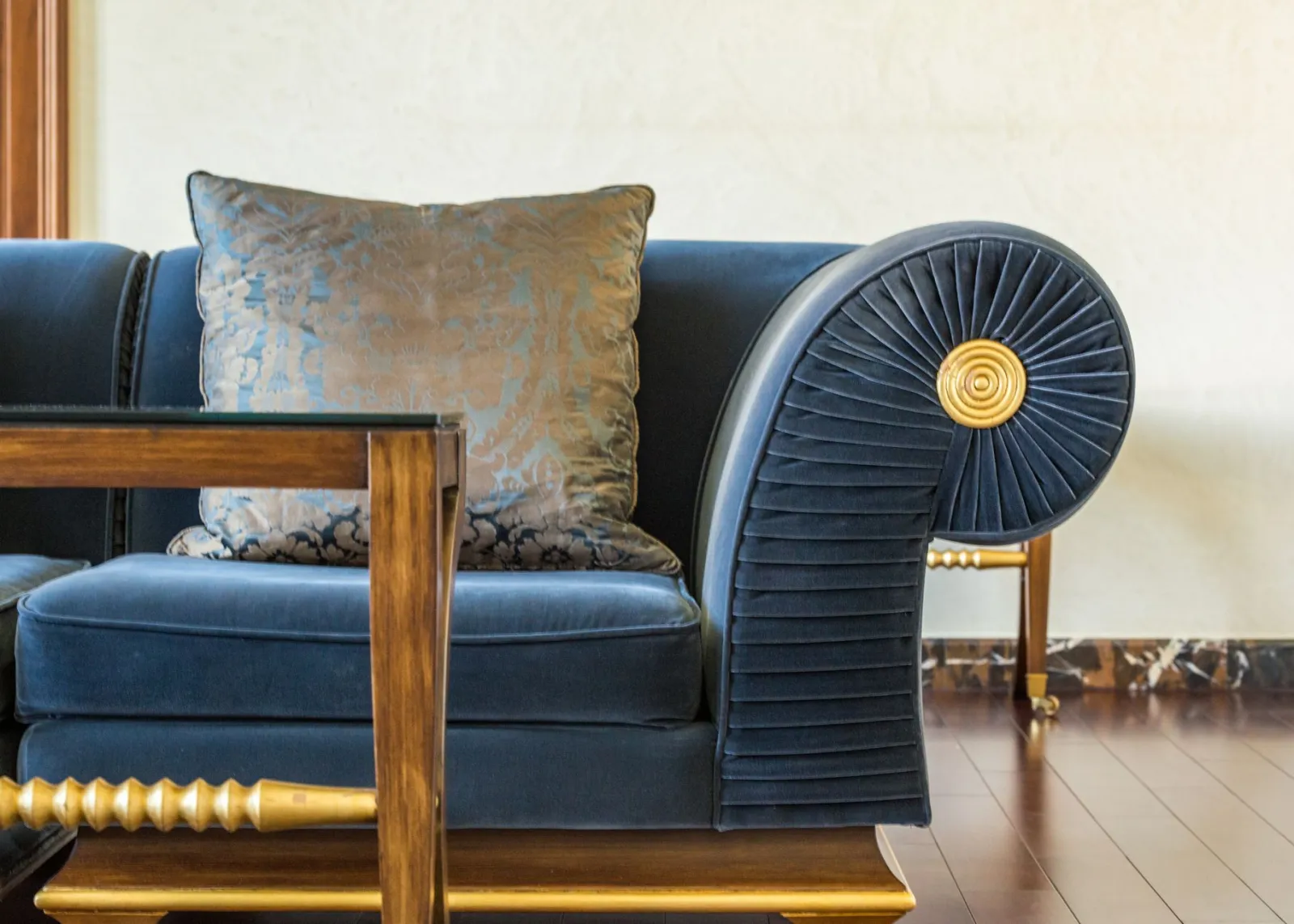
Most velvet damage isn’t caused by big spills — it’s caused by neglect. Dust and grit settle into the pile, and every time someone sits down, those particles grind against the fibers. A five-minute weekly routine prevents most of it.
Start with a soft brush — a dedicated upholstery brush or a clean, soft-bristled brush works well. Brush gently in the direction of the nap, which you can identify by running your hand across the surface: one way feels smooth, the other slightly rough. Always brush the smooth way. This lifts dust, redistributes the pile, and restores that velvety sheen.
For vacuuming, attach the upholstery nozzle and use the lowest suction setting. Never press a spinning brush bar into velvet — it can crush and permanently distort the pile. Glide the nozzle lightly over the surface, and use a crevice tool for the seams where crumbs love to hide.
A real-life case worth picturing: a sofa near a sunny window collects fine dust faster than one in a shaded corner, and the pile there can flatten from both dust and UV exposure. Rotating cushions regularly and brushing that sun-facing area a little more often keeps the whole sofa looking even.
Tools that genuinely help
- A soft upholstery brush with flexible bristles
- Microfiber cloths (lint-free, gentle on pile)
- Vacuum with an upholstery nozzle and adjustable suction
- A spray bottle for light, even misting — never a soaking douse
Tackling Spills and Stains Step by Step
Speed matters more than technique when something spills. The faster you act, the less chance the liquid sinks into the cushion filling. Keep a clean, dry cloth within reach of the sofa so you’re never scrambling.
- Blot, don’t rub. Press a dry cloth firmly onto the spill to draw the liquid up. Rubbing pushes it deeper and roughens the pile.
- Work from the outside in. This stops the stain from spreading outward as you clean.
- Use a mild solution sparingly. A few drops of gentle soap in lukewarm water, applied with a barely damp cloth, handles most fresh stains on synthetic velvet.
- Rinse with a clean damp cloth to remove soap residue, then blot dry.
- Let it air-dry away from direct heat. Radiators and hairdryers can set wrinkles and damage fibers.
- Brush the pile once dry to restore the nap direction.
Consider a common scenario: a red wine spill on a light gray velvet sofa. Blotting immediately with a dry cloth, then dabbing with a lightly damp cloth, often lifts most of the color before it sets. Waiting until morning usually means a permanent shadow. The lesson is simple — act in the first minute, not the first hour.
For grease or oil, a small amount of absorbent powder left for a short while can draw out the residue before you wipe. For anything stubborn, or for natural-fiber velvet, a professional upholstery cleaner is the safer call than experimenting at home.
Drying, Reviving, and Protecting the Pile
How you dry velvet matters as much as how you clean it. Damp pile that dries unevenly can leave water marks or a flattened patch. Aim for good airflow — open a window, use a fan on a low setting, and keep the sofa out of direct sunlight while it dries.
Once dry, brush the nap back into alignment. A soft brush, used in one consistent direction, brings back that soft light-catching finish. If a cushion looks slightly flattened from heavy use, gentle steaming at a distance can help relax the fibers — but keep the steam source moving and never let it sit in one spot.
Prevention pays off here too. Rotate and flip removable cushions every few weeks so wear is distributed evenly. Keep the sofa out of harsh direct sun to slow fading. And address small marks early — a five-second blot beats a thirty-minute stain removal session any day.
Frequently Asked Questions
Can you use a regular vacuum on a velvet sofa?
Yes, but only with the upholstery nozzle and low suction. Avoid any attachment with a rotating brush, as it can crush the pile. A quick, light pass once a week keeps dust from settling deep into the fibers.
What should you do if water leaves a mark on velvet?
Water marks usually come from uneven drying. Lightly mist the whole affected area so the moisture is even, then dry it with good airflow and brush the pile once it’s dry. Working on the entire panel rather than just the spot helps the mark blend in.
How often should a velvet sofa be professionally cleaned?
For most households, a professional clean every year or two is enough, depending on use. Homes with pets or young children may benefit from more frequent attention, especially on natural-fiber velvet that’s harder to treat at home.
The Bottom Line
Cleaning a velvet sofa comes down to three habits: check the label first, brush and vacuum gently in the direction of the nap, and blot spills fast rather than rubbing. Do those consistently, and velvet stops feeling fragile and starts feeling like the durable, elegant fabric it actually is.
This guide focuses on the essentials of velvet care. For a broader look at upholstery cleaning across fabrics, room-by-room routines, and long-term maintenance, a more complete guide on caring for soft furnishings is available on the site.
Was this guide helpful?
Share your experience with the WiseHomeGuides community.