In short :
- Start by knowing your stone: sandstone and limestone are porous, while marble hates anything acidic.
- Clean with a soft dry brush, then lukewarm water and pH-neutral soap, working top to bottom.
- Rinse well and let it dry slowly in the shade.
- Skip acid, bleach and pressure washers, since they strip the surface and make dirt stick faster.
- Twice a year is usually enough, plus a third pass in shady spots.
Cleaning stone garden ornaments comes down to three rules: remove loose dirt with a soft brush first, wash with water and a pH-neutral soap, then rinse thoroughly and let the piece dry slowly in the shade. Avoid acid cleaners, high-pressure jets and harsh scrubbing, which damage the surface and encourage faster re-soiling.
Why does stone need a gentler approach than other garden materials?
Stone is porous, and that single fact explains almost every cleaning mistake people make outdoors.
Sandstone, limestone and cast stone absorb water like a sponge. Whatever you put on the surface — soap, algae killer, tap water rich in minerals — travels inward and can settle there. Metal tools and stiff wire brushes scratch the outer layer, and once that protective skin is gone, dirt clings more easily. A common case: someone scrubs a birdbath with a wire brush to remove a green film, then finds the stains return within weeks, because the roughened surface now traps moisture and spores.
Marble and granite behave differently. They are denser and more resistant, but marble reacts badly to anything acidic — vinegar, lemon, even some household descalers. A single wipe with vinegar on a marble plinth can leave a dull, etched patch that never buffs out. That is a chemical reaction, not dirt, and no amount of scrubbing will reverse it.
So the starting point is identification. Before you touch a cloth to the stone, ask what you are dealing with:
- Soft and porous: sandstone, limestone, cast or reconstituted stone, terracotta.
- Dense and hard: granite, basalt, slate.
- Acid-sensitive: marble, travertine, limestone.
If you are unsure, test a hidden spot underneath or at the back. Apply your chosen cleaner there, wait ten minutes, rinse, and check the next day. That one habit prevents most regrets.
What is the right step-by-step method for routine cleaning?
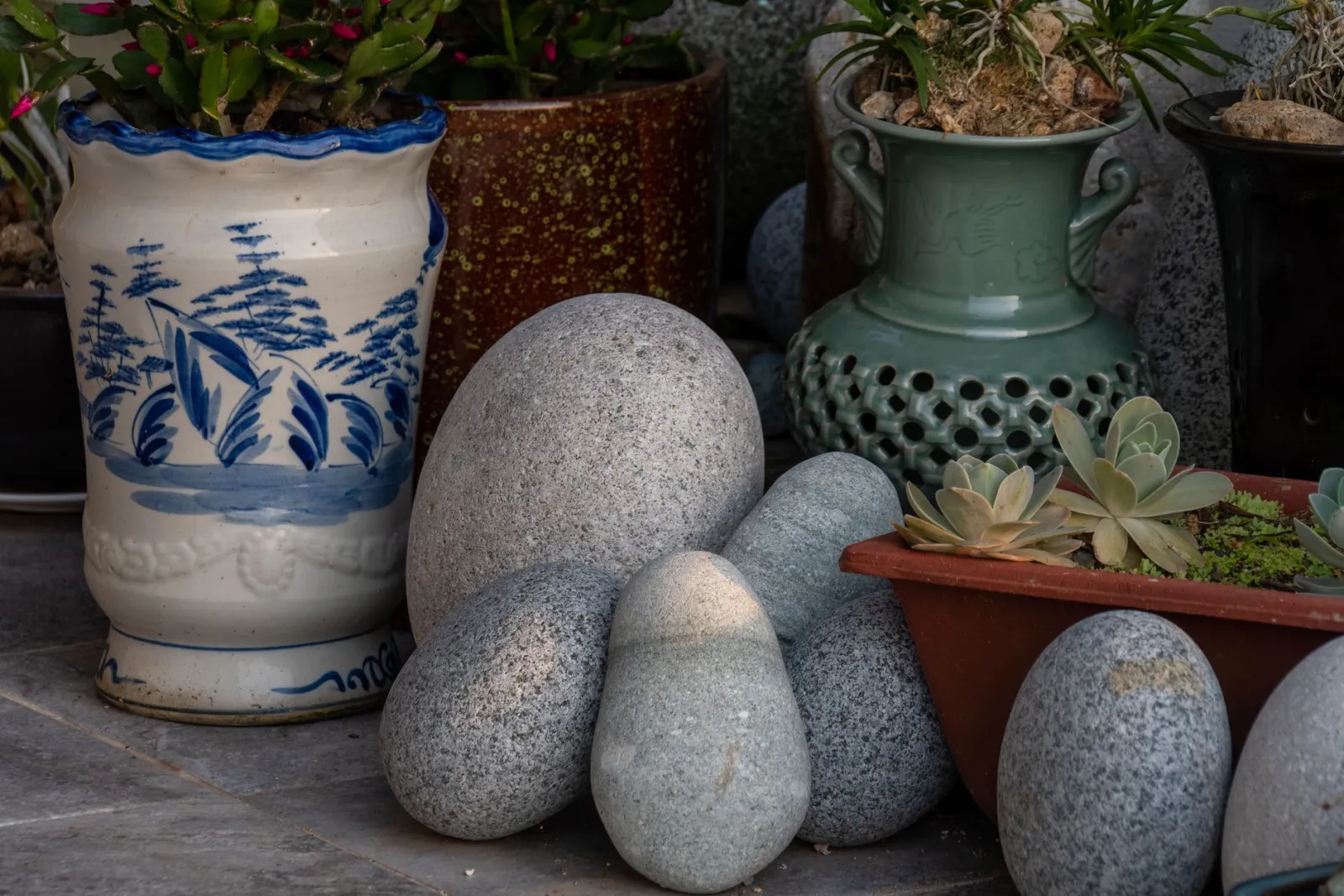
Routine cleaning takes about twenty to thirty minutes per ornament and needs only four things: a soft brush, a bucket of lukewarm water, a pH-neutral soap, and a cloth.
- Dry-brush first. Remove dust, cobwebs and loose soil with a soft hand brush or a paintbrush for carved details. Working dry stops mud from turning into a paste that pushes deeper into the pores.
- Wash from the top down. Use lukewarm water with a small amount of pH-neutral soap — a few drops in a bucket is plenty. Work in sections so the stone never dries with soap still on it.
- Reach the crevices. A soft toothbrush handles lettering, feathers, folds and other fine carving. Never use a wire brush or a metal scraper.
- Rinse generously. Clean water, twice if the piece is large. Soap residue attracts dust and can leave a dull film.
- Dry in the shade. Rapid drying in strong sun pulls moisture out unevenly and can cause surface flaking on soft stone.
A realistic example: a cast-stone garden bench that has gone grey over winter usually brightens noticeably after one gentle wash. The grey is often a mix of dust, algae spores and pollution particles sitting on the surface — not the stone itself changing colour. If the grey remains after washing and drying, it is mineral staining or deep algae, and that needs the treatment described below.
How do you deal with algae, moss, lichen and stubborn stains?
Biological growth needs three things — moisture, shade and a rough surface — so the fix is to break that cycle rather than attack the organism aggressively.
For green algae film, a soft brush and a solution of water with a little gentle soap usually lifts it. For moss in joints and hollows, a plastic or wooden scraper removes the bulk before washing. Lichen — the flat, crusty, grey-green or orange patches — is the hardest. It grips the stone physically, and harsh removal takes surface material with it. On ornaments where a weathered look is acceptable, leaving lichen is a legitimate choice; many old stone pieces look better with it.
If you do want to remove it, apply a dedicated stone-safe biological cleaner, keep it damp for the recommended contact time, then scrub gently and rinse. Two practical details make a real difference:
- Never let cleaner dry on the surface. Drying concentrates the product and can stain.
- Protect plants and soil. Rinse runoff away from beds, or cover nearby planting with plastic sheeting during the job.
For rust marks, white mineral bloom or hard-water rings, a poultice works better than scrubbing. Mix an absorbent powder — kaolin clay or diatomaceous earth — with water into a paste, spread it thickly over the stain, cover with plastic film and leave it for a day or two. As it dries, it draws the stain out of the pores. Lift it off and rinse. This is the standard conservation approach for porous masonry, and it is far kinder than repeated scrubbing.
Which mistakes cause permanent damage?
Most irreversible damage to garden stone comes from four habits, and each one is easy to avoid.
High-pressure washing. A pressure jet on soft stone blasts away the surface layer and opens the pores. On a carved ornament, it can round off sharp detail in seconds. A garden hose with normal pressure is enough.
Acid and bleach. Vinegar, descalers and chlorine bleach attack calcite-based stone. On marble or limestone they cause etching and yellowing that cannot be polished out at home.
Sealing too early or too often. A breathable stone sealer applied to a thoroughly dry, clean surface slows re-soiling and helps in frost. Applied to damp stone, it traps moisture inside — and trapped moisture plus frost equals cracking. Wait for a dry spell of several days before sealing.
Ignoring winter. Water sitting in hollows freezes and expands. Before the first frost, tip out birdbaths, empty planters and move small ornaments into a shed or against a sheltered wall. A concrete example: a shallow birdbath bowl left full over winter often develops a hairline crack along the rim, purely from ice expansion.
| Situation | Best approach | Avoid |
|---|---|---|
| Light dust and cobwebs | Soft dry brush | Wet cloth that creates mud |
| Green algae film | Lukewarm water, pH-neutral soap, soft brush, rinse | Bleach, pressure washer |
| Lichen and moss | Plastic scraper, stone-safe biological cleaner, keep damp, rinse | Wire brush, metal scraper |
| Rust or mineral stains | Absorbent poultice left to dry, then rinse | Acid descalers |
| Marble or limestone | Water and pH-neutral soap only | Anything acidic |
Frequently asked questions
Can you use a pressure washer on stone garden ornaments?
No — not on soft or carved stone. A pressure jet removes the surface layer, opens pores and erodes detail. On dense granite it is less destructive, but a garden hose and a soft brush achieve the same clean with no risk.
How often should stone ornaments be cleaned?
Twice a year is usually enough: once in spring after winter, and once in early autumn before frost. Ornaments under trees or in deep shade may need a third pass in summer, since algae grows faster where light and airflow are limited.
Does sealing stop algae from coming back?
It slows it down but does not stop it. A breathable sealer reduces water absorption, which makes the surface less hospitable to algae, but shade and damp air still encourage growth. Improving airflow and trimming overhanging foliage does as much as any product.
The short answer
Clean stone garden ornaments with a soft dry brush, then lukewarm water and pH-neutral soap, working top to bottom; rinse well and dry in the shade. Treat algae and lichen with stone-safe products kept damp, lift rust and mineral marks with a poultice, and never use acid, bleach or a pressure washer. Know your stone type before you start, and protect pieces from standing water before winter. For the wider picture — choosing, placing, protecting and maintaining stone features across the whole garden — a more complete guide covers the full range of materials and seasonal care.
To choose the right model : Watering system: how to choose the best for your garden
Was this guide helpful?
Share your experience with the WiseHomeGuides community.