In short :
- The panel itself is usually the cheapest part of your solar quote.
- What really drives the price is your roof, shading, electrical setup, local permits, and whether you add a battery.
- Ask for a breakdown of hardware, labour, and compliance costs, then compare quotes on those lines instead of the headline total.
- Keep a 20% buffer above the quoted price for surveys, permits, and surprise electrical work.
- You can DIY the mounting, but grid connection almost always needs a licensed electrician.
Ask ten homeowners what solar costs and you’ll get ten different answers. That’s not because the numbers are secret — it’s because “the cost of installing a solar panel” hides a stack of variables most people never think about. The panel itself is often the cheapest part of the job. What you’re really paying for is the system around it: the mounting, the wiring, the inverter, the permits, the labour, and the paperwork that lets you connect to the grid.
This guide breaks down what actually shapes the number on your quote, so you can read a proposal with clear eyes instead of a polite nod. No brands, no prices — just the mechanics of how solar installation gets priced, and how to spot where your money is going.
What you’re actually paying for when you install solar
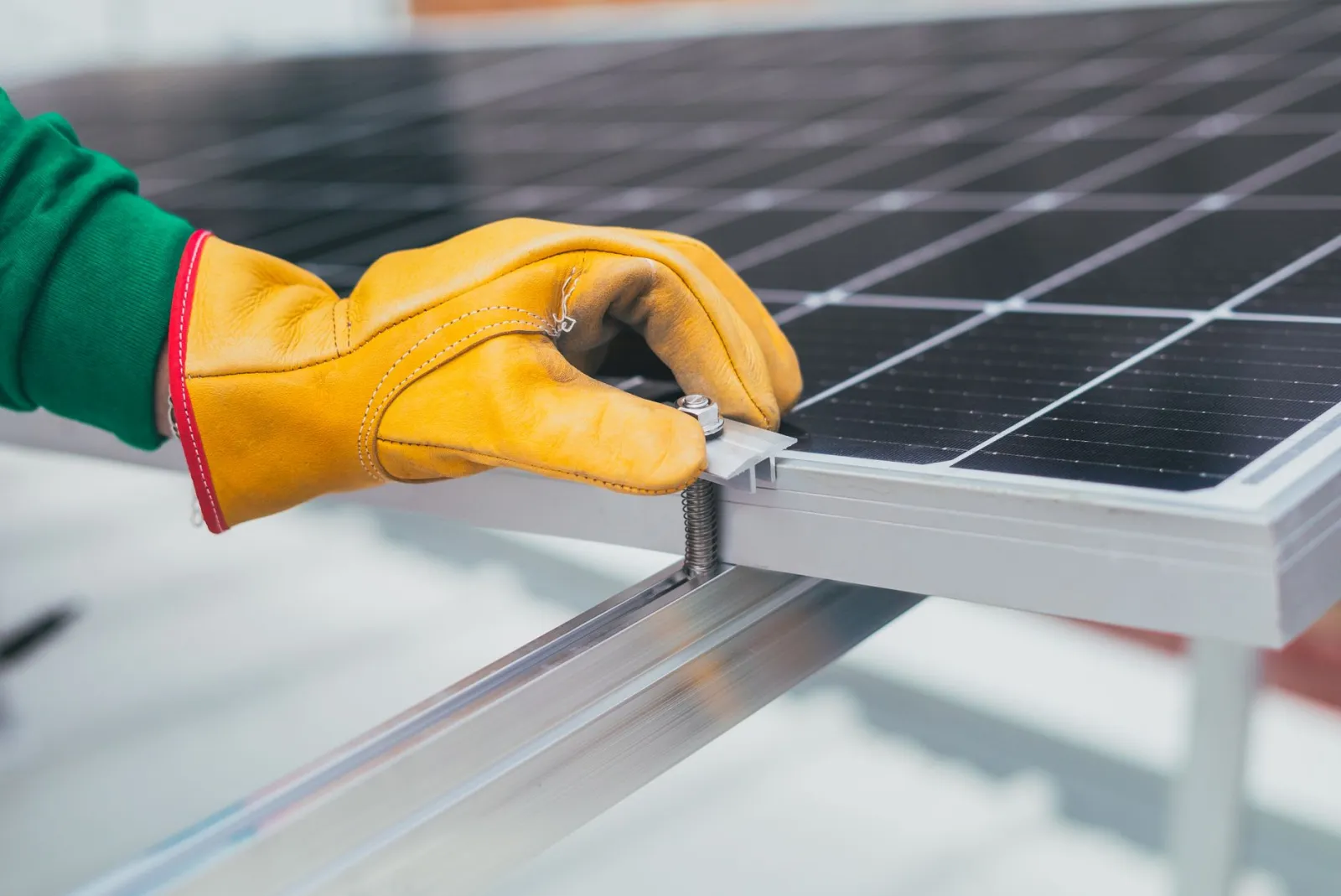
Picture the hardware on a roof. You see panels. But behind those panels sits a small ecosystem: racking that holds them down against wind, DC cables, a rapid shutdown device, an inverter that converts DC into usable AC, a monitoring gateway, and often a battery if you want stored power. Add the electrician’s time, the roofer’s inspection, the structural check, and the permit fees, and you have the full picture.
Here’s a concrete example. Two neighbours install the same number of panels. One has a simple south-facing roof with no shade and an electrical panel in the garage. The other has a roof split across two pitches, a mature oak casting afternoon shade, and a fuse box at the far end of the house. Same panels, same wattage — and the second quote comes back meaningfully higher. Not because of the panels. Because of the labour, wiring runs, and optimisers needed to make the system work in a less friendly layout.
So when you compare quotes, compare the system, not the panel count. A cheap quote on a complicated roof usually means something was left out.
The cost drivers, ranked by impact
- System size — measured in kilowatts. More panels, more everything.
- Roof complexity — pitch, number of faces, obstructions, height, and material.
- Shading — triggers optimisers or micro-inverters, which add cost per panel.
- Inverter choice — a single string inverter versus per-panel electronics.
- Battery storage — optional, but it’s the single biggest add-on.
- Electrical work — panel upgrades, main board changes, cable distances.
- Permits and inspections — varies enormously by jurisdiction.
- Labour market — installer availability in your region.
What is the 20% rule for solar panels?
You’ll see this phrase everywhere, and it’s worth getting straight. In most contexts, the “20% rule” refers to a rough sizing guideline: aim to cover roughly 80% of your annual electricity use with solar, leaving the remaining 20% to the grid. The logic is simple — oversizing costs more, and the last slice of production is often the least valuable because you can’t use it all.
But the 20% rule also shows up in another, more practical place: budgeting for hidden costs. A common rule of thumb among installers is to set aside an extra 20% on top of the headline quote for the things that appear mid-project — a structural reinforcement, an upgraded consumer unit, a longer cable run than expected, or a permit that costs more than assumed.
Real case: a household budgets carefully for the panel and inverter package, then discovers during the site survey that the roof needs two rafters replaced before mounting. That’s not the installer being sneaky — it’s the kind of thing surveys uncover. Having a 20% cushion turns a stressful surprise into a line item.
How to use the 20% rule sensibly
- Size for 80% of consumption if you have no battery and rely on export credits.
- Keep a 20% cash buffer for survey findings and permit variance.
- Ask for a fixed-price quote where possible, so the buffer stays in your pocket.
How much will solar panels cost to install? Reading a quote properly
A solar quote is really three quotes in one: hardware, labour, and compliance. If your proposal doesn’t separate them, ask for a breakdown. It’s the fastest way to compare two installers fairly.
| Cost component | What it covers | What to check |
|---|---|---|
| Hardware | Panels, inverter, racking, cabling, monitoring | Are optimisers included if you have shade? |
| Labour | Roof work, electrical work, commissioning | Is scaffolding included or billed separately? |
| Compliance | Permits, inspections, grid connection | Who files the paperwork — you or the installer? |
| Optional | Battery, EV charger, monitoring upgrades | Can it be added later without rework? |
Here’s a concrete comparison. Installer A quotes a single number with no breakdown. Installer B quotes the same total but lists scaffolding, permit filing, and a five-year workmanship warranty separately. B looks more expensive on the surface — but A’s number is likely to grow once the scaffolding and permits are invoiced. Transparent quotes are almost always cheaper in the end.
Can I install my own solar panels myself?
Technically, yes — the hardware is available and the principles aren’t secret. Practically, it depends heavily on where you live and what you’re willing to take on.
Three things decide whether DIY makes sense for you:
- Grid connection rules. Most utilities require a licensed electrician to sign off on the connection. You can mount panels yourself and still need a professional for the final hook-up.
- Roof safety. Working at height with heavy panels, wind load, and fall risk is where most DIY projects go wrong. This isn’t a weekend job for a ladder and a friend.
- Warranty and insurance. A self-installed system may void panel warranties and complicate home insurance claims if something fails.
A realistic middle path: do the roof preparation, conduit runs, and mounting yourself if you’re confident, then bring in a licensed electrician for the inverter, consumer unit, and grid connection. You’ll save on labour without gambling on the parts that keep you legal and safe.
FAQ
How much does it cost to install a solar panel?
There’s no single figure, because installation cost depends on system size, roof complexity, shading, inverter type, battery storage, and local permit and labour rates. The panel itself is typically a small fraction of the total. Most of the money goes into mounting, wiring, the inverter, and compliance work.
What is the 20% rule for solar panels?
It usually means sizing your system to cover about 80% of your annual electricity use, leaving 20% to the grid. It’s also used as a budgeting guideline — setting aside roughly 20% above the quoted price for survey findings, permits, and unexpected electrical work.
How much will solar panels cost to install?
The honest answer: it varies too much for a single number to be useful. What you can do is demand a breakdown of hardware, labour, and compliance costs, then compare quotes on those three lines rather than the headline total. That’s where the real differences hide.
Can I install my own solar panels myself?
You can mount panels yourself in many places, but grid connection almost always requires a licensed electrician. Factor in roof safety, warranty implications, and insurance before deciding. A hybrid approach — DIY mounting plus professional electrical work — is often the smartest compromise.
The bottom line
So, how much does it cost to install a solar panel? The truthful answer is that the panel is rarely the expensive part. Your quote is shaped by your roof, your shading, your electrical setup, your local rules, and whether you add a battery. Get a breakdown, keep a 20% buffer, and compare systems rather than panel counts. Do that, and you’ll read any quote with confidence.
This guide covers installation specifically. For the broader picture — how solar works, how to size a system, and how to choose an installer — there’s a more complete article on the general topic of home solar that walks through the whole journey from first survey to switch-on.