In short:
\n
- \n
- Nylon leads stink because bacteria get trapped deep inside the woven fibers, not just on the surface.
- A quick rinse won’t fix it — you need to work soap into the weave, rinse until the water runs clear, then disinfect gently.
- Drying properly matters more than you’d think, so don’t skip it.
- Deep clean every so often, and your lead will stay fresh between walks.
- Grab a bucket and fifteen minutes — your nose will thank you.
\n
\n
\n
\n
\n
\n
\n\n
You know that smell. You come back from a walk in the rain, the dog shakes off, and a few hours later the lead in the hallway smells like… wet dog mixed with something worse. Nylon is a wonderful material for leads — it’s tough, it dries fast, and it holds up to mud and pulling. But that same woven structure is also a sponge. Every paw swipe, every roll in something unidentifiable, every slobbery tennis ball gets worked into the fibers.
\n\n
The good news? Nylon is one of the easiest materials to clean properly. You don’t need special equipment or a cupboard full of chemicals. What you do need is a method that actually reaches inside the weave, because that’s where the bacteria live and that’s where the smell comes from. Rinsing the surface won’t cut it — I learned that the hard way after three years of just hosing down leads and wondering why they still stank.
\n\n
Below is what actually works, based on years of muddy walks, lake swims, and one memorable encounter with a dead fish on the beach.
\n\n
Why Nylon Holds Odors So Stubbornly
\n
Nylon fibers are extruded as thin strands and then woven or braided into a tight structure. On a microscopic level, that structure is full of tiny gaps and crevices. When your dog’s lead drags through puddles, grass, or something smellier, organic particles get trapped in those gaps. Bacteria and yeast then move in, feed on the residue, and produce the volatile compounds you smell.
\n\n
Here’s the catch: a quick wipe with a damp cloth only cleans the outer surface. The inner fibers stay wet, warm, and full of food for microbes. That’s why a lead can smell clean for an hour and then turn sour again — you killed nothing, you just masked it temporarily.
\n\n
A real example: A friend of mine kept her lead in a closed plastic bag between walks. Smart for keeping the car clean, terrible for the lead. The trapped moisture turned the nylon into a petri dish. Within two weeks the smell was so bad she considered throwing the lead away. A proper deep clean brought it back to like-new in under an hour.
\n\n
Signs your lead needs more than a rinse
\n
- \n
- A sour or musty smell that returns within a day of cleaning
- Stiff, crusty patches along the weave
- Visible discoloration, especially near the handle and clip
- Your dog sniffs the lead and pulls away — trust their nose
- The lead feels greasy even when dry
\n
\n
\n
\n
\n
\n\n
What You’ll Need
\n
Nothing exotic. Everything here is likely already in your kitchen or laundry cupboard:
\n
- \n
- A bucket or basin — big enough to submerge the whole lead loosely.
- Lukewarm water — never hot, since heat can weaken nylon over time.
- A gentle liquid soap — a mild dish soap or a fragrance-free pet shampoo both work well.
- White vinegar — for the disinfecting soak.
- A soft-bristled brush or an old toothbrush — for working grime out of the weave and around the clip.
- A clean towel — for patting dry.
- A mesh laundry bag — only if you plan to machine wash.
- A ventilated drying spot — a hook or a line out of direct sun.
\n
\n
\n
\n
\n
\n
\n
\n
\n
If you’re thinking about replacing a lead that’s beyond saving, it’s worth knowing what to look for before you buy — see our guide to choosing a dog leash that lasts for the practical criteria that matter.
\n\n
The Deep-Clean Method That Actually Works
\n
This is the routine I use every few weeks, or immediately after any walk involving water, mud, or unknown substances. It takes about fifteen minutes of hands-on time plus drying.
\n\n
Step 1: Pre-rinse and inspect
\n
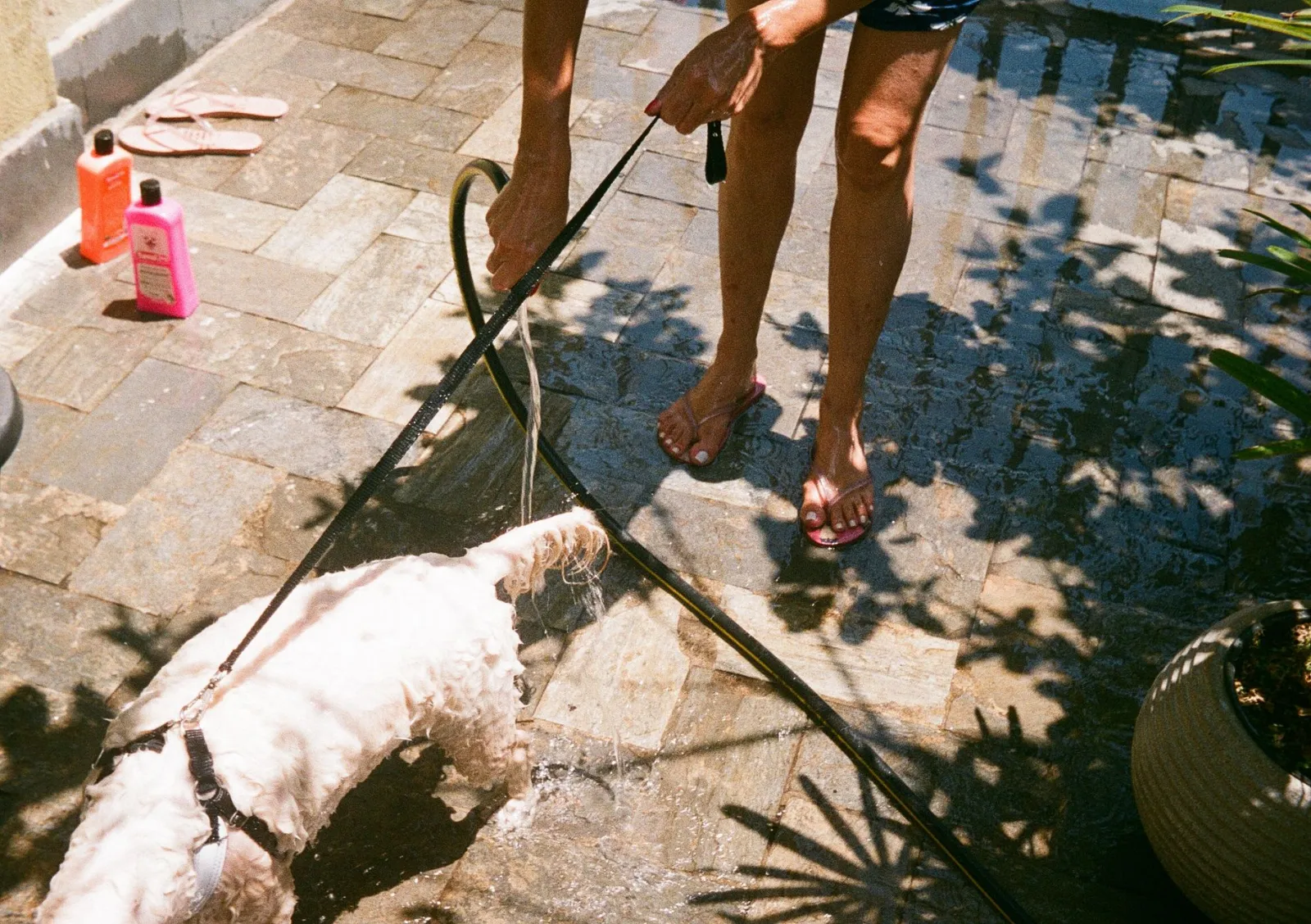
Fill a basin or bucket with lukewarm water — not hot, since heat can weaken nylon over time. Add a small amount of gentle liquid soap. Swish the lead through the water to loosen surface dirt. Run your fingers along the whole length, feeling for caked-on spots. Pay special attention to the handle loop and the area around the clip, where grime accumulates fastest.
\n\n
Step 2: Work the soap into the weave
\n
This is the step most people skip, and it’s the one that matters. Squeeze a little soap directly onto the lead and massage it in with your thumbs, working along the length in small sections. You want the soapy water to penetrate the weave, not just glide over it. For braided leads, gently flex the braid back and forth as you work — this opens the structure and lets the soap reach the core.
\n\n
A concrete case: A reader once told me her lead smelled like pond water no matter what she did. The fix was simple: she’d been soaking the lead, but never agitating the fibers. Once she started working the soap in by hand, section by section, the pond smell disappeared after two washes.
\n\n
Step 3: Rinse until the water runs clear
\n
Residual soap attracts dirt and can irritate your dog’s skin. Rinse under running lukewarm water, squeezing the lead as you go, until no suds appear. Then rinse once more. Nylon holds soap longer than you’d expect.
\n\n
Step 4: Disinfect — gently
\n
For bacteria and lingering odor, a diluted white vinegar solution works well. Mix one part vinegar with three parts water, soak the lead for ten to fifteen minutes, then rinse thoroughly. Vinegar is acidic enough to discourage bacteria without damaging nylon. If the smell is truly stubborn, a very dilute solution of pet-safe disinfectant can help, but always rinse afterward and let the lead dry completely before use.
\n\n
Avoid bleach on nylon. It breaks down the fibers over time and leaves a harsh residue that isn’t kind to your dog’s nose or skin.
\n\n
Step 5: Dry properly — this matters more than you think
\n
Hang the lead in a well-ventilated spot, out of direct sunlight. Sun can fade colors and degrade nylon over months. Never store a damp lead in a bag, drawer, or car. If you’re in a hurry, pat it with a clean towel and hang it near a fan. A lead that’s even slightly damp when stored will start smelling again within days.
\n\n
| Method | Best for | Time needed | Effectiveness |
|---|---|---|---|
| Quick rinse | Light dust and fresh mud | 2 minutes | Surface only |
| Soap + hand massage | Regular maintenance | 15 minutes | Good |
| Soap + vinegar soak | Odors and bacteria | 30 minutes | Very good |
| Machine wash (in a mesh bag) | Heavily soiled leads | 1 hour+ | Good, with care |
\n\n
Comparing Your Options: Which Cleaning Route Fits Your Situation
\n
Not every lead needs the full treatment, and not every situation suits the same approach. Here’s a side-by-side look at the realistic options, so you can pick the one that matches how dirty the lead is and how much time you actually have.
\n\n
| Option / type | Advantages | Drawbacks | Best used for |
|---|---|---|---|
| Damp-cloth wipe | Fast, no soaking, no drying wait; safe for any hardware | Cleans the surface only; does nothing for trapped bacteria | After a dry walk or a light dusting; a between-cleans touch-up |
| Hand wash with soap and water | Reaches into the weave; gentle on nylon and metal; you control the temperature | Requires hands-on scrubbing and a full drying period | Routine monthly maintenance and moderately smelly leads |
| Vinegar soak after washing | Discourages bacteria and neutralizes lingering odor; cheap and gentle | Adds soaking and rinsing time; the smell of vinegar needs to fully dry off | Leads that smell sour or musty even after a wash |
| Baking soda paste | Absorbs odor and lightly abrades caked grime; useful on stubborn patches | Can leave a chalky residue if not rinsed well; messy to apply | Spot-treating crusty areas near the handle or clip |
| Machine wash in a mesh bag | Hands-off; good agitation for heavily soiled leads | Hardware can bang and wear; heat risk if settings are wrong; not for delicate clips | Truly filthy leads after mud season or a swim in stagnant water |
| Replacing the lead | Solves the problem permanently; a chance to switch to a material that resists odor | Costs money; the old lead still needs disposing of responsibly | Leads with cracked hardware, frayed stitching, or odor that returns within hours |
\n\n
A word on materials that resist odor better
\n
If you’re cleaning your lead constantly and wondering whether there’s a better option, the material matters more than the brand. Woven nylon is the worst offender because of all those internal gaps. Coated webbing — often sold as waterproof or “Biothane”-style leads — has a smooth, non-porous surface that wipes clean in seconds and barely absorbs anything. Leather is durable but needs its own care routine and dislikes prolonged soaking. Rope leads sit somewhere in the middle: easy to wash, but they hold water in the core and take longer to dry. If odor is your main frustration, a waterproof coated lead is the single biggest upgrade you can make, and it pairs well with a waterproof dog collar or lead for dogs that swim or get rained on constantly.
\n\n
Prevention: Keeping the Smell From Coming Back
\n
Cleaning is half the battle. The other half is not letting the lead become a breeding ground in the first place.
\n
- \n
- Wipe after wet walks. A thirty-second wipe with a damp cloth after rainy or swim-heavy walks makes a huge difference.
- Air dry before storing. Always. No exceptions.
- Rotate leads. If you have two, alternate them so each gets a full dry day between uses.
- Keep a dedicated hook. Somewhere airy, not in a closed cupboard or the car boot.
- Wash monthly. Even if it looks clean, a monthly deep clean keeps bacteria from building up.
\n
\n
\n
\n
\n
\n
One more tip: if your dog swims in lakes or rivers regularly, rinse the lead with fresh water after every swim. Lake and river water carry organic matter that accelerates odor development.
\n\n
The Mistakes to Avoid
\n
Most of the “nothing works” complaints I hear come down to one of these six errors. Each one is easy to fix once you know what’s going wrong.
\n
- \n
- Soaking without agitating. Leaving a lead in soapy water feels productive, but water alone doesn’t dislodge the biofilm clinging to the fibers. You have to physically work the soap into the weave with your hands or a soft brush. Soaking loosens; agitation removes.
- Using hot water. Hot water feels like it cleans better, but it can gradually weaken nylon and warp or loosen the hardware over repeated washes. Lukewarm is the sweet spot — warm enough to help the soap work, cool enough to be kind to the material.
- Reaching for bleach. Bleach is the instinctive answer to “kill the smell,” but on nylon it degrades the fibers and leaves a residue that’s harsh on your dog’s skin and nose. A diluted vinegar soak does the disinfecting job without the collateral damage.
- Storing the lead damp. This is the single biggest reason a freshly cleaned lead smells again within days. If there’s any moisture left in the weave when you coil it up and put it away, you’ve basically reseeded the bacteria. Dry it fully, every time.
- Skipping the hardware. The clip, the D-ring, and the stitching around them trap grime and moisture that the rest of the lead doesn’t. If you only wash the strap, the smell can linger right at the handle where your hand sits. Give the metal a scrub with a soft brush and dry it thoroughly to prevent rust.
- Waiting until it’s unbearable. Once a lead smells strongly, the bacteria have had weeks to colonize deep in the fibers. A quick monthly wash keeps you ahead of the problem and makes each clean far easier than a rescue mission on a lead that’s been festering since spring.
\n
\n
\n
\n
\n
\n
\n\n
Frequently Asked Questions
\n\n
How to remove smell from dog leash?
\n
Work a gentle soap into the weave by hand, rinse until the water runs clear, then soak in a diluted white vinegar solution for ten to fifteen minutes and rinse again. The key is reaching inside the fibers, not just wiping the surface. Dry the lead completely in a ventilated spot before storing it — a damp lead will smell again within days.
\n\n
How can I deodorize my dog harness?
\n
The method is nearly identical to a lead, because harnesses are usually made of the same woven nylon. Soak the harness in lukewarm soapy water, scrub the straps and the areas that sit against your dog’s chest and armpits (those trap the most sweat and grime), rinse thoroughly, then disinfect with a diluted vinegar soak. Rinse once more and air dry fully, paying attention to the padded sections, which hold water longer than flat straps.
\n\n
What neutralizes dog odor?
\n
For washable gear, diluted white vinegar is the most reliable neutralizer — it’s acidic enough to discourage the bacteria that produce odor without damaging nylon. Baking soda works well as a paste on stubborn spots because it absorbs odor and lightly abrades caked grime. The important thing is to remove the source, not just cover it: any product that only masks the smell will fade within hours because the bacteria are still there.
\n\n
Are nylon leashes good?
\n
Yes — nylon is strong, affordable, dries relatively fast, and handles mud and pulling well. Its one real weakness is odor retention, because the woven structure traps moisture and organic particles. That’s a maintenance issue rather than a dealbreaker: clean it monthly and dry it properly, and a nylon lead will last for years. If you’d rather not deal with the smell at all, a coated or waterproof lead wipes clean in seconds.
\n\n
How to clean dog collar smell?
\n
Collars get the same treatment as leads, with extra attention to the buckle and the D-ring, where grime and moisture collect. Soak in lukewarm soapy water, scrub the webbing and the metal with a soft brush, rinse until clear, then do a short vinegar soak. Rinse and dry completely before putting it back on your dog — a damp collar against the neck can irritate the skin.
\n\n
How to wash dog harness in washing machine?
\n
Place the harness inside a mesh laundry bag to protect the hardware, use a gentle cycle with cold water, and skip the dryer entirely. High heat can warp plastic buckles and weaken the nylon. Air dry only, and check that every padded section is fully dry before use. Reserve machine washing for genuinely filthy gear — hand washing is gentler and just as effective for routine cleaning.
\n\n
How to clean smelly dog harness?
\n
Start with a pre-rinse to loosen surface dirt, then work soap into the straps by hand, focusing on the contact points against your dog’s body. Rinse until the water runs clear, disinfect with a diluted vinegar soak, and rinse again. The smell usually comes from the padded chest and belly sections, so don’t rush those. Dry fully in a ventilated spot out of direct sun.
\n\n
How to wash dog collar with metal?
\n
Metal hardware needs a little extra care. Wash the webbing as usual, but scrub the buckle and D-ring with a soft brush to remove grime from the crevices, then dry the metal thoroughly with a towel to prevent rust. Avoid prolonged soaking of cheap plated hardware, and never use bleach, which corrodes metal and damages nylon alike.
\n\n
How to clean dog collar with baking soda?
\n
Mix baking soda with a little water to form a paste, then work it into the smelliest areas with your fingers or a soft brush. Let it sit for a few minutes to absorb odor, then rinse thoroughly — baking soda leaves a chalky residue if you don’t rinse well, and that residue can irritate skin. It’s best used as a spot treatment on stubborn patches rather than a full wash.
\n\n
Can I put a nylon dog lead in the washing machine?
\n
Yes, but with care. Place the lead inside a mesh laundry bag to protect the clip from banging around, use a gentle cycle with cold water, and skip the dryer entirely. High heat can warp the hardware and weaken the nylon. Air dry only. I’d reserve machine washing for leads that are truly filthy — hand washing is gentler and just as effective for routine cleaning.
\n\n
How often should I deep clean my dog’s lead?
\n
Once a month for most dogs. If your dog swims, rolls in mud, or walks in the rain regularly, clean it more often — after every wet or dirty outing is ideal. Between deep cleans, a quick wipe and a full air dry will keep things fresh.
\n\n
Is vinegar safe for nylon and for my dog?
\n
Diluted white vinegar is safe for nylon and, once rinsed and dried, safe for your dog. The key word is diluted — one part vinegar to three parts water. Rinse thoroughly afterward so no acidic residue stays in the weave, and let the lead dry completely before your dog wears it again.
\n\n
My lead still smells after washing. What now?
\n
Two likely culprits: you didn’t agitate the fibers enough, or the lead didn’t dry completely before storage. Try a second wash with more hand massaging, add a longer vinegar soak, and make sure it dries fully in a ventilated spot. If the smell returns within a day even after that, the bacteria may have colonized too deep, and it may be time to replace the lead.
\n\n\n\n
To choose the right model : Webbing Dog Lead Cleaning: Mud and Salt Removal
\n
\n
Sources
\n
- \n
- American Kennel Club (AKC) — general guidance on dog gear care and hygiene
- The Humane Society — pet care and cleaning best practices
- ASPCA — pet-safe cleaning and household product guidance
\n
\n
\n
\n\n\n\n
Full guide :Pets
More from this guide :
Was this guide helpful?
Share your experience with the WiseHomeGuides community.