This article contains Amazon affiliate links. As an Amazon Associate we earn from qualifying purchases.
In short :
- A narrow, fairly deep bowl with a rolled rim is the single biggest fix for soggy ears.
- Raise it to about chest height so your dog drinks without dunking.
- Pick something heavy with a non-slip base, and keep the opening no wider than your dog’s muzzle plus a couple of centimetres.
- Clean it daily, since damp ears drop more debris into the water.
- Get the geometry right and the ears stay dry.
Long ears are charming, until they end up in the water bowl. If you live with a spaniel, a basset, a setter, a dachshund or any dog whose ears hang past the jawline, you already know the daily ritual: the dog drinks, the ears dive in, and ten minutes later you have a wet, heavy, smelly fringe dragging across the floor and furniture.
The good news is that this is mostly a bowl problem, not a dog problem. The right bowl shape, height, material and rim design can keep ears out of the water almost entirely, while the wrong one guarantees a soggy mess at every meal. This guide walks through the criteria that actually matter when choosing a bowl for a long-eared dog, so you can judge any option on the shelf or online without guessing.
Criterion 1: Rim shape and depth — the single biggest factor
A wide, shallow bowl with a rolled or flared rim is the classic culprit. The dog’s muzzle goes down, the ears fan out sideways, and gravity does the rest. What you want instead is a bowl whose opening is narrow enough to keep the ears outside the perimeter, or one with a rim that curves inward so the ears rest against the outside wall rather than dipping into the liquid.
Look for bowls described as “narrow-mouth,” “tapered,” or “deep and slim.” A depth of roughly 6 to 9 cm for a medium dog, with an opening no wider than the dog’s muzzle plus a couple of centimetres, is a useful benchmark. Too shallow and the ears touch the surface; too wide and there is simply no barrier. Pitfall to avoid: decorative wide ceramic bowls sold as “large” — they look generous but are the worst possible geometry for a spaniel.
You can test this at home before buying anything. Fill a bowl you already own to the normal level, let the dog drink, and watch where the ear tips land. If they touch the water, measure the gap between the ear line and the rim. That measurement tells you exactly how much narrower the new bowl needs to be.
Criterion 2: Bowl height and elevation
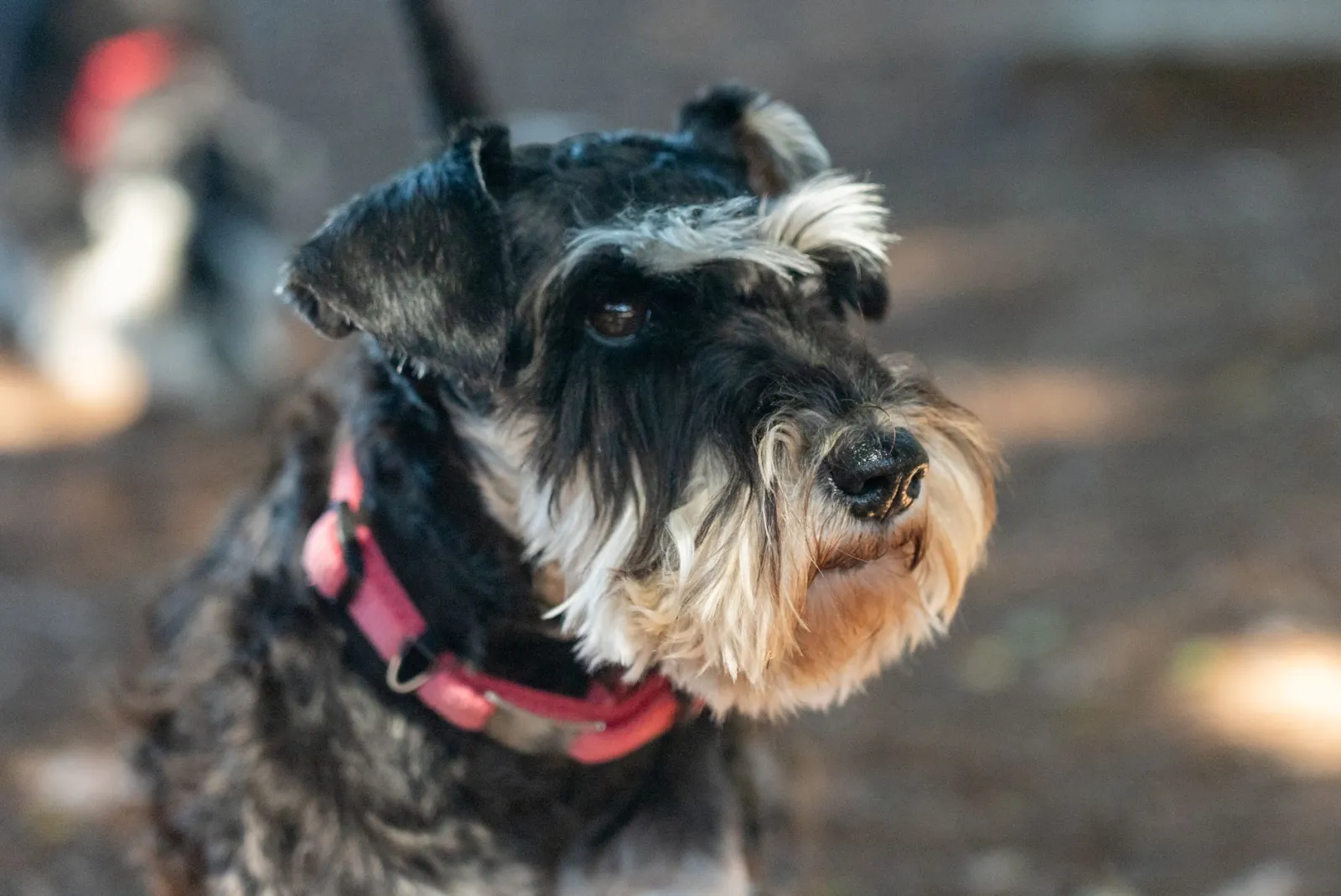
Raising the bowl changes the angle of the head and lets the ears hang clear of the surface. For a long-eared dog, a raised bowl — either a tall standalone design or a bowl set into a stand — often solves the problem on its own, because the ears fall to the sides rather than forward into the water.
As a practical range, the rim should sit somewhere between the dog’s lower chest and the point of the shoulder when standing. Too low and the ears drape into the bowl; too high and the dog has to stretch, which encourages gulping and messy drinking. Adjustable stands are worth considering if you have dogs of different sizes or a puppy that is still growing.
Common pitfall: a stand that is stable for a calm dog but tips when a bouncy one leans on it. A dog that knocks over a raised bowl at every meal will be back to floor-level drinking within a week. Check the base width relative to the bowl’s height before committing.
Criterion 3: Material and weight
Stainless steel is the default for good reason: it is durable, easy to sanitise, and does not hold odours. The trade-off is that light steel bowls slide and tip easily, especially with a dog that pushes its nose to the bottom. Ceramic is heavier and stays put, but chips if dropped and can crack in a dishwasher over time. Plastic is cheap and light but scratches, and scratched plastic harbours bacteria in a way smooth surfaces do not.
For long-eared dogs specifically, weight matters more than usual. A dog that has to press its ears against the rim to reach the water will apply sideways pressure, and a light bowl will move. A bowl with a non-slip base, or simply a heavier material, keeps the geometry consistent from the first lap to the last.
An easy home test: place the bowl on your usual floor, fill it, and give it a firm nudge with the side of your hand at the height of your dog’s muzzle. If it slides more than a few centimetres or tips, it will not survive a determined drinker.
Criterion 4: Opening diameter relative to your dog’s muzzle
This is the measurement most owners never take, and it is the one that decides whether ears stay dry. Measure the width of your dog’s muzzle at the widest point, then add roughly 2 to 3 cm. That total is the minimum opening the dog needs to drink comfortably. Anything wider than that plus the ear span is wasted space that invites the ears in.
For a dog with very long, heavy ears, a tapered bowl — wide at the base, narrower at the top — works better than a straight-sided one, because the ears slide down the outside of the cone rather than folding over the rim. For a dog with shorter but thick ears, a straight-sided narrow bowl is usually enough.
Watch out for bowls marketed purely by volume. A “2-litre” bowl tells you nothing about the opening. Always check the diameter of the top, not the capacity, when ears are the concern.
Criterion 5: Ease of cleaning and hygiene
Long ears and water bowls are a hygiene issue, not just a tidiness one. Damp ear flaps trap moisture against the ear canal, and that is exactly the condition that favours yeast and bacterial overgrowth. A bowl that is awkward to clean — deep grooves, narrow necks, textured interiors — will be rinsed less often, and residue builds up faster than most owners realise.
Choose a bowl with smooth interior walls and no crevices, and one that fits comfortably in your sink or dishwasher. If the bowl has a rubber ring or a stand, check that the ring can be removed and cleaned, because that is where slime quietly accumulates. A bowl that takes thirty seconds to wash will be washed daily; one that takes five minutes will not.
Practical habit: rinse the bowl and wipe the dog’s ears with a dry cloth after every drink during the first week with a new bowl. It sounds fussy, but it breaks the moisture cycle while you are still dialling in the right setup.
Criterion 6: Stability and anti-slip design
A bowl that shifts mid-drink ruins everything else. The dog adjusts its head, the ears drop lower, and the water ends up on the floor. Stability comes from three things: a wide, low centre of gravity; a non-slip base; and enough weight that a nose nudge does not move it.
Rubber or silicone rings under the base are the most common solution and work well on tile and hardwood. On carpet or a rug, a weighted base matters more than a grippy ring. If your dog eats and drinks on a mat, check that the mat itself does not slide — a bowl gripping a sliding mat is still a moving bowl.
Test at home by placing the empty bowl on your floor and pressing down on one edge with a finger. If the opposite edge lifts easily, the bowl is too light or too narrow at the base for a long-eared drinker.
Criterion 7: Spill control and floor protection
Even with the perfect bowl, long-eared dogs drip. Water clings to the ear fringe and gets carried across the room. A bowl with a slightly inward-curving rim reduces the amount that runs down the outside, and a raised lip or a wide catch tray underneath contains what does escape.
Look for bowls with a rolled edge rather than a sharp cut edge, as water tends to follow a rolled rim back into the bowl instead of down the side. If you use a stand, check whether it has a lip or tray at the base. For very messy drinkers, a shallow tray under the bowl is a cheap and effective addition — just make sure the tray itself is easy to empty and dry.
Real-world example: owners of heavy-eared breeds often find that the floor stays dry once they switch to a narrow, raised bowl with a rolled rim, even though the dog still drips a little. The drips come from the ears, not the bowl, and a tray catches them.
Comparison table: what to prioritise
| Criterion | What to look for | Common pitfall |
|---|---|---|
| Rim shape and depth | Narrow or tapered opening, rolled rim, 6–9 cm deep | Wide decorative bowls |
| Height | Rim between lower chest and shoulder | Stand that tips easily |
| Material | Stainless steel or heavy ceramic, non-slip base | Light plastic that slides |
| Opening diameter | Muzzle width + 2–3 cm, no wider | Buying by volume, not diameter |
| Cleaning | Smooth interior, removable parts, dishwasher-safe | Grooves and fixed rubber rings |
| Stability | Wide base, weighted, grippy on your floor type | Bowl that shifts mid-drink |
| Spill control | Rolled rim, tray underneath | Sharp rim that channels water down |
FAQ
Do raised bowls really help long-eared dogs, or is it a myth?
They help, but not because of any health claim — purely geometry. Raising the bowl changes the angle of the head so the ears hang to the sides instead of forward into the water. The effect is real and easy to test: put the bowl on a low box or a stack of books at chest height and watch where the ears land. If they clear the rim, elevation is your answer.
Is a narrow bowl uncomfortable for my dog to drink from?
Not if the opening is at least your dog’s muzzle width plus a couple of centimetres. Dogs do not need a wide bowl to drink comfortably; they need enough room for the muzzle, not the whole head. If your dog has to press its nose hard against the sides or cannot reach the bottom, the bowl is too narrow — go up one size in diameter.
How often should I clean the bowl if my dog has long ears?
Daily rinsing is the baseline, and a proper wash every day or two is sensible because damp ears transfer more debris into the water than short ears do. If the bowl feels slick to the touch, it needed washing yesterday. A smooth, crevice-free bowl makes this a thirty-second job, which is why ease of cleaning is a real selection criterion, not an afterthought.
Conclusion: the answer in one line
The best bowl for a long-eared dog is a narrow, relatively deep bowl with a rolled rim, raised to roughly chest height, made of a heavy material with a non-slip base, and easy enough to clean that you will actually do it every day. Get the geometry right and the ears stay dry; get it wrong and no amount of mopping will fix the problem.
If you want the broader picture — materials, feeding routines, water hygiene and how bowls fit into a complete care setup — a more complete guide on dog bowls and feeding equipment covers the general topic in depth.
Go further : What’s the best water bowl for dogs?
Full guide :Pets
More from this guide :
Was this guide helpful?
Share your experience with the WiseHomeGuides community.