This article contains Amazon affiliate links. As an Amazon Associate we earn from qualifying purchases.
In short :
- An air fryer isn’t a small oven, it blasts hot air fast, so it crisps and dries surfaces instead of baking gently.
- That’s why fatty, starchy, or dry foods like frozen chips, chicken wings, and root vegetables turn out great.
- Anything that needs to stay moist, like plain chicken breast, wet batters, or saucy dishes, will dry out or make a mess.
- For sausages, go 200°C for 12 to 15 minutes, or 15 to 20 if frozen, and use 180°C for thin ones so the casing doesn’t split.
- When buying, focus on basket size, a flat shape, and easy cleaning rather than preset buttons.
An air fryer is not a small oven. That single idea explains most of the disappointment people feel in the first weeks. A small oven bakes gently with still air. An air fryer moves hot air fast, right against the food, so surfaces dry out and brown while the inside steams. Understanding that difference tells you which foods will shine and which will fail.
This guide covers the foods that genuinely benefit from that fast, dry heat, the ones that need a small adjustment, and the ones better left to other appliances. It also explains how to pick a model without overthinking it. If you want the full picture on sizes, wattage, and accessories, there is a more complete guide on the general topic elsewhere on the site.
Why an air fryer suits some foods and ruins others
Fast-moving hot air does two things well: it crisps surfaces and it drives off moisture. Any food that already has fat, starch, or a dry exterior responds beautifully. Anything that needs to stay moist and tender with no protective layer will dry out before it browns.
Think about what happens to a chicken thigh versus a plain chicken breast. The thigh carries its own fat, which renders and bastes the meat while the skin crackles. The breast, with almost no fat, tightens and turns stringy unless it is coated, oiled, or wrapped. Same appliance, same temperature, completely different results.
Here is a quick reference for how common foods behave:
| Food | How it performs | What to watch |
|---|---|---|
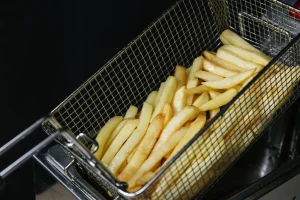
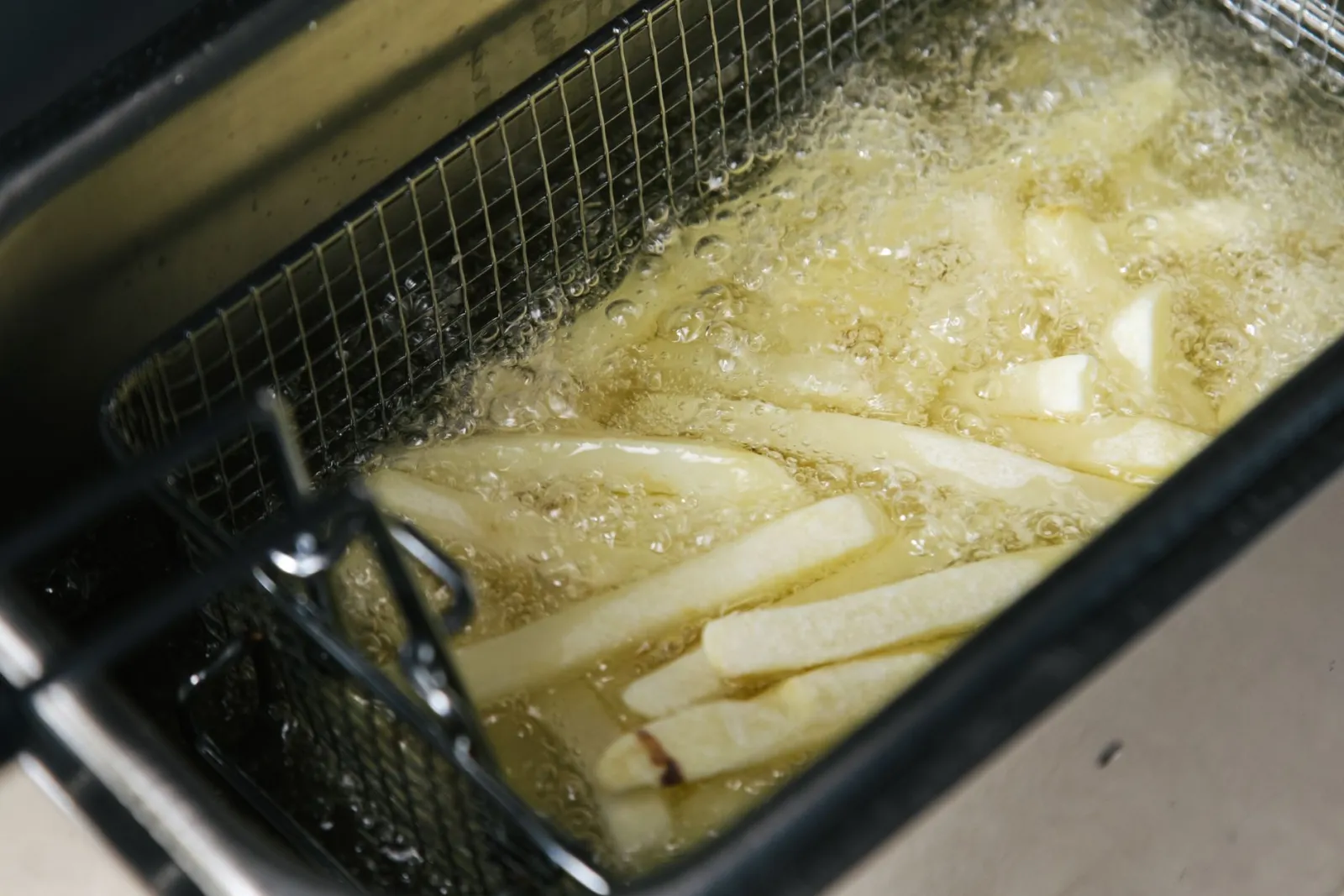
| Frozen chips or fries | Excellent | Shake the basket halfway |
| Chicken wings and thighs | Excellent | Pat dry before cooking for crisp skin |
| Sausages | Very good | Do not overcrowd; they need space to brown |
| Vegetables (peppers, courgette, broccoli) | Very good | Toss in a little oil; cut evenly |
| Fish fillets | Good with care | Short cooking time; thin fillets dry fast |
| Fresh leafy greens | Poor | They fly around and scorch |
| Batters and wet coatings | Poor | The coating slides off before it sets |
A practical example: someone buys an air fryer to make “healthy fried chicken.” They dip raw chicken in a wet batter and cook it. The batter drips, pools, and burns on the base while the meat stays pale. Switch to a dry seasoned coating pressed onto oiled chicken, and the same appliance produces a crisp, golden result.
The foods that genuinely shine
Start with anything frozen and pre-cooked. Nuggets, fish fingers, potato products, spring rolls, and similar items are designed to be reheated and crisped. They come out faster than in an oven and with a firmer crust, because the hot air reaches every surface instead of just the top.
Root vegetables are the next winner. Potatoes, sweet potatoes, carrots, and parsnips cut into even pieces and tossed with a spoonful of oil turn golden outside and tender inside. The key word is even. A chunk twice the size of its neighbours will still be hard when the rest are done.
Meats with natural fat belong here too. Wings, drumsticks, lamb chops, pork belly, and sausages all benefit from the rendering process. The fat drips away, the exterior browns, and the result is closer to roasted than fried.
Consider a weeknight example: sausages, halved baby potatoes, and sliced peppers all go in together at the same temperature. The potatoes need a head start, the peppers go in last. Twenty minutes later there is a full plate with one basket to wash.
Foods that need a workaround
Not everything fails permanently. Some foods just need a small change in approach.
- Lean fish and chicken breast: brush with oil, add a dry coating, or wrap in foil for part of the cook. The oil or coating slows moisture loss.
- Cheese-topped dishes: the topping can fly off. Secure it or add it near the end.
- Bread and pastry: works well but browns fast. Lower the temperature and check early.
- Wet marinades: sugar in a marinade burns before the meat cooks. Pat the surface dry before it goes in.
- Light, leafy items: use a rack or skewer, or skip the air fryer entirely.
An everyday case: someone tries to reheat last night’s saucy pasta. The sauce spatters, the pasta edges harden, and the centre stays cold. Reheating that dish in a pan or microwave gives a far better result. The air fryer is not a universal reheater.
How to choose an air fryer without overthinking it
Three things matter more than any feature list.
Basket size. Match it to how many people you cook for. A single person is fine with a small basket; a family of four needs one that holds a full meal in a single layer. If food has to be stacked, it steams instead of crisping, and you will cook in two batches anyway.
Shape. A flat, wide basket gives more usable surface than a deep, narrow one. Surface area is what crisps food, not depth.
Ease of cleaning. A basket that goes in the dishwasher, or one with a removable non-stick tray, gets used far more often. Complicated crevices and fixed elements are the reason air fryers end up in cupboards.
Power matters too, but mostly for speed. A higher wattage heats up faster and recovers temperature quicker when you open the basket. Beyond that, extra presets add little. You will learn two or three temperatures that work for you and ignore the rest.
A real-world example from a normal weeknight
Picture a household of two people, both working, getting home around seven in the evening. The fridge holds a bag of frozen fries, two chicken thighs, a courgette, a handful of cherry tomatoes, and a block of halloumi. Nobody wants to spend forty minutes over a hob. This is exactly the kind of meal where an air fryer earns its place, and it also shows where the limits are.
The chicken thighs go in first, skin side up, patted dry with a paper towel and rubbed with a little oil and salt. They need the longest cook and the most heat, so they get the basket to themselves for the first stretch. The fries follow halfway through, spread in a single layer, and the basket gets a shake so they brown on all sides instead of one. The courgette, cut into half-moons and tossed with oil, goes in near the end because it cooks fast and would turn to mush if it went in early. The cherry tomatoes go in last, just long enough to blister and split.
Now the halloumi. This is where the same meal teaches the lesson. Slices of halloumi placed straight on the basket will brown on top and stick to the base, and the cheese will sag through the gaps. The fix is simple: a small piece of baking paper with holes punched in it, or a thin slice of bread underneath, and the cheese browns evenly without welding itself to the tray. Someone who skips that step ends up scraping cheese off the basket and wondering why the appliance is “bad.”
The whole plate comes together in roughly the time it takes to set the table, with one basket to wash and no hob to scrub. The same household, on a different night, tries to reheat a leftover curry in the same basket. The sauce spits, the smell lingers, and the rice dries into hard grains. That contrast is the whole point: the air fryer is excellent at dry, fatty, crispable food and poor at wet, saucy, moisture-dependent food. Once that rule is clear, the appliance stops being a gamble and becomes predictable.
A second everyday scenario makes the buying decision concrete. A couple moving into a small flat has limited counter space and cooks for two most nights. They are tempted by a large model with a dozen presets because it looks more capable. But a wide, flat basket that fits a two-person meal in a single layer, cleans easily, and slides into a cupboard will get used far more than a bulky unit that dominates the worktop. The presets are forgotten within a week; the size and the cleaning are felt every single day.
Les erreurs à éviter
Most air fryer frustration comes down to a handful of repeatable mistakes. None of them are about the machine itself. They are about how it gets used.
- Overcrowding the basket. Piling food in so it stacks and touches is the single most common error. Hot air needs to circulate around each piece, and when it can’t, food steams and turns limp instead of crisp. The fix is to cook in a single layer and accept two batches for a big meal. A crowded basket always takes longer and gives a worse result than two quick rounds.
- Skipping the shake or the turn. Food sitting still browns only where the air hits it hardest. A shake of the basket or a turn with tongs halfway through is what gives even colour. This matters most for fries, nuggets, and anything small that settles into the base.
- Using wet batters and runny marinades. A loose batter slides off before it sets and pools on the base, where it burns and smokes. Sugary marinades catch and scorch before the inside cooks. The workaround is a dry coating pressed onto lightly oiled food, and patting marinated items dry before they go in.
- Expecting it to reheat anything. Saucy dishes, soups, stews, and wet leftovers do poorly. The liquid spatters, the texture suffers, and cleaning becomes a chore. Reserve the air fryer for dry, crispable reheating like pizza slices, pastries, or fried food that has gone soft.
- Ignoring the cleaning routine. A basket left with baked-on residue from the last cook smokes on the next one and loses its non-stick surface faster. A quick soak and wash after each use, or a dishwasher-safe basket run promptly, keeps the appliance pleasant to use. The models that end up in cupboards are usually the ones that became a scrubbing job.
- Buying on preset buttons instead of size and shape. A long list of presets looks impressive but adds little in daily use. What actually determines whether the appliance fits your life is whether the basket holds a full meal in one layer, whether the shape gives usable surface, and whether it is easy to clean. Those three things decide how often it gets switched on.
Each of these mistakes has the same root: treating the air fryer like a small oven or a universal cooker. Once the fast, dry-air principle is understood, the fixes become obvious and the results become consistent.
FAQ
How long do you do sausages in an air fryer?
Thin sausages take about 7 to 10 minutes at 180°C. Standard or thick sausages need 12 to 15 minutes at 180°C to 200°C. Frozen sausages take longer, roughly 15 to 20 minutes at 200°C, and should be separated as they cook. Turn them halfway through so they brown evenly on all sides.
What are common mistakes when air frying sausages?
Overcrowding is the biggest one. Sausages piled on top of each other steam rather than brown, and the ones underneath stay pale. Not turning them is the second mistake, which leaves one side dark and the other underdone. A third is pricking them and letting the juices escape, which dries out the meat. Space them in a single layer, turn once, and let them rest briefly before serving.
What is the most highly recommended air fryer?
There is no single model that suits everyone, and “most recommended” depends on how many people you cook for and how much counter space you have. The features that earn consistent praise are a wide, flat basket, a dishwasher-safe tray, and enough wattage to recover heat quickly. Focus on those practical points rather than on a specific name, because the best choice is the one that fits your kitchen and your portion sizes.
Which brand is the best for air fryers?
Brand matters less than the design of the basket and how easy the unit is to clean. Well-known kitchen appliance makers and dedicated air fryer brands both produce good and mediocre models. Instead of chasing a brand, compare basket size, shape, cleaning, and wattage across a few options. A well-designed mid-range model usually beats a feature-heavy one that is awkward to use daily.
What to avoid while buying an air fryer?
Avoid a basket that is too small for your household, a deep narrow shape that limits surface area, and fixed parts that are hard to clean. Be wary of models sold mainly on a long list of presets, since you will use only a couple of settings in practice. Also check that the basket is dishwasher-safe or easy to wash by hand, because cleaning difficulty is the main reason air fryers get abandoned.
Which air fryer does Jamie Oliver use?
Celebrity endorsements are not a reliable guide to buying an air fryer. A famous chef may promote a particular model for commercial reasons, and that says little about how it performs in your kitchen. Judge a model on basket size, shape, cleaning, and wattage instead of on who is associated with it. The right choice depends on your cooking habits, not on a name on the box.
To make your choice concrete : Air Fryer Cakes: Best Small Cake Recipes and Tips
Sources
- US Department of Agriculture (USDA) — food safety guidance on cooking temperatures and safe handling of poultry and meat.
- US Food and Drug Administration (FDA) — general food safety and safe food preparation information.
- Food Standards Agency (UK) — guidance on safe cooking and reheating of food.
🔗 Read also
Full guide :Appliances
More from this guide :
Was this guide helpful?
Share your experience with the WiseHomeGuides community.