This article contains Amazon affiliate links. As an Amazon Associate we earn from qualifying purchases.
In short :
- There’s no single best dog food, only the best one for your dog.
- Start with life stage, not marketing: puppies, adults, and seniors need different things.
- Check two things today: the life-stage statement on your current food, and your dog’s ribs under your hands.
- Adjust as they age, and you’ve covered most of what matters.
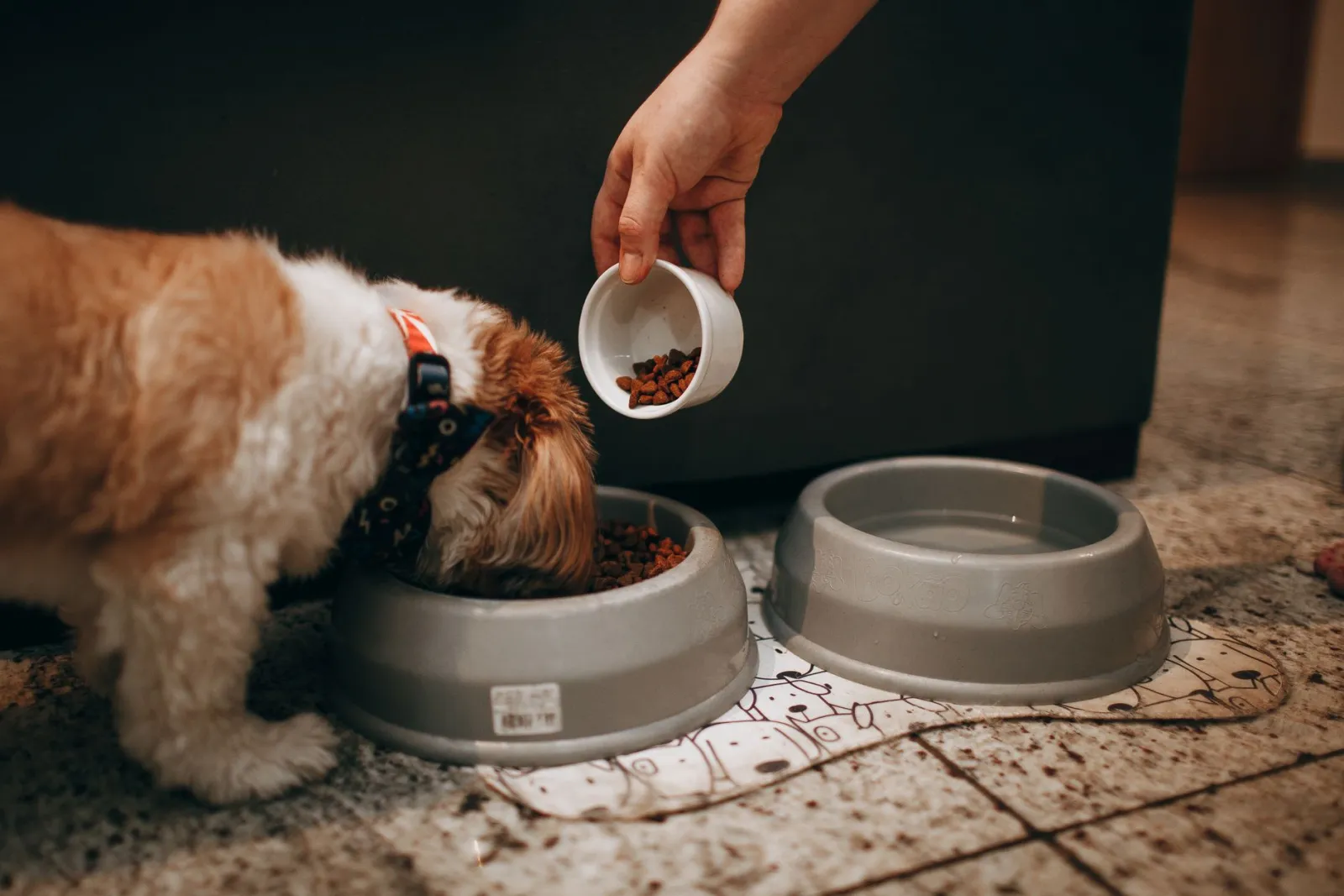
You come home from a long walk, your dog is sprawled on the kitchen floor, and you reach for the bowl. That moment — what goes in it — is the single decision you make most often about your dog’s health. Twice a day, every day, for ten years or more. No vet visit, no toy, no training class comes close in frequency.
So it’s worth getting right. Not perfect, not obsessive. Just right.
The honest answer is that there is no universal best food. But the principles behind a good choice are stable, well documented, and surprisingly simple. This guide walks through them, step by step.
Start With Life Stage, Not With Marketing
The first filter has nothing to do with ingredients lists or fancy packaging. It’s life stage. A puppy, an adult, and a senior dog have genuinely different nutritional needs, and feeding the wrong one long-term causes real problems.
Puppies need more calories per kilo, more protein, and a careful calcium-to-phosphorus balance for bone development. Feed an adult formula to a growing large-breed puppy and you risk growth that’s too fast, which puts stress on developing joints. Adults need a maintenance formula — enough energy for their activity, not a growth surplus.
Concrete example: A two-year-old border collie doing agility three times a week and a twelve-year-old labrador sleeping most of the day should not eat the same food, even if they weigh roughly the same. Same bowl, same brand, completely different needs.
Check the label for a clear life-stage statement. In most countries, a food labelled “complete” must meet defined nutritional standards for the life stage it claims. “All life stages” exists, but it’s a compromise — fine for some dogs, less ideal for a growing puppy or a senior with specific needs.
Read the Label Like a Grown-Up
Ingredient lists are written to sell, not to inform. The order of ingredients tells you what’s in the largest quantity by weight — but “chicken” by weight includes water, while “chicken meal” is concentrated. That’s why a food can list chicken first and still contain less actual protein than one listing a meal further down.
What actually matters on the label:
- A named protein source first. “Chicken,” “beef,” “salmon” — not “meat” or “animal derivatives.”
- A nutritional adequacy statement. This is the sentence confirming the food meets a recognised standard for a specific life stage.
- Crude numbers, but useful for comparing.
- A contactable manufacturer. If a company won’t tell you who formulates their food, that’s a signal.
You don’t need to decode every additive. You need to know whether the food is complete, appropriate for your dog’s stage, and made by someone accountable.
Concrete example: Two bags sit side by side. One leads with “fresh chicken” and lists no meal. The other leads with “chicken meal” and lists “chicken” third. The second often delivers more actual animal protein — because meal is concentrated, while fresh chicken is mostly water. The label order alone won’t tell you which is better for your dog.
Match the Food to Your Dog’s Real Life
Once you’ve cleared life stage and label basics, the fine-tuning is about your dog’s actual body and routine — not the idealised dog in the advert.
Weight and body condition
Run your hands along your dog’s ribs. You should feel them easily, without pressing, and see a slight waist from above. If you can’t feel ribs, the food (or the portion) needs adjusting. If ribs and hip bones jut out sharply, the opposite. Body condition, not the number on the scale, is your best daily gauge.
Activity level
A working dog, a weekend hiker, and a couch companion burn wildly different amounts. Feeding instructions on the bag are a starting point based on an average dog — your dog is not average. Start with the recommended amount, watch body condition for two to three weeks, then adjust up or down by roughly ten percent.
Special needs
Food allergies in dogs are real but less common than owners assume; environmental allergies are more frequent. If you suspect a food issue, a structured elimination diet guided by a vet is the reliable route.
Concrete example: A dog that scratches constantly and has soft stools may not have a food allergy at all. Switching to a “hypoallergenic” bag from the shelf rarely resolves it, because the actual trigger is often fleas, pollen, or a portion that’s simply too large.
Wet, Dry, Raw, or Home-Cooked?
Each format has trade-offs, and none is universally superior.
| Format | Main advantage | Main drawback |
|---|---|---|
| Dry kibble | Convenient, stable, easy to portion, helps clean teeth | Some dogs find it dull; quality varies widely |
| Wet food | Highly palatable, higher moisture, good for fussy or older dogs | Pricier per calorie, less dental benefit, spoils once opened |
| Raw | Owners often report shiny coats and good stools | Requires careful balancing, hygiene risks, veterinary supervision advised |
| Home-cooked | Full control over ingredients | Easy to get nutritionally wrong without a formulated recipe |
Mixing formats works fine for many dogs — a little wet food to make kibble more appealing, for instance. What doesn’t work is guessing. If you go raw or home-cooked, get a properly balanced recipe from a qualified veterinary nutritionist. “Meat and vegetables” is not a complete diet, and deficiencies show up months later.
FAQ
How do I determine the best dog breed for me?
Match the breed to your life, not the other way around. Look at your living space, how much daily exercise you’ll genuinely provide, how much grooming you’ll tolerate, and your experience level. A high-energy working breed in a small flat with a sedentary owner is a mismatch, however lovely the dog. Honest self-assessment beats breed popularity every time — and if you’re unsure, a breed that’s easy to train and adapts to family life is usually the safer first choice.
What is the 7 7 7 rule with dogs?
It’s a rough timeline for a rescue dog settling into a new home. Roughly the first seven days are about decompression — the dog is overwhelmed and needs calm and space. Around seven weeks, routines and trust are forming. Around seven months, the dog often feels genuinely at home and their real personality shows. It’s a guide, not a deadline — some dogs settle faster, others take much longer.
Which dog is most ADHD?
No breed is diagnosed with ADHD the way humans are. But some breeds are famously high-drive and need constant mental and physical work — border collies, Australian shepherds, huskies, jack russell terriers. These dogs aren’t “hyperactive” in a medical sense; they’re bred for intense activity and become restless without it. If you want a calmer companion, look at lower-energy breeds and provide daily enrichment regardless.
What is the nicest dog to have as a pet?
“Nicest” depends on what you want from a dog. For gentle, trainable, family-friendly temperaments, retrievers and similar companion breeds are consistently popular. For first-time owners, easygoing, biddable dogs tend to cause the fewest surprises. The nicest dog for you is the one whose energy, size, and grooming needs fit your daily reality — not the one topping a list.
The Bottom Line
Feeding your dog well isn’t about finding a magic bag. It’s about three things: choosing a complete food for the right life stage, matching the portion to your dog’s body condition and activity, and adjusting as they age. Get those right, and you’re covering the vast majority of what matters.
Start today by checking two things — the life-stage statement on your current food, and your dog’s ribs under your hands. Those two checks tell you more than any ingredient list ever will.
If you want the fuller picture, including how to build a feeding routine, transition between foods, and handle fussy eaters, there’s a more complete guide on the general topic of dog nutrition on the site.
🔗 Read also