In short :
- Look at the wood species before anything else, because a dense hardwood like oak or walnut handles daily life far better than pine or rubberwood.
- Check the joints and the base in person, since that’s what separates a table you keep for decades from one that wobbles within a year.
- Pick a matte oil or satin finish, which hides scratches and can be spot-repaired at home.
- Match the table to how you actually live and buy for your real space with a little breathing room.
- Solid hardwood beats veneer if you want to sand and refinish it over time.
What Makes a Wood Dining Table Worth Choosing
A dining table is one of the few pieces of furniture you touch every single day. You lean on it over coffee, gather around it on Sunday evenings, and wipe it down more often than you’d like to admit. So when it comes time to choose one, wood deserves a serious look — but not all wood tables are created equal.
Walk into any furniture showroom and you’ll see tables that look almost identical from three feet away. Move closer, and the differences start to show: how the top was joined, whether the base wobbles, how the grain was matched. This guide focuses on the practical criteria that separate a table you’ll keep for decades from one you’ll regret within a year. No brand names, no shopping lists — just the things worth checking before you commit.
Start With the Wood Species, Not the Finish
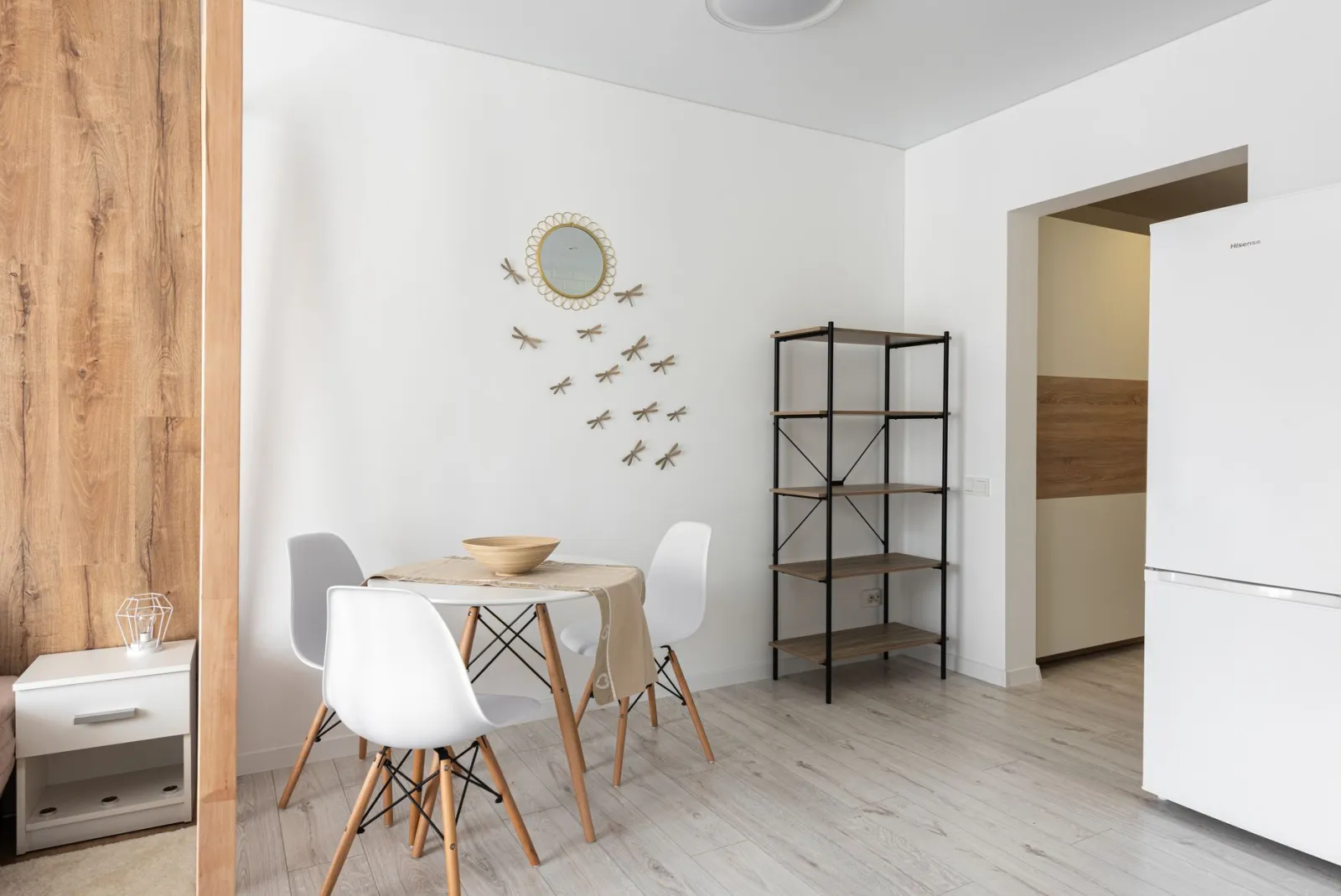
The finish is what catches your eye, but the species underneath determines how the table will age. Hardwoods like oak, maple, walnut, and cherry behave very differently from softer options like pine or rubberwood.
Hardwoods resist dents and scratches far better, which matters if you have children doing homework at the table or friends who slide glasses across it. Softer woods are lighter and easier to move, but they show wear quickly — a fork dropped on pine leaves a mark that oak would shrug off.
Here’s a concrete example worth remembering: a family with two young kids and a dog will almost always be better served by a dense hardwood with a matte oil finish than by a delicate veneered top. The veneer may look flawless on day one, but one spilled glass left overnight can lift the edge. Solid hardwood can be sanded and refinished years later; a thin veneer cannot.
Grain also tells a story. A table with closely matched grain across the top looks intentional and calm. Mismatched planks — especially with wildly different tones — can look busy and cheapen the whole room.
Check How the Table Is Built, Not Just How It Looks
Construction is where most buyers get caught out. A beautiful top on a weak base is a wobbly table waiting to happen.
Look at the joints. Dovetails, mortise-and-tenon joints, and properly glued and screwed corner blocks signal care. Staples and visible screws holding the apron to the legs are a warning sign. Turn the table over if you can — the underside reveals more about quality than the top ever will.
- Leg attachment: legs should be reinforced with corner blocks or a sturdy apron, not just screwed into the top.
- Top movement: solid wood expands and contracts with humidity. A well-built table allows for this; a rigidly fixed top can crack over time.
- Weight and stability: a solid table shouldn’t shift when you lean on one edge. Give it a gentle push in the showroom — if it rocks, walk away.
A practical case: a buyer once chose a table that looked perfect but had a single central pedestal. It was elegant, but every time someone leaned on the end, the whole table tilted. Four well-braced legs or a wide, stable trestle base solve this problem far better for everyday family use.
Match the Table to Your Real Life, Not Your Pinterest Board
This is the part most people skip. The table has to survive your actual routine, not the idealized version of it.
Ask yourself a few honest questions. Do you eat in the kitchen most nights and use the dining room twice a year? Then a smaller, tougher table makes more sense than a grand formal one. Do you host big dinners? An extendable design or a generous fixed size beats a beautiful but cramped round table.
Finish matters here too. Matte oil finishes are forgiving and easy to spot-repair; high-gloss lacquers show every fingerprint and scratch. If you have pets, a lightly textured or matte surface hides claw marks far better than a mirror-like sheen.
One common observation: households that choose a table slightly larger than they think they need almost never regret it, while those who buy small to save space often end up squeezing guests around it. Measure your room, then measure the walking space around the table — you want at least a comfortable chair-pull distance on every side.
Quick Comparison: What to Weigh Up
| Factor | What to Look For | Why It Matters |
|---|---|---|
| Wood type | Dense hardwood (oak, maple, walnut, cherry) | Resists dents and can be refinished |
| Construction | Reinforced joints, stable base, allowance for movement | Prevents wobble and cracking |
| Finish | Matte oil or satin, repairable | Hides wear, easy to touch up |
| Size | Fits your room with chair clearance | Avoids cramped hosting |
| Everyday use | Matches your real routine | Long-term satisfaction |
Frequently Asked Questions
Is solid wood always better than veneer?
Not automatically. Quality veneer over a stable core can be durable and resist warping, especially in humid rooms. The key difference is repairability: solid wood can be sanded and refinished repeatedly, while veneer cannot once it’s damaged. For a table you plan to keep for decades and use hard, solid hardwood is the safer bet.
How do I stop a wood table from cracking?
Most cracks come from sudden humidity swings. Keep the table away from radiators and direct sun, and avoid leaving it in a dry, overheated room for long stretches. A well-built table allows the top to move slightly — that flexibility is a feature, not a flaw.
What’s the easiest finish to live with?
Matte oil or satin finishes are the most forgiving. They hide small scratches, don’t show fingerprints the way gloss does, and can often be spot-repaired at home. High-gloss looks striking in photos but demands more care in daily life.
The Short Answer
The best wood dining table isn’t the most expensive or the most photographed one — it’s the one whose species, construction, and finish match how you actually live. Prioritize a dense hardwood, check the joints and base before anything else, choose a repairable matte finish, and buy for the space you have with a little breathing room to spare. Get those four things right and the table will quietly do its job for years.
For a deeper look at materials, care routines, and room-by-room considerations, a more complete guide on choosing dining furniture is available on the site.
Put it into practice : How long can you expect a solid wood coffee table to last?
Was this guide helpful?
Share your experience with the WiseHomeGuides community.