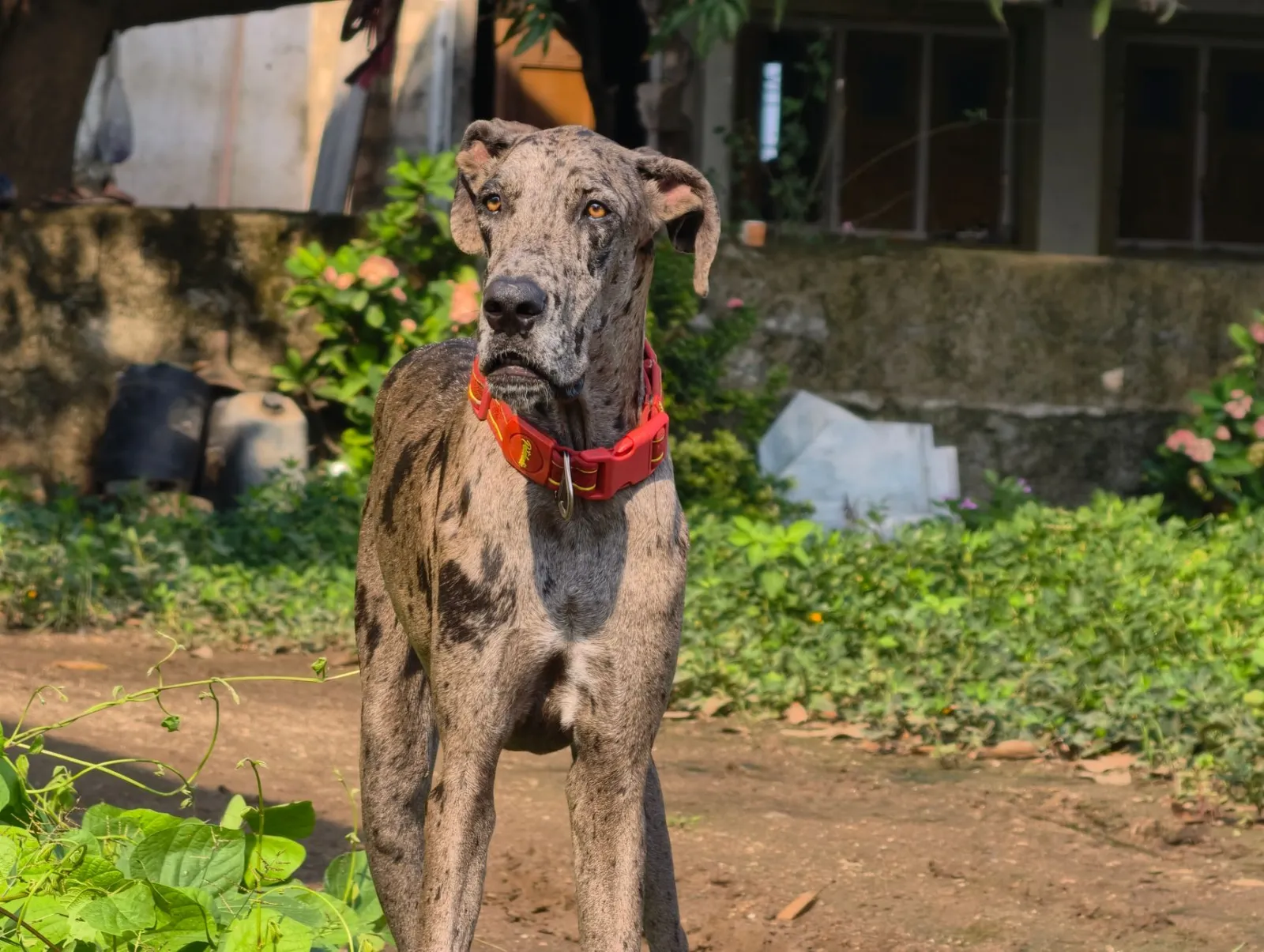
Short answer : Scooby-Doo is a fictional Great Dane, the large German breed known for its tall frame, long legs, and short coat. The character’s design borrows from the Great Dane’s size and lanky build, but it exaggerates those traits for comic effect, giving him an oversized snout, floppy ears, and a clumsy, expressive posture. He is not modeled on a real individual dog or a specific bloodline; he is a cartoon creation shaped around the Great Dane silhouette. Fans often note that his appetite, nervous temperament, and tendency to bolt when frightened are personality traits written for the show rather than accurate breed characteristics. In short, Scooby-Doo is a Great Dane in name and basic shape, styled and stretched to fit animation.
In short
- Scooby-Doo is officially a Great Dane, one of the largest and tallest dog breeds.
- His cartoon design exaggerates the Great Dane’s long legs, deep chest, and short coat.
- He is a fictional character, not based on a real dog or a specific bloodline.
- His huge appetite and fearful, clumsy behavior are scripted traits, not breed traits.
- The Great Dane’s imposing size makes the scaredy-dog joke land harder on screen.
What Dog Is Scooby-Doo Based On
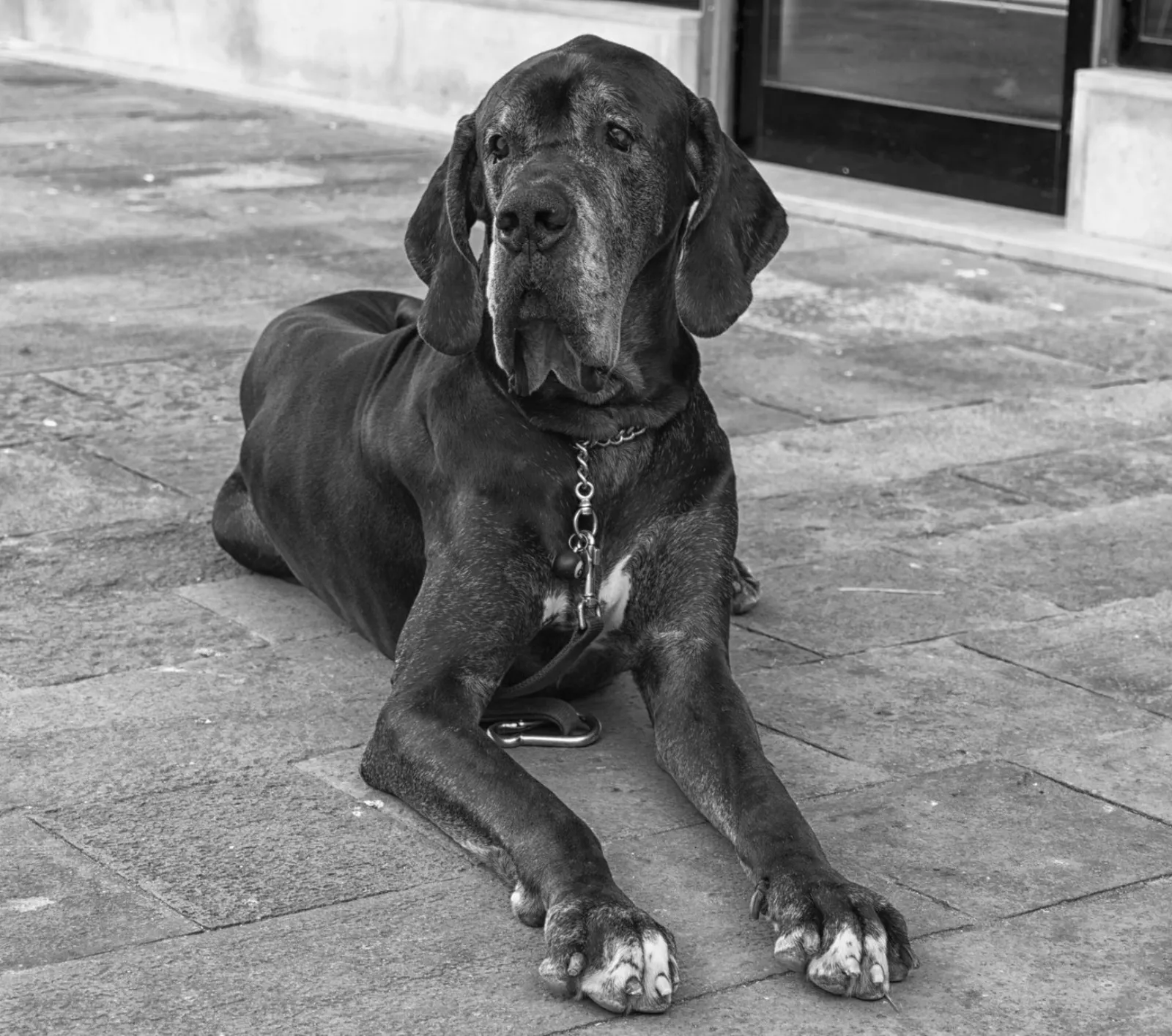
Scooby-Doo is not a purebred dog, and that is the key to answering the question. The character was designed by Iwao Takamoto, a Hanna-Barbera animator, who built the Great Dane from a set of exaggerated, cartoon-friendly traits rather than from a single breed standard. The result reads unmistakably as a Great Dane, but a deliberately odd one: too lanky, too loose-limbed, and with a head and muzzle that don’t quite match a show-quality Dane. In other words, Scooby is a Great Dane in spirit and silhouette, filtered through animation logic.
The clearest evidence is in the body proportions. Scooby stands tall on long, thin legs, carries a deep chest, and has an elongated muzzle with a prominent nose — all hallmarks of the Great Dane. His ears flop rather than stand cropped, and his overall frame is narrow and leggy. Real Great Danes are among the tallest dog breeds, often described as “gentle giants,” and Scooby’s towering height relative to Shaggy and the rest of the gang matches that reputation. He is big enough to be a burden in a small van and tall enough to reach countertops, which the show uses constantly for physical comedy.
What makes him a caricature rather than a portrait is the exaggeration. Takamoto reportedly softened the Dane’s features, giving Scooby a rounded, expressive face, oversized paws, and a rubbery, almost human range of expressions. His chin and jaw are more pronounced than a real Dane’s, and his back is longer and more sloping. These choices make him easier to animate and funnier to look at, but they pull him away from breed accuracy. A Great Dane owner would recognize the general type immediately while also noticing that Scooby looks like a friendly cartoon cousin rather than a show dog.
The personality is where the design and the breed lore meet. Great Danes are often described as calm, affectionate, and surprisingly timid for their size — a combination that fits Scooby’s core joke perfectly. He is enormous yet easily frightened, loyal to Shaggy, and driven by appetite. That contrast between a giant body and a nervous disposition is exactly the kind of trait animators love to amplify, and it is why the Great Dane read works so well for the character.
So the honest answer is that Scooby-Doo is based on a Great Dane, but an intentionally distorted one. He borrows the height, the deep chest, the long legs, and the floppy ears of the breed, then stretches them for comedy. If you picture a real Great Dane, you have the right family tree — just imagine it drawn with a looser hand and a bigger appetite.
The Great Dane Traits That Fit Scooby
The Great Dane build is the foundation of Scooby’s silhouette, and the cartoon leans on real traits of the breed rather than inventing a fantasy dog. Great Danes are among the tallest dog breeds, with a long-legged, deep-chested frame and a large head carried on a strong neck. That combination of height and mass is exactly what the animators exaggerate: Scooby towers over Shaggy in most scenes, and his chest and shoulders are drawn broad enough to suggest a dog that takes up real space in a room. The breed’s proportions, tall and narrow rather than stocky, explain why Scooby reads as lanky rather than bulky.
The head shape matters just as much. Great Danes have a long, rectangular muzzle and a pronounced brow, with ears that can stand naturally or be cropped depending on the dog. Scooby’s design keeps the long snout and the heavy brow, which is where much of his expressiveness comes from — the raised eyebrow, the drooping lip, the wide-eyed panic. A shorter-muzzled breed like a bulldog or a boxer would not support the same range of comic facial expressions, because the geometry of the face is different.
Size also drives the show’s physical comedy. A dog of Great Dane scale can knock over furniture, block a doorway, or carry Shaggy’s weight in a chase, and the cartoon uses that constantly. In practical terms, owners of large breeds know the everyday version of this: countertops within reach, a leash walk that becomes a strength contest when the dog spots something interesting, and a car boot that barely fits. Scooby’s clumsiness in tight spaces mirrors the real mismatch between a giant dog and an ordinary house.
Temperament is the other half of the fit. Great Danes are often described as gentle, people-oriented dogs that lean toward their owners and prefer company to solitude, and Scooby’s clinginess with Shaggy tracks that reputation closely. The breed is also famously calm indoors for its size, which is why a giant dog can live in a normal home — and why Scooby’s default mode is lounging and snacking rather than constant motion. His courage arrives only under pressure, which fits a dog that is steady rather than driven.
Finally, the appetite is not an invention. A dog of that mass eats a great deal, and Scooby’s obsession with snacks and sandwiches is a recognizable exaggeration of feeding a large breed. The cowardice, by contrast, is pure cartoon license — Great Danes are not notably fearful dogs. The breed supplies the body, the face, the appetite and the affectionate temperament; the personality is the writers’ work.
Why Scooby’s Size and Appetite Match
Scooby’s proportions are the first clue that the cartoonists had a very large dog in mind. He stands tall enough that Shaggy, a grown man, has to crouch or lean down to meet him eye to eye, and his body is deep-chested and long-limbed rather than compact. That silhouette fits a Great Dane far better than a medium-sized companion breed. A Dane’s frame is built for height and reach, with a broad chest and a long back, and Scooby’s design echoes exactly those proportions: a big barrel of a torso, legs that carry him at roughly human waist height, and a head that is large relative to his body. When you picture him squeezing into the Mystery Machine or clattering through a doorway, you are picturing a dog whose size is genuinely inconvenient, which is the joke the show leans on.
His appetite is the second match, and it is drawn at a scale that only makes sense for a giant breed. Scooby is obsessed with food to the point that a Scooby Snack becomes the running bribe of the entire series, and his meals are depicted as enormous. That appetite tracks with how large dogs actually eat: a dog of Dane proportions needs substantially more food per meal than a small or medium breed, and the volume can look comical next to a human plate. The cartoon exaggerates this for laughs, but the underlying idea, that a very big dog is a very big eater, is grounded in reality. Owners of large breeds routinely describe the grocery bill as one of the defining costs of ownership, and Scooby’s bottomless hunger is a cartoon version of that same practical truth.
Size and appetite also drive the show’s most reliable gags, and those gags only work because of the breed type. Scooby hides behind Shaggy, despite being taller and heavier, because a big dog trying to disappear behind a slim person is inherently funny. He knocks things over, fills doorways, and eats portions meant for several people. None of that lands if Scooby were a small terrier. The comedy depends on a mismatch between a large, powerful body and a timid, hungry personality, and that mismatch is precisely what a Great Dane’s physical presence makes possible. The appetite is the engine of the plot, since the promise of a snack is what gets him to face the monster, and the size is what makes the fear look absurd.
There is also a practical, everyday dimension worth noting for anyone drawn to the breed because of Scooby. A dog of this scale needs room to move, sturdy furniture, and a household prepared for a pet that can reach countertops and clear a sofa in one step. Feeding a large dog is a daily commitment in quantity as well as cost, and the cartoon’s running food obsession is a lighthearted stand-in for that reality. Scooby’s design, in other words, is not just a visual choice; it is a fairly accurate sketch of what living with a giant breed actually involves, from the height at the shoulder to the size of the bowl.
How to Choose a Dog Like Scooby
Choosing a dog with the Great Dane qualities that make Scooby-Doo recognizable means focusing on temperament and fit rather than chasing an exact replica. The cartoon dog’s defining traits are his size, his nervous but loyal personality, and his deep attachment to his people. A real Great Dane shares the imposing frame, but every individual dog varies in confidence and energy, so the goal is to find a companion whose natural disposition matches your household rather than a dog that merely looks the part.
Size is the first practical filter. Great Danes are among the tallest breeds, and that scale shapes daily life in ways that are easy to underestimate. A dog of this size needs room to stretch out indoors, a vehicle that can accommodate him, and furniture and doorways that won’t become constant obstacles. If your living space is compact or your car is small, an honest assessment now prevents years of friction. The trade-off is a calm, couch-friendly companion indoors, since these dogs tend to be relaxed at home and save their energy for short bursts.
Temperament should carry more weight than appearance. Scooby is famously timid, and while a shy dog can be endearing, genuine fearfulness is different from cartoon comedy. When meeting a potential dog, watch how he responds to strangers, loud noises, and new environments. A dog who recovers quickly from a startle and warms up with gentle encouragement is easier to live with than one who stays tense. If you want a dog for a busy household with frequent visitors, look for a confident individual; if your home is quiet and predictable, a softer-natured dog may settle in well. Ask about the dog’s background and early socialization, since these shape adult behavior.
Energy and exercise needs deserve a realistic look. Great Danes are not high-drive athletes; they typically enjoy moderate daily walks and plenty of rest, which suits owners who prefer a steady routine over intense activity. That said, a young dog still needs structured exercise and mental engagement to stay balanced. Consider your schedule honestly: a dog this large is harder to manage on a leash if he hasn’t learned manners, so early, consistent training matters. Puppies grow fast and are strong before they are mature, so plan for patient, reward-based guidance from the start.
Finally, think about long-term commitment and sourcing. A dog of this size lives a relatively short lifespan compared with many breeds, and his needs remain substantial throughout. Reputable breeders and breed-specific rescues can tell you about a dog’s parents, temperament, and typical development, and they will match you with an individual rather than a look. Meet the dog more than once, ask how he handles everyday situations, and choose the companion whose calm, loyal nature fits your life, the same devotion that makes Scooby-Doo so lovable.
Key Criteria Before Picking a Giant Breed
Before you fall for the charm of a cartoon-sized dog, it helps to understand what separates a giant breed from a merely large one. The distinction is not just about height at the shoulder or body mass. It is about the pace of physical maturation, the amount of space a dog genuinely needs to move and rest comfortably, and the daily logistics of feeding, exercising, and transporting an animal that may weigh as much as a small adult. A Great Dane, for instance, is often described as a giant breed precisely because its frame and growth timeline differ substantially from those of a medium-sized working dog. Understanding these criteria before you commit is the most reliable way to avoid a mismatch between your household and the dog.
Space is the first practical filter. A giant breed needs room to stretch out fully when resting, to turn around without knocking into furniture, and to move through doorways and hallways without constant negotiation. Apartment living is not automatically disqualifying, but it demands honest assessment: a dog that occupies most of a small living room floor changes daily life for everyone in the home. Outdoor access helps, but a securely fenced area matters more than sheer size, because a giant dog can generate considerable momentum and needs boundaries that hold.
Time and physical capability come next. Large dogs still require regular exercise, but the handling demands are different from those of a small companion: leash control with a powerful animal, the ability to steady it around other dogs and people, and the strength to manage it if it lunges or pulls. Consider who in the household will walk the dog daily, in all weather, and whether that person can physically manage the animal. A giant breed is a long-term commitment to that routine, not an occasional outing.
Budget and logistics deserve a clear-eyed look without turning into a shopping list. A bigger dog eats more, occupies more of a vehicle, and needs sturdier equipment that wears differently than gear built for smaller animals. Travel, boarding, and even visiting friends all require planning when your dog takes up significant space. These are ongoing considerations rather than one-time costs, and they shape whether a giant breed fits your life over the years.
Finally, temperament and training matter as much as size. Giant breeds are not a monolith: some are calm and laid-back, others are energetic and need structured activity. What they share is that early, consistent training and socialization carry outsized importance, because an untrained large dog is a far bigger problem than an untrained small one. Match the breed’s typical energy level and personality to your own routine, and be realistic about the time you can invest in training. If those criteria align, a giant breed can be a wonderful fit; if they do not, a smaller dog may suit your household far better.
Feeding and Grooming a Large Dog
Feeding a dog the size of a Great Dane is a different exercise from feeding a small companion breed, and the gap is not just about portion size. A giant-breed body has a slower metabolism per pound of body weight, which means the bowl is not refilled as often as owners of smaller dogs might expect, yet each meal still involves a substantial volume of food. The practical consequence is that meal timing and digestion matter more than raw quantity. Large, deep-chested dogs do best with meals split across the day rather than one enormous serving, and vigorous activity immediately before or after eating is best avoided. Owners typically find that two or three smaller meals suit a big dog better than a single large one, and that a consistent schedule makes behavior around food far more predictable.
Portion control is where the cartoon image of Scooby inhaling an entire feast becomes genuinely useful as a cautionary tale. A dog of this scale gains and loses weight in visible increments, but the change happens gradually enough that owners often miss it until the ribs disappear under a layer of padding. The reliable approach is to judge condition by feel rather than by the scale alone: ribs should be easy to locate under a light layer of covering, and the waist should be discernible from above. Because large dogs carry more weight on the same joints, carrying extra pounds has an outsized effect on how comfortably they move, especially as they age.
The equipment matters as much as the food. A raised feeding station reduces the downward stretch a tall dog’s neck and front legs have to make at every meal, and a bowl that is wide and shallow is easier for a long muzzle to reach than a deep narrow one. Slow-feeders designed for big mouths help with dogs that gulp, which is common in breeds built like the Great Dane. Water intake deserves the same attention: a large dog drinks a lot, so a generously sized bowl that is refreshed often is more practical than a small one refilled constantly.
Grooming a short, dense coat is less labor-intensive than grooming a long one, but the sheer surface area changes the job. A rubber curry or grooming mitt works well for lifting loose hair from a smooth coat, and a weekly session keeps shedding manageable indoors. The parts that need deliberate attention are the ones the dog cannot reach or that trap moisture and debris: ears, especially on dogs with folded or pendulous ears, and the skin under any loose folds. Nails on a heavy dog are thick and wear unevenly, so they need regular checking rather than occasional attention.
The final consideration is handling. A large dog cannot be lifted onto a grooming table or into a bath the way a small one can, so grooming works best at floor level or with a ramp, and it works best when the dog is taught early to stand still and tolerate handling. Treating grooming as a routine, brief, and calm part of the week produces a dog that cooperates; treating it as an occasional wrestling match produces a dog that learns to avoid it.
Exercise Needs for Big Companion Dogs
Big companion dogs were bred for stamina and purpose, not for lounging, and that shapes how much daily movement they actually need. A large, athletic dog with a working or herding background typically needs substantially more than a short walk around the block; think in terms of one or more long outings plus structured activity rather than a single quick trip outside. The cartoon version of Scooby is a comedic exaggeration, but the real Great Dane behind the design is a giant breed whose exercise needs sit in a different category from a small lap dog, even though the two are often lumped together under “companion.”
The key distinction for big companion dogs is between free, unstructured movement and purposeful exercise. A slow sniff-heavy walk does a lot for mental engagement but little for conditioning, while a brisk sustained walk, a run alongside a bicycle at an appropriate pace, or a supervised swim builds endurance. For a giant breed, the sensible approach is moderate intensity spread across the day rather than one exhausting session, because large bodies carry more load on joints and recover more slowly. Splitting activity into a morning outing and an evening outing is often easier on the dog than a single long push.
Age changes the picture considerably. Puppies of large and giant breeds should not be pushed through long forced marches or repetitive high-impact activity while they are still growing; short, frequent, low-impact play suits them better. Adult dogs in their prime can handle more volume and benefit from variety. Senior dogs of these breeds often do best with shorter, more frequent walks on forgiving surfaces, plus gentle mental work such as scent games, which tires them without stressing the body. Matching the plan to the life stage matters more than hitting a fixed target.
Breed background gives useful clues. A livestock guardian type tends to be content with steady patrol-style walking and long periods of settling, while a herding or retrieving type wants a job and will invent its own if none is offered. Companion dogs kept mainly for company still need an outlet, and the most common failure is under-exercising a big dog and then expecting calm behavior indoors. A tired dog settles; an under-stimulated one paces, chews, and tests boundaries.
Practical cases help. A household with a fenced yard can use it for short training bursts and sniffing, but yard time alone rarely replaces a real walk, because dogs explore and socialize on the move. An apartment dweller with a large companion dog should plan several outings a day and lean on training games and puzzle feeding to fill the gaps. In hot or cold weather, shift activity to the cooler or warmer parts of the day and favor shaded or indoor mental work. The through-line is consistency: a predictable daily rhythm of walks, play, and quiet rest suits big companion dogs better than occasional bursts of intense activity followed by long idle stretches.
Common Mistakes With Giant Breed Ownership
The most common mistake with giant breed ownership is treating a large dog like a scaled-up version of a medium one. A Great Dane or a Mastiff-type dog has different proportions, a different growth curve, and a different center of gravity, so the habits that work for a Labrador often backfire. People buy oversized crates and beds but forget that the dog’s joints and frame need controlled exercise rather than free-for-all running during the long growth period. Letting a young giant breed pound up and down stairs or chase balls on hard surfaces for long stretches is a classic error, because these dogs keep growing well past the age most breeds are finished.
A second frequent mistake is underestimating the space and logistics a giant breed actually requires. This is not just about floor area; it is about turning radius in hallways, the width of a car boot, and whether the dog can comfortably lie down without blocking a doorway. Owners often discover too late that a standard hatchback cannot safely transport an adult giant breed, or that a narrow staircase becomes a daily obstacle. Planning the vehicle, the crate footprint, and the home layout before the dog reaches full size avoids a lot of stress later.
Training and handling mistakes are equally common. Because the dog is calm and slow-moving as a puppy, owners delay leash manners and impulse control, then face a hundred-pound-plus animal that pulls toward other dogs. The window for teaching loose-leash walking and a reliable recall is much easier when the dog is small, and it closes fast. Similarly, jumping up is cute at a few months and genuinely dangerous at full size, so the rules need to be set early and applied consistently by everyone in the household.
Owners also misjudge cost and effort over the dog’s lifetime. Giant breeds eat substantially more than medium dogs, need more robust equipment that wears out or gets outgrown, and require more room in boarding and grooming arrangements. Many people budget for the purchase and the first year but not for the recurring reality of a bigger dog. A final trap is expecting the cartoon version: Scooby-Doo’s clumsy, food-driven charm is fiction, and a real giant breed needs structure, consistent training, and a household prepared for its size rather than amused by it.
Budgeting for a Large Dog’s Care
Owning a dog the size of a Great Dane means planning your finances around a genuinely large animal, not a lap dog. The costs scale with body weight at almost every turn: more food per meal, larger doses of routine parasite prevention, bigger crates and beds, and stronger restraints that wear out faster. Before committing, it helps to sketch a realistic annual budget rather than focus only on the purchase or adoption fee, which is usually the smallest part of the total.
Food is the most predictable recurring expense and the one most directly tied to size. A giant-breed dog eats several times what a medium dog eats, so a bag that lasts a small dog weeks may last only days. Large-breed-specific formulas exist partly because growing giant puppies have different nutritional needs, and these diets often cost more per bag. Expect the food line to be your largest routine cost, and budget for it monthly rather than buying bag by bag, since prices and availability fluctuate.
Routine care and prevention also scale with weight. Many parasite preventives are dosed by body weight, so the largest sizes cost more per dose. Grooming is another size-sensitive line: bathing, brushing, and nail care take longer on a big coat, and professional grooming appointments cost more for large dogs. Factor in sturdy gear as well, because a giant dog needs heavy-duty collars, harnesses, and leads that are pricier and replaced more often than small-dog equipment.
Setup costs deserve their own line. A crate large enough for a Great Dane-sized dog, an orthopedic bed that supports a heavy frame, a raised feeding stand, and a vehicle solution for transport all carry a premium. These are largely one-time purchases, but they arrive together when you bring a dog home, so plan for a lump sum at the start rather than spreading them out.
Finally, build a buffer for the unexpected. Large dogs are heavy enough that accidents, injuries, and age-related issues can require more involved care, and the financial reserve you keep should reflect that. A practical approach is to set aside a fixed monthly amount into a dedicated pet fund from day one, treat routine costs as fixed bills, and keep gear and food purchases within that plan. The goal is not to predict every expense but to make sure a big dog’s everyday needs never force a choice between food and rent.
Is a Great Dane Right for Your Home
A Great Dane is a serious commitment before it is a charming one, so the honest question is not whether you like the idea of a Scooby-Doo-sized dog but whether your daily life can absorb one. The first filter is space and structure. These are tall dogs that cover ground quickly indoors, and a small apartment with fragile surfaces and no easy route outside will feel cramped for both of you. A home with a securely fenced yard suits the breed far better, though a yard is not a substitute for walks. Expect to plan exercise around short, controlled sessions rather than long forced marches, especially while the dog is still growing, and to keep a leash on in unfenced areas because the breed’s size makes recall a safety issue rather than a convenience.
The second filter is handling and logistics. A Great Dane is heavy enough that ordinary tasks become two-person jobs at times, and a dog that leans, pulls, or jumps can knock over children, guests, or furniture without meaning to. Early, consistent training in loose-leash walking and polite greeting matters more with this breed than with a small one, because the consequences of poor manners scale with the dog. Think about who in the household can physically manage the dog on a bad day, and whether everyone is prepared to enforce the same rules. Homes with very young children or frail elderly residents need an honest conversation about supervision and layout.
The third filter is budget and time, described in relative terms rather than figures. Large dogs eat more, need sturdier gear that wears out differently, and take up more room at the vet and in the car. Everything from a crate to a bed to a harness is sized for a giant breed, and those items cost more and last differently. Grooming is manageable, but nail care, ear checks, and coat upkeep still take regular time. If your schedule leaves little room for daily walks, training refreshers, and calm indoor companionship, a Dane will notice.
The fourth filter is temperament fit. Great Danes are typically affectionate, people-oriented dogs that want to be near their family, which makes them poor candidates for long stretches alone in a backyard or a kennel run. They do best with owners who want a close, calm companion and who can provide steady, gentle leadership. If you want a dog for intense sport, long runs, or rough-and-tumble play with other large dogs, a Dane may frustrate you. If you want a mellow, imposing companion who is content to lean against you on the sofa after a short outing, the breed can be a wonderful match. Be honest about which of those households you actually run.
Frequently asked questions
What dog breed is Scooby-Doo supposed to be?
Scooby-Doo is written and drawn as a Great Dane. The character was created by Hanna-Barbera for the 1969 cartoon series, and the creators described him as a large Great Dane with a brown coat and black spots. That breed label is part of the show’s official premise, not fan speculation. Scooby’s size, long legs, deep chest, and droopy jowls all follow Great Dane anatomy, which is why the label fits what viewers see on screen.
Is Scooby-Doo really a Great Dane?
Yes, in the fiction of the series Scooby-Doo is a Great Dane. The cartoons consistently refer to him as a Great Dane, and his design follows that breed’s basic shape. He is not a real dog, so he is a cartoon version rather than a pedigree animal. His coloring is fictional, since Great Danes do not come in that spotted brown pattern. So he is a Great Dane by the show’s own definition, drawn loosely rather than realistically.
Why is Scooby-Doo drawn as a Great Dane?
The creators wanted a big dog that could believably share scenes with teenagers and still look funny when scared. A Great Dane gives the show a dog large enough to be a comic presence, with long legs for running and a big head for expressive reactions. The breed’s tall, slightly goofy silhouette suits slapstick animation. Making him a Great Dane also explains why he can carry weight, reach high places, and tower over the gang in the Mystery Machine.
How big does a Great Dane get?
Great Danes are among the tallest dog breeds, with males typically standing noticeably taller at the shoulder than females. They are large-framed dogs with long legs, a deep chest, and a heavy build. Exact height and weight vary by bloodline, sex, and diet, so responsible sources give ranges rather than one figure. What matters for owners is that a Great Dane is a genuinely big dog that needs space, sturdy furniture, and a vehicle large enough to carry it comfortably.
Do Great Danes eat as much as Scooby?
Scooby’s cartoon appetite is a running gag, and real Great Danes do eat more than small breeds because of their body size. But they are not bottomless eaters, and overfeeding a large dog causes problems. A Great Dane’s food needs depend on age, activity, and body condition, and growing puppies need a carefully managed diet. Portion sizes should come from a veterinarian or the food maker’s guidance, not from cartoon comparisons. The real rule is measured meals, not free feeding.
Are Great Danes good family pets?
Great Danes are often described as gentle, affectionate dogs that bond closely with their people. Many do well in family homes when they are socialized early and taught basic manners while still small enough to handle. Because of their size, they can accidentally knock over young children, so supervision and training matter. They generally prefer being with their family rather than left alone for long stretches. Temperament varies by individual dog, so meeting the dog and its breeder matters more than the breed label alone.
How much exercise does a Great Dane need?
Great Danes need regular daily exercise, but not the intense, high-impact routine suited to sporting breeds. Moderate walks and safe off-lead time in a secure area are typical. Because they are large and still growing as youngsters, strenuous repetitive jumping or long forced runs are usually avoided while the dog is developing. Adult exercise needs vary with age and energy level. A tired but calm Great Dane is usually a better sign than an exhausted one.
What should I know before getting a Great Dane?
A Great Dane is a very large dog, so plan for space, a big bed, a large crate, higher food costs, and a vehicle that fits it. Early training and socialization are important because an untrained large dog is hard to manage. Great Danes are prone to certain inherited health issues, so ask breeders about health testing and talk to a veterinarian about the breed’s needs. They also want company and do not suit homes where they are left alone all day.
Put it into practice : How Big Will My Dog Get? Estimate Adult Size
Work out your own case in 30 seconds:
Methodology
This calculator produces an indicative estimate based on the parameters you enter. The ranges used reflect typical market tiers in the pets space and are neither a commercial offer nor a guarantee. Prices and availability may vary.
Read next :Best Dog Names: How to Choose the Perfect Name
Read next :How to Choose the Best Fridge Brand for Your Home
Read next :Fridge Freezer With Ice Dispenser: A Complete Buying Guide
Full guide :Pets
More from this guide :
Was this guide helpful?
Share your experience with the WiseHomeGuides community.