
This article contains Amazon affiliate links. As an Amazon Associate we earn from qualifying purchases.
In short :
- Your flat-faced cat isn’t being fussy, it’s the bowl.
- Deep narrow bowls force their nose into the sides before their tongue reaches the food.
- Go shallow, go wide, and keep the rim low so they can breathe while eating.
- Raising the bowl slightly and keeping it away from other cats helps too.
- Wet food usually works better than dry for these cats.
If you share your home with a flat-faced cat — a Persian, an Exotic Shorthair, a British Shorthair with a pushed-in muzzle, or any brachycephalic breed — you have probably noticed something odd at mealtime. Your cat approaches the bowl, sniffs, then… backs away. Or scoops food onto the floor with a paw. Or eats three bites, sneezes, and walks off. This is not pickiness. It is anatomy.
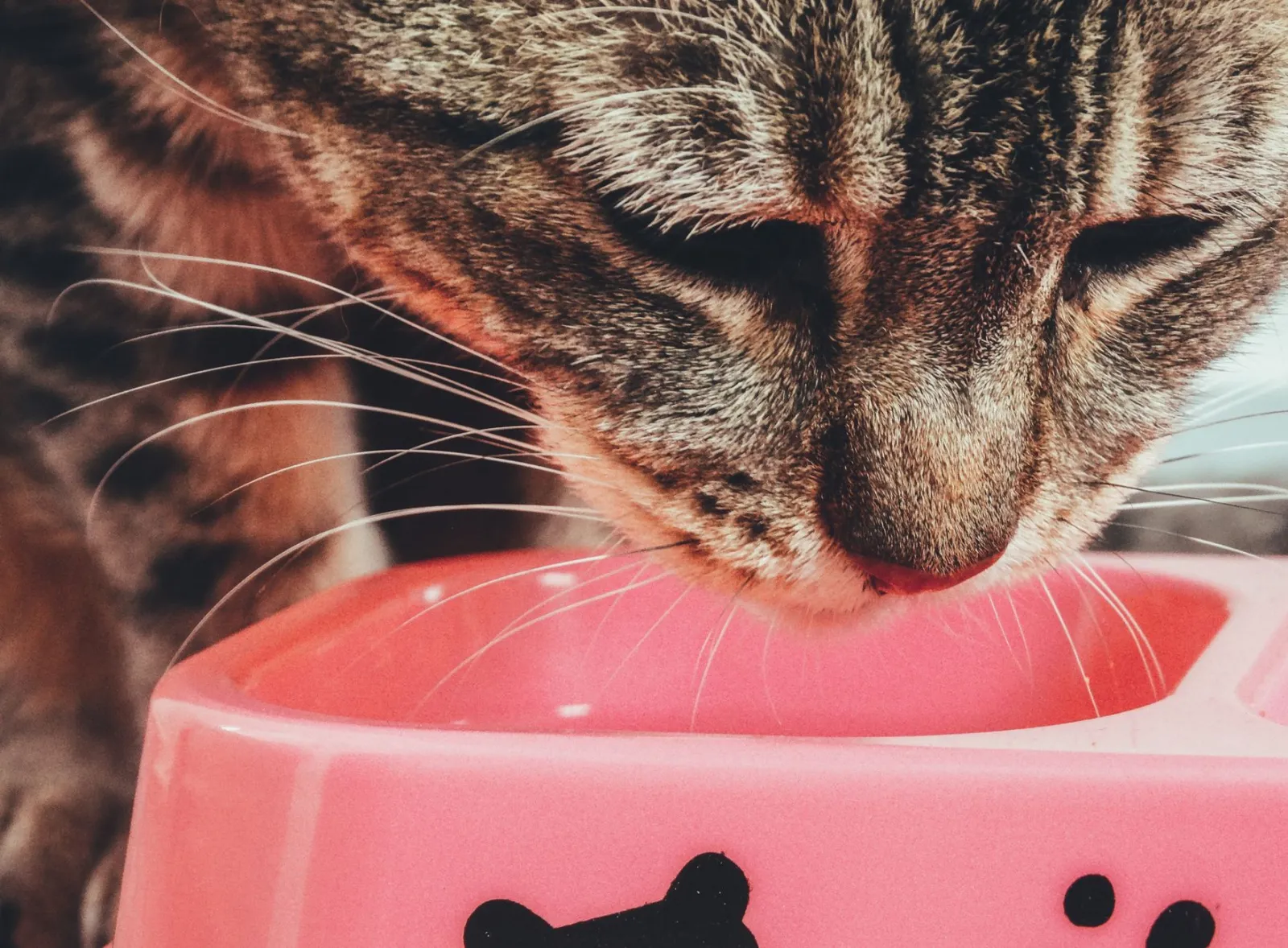
Flat-faced cats have a shortened skull. That means a shorter nasal passage, a compressed airway, and a jaw that does not open as wide as a typical cat’s. When the food sits at the bottom of a deep, narrow bowl, the cat has to push its nose into the sides to reach it. The result: whiskers bent, nostrils blocked, and a mouthful of kibble that is hard to swallow. Many owners assume their cat is simply fussy. In reality, the bowl is working against the cat.
The good news is that the fix is simple, cheap, and immediate. In this article, we will walk you through the specific bowl shapes, heights, and placements that make eating comfortable for a flat-faced cat — and the ones that make it worse. By the end, you will know exactly what to look for the next time you are standing in a pet store aisle, bowl in hand, wondering if it will actually work at home.
Why Standard Bowls Fail Flat-Faced Cats
Most cat bowls are designed for the average feline head: a long muzzle that can dip into a deep well without touching the sides. A flat-faced cat has the opposite geometry. The nose sits almost flush with the mouth. When the bowl is deep, the cat’s nose hits the rim before the tongue reaches the food. This creates a frustrating cycle: the cat tries, fails, tries again, then gives up or uses a paw to drag food out onto the floor.
There is a second problem: whisker fatigue. Cats have highly sensitive whiskers. When those whiskers press against the sides of a narrow bowl, the cat receives constant tactile signals that can be stressful. A flat-faced cat is more likely to experience this because its face is already close to the bowl’s edge just to reach the food.
Concrete example: A reader once told me her Persian, Milo, would eat only if she scattered kibble across a flat plate. She thought he was being dramatic. When she switched to a shallow, wide dish, he ate from it immediately — no paw scooping, no walking away. The bowl was the problem, not the cat.
What makes it worse: elevated bowls with deep wells, narrow ceramic bowls with high rims, and any bowl with a rounded bottom that forces the cat to chase food into a corner. These designs work fine for a Siamese. For a flat-faced cat, they are an obstacle course.
The Ideal Bowl Shape: Shallow, Wide, and Open
For a flat-faced cat, the best bowl is barely a bowl at all. Think of a shallow saucer or a wide, rimless plate. The food should sit in a single layer, easy to reach without the nose touching anything. Depth matters more than material. A bowl that is two inches deep will force the cat to dig. A bowl that is half an inch deep lets the cat eat naturally.
Width also matters. A flat-faced cat needs room to open its jaw and swallow without the food shifting away. A bowl that is too narrow forces the cat to chase kibble around the bottom. A bowl that is too wide lets the food spread out and dry. The sweet spot is usually a dish that is about one and a half times the width of the cat’s head — wide enough to eat from any angle, narrow enough to keep food in one place.
Material is a secondary concern, but it does affect the experience. Ceramic and glass are stable and easy to clean. Stainless steel is durable and does not hold odors. Plastic is lightweight but can develop scratches that harbor bacteria, and some cats develop chin acne from plastic bowls. For a flat-faced cat, whose chin often rests near the food, a smooth, non-porous surface is a practical choice.
Concrete example: A foster carer once described a flat-faced cat who would only eat wet food from a small, deep bowl. She would lick the top layer, then stop. When the same food was transferred to a shallow glass dish, she cleaned the bowl in under two minutes. The food did not change. The access did.
If you feed dry food, a shallow dish works, but you may need to refresh it more often because the kibble dries out faster when spread thin. If you feed wet food, a shallow dish is almost always the better choice — it lets the cat lick without pressing its nose into the sides.
Height and Angle: Small Adjustments, Big Difference
You might assume that raising the bowl helps a flat-faced cat. Sometimes it does, but not always. The goal is to bring the food closer to the mouth without forcing the cat to lift its head into an unnatural position. A bowl that is too high can cause the cat to swallow air, which leads to vomiting. A bowl that is too low forces the cat to crouch and compress its airway.
The right height depends on the cat’s size and posture. For most flat-faced cats, a bowl that sits one to two inches off the floor is a good starting point. You can test this by watching your cat eat. If its neck is straight and its chin is parallel to the floor, the height is right. If its head is tilted up or down, adjust.
Angle is another lever. A slightly tilted bowl — raised at the back, lower at the front — can make food slide toward the cat and reduce the need to dig. This is especially useful for wet food, which tends to stick to the bottom. Some cats prefer a flat bowl with no tilt at all. There is no universal rule here. The cat’s comfort is the only metric that matters.
Concrete example: A two-cat household with flat-faced cats noticed one would vomit after meals. Both bowls were on a raised stand. When one bowl was lowered to floor level, the vomiting stopped. The other cat continued to use the raised bowl without issue. Same household, different needs.
If you are unsure, start with a flat, shallow dish on the floor. Then try raising it by an inch. Watch how your cat eats for two or three meals. You will see the difference in posture and speed.
Placement and Multi-Cat Considerations
Where you put the bowl matters as much as what the bowl looks like. A flat-faced cat needs space to approach without feeling crowded. If the bowl is against a wall or in a corner, the cat may feel trapped. If it is in a high-traffic area, the cat may eat too fast or walk away. A quiet spot with a clear escape route works best.
In a multi-cat home, the challenge doubles. Flat-faced cats are often slower eaters because they have to work harder to pick up food. A faster cat can finish its own meal and then push the flat-faced cat away. This is not dominance. It is opportunity.
Separation is the simplest solution. Feed the flat-faced cat in a different room, behind a closed door, or in a space the other cats cannot access. If that is not possible, use a bowl that is physically separated from the others — across the room, around a corner, or on a different level. Some owners use a microchip-activated feeder, which opens only for the cat wearing the matching tag. This keeps the flat-faced cat’s food available without competition.
Another option is to feed smaller, more frequent meals. A flat-faced cat that eats slowly may do better with three or four small portions rather than two large ones. This reduces the pressure to eat quickly and gives the cat time to chew and swallow without rushing.
Concrete example: A multi-cat home with one Persian and two domestic shorthairs found that the Persian was losing weight. The other cats were finishing his food before he could eat. The owner started feeding the Persian in a separate room with the door closed for twenty minutes. Within a week, his weight stabilized and his eating speed improved. The food did not change. The access did.
If you cannot separate the cats, consider feeding the flat-faced cat on a raised surface that the others cannot reach, or use a puzzle feeder that slows the faster cats down. The goal is to give the flat-faced cat a fair chance to eat without stress.
Wet Food vs. Dry Food: What Works Better
For most flat-faced cats, wet food is easier to eat. It is softer, easier to lick, and does not require the jaw to open as wide. Dry kibble can be difficult because the cat has to pick up individual pieces, which often means pressing the nose into the bowl. If you feed dry food, choose a smaller kibble size and serve it in a shallow dish so the cat can lick it up rather than dig for it.
Some flat-faced cats do fine with dry food if the bowl is right. Others struggle no matter what. If your cat consistently walks away from dry food, try wet food in a shallow dish. You may see an immediate difference. If you want to feed both, offer wet food first and dry food later, or mix them in a shallow dish so the cat can choose.
Hydration is another consideration. Flat-faced cats often have difficulty drinking from deep bowls because their nose hits the rim. A shallow water dish or a running water fountain can encourage drinking. If your cat avoids the water bowl, try a wider, shallower dish and place it away from the food bowl. Cats often prefer to drink in a different location than where they eat.
Choosing the Right Bowl: A Practical Checklist
When you are comparing options, use this checklist to evaluate any bowl before you buy it:
- Depth: Less than one inch deep. If you can stack two fingers in it, it is too deep.
- Width: Wide enough for the cat to eat from any angle without its whiskers touching the sides.
- Rim: Low and rounded. A high rim forces the nose up and blocks the airway.
- Material: Smooth, non-porous, and easy to clean. Ceramic, glass, or stainless steel are good choices.
- Stability: Does not slide or tip when the cat eats. A non-slip base helps.
- Height: Adjustable or low enough to keep the neck straight. Start low and raise only if needed.
- Angle: Flat or slightly tilted. Avoid steep angles that force the cat to chase food.
If you are shopping online, look for bowls described as “shallow,” “wide,” or “flat.” Avoid bowls marketed as “deep” or “high-sided.” Read the dimensions carefully. A bowl that looks shallow in a photo may be deeper than it appears.
A Day in the Life: A Realistic Scenario
Consider a typical weekday in a household with a four-year-old Exotic Shorthair named Poppy. The owner wakes at 6:30 a.m. and fills a deep ceramic bowl with dry kibble, the same bowl that has been on the kitchen floor since Poppy was a kitten. Poppy approaches, sniffs, and walks away. The owner assumes she is not hungry and leaves for work.
By mid-morning, Poppy returns to the bowl. She tries again, but her nose presses against the rim before her tongue reaches the kibble. She uses a paw to drag a few pieces onto the floor, eats those, and leaves the rest. When the owner comes home, the bowl is still mostly full, and there are crumbs scattered across the floor. The owner thinks Poppy is a picky eater.
Now imagine the same day with a different setup. The owner switches to a shallow, wide glass dish — about an inch deep and three inches wider than Poppy’s head. The kibble sits in a single layer. Poppy approaches, eats without pawing, and finishes most of the bowl in one sitting. The owner notices she no longer sneezes after eating and does not walk away mid-meal.
At dinner, the owner offers wet food in the same shallow dish. Poppy licks it clean in under three minutes. The owner realizes that the change was not about the food — it was about access. The deep bowl was forcing Poppy to work against her own anatomy. The shallow dish removed that obstacle.
This scenario plays out in countless homes. The fix is not expensive or complicated. It is a matter of matching the bowl to the cat’s face. Once that happens, mealtime becomes calm, quick, and complete.
Common Mistakes to Avoid
Even with good intentions, it is easy to make choices that work against a flat-faced cat. Here are the most common mistakes and how to avoid them.
- Choosing a bowl because it looks good. A deep, decorative bowl may match your kitchen, but it will not help your cat eat. Prioritize function over form. A plain shallow dish that the cat can use comfortably is better than a stylish bowl that sits untouched.
- Assuming the cat is just fussy. If your cat walks away from food, paws it onto the floor, or eats only a few bites, the bowl is the first thing to check. Before you switch foods or visit the vet, try a shallow dish. The change may solve the problem immediately.
- Raising the bowl too high. A raised bowl can help, but only if the height is right. If the cat has to lift its head to eat, the bowl is too high. Watch your cat’s posture. The neck should be straight, not tilted up or down.
- Using a narrow bowl with high sides. Narrow bowls force the cat to chase food and press its whiskers against the sides. Choose a wide, open dish instead. The cat should be able to eat from any angle without its face touching the rim.
- Feeding in a high-traffic or crowded area. A flat-faced cat needs a quiet spot with a clear escape route. If the bowl is in a corner or near a busy doorway, the cat may eat too fast or avoid the bowl altogether. Move it to a calm, low-traffic area.
- Ignoring multi-cat dynamics. In a multi-cat home, a faster cat can push a flat-faced cat away from its food. Separate the cats at mealtime or use a microchip-activated feeder. Do not assume the flat-faced cat will stand up for itself — it often will not.
Avoiding these mistakes is mostly about observation. Watch your cat eat. Notice where it struggles. Adjust one thing at a time — the bowl, the height, the placement — and see what changes. The cat will tell you what works.
FAQ
Do flat-faced cats need special bowls?
Yes, in most cases. A shallow, wide bowl makes it easier for a flat-faced cat to reach food without pressing its nose into the sides. A standard deep bowl forces the cat to work against its own anatomy, which can lead to frustration, messy eating, and even vomiting.
Can I just use a plate instead of a bowl?
A flat plate works well for many flat-faced cats, especially for wet food. The key is that the food sits in a single layer and the cat can reach it without its nose touching anything. If the plate is too flat, food may slide off. A shallow dish with a slight rim is often the best compromise.
Should I raise the bowl for my flat-faced cat?
Sometimes. A bowl that sits one to two inches off the floor can help, but only if the cat’s neck stays straight. If the bowl is too high, the cat may swallow air and vomit. Start low and raise only if your cat seems uncomfortable.
What about water bowls?
The same principles apply. A deep water bowl forces the cat to press its nose into the rim. Use a shallow, wide water dish or a fountain. Place it away from the food bowl, as many cats prefer to drink in a different location.
My cat eats dry food fine. Do I need to switch to wet?
Not necessarily. If your cat eats dry food comfortably from a shallow dish, there is no need to change. But if you notice pawing, sneezing, or walking away, try wet food in a shallow dish. It is often easier for flat-faced cats to eat.
How do I know if the bowl is the problem?
Watch your cat eat. If it approaches the bowl, sniffs, and walks away, or if it uses a paw to drag food onto the floor, the bowl is likely the issue. Try a shallow dish and see if the behavior changes. In most cases, it will.
Conclusion
Flat-faced cats are not difficult. They are just built differently. Their shortened skulls and compressed airways make eating from a standard bowl a challenge. The fix is simple: choose a shallow, wide bowl with a low rim, keep the height and angle comfortable, and place it in a quiet spot away from other cats. If you feed wet food, serve it in a shallow dish. If you feed dry, choose a smaller kibble and a wider bowl.
Start with one change. Swap the deep bowl for a shallow dish. Watch your cat eat for two or three meals. You will likely see a difference in speed, posture, and comfort. From there, adjust the height, the angle, or the placement as needed. The goal is not perfection. It is a mealtime that works for your cat.
If you are ready to compare options, you can browse shallow cat bowls on Amazon and look for dishes that match the checklist above. A small change in the bowl can make a big difference in your cat’s daily life.
To make your choice concrete : Cat bowls for Maine Coon cats: best picks compared
Sources
- International Cat Care — guidance on brachycephalic cat care and feeding
- The Governing Council of the Cat Fancy (GCCF) — breed standards and health information for flat-faced breeds
- American Veterinary Medical Association (AVMA) — general feline health and welfare resources
Full guide :Pets
More from this guide :
Was this guide helpful?
Share your experience with the WiseHomeGuides community.
