
This article contains Amazon affiliate links. As an Amazon Associate we earn from qualifying purchases.
Short answer : The best indoor plant fertilizer depends less on finding a single universal product and more on matching the fertilizer type and nutrient ratio to the plant you are growing. Most houseplants do well with a balanced liquid or water-soluble fertilizer diluted to a lower strength than the label suggests for outdoor use, applied during active growth and paused when growth slows. Slow-release granules and organic options suit plants that prefer steady, gentle feeding, while flowering types often benefit from a formula with more phosphorus. The right choice also depends on your watering habits, pot size, and whether the potting mix already contains nutrients, so reading the label and adjusting frequency matters more than brand loyalty.
In short
- Choose a balanced liquid fertilizer for general houseplants and dilute it to roughly half strength before applying.
- Feed only during active growth periods and stop or reduce feeding when the plant naturally slows down.
- Use slow-release granules for low-maintenance feeding and organic formulas for a gentler, gradual nutrient supply.
- Pick a higher-phosphorus formula for flowering indoor plants and a nitrogen-forward one for leafy foliage types.
- Always check whether your potting mix already contains fertilizer, since adding more can oversupply nutrients.
Why Indoor Plants Need Regular Feeding
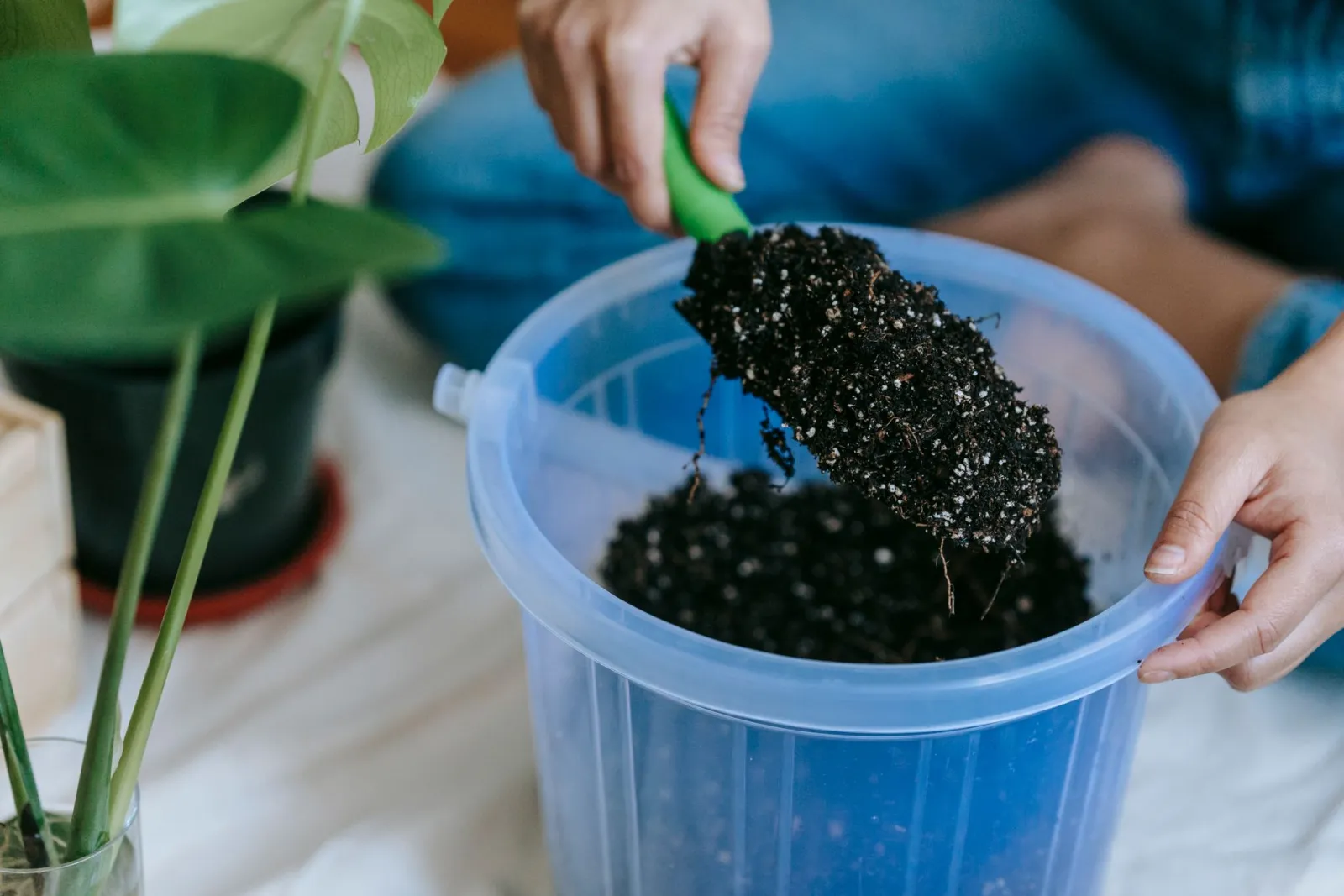
Indoor plants live in a fundamentally different environment from the one their species evolved in. In the wild, roots spread through deep, biologically active soil that is constantly replenished by decaying organic matter, and rainfall carries fresh dissolved nutrients past those roots on a regular basis. A pot on a windowsill offers none of this. The volume of growing medium is tiny by comparison, the plant cannot send roots elsewhere when supplies run low, and the only nutrients available are the ones that were mixed into the potting soil at the time it was bagged. Once those reserves are drawn down, the plant has no way to replace them on its own.
The most important reason to feed regularly is that potting soil is a finite reservoir. Most commercial mixes contain a starter charge of nutrients that keeps a plant comfortable through its first stretch of growth, but that reserve is gradually consumed by the plant and leached away every time you water. Watering to the point of runoff, which is standard practice for most houseplants, carries dissolved nutrients out the drainage holes and into the saucer. Over a season of normal watering, a plant can exhaust the original charge in its pot even though the soil still looks and feels perfectly fine. Regular feeding simply restores what watering and growth remove.
Indoor conditions also push plants to burn through nutrients faster than many people expect. A home kept warm and bright, with long summer days and consistent watering, gives many species the signal to grow steadily rather than in short bursts. Continuous growth means continuous demand. A flowering houseplant has an additional draw, because producing buds and blooms takes more resources than simply maintaining foliage, and a plant that is never fed will often hold leaves but refuse to flower, or produce fewer and smaller blooms each cycle. Conversely, a plant in a dim corner grows slowly and needs far less, which is why feeding schedules should follow the plant’s actual growth rather than a fixed calendar.
Nutrient shortages in houseplants tend to appear slowly and subtly, which is exactly why routine feeding beats reacting to problems. The first signs are usually a general loss of vigor: new leaves coming in smaller than the older ones, growth that stalls partway through a flush, older leaves fading or dropping, and stems that look thin and stretched. Pale coloring between the veins, weak new growth, and a plant that simply sits still for months are all common signals that the soil has run low. By the time these appear, the plant has often been underfed for a while, and correcting it takes longer than preventing it would have.
The practical takeaway is that feeding is maintenance, not rescue. The plants that benefit most from a steady routine are the fast growers, the heavy bloomers, and anything that has been in the same pot for a long stretch without repotting into fresh soil. Slow-growing species, recently repotted plants sitting in new mix, and plants resting through a low-light season need much less. Matching the feeding rhythm to how actively a plant is growing keeps nutrient supply in step with demand, avoids waste, and keeps foliage and flowers coming season after season.
How to Choose the Right Fertilizer
Choosing the right fertilizer starts with understanding what the product actually delivers, because indoor fertilizers differ far more in their nutrient ratio and release behavior than in their packaging. The first thing to examine is the NPK ratio, the relative proportions of nitrogen, phosphorus, and potassium. A balanced ratio suits general-purpose feeding for foliage plants through the growing season, while a formula skewed toward nitrogen supports leafy growth in plants grown mainly for their leaves. Phosphorus-leaning blends are more relevant when you want to encourage flowering or fruiting, and potassium-heavy formulas help with overall vigor and root health. Matching the ratio to the plant’s role in your collection matters more than chasing a high total number.
The concentration of the product determines how much control you have over dosing. Liquid concentrates that you dilute yourself give fine-grained control and are easy to adjust for small pots or sensitive plants, while ready-to-use liquids and pre-measured formats trade some flexibility for convenience. Water-soluble granules dissolve into a watering can and suit routine feeding schedules. Slow-release granules and spikes release nutrients gradually over an extended period, which reduces the frequency of feeding but gives you less say over timing. For a small collection with varied plants, a dilute-it-yourself concentrate is usually the most adaptable choice; for a large collection or for someone who travels, a slow-release format reduces the risk of missed feedings.
Consider the growing medium and the plant’s growth phase together. Plants in fresh, nutrient-rich potting soil generally need little or no feeding for a while after repotting, whereas plants that have been in the same soil for a long time benefit from regular supplementation. During active growth, indoor plants use nutrients steadily; during the slower season, most plants need far less, and continuing a full feeding schedule can do more harm than good. A fertilizer you can easily dilute to a weaker strength is valuable here, since it lets you taper feeding without switching products.
Formulation details beyond NPK also shape the choice. Some fertilizers include micronutrients such as iron and magnesium, which matter for plants that show pale leaves or poor color over time. Others are formulated for specific plant types, such as acid-loving plants, and these can be worth seeking out if your collection leans that way. How the product interacts with your watering routine matters too: fertilizers designed to be mixed into water fit a regular watering schedule, while spikes and granules sit in the soil independently.
Finally, weigh ease of use against precision. The best fertilizer is the one you will actually apply consistently and at the right strength. If measuring and mixing feels like a chore, a simpler format will serve you better than a precise one you rarely reach for. Read the label for the intended dilution and application frequency, and choose a product whose instructions match the way you already care for your plants.
Liquid, Granular, or Slow-Release Options
Liquid fertilizers are the most versatile choice for indoor growing, and they suit the widest range of situations. Because they are diluted into water, they let you feed at the same time you irrigate, which makes them easy to fit into an existing watering routine. Their main advantage is control: you can adjust the strength from one watering to the next, which helps when a plant is actively pushing new growth and then slows down. The trade-off is frequency. Liquid feeds are quickly available to roots but also wash through the potting mix relatively fast, so they generally need to be reapplied more often than solid options. They are the natural pick for container plants in soilless or peat-based mixes, for seedlings, and for anyone who prefers to fine-tune feeding week by week.
Granular fertilizers are dry solids that you work into the top layer of the potting mix or scatter around the base of the plant. They break down gradually as you water, releasing nutrients over a longer window than a liquid feed. This makes them convenient for plants that you repot infrequently or for larger containers where you want a steady background level of nutrition without mixing a dose every time. The limitation is less precision: once granules are in the mix, you cannot easily dial the strength down if a plant seems overfed, and uneven distribution can create hot spots near the roots. Granular products tend to suit established, actively growing houseplants in generous containers more than small pots or delicate young plants.
Slow-release fertilizers take the gradual approach further. These are typically coated or formulated pellets that meter out nutrients over an extended period, often measured in weeks to months rather than days. They are the lowest-effort option and work well for people who travel, forget to feed, or simply want a plant to coast on a baseline supply between repottings. The catch is reduced flexibility: release rate depends partly on temperature and moisture, so you have less direct say in how much a plant receives at any given moment, and the pellets can be difficult to remove if you need to stop feeding. They are best treated as a background layer rather than a tool for responding to a plant’s changing needs.
Matching the format to the plant and the grower matters more than picking a single “best” type. Fast-growing foliage plants in small pots benefit from the responsiveness of liquids, while a large, settled specimen in a big planter may do perfectly well on granules or slow-release pellets refreshed occasionally. Many indoor growers combine approaches, using a slow-release base and topping up with a liquid feed during active growth. Whichever format you choose, the underlying principles stay the same: feed according to the plant’s growth cycle, watch how the potting mix and foliage respond, and reduce or pause feeding when growth stalls.
Understanding N-P-K Ratios for Houseplants
Every fertilizer label leads with three numbers, and those figures tell you more about how a product behaves than any marketing claim on the package. The sequence always follows the same order: nitrogen (N), phosphorus (P), and potassium (K). Nitrogen drives leafy, vegetative growth and gives foliage its deep green color. Phosphorus supports root development, flowering, and fruiting. Potassium contributes to overall vigor, stem strength, and the plant’s ability to handle stress. A ratio describes the relative balance among these three nutrients rather than their absolute strength, so a 10-10-10 and a 2-2-2 share the same balance even though one is far more concentrated than the other.
For most foliage houseplants grown primarily for their leaves, a roughly balanced ratio or one tilted slightly toward nitrogen suits steady growth. A formulation where nitrogen leads the other two numbers is a sensible default for a pothos, philodendron, or ficus that you want to keep full and lush. Heavily balanced ratios with equal parts of all three work fine as an all-purpose choice when you keep a mixed collection and don’t want to stock several products. The key is consistency: a moderate, balanced feed applied regularly generally serves houseplants better than an occasional strong dose of a high-number formula.
Plants grown for blooms or fruit benefit from a different balance. When a flowering houseplant such as an orchid or a peace lily is pushing buds, a ratio with proportionally more phosphorus and potassium supports that phase. The same logic applies to any indoor plant you’re encouraging to flower rather than simply leaf out. You don’t need an extreme bloom formula; a modest shift in the ratio toward the P and K numbers is enough to signal the change in growth phase. Switching back to a more nitrogen-forward feed after flowering keeps vegetative growth moving.
The absolute numbers matter for concentration, not balance, and this is where beginners get into trouble. A product with large numbers is simply more concentrated, meaning it must be diluted more heavily before use, while a low-number organic-style fertilizer is gentler and harder to overdo. For indoor plants in containers, where nutrients aren’t replenished by surrounding soil, a lower-concentration product used more often gives you finer control and reduces the risk of salt buildup in the potting mix. Match the dilution to the numbers on the label rather than assuming all products mix at the same rate.
Read the ratio as a guide to the plant’s current need, then adjust with the seasons. During active growth in spring and summer, houseplants use nutrients readily and tolerate regular feeding. Through the slower light months of autumn and winter, growth stalls and nutrient demand drops, so many growers reduce frequency or pause feeding altogether. The N-P-K ratio tells you what kind of growth a product encourages; your job is to align that with what the plant is actually doing at that moment.
Organic Versus Synthetic Fertilizers Compared
Organic and synthetic fertilizers differ less in the nutrients they ultimately deliver than in how those nutrients are packaged, released, and processed in the potting mix. Organic products derive their nitrogen, phosphorus, and potassium from plant, animal, or mineral matter—things like composted bark, feather meal, bone meal, or rock phosphate. Synthetic fertilizers supply nutrients as refined mineral salts that dissolve readily in water. That distinction shapes nearly everything that follows: release speed, feeding frequency, risk of overfeeding, and how the product behaves in the confined environment of a pot.
The most practical difference for indoor growers is availability. Synthetic fertilizers are immediately plant-available, so a nitrogen-hungry foliage plant in active growth responds within days. Organic amendments generally need soil microbes to break them down before roots can absorb the nutrients, which makes them slower and gentler but also dependent on a biologically active mix. In a fresh, sterile potting soil, that microbial population is still establishing itself, so organic feeding can lag at first. This is why organic products often suit established plants in living or recharged soil, while synthetics suit fast responses and predictable scheduling.
Release pattern matters just as much. Synthetic salts are highly water-soluble, which means a single watering can push a concentrated dose into the root zone, and the same solubility that makes them fast also makes them easy to over-apply. Organic fertilizers release gradually as they mineralize, giving a wider margin for error and less risk of salt buildup at the root surface. Over time, though, organic matter can accumulate and affect drainage if you feed heavily without repotting, while synthetic regimes tend to leave soluble salts that periodic flushing can manage.
Consider your watering habits and plant type. If you water thoroughly and often, a slow-release organic feed stays put in the mix and keeps working between applications, which suits ferns, calatheas, and other steady, moderate feeders. If you keep a collection of heavy-feeding tropicals pushing growth under strong light, a soluble synthetic gives you tighter control over timing and strength. For plants in semi-hydro setups with inert media like LECA, organic matter has little to break down in, so soluble nutrients are the more workable choice. Conversely, in a rich, compost-based mix, organic feeding aligns with what the soil is already doing.
Neither category is inherently better; the right pick depends on your soil, your plants, and how precisely you want to steer feeding. Organic products reward a patient, soil-focused approach and forgive occasional over-application. Synthetics reward consistency and give fast, measurable responses but demand more attention to dilution and flushing. Many indoor growers land on a hybrid: a gentle organic base to build the mix’s fertility, topped with a soluble feed during peak growth when demand spikes. Match the format to your routine rather than to a label, and the fertilizer does its job without fuss.
Matching Fertilizer to Plant Type
The plant’s growth habit is the first thing to weigh when choosing a fertilizer. Fast-growing foliage plants that push out new leaves through much of the year can handle a balanced or nitrogen-leaning feed on a regular schedule during active growth, because their demand for new tissue is steady. Slow growers, by contrast, take up nutrients gradually and are easy to overfeed; for these, a diluted dose at longer intervals is safer than a full-strength routine. The signal to watch is the pace of new growth rather than the calendar alone.
Flowering indoor plants have a different priority. Once buds begin to form, a feed higher in phosphorus and potassium supports bloom development better than a nitrogen-heavy formula, which tends to encourage leafy growth at the expense of flowers. A common approach is to shift from a balanced feed during the vegetative phase to a bloom-oriented one as buds appear, then ease off once flowering finishes so the plant can rest. Plants grown primarily for foliage rarely need this switch and do well on a consistent balanced diet.
Consider how the plant is potted, too. A specimen in a large container of fresh, nutrient-rich potting mix has reserves to draw on for a while and needs little or no feeding early on, whereas a plant that has occupied the same pot for a long time is more dependent on what you add. Plants in small pots dry out and leach nutrients faster, so they tend to need more frequent, lighter feeds than the same species in a roomier container. Matching feed strength to pot size and soil age prevents both starvation and salt buildup.
Group plants by their water and light needs, and let that guide feeding. A succulent or cactus kept on the dry side and in bright light grows slowly and is prone to damage from rich, frequent feeding; a diluted feed a few times across the growing season is usually plenty. A tropical foliage plant in consistent warmth and indirect light grows more vigorously and can take a more regular schedule. Orchids and other epiphytic plants are a special case, often preferring very dilute, frequent feeding because their roots are adapted to scarce nutrients.
Finally, match the fertilizer form to your routine and the plant’s sensitivity. Water-soluble concentrates suit plants you water regularly and let you adjust strength easily, while slow-release granules reduce the frequency of feeding for established specimens. For salt-sensitive plants, occasional flushing of the pot with plain water between feeds helps prevent the crusty buildup that concentrated fertilizers can leave behind. The goal throughout is to feed in step with actual growth rather than on a fixed timetable.
How Often to Feed Indoor Plants
Frequency is where most feeding routines go wrong, and the right answer depends less on the calendar than on how the plant grows. As a working rule, feed actively growing plants at the interval recommended on the product label, then adjust based on how the plant responds. A plant pushing out new leaves through spring and summer can usually be fed more often than one that has slowed to a near standstill in winter. The seasons, not a fixed weekly habit, should set the pace.
Growth rate is the clearest signal. Fast, vigorous growers that produce new foliage steadily through the warm months can generally be fed on a regular schedule through that period. Slow growers, and plants that only flush once or twice a year, need far fewer feeds and can be harmed by a routine built for a heavy feeder. Grouping plants by how vigorously they grow makes it easier to feed each group appropriately rather than treating every pot the same.
The growing medium matters just as much. Fresh potting mix usually contains starter nutrients that carry a plant for a while after repotting, so feeding too soon can be unnecessary or even excessive. Once that reserve is used up and the plant is established, a regular feeding rhythm becomes more useful. In lean or old mixes, plants tend to show hunger sooner, and a slightly more frequent schedule may be appropriate.
Light and temperature set the ceiling on how much feeding a plant can use. A plant in bright light grows faster and can absorb more nutrients; the same plant in dim conditions grows slowly and cannot use the same amount, so feeding should be reduced to match. Similarly, feeding tapers off in the cooler, darker months when growth slows. Matching the feed rate to the light and warmth the plant actually receives prevents the buildup that causes problems.
Watch the plant rather than the calendar. Pale older leaves, slow growth despite good light, and long gaps between new leaves can suggest the plant is ready for more regular feeding, while burnt leaf edges, crusty deposits on the soil surface, or wilting after feeding suggest the schedule is too aggressive. When in doubt, feed less often and observe; it is far easier to correct underfeeding than to undo the damage from overfeeding.
Signs of Over-Fertilizing and How to Fix
Over-fertilizing is one of the most common ways indoor gardeners harm otherwise healthy plants, and it rarely announces itself clearly. The first reliable signal is a crust of white or yellowish mineral deposits on the soil surface and along the rim of the pot, often paired with a stiff, chalky texture when you press the soil. This salt buildup comes from fertilizer minerals accumulating faster than the plant can absorb them or than watering can flush them away. If you also notice a pale ring or whitish film on the outside of a terracotta pot, treat that as confirmation that soluble salts have been migrating through the soil for some time.
Foliage tells a second story. Look for leaf tips and margins that turn brown and crisp while the rest of the leaf stays green, a pattern that differs from the uniform yellowing of nutrient deficiency. In severe cases, lower leaves drop suddenly and new growth emerges stunted or distorted. A third sign is a white, powdery crust appearing on the soil even when the plant sits in a spot with good airflow, which points to excess rather than to a fungal issue. Roots offer the most direct evidence: if you slide a plant from its pot and see brown, brittle root tips instead of firm pale ones, salt damage is likely.
The fix begins with flushing. Move the plant to a sink or outdoors in shade, run room-temperature water slowly through the entire root ball until it drains freely from the bottom holes, and repeat several times so the excess salts wash out rather than merely wetting the soil. Let the pot drain completely afterward; never leave it standing in the runoff. Hold off on all feeding for the next several weeks, and resume only at a reduced strength once you see fresh, healthy growth.
If the crust is heavy or the soil is old and compacted, repotting is the more reliable route. Shake off as much of the old mix as the roots allow, trim any mushy or brittle root ends with clean scissors, and replant in fresh potting mix, watering in gently. This resets the mineral load in one step and is the better choice for plants that have gone a long time without a soil refresh.
Prevention matters more than correction. Feed only during active growth, dilute liquid fertilizers more than the label suggests when in doubt, and water the soil thoroughly before feeding so roots are not exposed to concentrated salts. Plants in small pots and those under low light need less fertilizer than vigorous plants in bright spots, so match the dose to how fast the plant is actually growing rather than to a fixed schedule.
Common Feeding Mistakes to Avoid
Overfeeding is the most frequent error, and it rarely looks like overfeeding at first. Excess fertilizer salts accumulate in the potting mix and draw water away from roots, so an overfed plant often shows burnt leaf tips, crispy margins, or a crusty white film on the soil surface and the rim of the pot. Because these symptoms resemble underwatering or low humidity, the instinct is often to feed more, which deepens the problem. When you see salt buildup or scorched tips, the corrective step is to stop feeding and flush the pot thoroughly with plain water, letting it drain freely, rather than reaching for a stronger dose.
Feeding on a fixed calendar schedule ignores what the plant is actually doing. A plant in its slow season, whether that is the low-light winter months or a natural rest period, uses far less nutrition and cannot process a full-strength feed. Fertilizing at the same rate year-round is a common cause of root stress. Match the frequency to active growth: feed when you see new leaves or active extension, and ease off or pause when growth stalls. A slow-release or controlled-release product is more forgiving here because it meters out nutrients gradually, while a liquid feed demands that you adjust the interval yourself.
Mixing fertilizer too strong is another easy mistake, especially with concentrates. More is not better; a diluted dose given more often is gentler on roots than a concentrated dose given rarely. Always follow the label dilution rather than eyeballing it, and when in doubt, err on the weaker side, particularly for young plants, recently repotted plants, and sensitive species. Applying a full-strength feed to a plant that has just been moved, repotted, or is recovering from stress can tip it into decline.
Feeding a dry root ball is a subtle but damaging habit. Applying fertilizer to bone-dry potting mix concentrates salts right against the roots. Water the plant first so the mix is evenly moist, then feed, so nutrients distribute through the root zone instead of sitting in one spot. Similarly, feeding a plant that is already struggling with pests, root rot, or poor light rarely helps and can add stress; correct the underlying problem before resuming a feeding routine.
Finally, treating fertilizer as a substitute for good light and proper watering is a common trap. No amount of feeding compensates for insufficient light or chronic overwatering, and pushing nutrients into a plant that lacks the energy to use them only creates imbalance. Fertilizer supports healthy growth; it does not create it. Read the plant’s signals, adjust to its growth cycle, and keep doses moderate.
Setting a Sensible Fertilizer Budget
Setting a fertilizer budget for indoor plants is less about spending as little as possible and more about matching your outlay to how many plants you keep and how demanding they are. A sensible approach starts with a simple inventory: count your plants, note which are fast growers that need regular feeding during the growing season, and separate out the slow growers and succulents that need very little. This rough tally tells you whether you are buying for a handful of windowsill pots or a collection spread across several rooms, and it prevents you from overbuying a large container that will sit half-used and degrade on a shelf.
The next consideration is format, because the form you choose shapes both the upfront cost and the cost per feeding. Ready-to-use liquid concentrates are diluted at home and stretch across many applications, which tends to make them economical for anyone with more than a few plants. Pre-mixed, ready-to-pour liquids cost more per feeding but suit people who keep only one or two plants and value convenience. Slow-release granules or spikes involve a single purchase that covers an extended period, which can be attractive for low-maintenance collections but offers less control over timing. Water-soluble powders sit somewhere in the middle. Weigh these against how often you actually feed, not how often you imagine you will.
Seasonality matters for budgeting as much as product choice. Most indoor plants need feeding primarily during active growth and little or nothing during the slower months, so your real annual spend is concentrated in a few months rather than spread evenly. Planning for that seasonal bulge is more realistic than assuming a steady monthly cost. If you keep a large collection, buying a slightly larger concentrate size during the growing season often works out better than repeated small purchases, provided you can store it properly and use it before it loses effectiveness.
A practical budget also leaves room for the supporting items that make fertilizer go further and last longer, such as a measuring dropper or a dedicated watering can you reserve for feeding. These small additions protect your investment by helping you dilute accurately and avoid waste. Finally, resist the pull toward buying several different products at once. One balanced fertilizer suited to your plant types will cover the majority of indoor needs, and adding a second specialized product only makes sense once you have a clear reason for it. Building your budget around one dependable product, sized to your collection and your feeding rhythm, keeps costs predictable and your cupboard uncluttered.
Frequently asked questions
How often should I fertilize indoor plants?
Frequency depends on the plant’s growth rate, the fertilizer strength, and the season. Fast-growing foliage plants in active growth usually need feeding more often than slow growers. A common approach is to feed at a diluted strength on a regular schedule during the growing season and pause when growth slows. Always follow the label directions for the specific product, since concentrations vary widely. Watch the plant: steady new growth suggests the schedule works, while pale leaves or stalled growth may mean it needs adjusting.
What does N-P-K mean on fertilizer labels?
N-P-K stands for nitrogen, phosphorus, and potassium, the three primary nutrients plants need in the largest amounts. The three numbers on a fertilizer label show the percentage of each nutrient by weight. Nitrogen supports leafy green growth, phosphorus supports root and flower development, and potassium supports overall vigor and stress tolerance. A balanced ratio suits general houseplant feeding, while formulas skewed toward one nutrient serve specific goals. The remaining label content covers secondary nutrients and fillers.
Is organic fertilizer better for houseplants?
Organic fertilizers come from plant, animal, or mineral sources and release nutrients as soil microbes break them down. That slow release can suit houseplants and reduces the risk of sudden overfeeding, but it depends on living soil biology to work well. Synthetic fertilizers deliver nutrients immediately and predictably, which some growers prefer for precise control. Neither is universally better; the right choice depends on your soil mix, watering habits, and how much control you want over timing and strength.
Can I use outdoor fertilizer on indoor plants?
You can use outdoor fertilizer indoors if you dilute it to a strength appropriate for container plants and follow the label. Outdoor formulas are often concentrated for garden soil, so full-strength application in a small pot can overwhelm roots. Also consider smell and residue, since some outdoor products are unpleasant in a living space. Check that the product is intended for container use and adjust the dose downward. When in doubt, apply weaker than the label suggests and observe the plant’s response.
Should I fertilize plants in winter?
Most houseplants slow their growth in winter because of lower light levels, so they need less fertilizer, and many growers pause feeding entirely. Continuing a full feeding schedule when a plant isn’t growing can let salts accumulate in the soil and stress the roots. Plants kept under strong grow lights or in warm, bright rooms may keep growing and can still benefit from occasional light feeding. Judge by actual growth rather than the calendar, and resume regular feeding when new growth appears in spring.
How do I fix fertilizer burn on leaves?
Fertilizer burn usually shows as crispy leaf edges, brown tips, or a white crust on the soil surface. Stop feeding immediately and flush the pot by running plenty of plain water through the soil so it drains out the bottom, which helps wash away excess salts. Remove severely damaged leaves, and let the soil dry appropriately between waterings. Don’t feed again until the plant shows healthy new growth. Prevention matters most: always dilute to label strength and never fertilize dry soil.
Do succulents need a different fertilizer?
Succulents grow slowly and store water in their tissues, so they need less fertilizer than most foliage houseplants. A standard houseplant fertilizer diluted to a weak strength is usually sufficient, and some growers prefer formulas lower in nitrogen to avoid soft, stretched growth. Feed only during active growth and skip feeding during dormancy. Overfeeding succulents can cause leggy growth, weak stems, and salt buildup. When in doubt, feed less often than you would for a typical tropical houseplant.
Is it possible to over-fertilize houseplants?
Yes, over-fertilizing is common and harmful. Excess nutrients, especially salts, accumulate in potting soil and can burn roots, causing brown leaf tips, wilting despite moist soil, and a white crust on the surface. Too much nitrogen can produce weak, leggy growth at the expense of strong roots. Prevent it by diluting fertilizer to label strength, feeding only during active growth, and flushing the soil occasionally with plain water. When symptoms appear, stop feeding and flush before resuming at a lower rate.
Work out your own case in 30 seconds:
Methodology
This calculator produces an indicative estimate based on the parameters you enter. The ranges used reflect typical market tiers in the gardening space and are neither a commercial offer nor a guarantee. Prices and availability may vary.
Read next :Speaker Stands for Your Home: A Practical Buying Guide
Full guide :Garden & Balcony
More from this guide :
Was this guide helpful?
Share your experience with the WiseHomeGuides community.