This article contains Amazon affiliate links. As an Amazon Associate we earn from qualifying purchases.
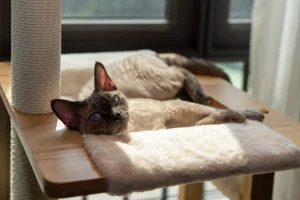
Short answer : A cat tree and bed work together as a single rest-and-play zone when the tree offers both elevated perches for watching and a soft, enclosed spot for sleeping. Place the tree where your cat can see the room but stay out of heavy foot traffic, and add a bed at the base or on a low platform so your cat can choose between climbing and curling up. Choose stable, wall-anchored furniture with washable covers and surfaces that suit your cat’s scratching habits, then keep the setup consistent so it becomes a reliable daily retreat.
In short
- Anchor tall trees to the wall and place them in a corner to prevent tipping during jumps.
- Add a bed at the base or on a low platform so shy cats can rest without climbing.
- Choose removable, washable covers for beds and perches to keep the area fresh.
- Match scratching surfaces to your cat’s preference, such as sisal posts or carpeted panels.
- Keep the tree and bed in one consistent spot so your cat learns the routine.
Why Cats Need Both a Cat Tree and a Bed
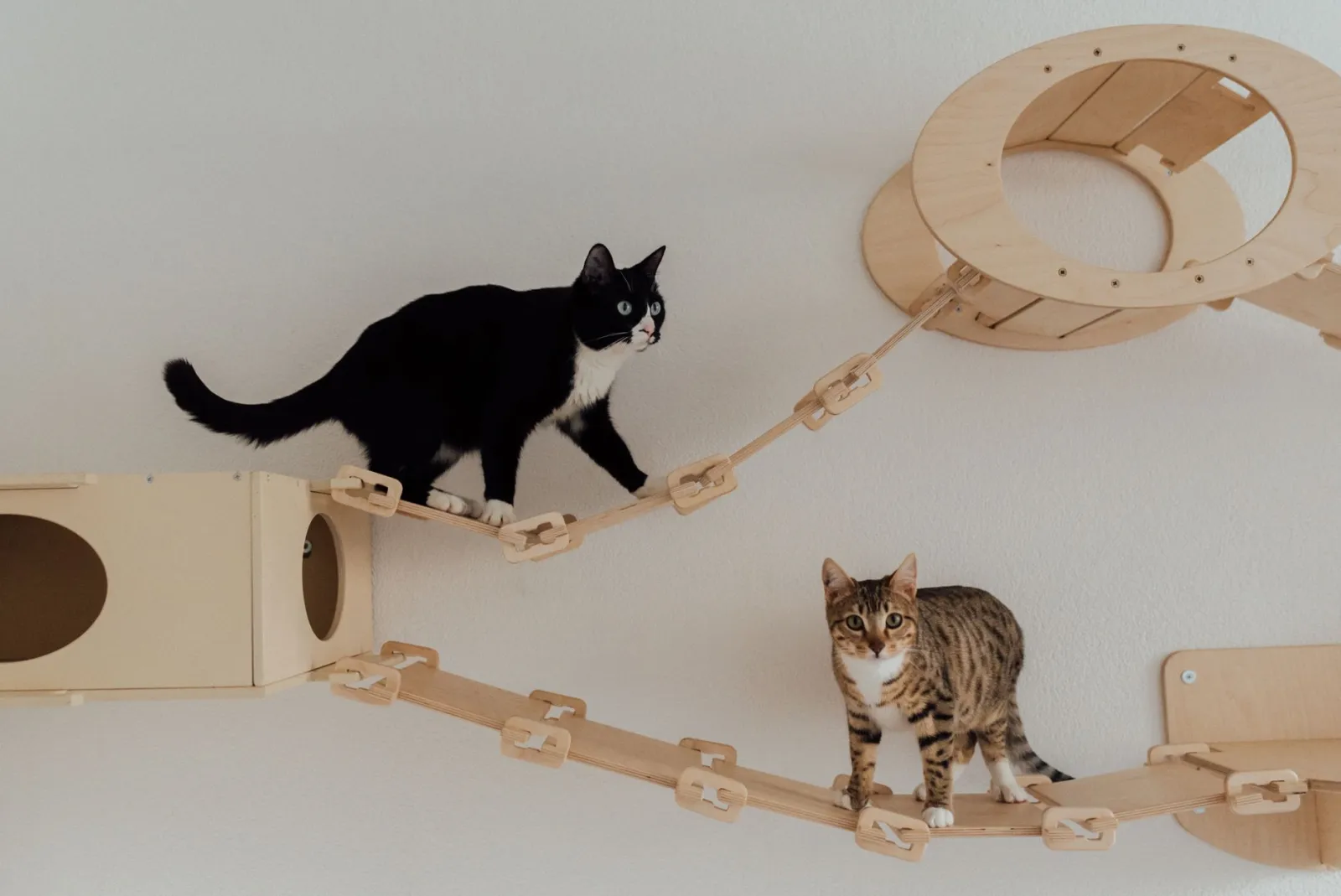
Cats rest for the majority of every day, yet they also need regular outlets for climbing, scratching, and stalking. A cat tree and a bed serve two different instincts, and providing only one leaves part of the cat’s daily routine without a proper outlet. A bed gives a cat a predictable, enclosed place to settle and sleep deeply, while a cat tree gives it vertical territory to climb, perch, and scratch. Owners who supply both tend to see less furniture damage and fewer restless evenings, because the cat has somewhere legitimate to direct each behavior.
The bed matters most for deep, uninterrupted rest. Cats often prefer a surface that holds warmth and offers a sense of cover, which is why enclosed or bolstered beds get used heavily during long naps and overnight. A bed placed in a quiet corner away from foot traffic and doorways becomes the cat’s default sleeping spot. Without a dedicated bed, many cats simply claim a sofa cushion or a human pillow, which works for the cat but creates friction in the household. A bed also gives older or less mobile cats an easy, low-entry resting place that does not require jumping.
The cat tree addresses a separate set of needs: elevation, observation, and scratching. Cats feel safer when they can watch a room from above, so a tree with a raised perch near a window or in a corner of the living room gets steady use. Scratching posts on the tree redirect claw maintenance away from upholstery, and multiple levels let a cat climb, stretch, and survey its territory in short bursts throughout the day. A tree with a cozy cubby or platform at the top doubles as a resting spot, but it does not replace a proper bed for long sleep.
The two pieces work together as a daily rhythm. A cat typically alternates between active climbing and scratching on the tree and quieter, deeper rest in its bed, moving between the two several times a day. Placing the bed near but not directly under the tree lets the cat choose between a high vantage point and a sheltered sleeping spot without crossing the whole home. In multi-cat households, having both a tree and a bed reduces competition, since one cat can occupy the tree while another rests undisturbed.
Practical criteria help when choosing each piece. For the bed, look for a size that lets the cat curl fully with a little room to spare, a washable cover, and a low entry if the cat is older or cautious. For the tree, prioritize a stable base that will not tip when the cat jumps, scratching surfaces tall enough for a full stretch, and at least one perch positioned high enough to feel secure. Matching both to the cat’s size and activity level keeps each item in regular use rather than ignored in a corner.
Understanding Your Cat’s Climbing and Resting Instincts
Cats are both predators and prey animals, and that dual nature shapes how they use vertical space. Climbing gives them vantage points for surveying a room, while height also provides a sense of safety from anything moving at floor level. This is why a cat tree rarely functions as a single piece of furniture: it is a territory in miniature, with lookout posts, transit routes, and sheltered sleeping spots. Understanding these instincts helps you choose and arrange a tree-and-bed combination that your cat will actually use rather than ignore.
Observe how your cat already moves through your home before buying anything. Some cats are confident jumpers who leap onto high shelves and door tops; others prefer to climb in stages, using intermediate platforms as stepping stones. A cat that hesitates before a big jump benefits from a tree with closely spaced levels, while a bold climber will make good use of a taller structure with wider gaps. Similarly, watch where your cat already naps: a cat that sleeps on the back of a sofa is telling you it likes elevation and a view, whereas one that burrows under a blanket is signalling a preference for enclosed, low, or cave-like resting spots.
Resting and climbing needs are not separate. A well-designed cat tree lets a cat move from active climbing at the top to passive resting in a bed or hammock partway down, without leaving the structure. Cats often rest in elevated beds after a play session, so placing a bed or cozy platform near the upper levels matches their natural rhythm of climb, watch, and doze. If the bed is only at floor level, many cats will simply choose your furniture instead.
Consider the traffic in each room. A tree placed in a busy hallway offers stimulation but little privacy, while one in a quiet corner near a window gives a cat a calm lookout with something to watch. Many cats prefer a spot where they can see a doorway or the length of a room, so positioning matters as much as the product itself. For multi-cat households, a tree with several resting spots and multiple routes up and down reduces competition over the best perch and gives each cat its own space.
Finally, match the structure to your cat’s age and build. Kittens and young adults tend to climb and jump frequently and benefit from sturdy platforms that tolerate rough play. Older or less agile cats do better with lower, easier-to-reach resting areas and gentle ramps or gradual steps rather than long leaps. A cat tree and bed setup works best when it reflects the specific cat in front of you: its confidence, its favourite napping posture, and the rooms it already claims as its own.
How to Choose the Right Cat Tree for Your Home
Choosing the right cat tree starts with the size and temperament of your cat, because a compact adult cat and a large, heavy breed have very different needs when it comes to platform width and overall stability. A tree with narrow perches and a small base may suit a lithe, agile cat, while a larger cat needs broader platforms and a wider footprint so it can settle without overhanging the edges. Think about how your cat actually rests: some cats drape themselves over the edge of a perch, while others prefer to curl up fully supported, and that difference should guide how generous the resting surfaces need to be.
The next consideration is the layout of your home and where the tree will stand. A tall, multi-level tree works well in a corner of a living room where it can rise toward the ceiling, but it needs enough floor space around its base to stay stable when your cat launches onto it. In a smaller apartment, a wall-mounted or narrower vertical design may fit better without crowding the room. Pay attention to the base dimensions relative to the height: a tall tree with a small base is more likely to wobble, and a wobbly tree is one a cautious cat will avoid.
Stability and material quality matter more than the number of features. Look for a solid, weighted base, sturdy posts, and platforms that do not flex under weight. The covering on the posts should be tightly wrapped so it withstands repeated scratching, and the resting surfaces should feel secure rather than slippery. A simpler tree built solidly will usually serve a cat better than an elaborate one that shifts and sways whenever the cat climbs.
Match the tree to your cat’s habits and age. A young, energetic cat benefits from multiple levels, climbing routes, and a high vantage point to survey the room, while an older or less mobile cat does better with lower, easy-to-reach platforms and gentle steps between levels rather than big jumps. If you have more than one cat, plan for enough separate resting spots and escape routes so each cat can claim its own space without conflict.
Finally, consider how the tree fits with the rest of your cat’s furniture, including where it sleeps. Placing the tree near a window or in a busy part of the home encourages use, and positioning a separate cat bed at its base or beside it creates a natural rest-and-play zone. Measure your available space, confirm the base is wide enough for the height, and choose a design your cat can climb confidently.
Key Features to Look for in a Cat Bed
When you evaluate a cat bed, start with size and shape relative to how your cat actually rests. A bed that is too small forces a cat to curl tightly or hang over the edge, while an oversized open bed can feel exposed. Many cats prefer a bed just long enough to stretch out slightly or to curl into a compact oval, so look for dimensions that match your cat’s sleeping posture. Curl sleepers tend to favor deep, bowl-shaped beds with raised rims, while sprawlers do better with flat or lightly bolstered mats. If you are unsure, choose a bed with a low front entry and a raised back, which accommodates both styles.
Support and cushioning matter more than thickness alone. A bed should hold its shape when your cat steps in rather than flattening into a thin pad, because sinking through the base defeats the purpose of joint-friendly rest. Look for a firm base layer with a softer top surface, and check that the filling does not clump or shift after a few weeks of use. For older cats or larger breeds, a bed with a slightly denser foam core and a lower entry height makes getting in and out easier. Removable, washable covers are a practical requirement in most homes, since cat beds collect hair and dust quickly.
Warmth and enclosure are the features cats gravitate toward most. Beds with high sides, hoods, or cave-style designs give a sense of security and trap body heat, which suits cats that like to burrow. In warmer rooms or for cats that run hot, an open, breathable design with a thin cushion is a better match. Placing the bed near a radiator or in a sunny spot changes how much enclosure your cat wants, so consider the location before choosing a fully hooded bed.
Stability and materials round out the checklist. A bed that slides on hard floors or tips when a cat jumps in will be avoided, so look for non-slip bases and a wide footprint. Fabrics should be tightly woven and free of loose loops that claws can snag, and seams should be reinforced at stress points. Finally, think about how the bed fits your space and your cat tree setup: a bed that sits on a platform or inside a cubby needs a flat, rigid base, while a floor bed can be softer and more flexible. Matching these features to your cat’s habits is what turns a bed from ignored to preferred.
Matching Your Cat Tree and Bed to Your Interior
Before you fall in love with a particular cat tree and bed, take a step back and look at the room where it will live. The single most common mistake is choosing a piece that is beautiful on its own but visually overwhelms the space it sits in. A tall, multi-level tree placed in a small living room can make the area feel cramped and cluttered, while an undersized bed tucked into a large open-plan room can look lost and get ignored by your cat. Matching the footprint and height of the furniture to the proportions of the room is the first concrete criterion to settle.
Consider the visual weight of the materials and colors relative to your existing decor. A pale wood or light fabric tree tends to recede into bright, airy rooms with white walls and natural textures, whereas a dark wood or charcoal finish holds its own in a room with deeper tones, leather, or moody walls. If your interior is a mix of warm neutrals, a tree with sisal-wrapped posts and soft beige cushions blends in far more easily than a brightly colored one. The goal is for the piece to read as part of the furniture rather than an obvious pet accessory dropped into the corner.
Think about where the piece will actually stand and what surrounds it. A cat tree placed against a wall near a window gives your cat a lookout and a sunbathing spot, but you need to leave enough clearance for the cat to jump up and down without knocking into a lamp, a shelf, or a curtain. Beds work best in quieter zones, away from the busiest walkway of the home, so a corner beside a sofa or under a side table is often more inviting than the middle of the floor. In a bedroom, a compact bed that matches the bedding palette keeps the room calm; in a home office, a tree with a bed at mid-height lets your cat stay close without taking over your desk.
Scale also matters in open-plan or multi-use spaces. In a large living area, a taller tree with several platforms and an integrated bed fills the vertical space and gives your cat genuine territory, while a low bed alone would be overlooked. In a small apartment or a single bedroom, a compact tree with a built-in bed at the base or a wall-mounted option saves floor space and keeps the room feeling open. Matching the number of levels and the overall height to the ceiling and to the amount of free wall space prevents the piece from feeling top-heavy.
Finally, let your cat’s habits guide the placement within your chosen style. A cat that likes to perch high will use a tall tree near a window, while one that prefers to curl up low will favor a bed in a sheltered corner. By aligning the size, finish, and position of the tree and bed with both your interior and your cat’s preferences, the piece earns its place in the room instead of being tolerated.
Placement Tips: Where to Put the Tree and the Bed
Placement decides whether a cat tree and bed actually get used. A tree pushed into a dark corner or a bed dropped in the middle of a busy hallway tends to be ignored, no matter how well made it is. The goal is to match each piece to the way cats naturally move through and rest in a home, so think about sightlines, traffic, and comfort before you decide where things go.
Cats like to rest where they can see without being seen. Place the bed in a spot that offers a sense of cover, such as beside a sofa, against a low wall, or in a quiet corner of a room the cat already favors, rather than in an open, exposed area. Beds work well in rooms where the household spends calm time, since cats often choose to sleep near people without being underfoot. Avoid placing a bed next to noisy appliances, doors that slam, or walkways where people and pets pass constantly.
The cat tree serves a different purpose, so it usually belongs where there is activity and a view. A tree placed near a window gives climbing cats something to watch and a reason to use the upper levels. Positioning it against a wall adds stability and lets the cat feel secure with its back protected. Keep it out of narrow passages and away from spots where a jumping cat would land on fragile items or knock things over. In multi-cat homes, a tree in a shared living area can reduce tension by giving cats vertical space to spread out.
Think about how the tree and bed relate to each other. Some cats prefer to survey a room from the top of a tree and then retreat to a softer bed lower down, so placing them in the same room but at different heights and levels of exposure can suit that routine. In a small apartment, a tree near the main living space and a bed in a quieter nook often works better than clustering everything in one corner. If you have more than one cat, consider a second resting spot in another room so no single animal guards the best position.
Finally, treat placement as something to adjust rather than fix permanently. Watch where your cat already chooses to nap and perch, and move the bed or tree toward those natural preferences. A tree that goes unused may simply be in the wrong spot, and shifting it a few feet toward a window or a busier wall can change how often it is used. Keep both pieces stable and clear of clutter, and give the cat time to explore before deciding the location is wrong.
Materials and Safety Considerations for Cat Furniture
Choosing the right materials for a cat tree and bed comes down to balancing durability, stability, and comfort against how much wear the furniture will realistically see. Solid wood and thick engineered wood panels form the most stable cores for tall structures, while thinner particleboard can flex or sag over time, especially on upper platforms where a cat launches itself repeatedly. For scratching surfaces, tightly woven sisal wrapped around posts tends to outlast loosely glued carpet or thin rope, and the density of the wrap matters: a firm, closely wound covering resists fraying far better than a loose one that a cat can pick apart within weeks. Fabric coverings on beds and perches should be chosen for how easily they can be cleaned, since removable, machine-washable covers make a real difference in households with heavy shedders or cats that occasionally mark territory.
Stability is the safety issue that owners most often underestimate. A tall tree with a small base footprint is prone to tipping when a cat jumps onto the highest platform or lands hard on a side perch, so look for a base that is wide and heavy relative to the overall height, and for wall-anchoring hardware included with taller units. Joints deserve close attention: bolted connections with metal hardware hold up better than stapled or glued assemblies, and posts that attach through both the platform above and below resist wobble far more than single-point mounts. If the furniture will sit on hardwood or tile, non-slip feet or a broad carpeted base reduce sliding when a cat scrambles up at speed.
Surface safety extends to the coverings themselves. Loose threads, dangling pom-poms, and glued-on decorations are common failure points that cats can chew or pull free, so favor construction where fabric is wrapped and secured rather than hung loosely. Any glue or adhesive used in assembly should be fully cured and out of reach, and it is worth checking that exposed staples or nail heads are recessed or covered, particularly on the underside of platforms where paws and claws reach during play. For beds, foam cushions should be firm enough to hold shape under a cat’s weight but dense enough not to compress flat within a short period.
Matching materials to the cat’s habits makes the choice more practical. A vigorous scratcher that digs in with back claws benefits from dense sisal and reinforced post ends, while an older or less agile cat does better with lower platforms, wider steps, and a bed surface that is easy to step onto without a big jump. In multi-cat homes, heavier materials and more robust joints pay off because the furniture takes repeated, simultaneous use. Finally, consider placement: a stable tree anchored away from unstable shelving or swinging doors, and a bed positioned in a draft-free spot, protects both the cat and the furniture from avoidable accidents.
Multi-Cat Households: Trees and Beds That Share Well
In a multi-cat household, the real test of any cat tree or bed is not how it looks but how it distributes space. Cats are territorial by nature, and a piece of furniture that forces them into close contact at the same moment will create friction no matter how plush it is. The guiding principle is simple: every resting spot should have a plausible second option elsewhere, so no cat is ever cornered into sharing when it doesn’t want to. A tree with a single large platform and one bed will work for a bonded pair that already sleeps tangled together, but it tends to fail with two cats who merely tolerate each other.
Vertical separation matters more than total surface area. A tall tree with several platforms set at different heights lets cats occupy the same footprint while staying out of each other’s line of sight, which is often enough to keep the peace. Look for trees where the perches are staggered rather than clustered at one level, and where each perch has a clear approach path so a cat can’t be ambushed on the way up. Beds placed on the floor should likewise be spread across different rooms or at least different corners, giving a lower-ranking cat somewhere to retreat that doesn’t require passing the resident bully.
Sharing works best when resources are duplicated rather than enlarged. Two medium beds in separate spots usually serve a household better than one oversized bed that everyone is expected to pile into. The same logic applies to the tree: two trees of modest size, placed at opposite ends of a room or in different rooms, often reduce tension more than one sprawling cat palace. Watch where cats already choose to sleep when nothing is provided, and position furniture to reinforce those natural preferences rather than fighting them.
Consider the traffic flow around each piece. A bed tucked into a dead-end corner becomes a trap if a more confident cat can block the only exit; a bed with two open sides gives a nervous cat an escape route and makes it far more likely to be used. Trees placed against a wall with perches facing outward let a cat keep watch without being approached from behind. In households of three or more cats, it helps to think in terms of zones: a high lookout zone, a quiet hiding zone, and a shared lounging zone, each with enough capacity that no single cat monopolizes it.
Finally, match the furniture to the social structure you actually observe. Cats who groom and sleep in contact can share a single large bed and a broad platform without issue, while cats who merely coexist need the duplicated, dispersed arrangement described above. Rotating beds between rooms occasionally can also refresh interest and prevent one cat from claiming a favorite spot permanently. The goal is not equal sharing but optional sharing, where every cat can choose company or solitude on any given day.
Keeping Your Cat Tree and Bed Clean and Durable
Keeping a cat tree and bed in good condition comes down to two habits: regular cleaning and a little preventive maintenance. Because these pieces combine fabric, carpet, sisal rope, and often wood or particleboard, each material needs slightly different care. A quick weekly routine prevents most problems from taking hold, while a deeper clean every few months keeps the whole structure fresh and extends its useful life.
For routine cleaning, start by vacuuming the platforms, hideouts, and bed surfaces with a brush or upholstery attachment. This lifts loose hair, dander, and grit before it works into the fibers. Pay particular attention to the bed cushion and the top perch, since cats spend the most time there and shed heavily. Most fabric covers and removable bed cushions are machine washable on a gentle cycle, so check the care label and keep a spare cover on hand to rotate while one is being washed. For fixed carpet surfaces, a light pass with a rubber glove or a damp cloth gathers embedded hair effectively.
Sisal scratching posts need their own attention. Loose fibers can be trimmed with scissors rather than pulled, because tugging can unravel the wrap. If a post starts to look frayed in one spot, rotating the tree or turning the post where possible spreads the wear. When the rope becomes badly shredded or the post feels soft under the claws, replacing or re-wrapping that section is worthwhile; a worn post stops satisfying the scratching instinct, and cats often redirect to furniture instead.
Structural checks matter as much as surface cleaning. Tighten any loose screws or bolts on a regular basis, since a wobbly tree discourages use and can tip. Check that wall-anchoring straps, if the tree has them, remain secure. Look at the joints where platforms meet posts and at the base, where stress concentrates. For beds, inspect seams and zippers on removable covers, and check that foam or padding has not flattened or bunched; a compressed cushion loses its support and is less inviting.
Odor control ties cleaning together. Wash bedding frequently, air out hideouts, and wipe hard surfaces with a pet-safe cleaner. Placing a washable mat or blanket on the favorite sleeping spot makes routine laundering easier and protects the original surface. In multi-cat homes or during heavy shedding seasons, shorten the interval between deep cleans. With consistent vacuuming, washable covers, prompt attention to fraying sisal, and periodic tightening, a well-built cat tree and bed stay comfortable, hygienic, and sturdy for years of daily rest and play.
Building a Complete Feline Comfort Zone on a Budget
Building a complete feline comfort zone on a budget comes down to prioritising the elements your cat actually uses and combining them smartly rather than buying every accessory separately. The core of the zone is a single resting and climbing structure: a cat tree that includes a bed, a perch, and a scratching surface. Choosing one multi-purpose piece instead of a separate bed, a standalone scratching post, and a climbing frame usually costs less overall and takes up less floor space, which matters in smaller homes. Look for a tree with a stable base, at least one enclosed or cushioned resting platform, and sisal-wrapped posts, since these three features cover the majority of a cat’s daily needs.
Placement is where a budget setup gains the most value. Cats tend to use a tree more when it sits near a window with a view, in a corner away from heavy foot traffic, or close to where the household spends its evenings. A single well-placed tree in a sunny spot often gets more use than two cheaper trees tucked into unused rooms. If you already own a basic tree without a soft bed, a low-cost cushion or folded blanket placed on the top platform can turn it into a proper sleeping spot without buying a new unit.
For households with more than one cat, spreading resources matters more than spending more. Two modest trees in different rooms can reduce competition for the best perch and give each cat its own retreat, and this is often more effective than one large expensive tree that becomes a contested territory. Where space is tight, a wall-mounted shelf or a window perch paired with an existing tree extends the climbing route cheaply. Scratching surfaces should be available in more than one location, because cats often scratch near resting areas and near entryways.
Durability is the budget factor people overlook. A cheaper tree with a wobbling base or thin posts tends to be abandoned quickly, so it pays to check stability and the quality of the covering before buying. Replacing worn sisal rope on a sturdy frame is inexpensive and extends the life of the whole structure, whereas a flimsy tree usually ends up discarded. Choosing a slightly sturdier model with replaceable or re-wrappable posts is often the more economical choice over time.
Finally, rotate and refresh rather than accumulate. Moving a tree to a new spot, swapping bedding, or adding a cardboard box or a paper bag near the structure keeps the zone interesting at almost no cost. The goal is a compact, stable, well-placed setup that combines rest, scratching, and climbing in one area, and that can be maintained and adjusted over time instead of replaced.
Frequently asked questions
Do I really need both a cat tree and a separate cat bed?
Not always. Cats often sleep on the platforms and in the cubbies of a cat tree, so a tall tree with a cozy hideaway can cover both resting and climbing needs. A separate bed becomes useful when your cat prefers a quiet, enclosed spot away from the activity around the tree, or when the tree sits in a busy room. Many homes do well with one tree plus one soft bed in a calmer corner.
How tall should a cat tree be for an indoor cat?
Height matters mostly for climbing and viewing. A tree that lets your cat perch above furniture and look out a window tends to get more use than a short one. For a single cat in a small flat, a medium tree with two or three levels is often enough. In a larger home or with several cats, choose a taller tree with staggered platforms so each cat can claim its own level without crowding.
What size cat bed is right for my cat?
The bed should let your cat curl up fully with a little room to spare, not sprawl with half its body hanging out. Watch how your cat sleeps: curl sleepers like snug, enclosed beds, while sprawlers prefer flat, open mats. Measure your cat from nose to base of tail while relaxed, then pick a bed slightly larger than that. When in doubt, a slightly bigger bed is safer than a cramped one.
Where should I place a cat tree in my home?
Put the tree where your cat already likes to be: near a window with a view, beside a favorite chair, or in a corner of the living room. Cats like height with a sense of cover, so a spot against a wall works better than the middle of the floor. Avoid drafty doorways and loud appliances. If you have several rooms, a tree in the main living area usually gets more daily use than one hidden away.
Can a cat tree double as a cat bed?
Yes, many cat trees include cubbies, baskets, or padded platforms that cats happily sleep in. Look for a tree with at least one enclosed hideaway and a soft, removable cover if you want easy washing. The main trade-off is that tree beds sit at height and may be less private than a floor bed. Placing a small bed on a lower platform can bridge the two.
How do I stop my cat from ignoring its new bed?
Place the bed where your cat already rests rather than where you’d like it to go. Add a worn T-shirt or blanket that carries your scent, and put a favorite toy inside. Avoid washing the bed with strong detergent at first. If your cat still ignores it, try a different style, such as an enclosed cave instead of an open mat, since preference for cover varies between cats.
Are cat trees and beds safe for kittens and senior cats?
Safety depends on stability and access. Kittens climb boldly but land poorly, so choose a tree with a wide, heavy base and low first steps. Senior cats may struggle with high jumps, so provide a tree with closely spaced platforms or a ramp, and a low, easy-to-enter bed. Check that screws stay tight and that no fabric loops or dangling toys can catch a paw or collar.
How often should I clean my cat tree and cat bed?
Vacuum the tree’s platforms and cubbies weekly to remove loose hair, and wipe down hard surfaces as needed. Wash removable bed covers according to their care label, usually every couple of weeks or sooner if soiled. Spot-clean stains promptly. Check seams and joints during cleaning, since loose fabric or wobbling posts are easier to fix when noticed early. Replace worn beds that no longer hold their shape.
Read next :Lawn Mower Service Near Me: A Homeowner’s Guide to Finding Local Care · Best Dog Walks Near Me: A Home and Pet Guide · What duvet cover size do I need? 140×200 or 240×220 compared · Best Fridge: A Complete Buyer’s Guide for Your Home · Best Robot Vacuum for Hard Floors: A Complete Buying Guide
Work out your own case in 30 seconds:
Methodology
This calculator produces an indicative estimate based on the parameters you enter. The ranges used reflect typical market tiers in the pets space and are neither a commercial offer nor a guarantee. Prices and availability may vary.
Read next :Best Lawn Mower: A Complete Buying Guide for Homeowners
Read next :Dog Food for Dogs with Pancreatitis: A Buyer’s Guide
Full guide :Pets
More from this guide :
Was this guide helpful?
Share your experience with the WiseHomeGuides community.