This article contains Amazon affiliate links. As an Amazon Associate we earn from qualifying purchases.
Short answer : A bed cover for dogs is a removable, washable layer that sits on top of your duvet or mattress to shield it from fur, dirt, drool, and accidents while giving your dog a comfortable spot to settle. Look for a cover with a water-resistant backing, a soft top surface, and secure corner straps or an elastic skirt so it stays flat when your dog jumps up or circles before lying down. Choose a size that matches your bed and a fabric that suits your dog’s coat, then keep a spare cover on hand so one can be washed while the other protects the bed.
In short
- Pick a water-resistant backing to block moisture from reaching your duvet or mattress.
- Elastic corner straps or a fitted skirt keep the cover flat when dogs jump up.
- A soft, quilted or fleece top surface makes the cover inviting for your dog to lie on.
- Machine-washable fabrics simplify cleanup of fur, drool, and everyday dirt.
- Keep a second cover on hand so one can be washed while the other stays on the bed.
Why Your Dog Needs a Dedicated Bed Cover
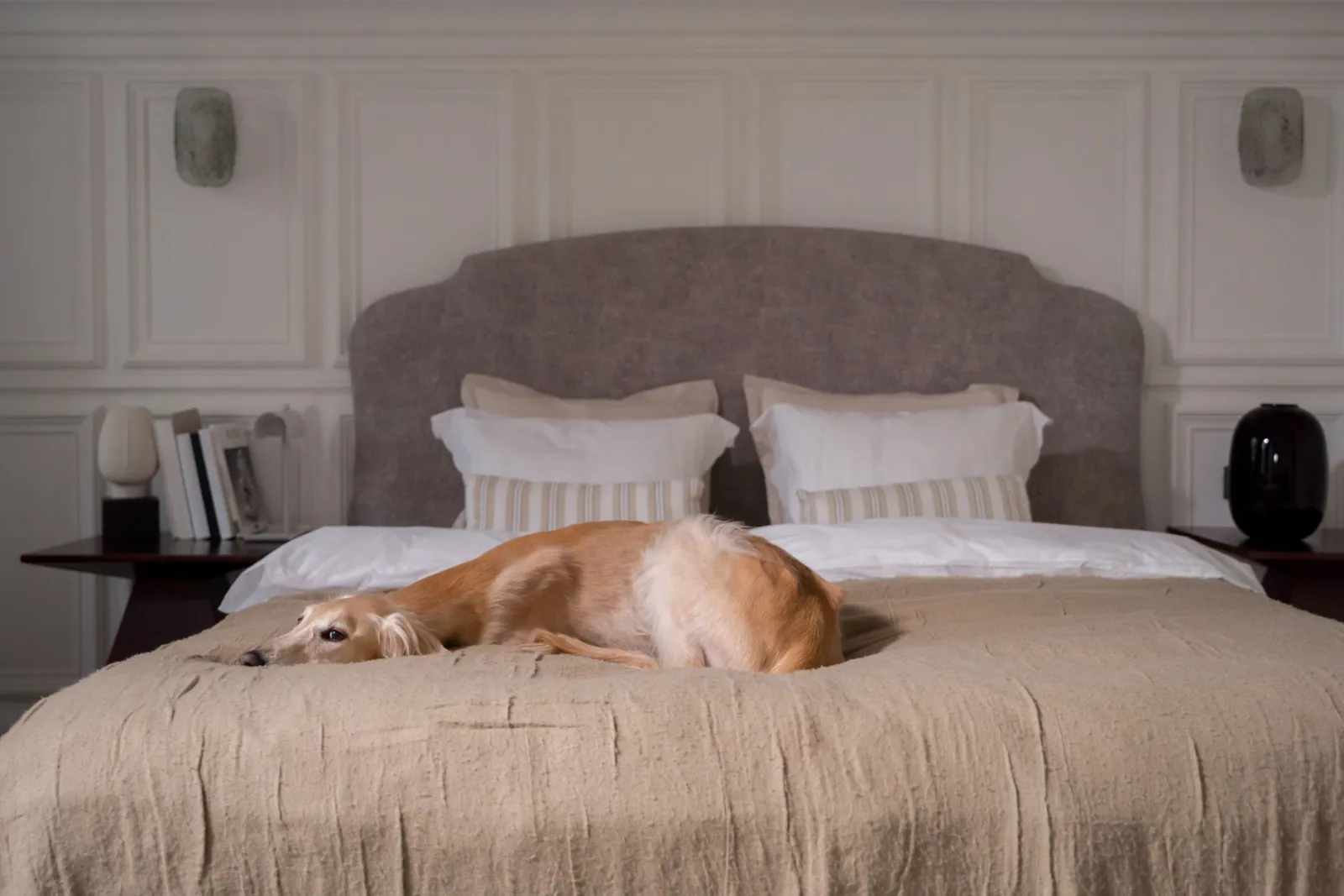
Dogs gravitate toward the same spots on the furniture day after day, and the bed is usually at the top of the list. A dedicated bed cover gives your dog a consistent, comfortable place to settle while creating a clear barrier between fur, dirt, and the surfaces you sleep on. Without one, every nap on the duvet leaves behind hair, shed skin cells, and whatever the dog picked up on the last walk, all of which work their way into the fabric and are far harder to remove once they settle in.
The protection argument is the practical core of it. Dogs bring in mud, dust, pollen, and grit from paws and coats, and they shed continuously rather than in one seasonal burst. A cover absorbs that traffic on a removable layer you can wash on its own, instead of forcing you to launder an entire duvet, comforter, or mattress protector every time the dog jumps up. That difference matters most in wet weather, after park visits, or during shedding periods, when the bed would otherwise need constant cleaning. A cover also guards against the slower damage that accumulates invisibly: oils from the coat transferring onto fabric, faint odors settling into padding, and the general wear that comes from claws and weight pressing into the same area night after night.
Comfort for the dog is the other half of the equation. Dogs seek out soft, warm, familiar surfaces, and a cover placed consistently on the bed becomes a recognizable spot rather than a forbidden zone. For older dogs or dogs that struggle to jump, a cover on a low bed or at the foot of the bed can make settling down easier. For dogs that run hot, a lighter cover offers a cooler surface than heavy bedding. The point is to give the dog a defined place that feels like theirs, which tends to reduce the restless circling and repositioning that happens when a dog can’t quite get comfortable.
There are also household benefits that are easy to overlook. A cover keeps the bed usable for both of you, so you are not faced with the choice between shutting the dog out of the bedroom and accepting a bed that needs frequent deep cleaning. It simplifies guest situations, since a cover can be removed before visitors arrive. And it makes the bed a shared space on your terms, with a layer that is easy to lift off, shake out, and wash when needed.
Choosing to use a dedicated cover comes down to a simple trade: one removable layer that takes the wear, versus bedding that absorbs everything directly. For most dog owners, that trade is worth making.
How to Measure Your Bed for a Dog Cover
Measuring your bed for a dog cover starts with the mattress itself, not the frame or the headboard. Pull the fitted sheet tight and run a tape measure along the full length from head to foot, then across the full width at the widest point. Mattress dimensions vary more than people expect between standard sizes, and an older or pillow-top mattress can run slightly larger than its nominal category. Write both numbers down before you shop, because a cover cut for a nominal size may not drape properly over a mattress that sits at the upper end of its range.
Next, measure the mattress depth, meaning how far the mattress rises from the top of the box spring or platform to the sleeping surface. This figure decides whether a cover with elasticated corners or a fitted skirt will actually stay tucked in place. A deep mattress paired with a shallow-cornered cover will pop off the moment your dog circles before lying down, while a thin mattress under a deep cover leaves loose fabric that bunches and slides. If your bed has a topper, measure with the topper in place, since it changes both the surface dimensions and the depth.
Decide how much overhang you want, because that choice shapes which size to buy. A cover sized exactly to the mattress protects the sleeping surface but leaves the sides exposed to paws, drool, and shed hair. Sizing up gives you fabric that drapes over the edges and tucks between mattress and box spring, which holds the cover steadier when a dog jumps up or digs at the blanket before settling. For a bed pushed into a corner, account for the fact that you only need overhang on the exposed sides, which can let you choose a size that fits the visible footprint more cleanly.
Think about how your dog uses the bed, since that changes the coverage you need. A dog that sleeps stretched out along the foot of the bed needs length more than width, while one that curls in the middle is easier to satisfy with a standard rectangular cover. If your dog likes to burrow or rearrange bedding, extra overhang and a secure tuck matter more than a precise fit. If the dog only joins you occasionally, a cover that is quick to straighten and easy to remove for washing will serve you better than a tightly fitted one.
Finally, measure the bed with the bedding you normally use in place, and check clearance around the perimeter. Skirts, footboards, and bedside tables can all interfere with a cover that needs to wrap the corners. Note the height of any footboard, because a cover that drapes low may catch on it. Record your length, width, depth, and desired overhang together, and use those four figures as your buying criteria rather than relying on the mattress size label alone.
Waterproof vs. Water-Resistant Bed Covers for Dogs
Waterproof and water-resistant bed covers are often marketed as if the terms were interchangeable, but they describe two different levels of protection, and choosing between them comes down to how much liquid you realistically expect your dog to bring onto the bed. A waterproof cover contains a continuous barrier layer, typically a coated fabric or a laminated membrane, that stops liquid from passing through to the mattress or duvet beneath. A water-resistant cover relies on a tightly woven fabric or a surface treatment that slows absorption and gives you time to blot a spill, but it will eventually let moisture through if liquid sits on it or soaks in under pressure. Understanding that gap matters, because the wrong choice means either a mattress that never quite smells clean or a cover that feels stiff and crinkly for no good reason.
Waterproof covers earn their place in households with senior dogs, puppies still learning bladder control, dogs that drool heavily, or dogs that come in wet from rain, snow, or a swim and immediately jump on the bed. They are also the sensible pick if your dog sleeps on the bed after walks in muddy conditions, since a waterproof layer lets you wipe or rinse the surface without the mess reaching the bedding. The trade-off is breathability and feel: barrier layers can trap heat, and some feel plasticky or rustle underfoot. Look for covers described as breathable or with a soft quilted top surface if your dog is a restless sleeper or runs warm, and check that the barrier is built into the whole cover rather than only a small central panel.
Water-resistant covers suit dogs that are mostly dry and clean indoors, occasional light drooling, or the odd damp paw after a quick garden trip. They tend to be softer, quieter, and more comfortable for a dog that sleeps deeply and shifts position often, and they drape more naturally over a duvet. The practical test is simple: a few drops of water on the surface should bead and sit long enough for you to grab a cloth. If the liquid sinks in within moments, the cover is decorative rather than protective, and it belongs on a guest bed rather than under a dog.
A useful middle path is layering. A water-resistant quilted cover on top gives comfort and catches hair and dirt, while a thin waterproof layer underneath handles accidents and damp fur. This combination keeps the sleeping surface soft while still guarding the mattress, and it means you can wash the top layer frequently without relying on the barrier every time. Whichever route you take, confirm the cover is machine washable and that the waterproof or water-resistant finish is described as durable through washing, since a treatment that washes out after a few cycles leaves you with an ordinary fabric cover.
Finally, match the choice to where the cover sits. On a bed shared with a dog that sleeps at the foot, a waterproof cover across the lower half is often enough, while a dog that burrows under the duvet needs protection that extends across the full surface. Consider how the cover attaches, too: elasticated corners and a snug fit keep a waterproof layer in place when a dog circles before settling, whereas a loose cover bunches up and leaves gaps where liquid can reach the bedding.
Choosing Fabrics That Withstand Claws and Chewing
Fabric choice is the single biggest factor in how long a bed cover survives a dog. The right material resists punctures from nails, holds up to repeated washing, and doesn’t shred the moment a determined chewer gets bored. The wrong one—typically a loose knit or a thin decorative weave—can develop pulls and holes within days. When you’re evaluating a cover, think in terms of weave density, fiber strength, and how the surface reacts to a claw dragging across it rather than puncturing straight through.
Tight, high-density woven fabrics are the most reliable baseline for claw resistance. Canvas, heavy cotton twill, and tightly woven microfiber all present a smooth, compact surface where nails tend to slide rather than catch. A dense weave also means there’s less space between threads for a claw tip to wedge into and pull. As a rule of thumb, if you can see light through the fabric when you hold it up, or if the threads look visibly loose and gapped, it’s likely too open for a dog that digs or scratches before settling. Denim-weight cotton and similar sturdy twills sit at a good middle ground—substantial enough to resist abrasion but still comfortable to lie on.
For dogs that chew, the priority shifts from abrasion resistance to tear strength and edge durability. Chewing concentrates force on seams, corners, and any loose hem a dog can grab. Look for covers with reinforced or double-stitched seams and bound edges rather than raw hems, since a chewed-through seam unravels fast. Fabrics with some give, like a heavy polyester blend, tend to stretch and deform under chewing rather than tearing cleanly, which buys time. Very stiff, brittle-feeling fabrics can crack or split at stress points, so a bit of flexibility in the material is an advantage, not a weakness.
Water resistance and washability interact with durability in ways worth planning for. A cover that repels moisture keeps the bed beneath dry, but coatings that provide that repellency can wear away with frequent hot washing. If your dog is a heavy shedder or prone to muddy paws, prioritize a fabric you can machine wash often without it thinning out—solution-dyed or tightly woven synthetics generally hold their color and structure through repeated cycles better than loose natural fibers. Removable, zip-off covers make this practical, since you’re washing the cover rather than the whole bed.
Match the fabric to the specific behavior you’re covering for. A dog that circles and scratches before lying down needs a smooth, dense weave that resists surface abrasion. A puppy in a chewing phase needs strong seams and a fabric that deforms rather than tears. An older dog that mostly sleeps needs comfort and easy laundering more than armor. There’s no single best fabric—only the one that fits how your particular dog uses the bed. When in doubt, a tightly woven, mid-to-heavyweight fabric with reinforced seams covers the widest range of these situations.
Machine-Washable Covers: Care and Cleaning Tips
Machine-washable covers earn their keep only if the washing routine is realistic. Before buying, check the care label and confirm the cover fits your machine’s drum with room to spare; a cover that barely fits will agitate poorly and may strain the machine. Look for covers that can be machine-washed in warm water and tumble-dried on low, since high heat is what typically shrinks backing fabrics and warps waterproof membranes. A cover that requires hand-washing or line-drying only is a poor fit for a household with a dog that sheds or drools daily.
Frequency depends on use. A cover that sits on the bed every night with a dog that sleeps on top of it generally needs washing roughly once a week to every two weeks, while a cover used only for occasional naps can stretch to monthly. Accidents, muddy paws, and illness call for immediate washing regardless of schedule. Shaking the cover outdoors before washing removes loose hair and grit that would otherwise clog the machine and redeposit on the fabric.
Washing technique matters as much as frequency. Close zippers and fasten any straps so they don’t snag the drum or tear the fabric. Use a mild detergent and skip fabric softener, which coats technical fabrics and reduces their ability to repel moisture. Wash on a normal cycle with warm water rather than a heavy-duty setting, and avoid overloading the machine so the cover can move freely and rinse clean. If the cover has a waterproof backing, check the label for tumble-dry guidance; some tolerate low heat, while others are best air-dried flat to preserve the coating.
Drying and post-wash care protect both the cover and your bed. Tumble-dry on low or air-dry, and make sure the cover is completely dry before putting it back, especially along seams and any padded sections where dampness lingers. A partly dry cover can transfer moisture to the mattress and develop a musty smell. Between washes, vacuum or brush the cover to lift surface hair, and spot-clean small marks with a damp cloth and mild soap rather than washing the whole cover.
Finally, treat washability as a buying criterion, not an afterthought. Two covers rotated weekly means one is always clean and ready while the other is in the wash, which suits households with a dog that sheds heavily or has frequent accidents. Check that seams, zippers, and elastic corners survive repeated washing, since these are the first points of failure. A cover that washes easily and dries quickly will actually get cleaned, and that consistency is what keeps your bed protected over the long run.
Fitted Covers vs. Throw-Style Covers for Dog Beds
When choosing a bed cover for dogs, the first real decision is between a fitted cover and a throw-style cover. The two solve the same basic problem—keeping fur, dirt, and moisture off your bed—but they behave very differently in daily use. A fitted cover is shaped to the mattress, often with elasticated corners or a zip, so it stays taut and flat. A throw-style cover is a loose blanket or quilted pad that you drape over the bed and tuck in as needed. Neither is universally better; the right pick depends on how your dog sleeps, how often you wash the cover, and how much you care about a tidy look.
Fitted covers win on stability. Because they grip the mattress, they resist bunching when a dog circles before lying down, and they don’t slide off during the night. That makes them a strong choice for restless sleepers, larger dogs, or dogs that dig and scratch at the bedding. The trade-off is fit: a fitted cover only works if it matches your mattress dimensions, and putting it on or taking it off takes more effort than simply lifting a throw. If you wash covers frequently, that extra effort adds up.
Throw-style covers are the flexible option. They fit any bed regardless of size, can be folded to double up in high-traffic spots, and are quick to whisk off and launder. They suit guest beds, beds that double as sofa throws, or households that want a cover they can reposition as the dog shifts. The downside is movement: a loose throw can bunch, slide, or get pushed to one side, leaving part of the mattress exposed. Look for a throw with some weight or a textured backing if you want it to stay put.
A practical middle ground is to match the cover to the dog’s habits. Dogs that sprawl and stay put do fine with a throw; dogs that pace, dig, or sleep pressed against the edge benefit from the grip of a fitted cover. Consider, too, how the cover interacts with the bed itself—a waterproof layer underneath matters more than the top cover’s style if accidents are a concern, and a fitted cover over a waterproof liner keeps everything aligned. For beds in shared living spaces, a fitted cover reads as more deliberate and stays neater; for a bed you move between rooms, a throw is easier to carry and re-drape.
Whichever you choose, check the washability and the way it attaches before buying. A cover that’s easy to remove and machine-washable gets changed more often, which matters more for hygiene than the fitted-versus-throw distinction. If you can, choose one that covers the sleeping surface fully and can be secured at the corners or edges, so your dog gets a comfortable, consistent spot and your bed stays protected.
Non-Slip Backings: Keeping the Cover in Place
A non-slip backing is the difference between a bed cover that stays where you put it and one that ends up bunched against the wall by morning. The backing is the underside layer that creates friction against your mattress, duvet, or existing bedding, and it matters most on smooth surfaces: cotton sateen sheets, bamboo blends, and tightly woven duvet covers all give a cover very little to grip. On those surfaces, a plain fabric underside slides readily under a dog that circles before lying down, shifts its weight, or scrambles on and off during the night. A textured or coated backing adds resistance so the cover holds its position through that movement.
Backings generally fall into a few practical types. A quilted or textured fabric underside relies on surface roughness alone; it grips best on flannel, fleece, or other brushed bedding and is the least effective on satin-smooth sheets. A coated grip backing, often a dotted or grid-patterned rubberized layer, creates the strongest hold on smooth mattresses but can feel slightly tacky against skin if the cover shifts. A silicone-dotted or mesh-style backing sits between the two, offering grip without a full rubber coating. Some covers use an elasticated skirt or corner straps instead of, or in addition to, a backing; these anchor the cover mechanically rather than relying on friction, which is more secure on very slippery bedding but limits the cover to mattress-style use rather than draping over a duvet.
Match the backing to how the cover will actually be used. If your dog sleeps on top of the duvet at the foot of the bed, a grip-coated backing on a smooth duvet cover is the more reliable choice, since a textured fabric alone will slide on the duvet’s weave. If the cover goes over a fleece throw or a textured blanket, a simple textured underside is usually sufficient. On leather or faux-leather furniture, a rubberized grip backing is close to essential; fabric undersides slide almost freely on those surfaces. For a cover used on a sofa or in a car, look for a backing combined with a tuck-in flap or straps, because friction alone rarely survives a dog jumping on and off at an angle.
The backing also affects how the cover handles washing and daily use. Rubberized and silicone-dotted backings generally tolerate machine washing but can degrade faster with high heat, so a cooler wash and air drying help them keep their grip. Textured fabric backings are the most durable through repeated washing but offer the least hold on smooth surfaces. A backing that has worn smooth, cracked, or begun peeling is no longer doing its job, and at that point the cover will slide regardless of how well it fits. Check the underside periodically, especially on covers that see daily use.
Finally, consider the dog’s movement style. A settled sleeper that curls up and stays put places modest demands on a backing, and almost any textured underside will do. A dog that paces, digs, or launches onto the bed needs a stronger grip layer, and pairing a grip backing with corner straps or a tuck-in flap gives the best chance of the cover staying flat. The backing is easy to overlook when comparing covers, but it is the feature that determines whether the protection stays where you placed it.
Matching Bed Covers to Your Home Decor
Choosing a bed cover for dogs is not only a practical decision about protection and washability; it also affects how your bedroom looks. Because these covers stay visible most of the day, it helps to treat the choice the way you would treat any other textile in the room, balancing the dog’s needs against the palette, textures, and furniture already present.
Start with colour and pattern as your main tools. Solid, muted tones such as charcoal, taupe, oatmeal, or deep navy tend to blend into most bedrooms and hide everyday smudges and hair better than pale pastels or bright whites. If your room already has a strong accent colour, a cover in a quieter neutral keeps the bed from competing with it. Patterns earn their place in busier rooms or homes with light-coloured bedding: a subtle herringbone, ticking stripe, or small geometric print breaks up the visual effect of dirt and shedding far better than a flat solid, so the cover looks presentable for longer between washes.
Texture matters as much as colour. Quilted covers with a stitched surface read as tailored and sit well in traditional or classic bedrooms, while smooth woven or suede-like finishes suit more contemporary, minimalist spaces. A textured cover also adds a layer of visual warmth to a plain duvet, which is useful in rooms with little artwork or soft furnishing. Think about how the cover will look folded back or draped at the foot of the bed, since that is how it will usually be seen.
Match the cover to the room’s existing materials rather than to a single piece of furniture. A cover in a similar tonal family to your curtains, rug, or headboard will feel intentional, whereas a cover that clashes with the largest textile in the room tends to look out of place. If your bedding is white or cream, a cover in a slightly deeper shade of the same family creates a layered, coordinated look without a harsh contrast.
Finally, consider how the cover is used day to day. In a guest room or a bedroom that doubles as a seating area, a cover that looks tidy when smoothed flat is worth prioritising, and a colour that matches the throw or cushions helps it disappear into the scheme. In a room where the dog sleeps on the bed every night, a darker, forgiving tone reduces the sense that the cover is purely functional. Choosing one cover per season, in a lighter tone for summer and a deeper one for winter, keeps the bed looking considered while still doing its job.
Bed Covers for Senior Dogs and Incontinence Support
Senior dogs often lose a little bladder control as they age, and that single change reshapes how you should think about a bed cover. The goal shifts from simple hair and dirt protection to liquid management: you want a cover that stops moisture before it reaches your mattress, stays comfortable enough that your dog will actually settle on it, and can be washed often without falling apart. A cover that only handles surface mess is not enough here; the layer closest to your dog needs to slow absorption and block pass-through.
The most important criterion is the backing. A waterproof or water-resistant membrane underneath a soft top fabric is what separates a genuine incontinence cover from an ordinary throw. Look for a cover where the liquid-blocking layer is bonded to the fabric rather than loose, so it does not bunch or shift when your dog circles before lying down. Fit matters just as much: a cover that is slightly oversized and tucked in, or held by elastic corners, stays flat instead of wrinkling into folds where liquid can pool and run off the edge onto the bed beneath.
Washability is where senior-dog covers earn their keep. You will be laundering far more often, so favor covers that survive frequent hot washes and tumble drying without the backing cracking or delaminating. A cover you can pull off, wash, and put back the same day keeps the bed usable; one that needs gentle cycles and air drying quickly becomes a chore. Having two covers in rotation is a practical approach, since one can be in the wash while the other protects the bed.
Comfort deserves real attention, because a senior dog may spend more time lying down and can be prone to pressure points. A quilted or softly padded top layer cushions joints better than a thin, crinkly waterproof sheet, and a quiet backing avoids the rustling that can startle a restless older dog. Smooth, low-nap fabrics also trap less debris and are easier to brush clean between washes.
Think about placement and coverage too. A cover that spans the whole sleeping area, rather than a small pad, protects against accidents that happen at the edges or when your dog shifts position overnight. For dogs who mostly sleep in one spot, a generously sized cover centered on that area is often enough, while a dog that roams the bed may need fuller coverage. Pairing the cover with a washable underlayer adds a second line of defense without changing how the bed feels.
Layering Bed Covers for Extra Protection and Warmth
Layering works on the same principle as dressing a bed for cold weather: each layer has a distinct job, and the combination handles more than any single cover could. The base layer sits directly on your mattress or duvet and should be a thin, tightly woven, waterproof cover whose only task is to stop moisture and dirt from reaching what’s underneath. Because it stays flat and is rarely disturbed, it can be lighter and less padded than a standalone cover. The middle layer adds warmth and cushioning — a quilted or fleece-topped cover is a sensible choice here, since it gives your dog a soft surface to settle on while trapping a little body heat. The top layer is the sacrificial one: a washable, quick-drying throw or cover that catches hair, drool, and muddy paw prints and goes into the machine far more often than the layers below it.
The practical benefit of this arrangement is that you rarely have to strip the whole bed. When the top layer gets soiled, you remove and wash only that piece, leaving the waterproof base in place and the bed usable within the hour. Rotate two or three top layers if your dog is a frequent bed user, so one is always clean and dry while another is in the wash. This keeps the washing cycle short and prevents the buildup of dampness that comes from putting a still-damp cover back on.
Fit matters more with layers than with a single cover. Each layer should be sized to the bed beneath it, with enough tuck-in on the sides to stay put when your dog circles and scratches before lying down. A top layer that’s too small will bunch and slide; one that’s too large will drape over the edges and collect debris from the floor. Elasticated corners or a slightly generous cut that tucks under the mattress both work, but avoid mixing the two on the same bed.
Use cases shape how many layers you need. For an older dog that spends long stretches resting, a warmer middle layer and a soft top layer make the bed more inviting, particularly on cold floors or in drafty rooms. For a dog that comes in wet from walks, prioritize a waterproof base and a fast-drying top layer over extra padding. In warm weather, drop the middle layer entirely and keep just the waterproof base and a light top cover. If your dog sleeps on your own bed rather than a dedicated one, the same stacking logic applies: a waterproof fitted layer under a washable quilted cover protects your bedding while giving your dog a defined, comfortable spot.
Frequently asked questions
What is a bed cover for dogs and how does it work?
A bed cover for dogs is a removable fabric layer that sits over a dog bed or your own bedding to shield it from hair, dirt, drool, and accidents. It usually attaches with elastic corners, a zipper, or a fitted skirt, and many versions include a waterproof backing that blocks moisture from reaching the cushion or mattress beneath. You lift it off, wash it, and put it back, so the bed itself stays cleaner and lasts longer.
Are waterproof dog bed covers safe for puppies?
Waterproof covers are generally fine for puppies as long as the fabric is breathable and the puppy cannot chew loose edges or zippers. Choose a cover that fits snugly with no dangling straps, and check that any waterproof membrane is covered by a soft top layer rather than exposed. Supervise a young puppy with any new bedding at first, and remove the cover if you notice chewing or tearing.
How often should I wash my dog’s bed cover?
Wash the cover regularly, roughly once a week for dogs that shed heavily or drool, and more often after any accident or illness. A quick shake and vacuum between washes helps control hair. Always follow the care label: most covers tolerate a gentle cycle and low heat, but waterproof liners and some fabrics last longer when air-dried. Keeping a spare cover lets you rotate them without leaving the bed bare.
Can a bed cover protect my own bed from dog hair and accidents?
Yes. A cover sized for your mattress or duvet creates a washable barrier between your dog and your bedding, catching hair, dirt, and drool before they reach the sheets. A waterproof-backed version also blocks moisture from accidents or wet paws. You simply strip and wash the cover instead of laundering the whole duvet, which saves time and protects the bedding underneath.
What size bed cover do I need for a large dog?
Measure the bed or surface you want to cover, including the sides if the cover needs to tuck or wrap, then pick a cover that matches those dimensions rather than guessing by breed. For a large dog, allow extra room for stretching out and for the cover to stay anchored when the dog moves. If your dog is between sizes, choose the larger one so it does not pull tight or slip off.
Do bed covers for dogs fit standard dog bed sizes?
Many covers are made to match common dog bed shapes and sizes, such as rectangular mats, bolster beds, and round cushions, and are sold by the same size labels as the beds. Fit varies between makers, so check the listed dimensions against your bed rather than relying on the size name alone. Covers with elastic or zippered edges tolerate small differences better than flat, fitted styles.
Will a bed cover stop my dog from chewing the bed itself?
A cover is not a chew deterrent. It protects the bed from hair and moisture, but a determined chewer can still bite through fabric, zippers, or seams. If chewing is the problem, address it with appropriate chew toys, supervision, and keeping the bed out of reach when you are away. Choose covers with reinforced seams and no loose ties, and replace any cover your dog has started to shred.
Can I use a bed cover on a human mattress or sofa?
Yes. Covers sized for mattresses, duvets, and sofas work well as a washable layer that keeps dog hair, dirt, and drool off furniture. Look for a waterproof backing if accidents are a concern and a textured or gripped underside so it stays in place when your dog jumps up. Measure the seat or mattress first, and pick a cover that can be machine washed for easy upkeep.
Read next :Lawn Mower Service Near Me: A Homeowner’s Guide to Finding Local Care · Best Dog Walks Near Me: A Home and Pet Guide · What duvet cover size do I need? 140×200 or 240×220 compared · Best Fridge: A Complete Buyer’s Guide for Your Home · Best Robot Vacuum for Hard Floors: A Complete Buying Guide
Work out your own case in 30 seconds:
Methodology
This calculator produces an indicative estimate based on the parameters you enter. The ranges used reflect typical market tiers in the pets space and are neither a commercial offer nor a guarantee. Prices and availability may vary.
Read next :Dog Food for Dogs with Pancreatitis: A Buyer’s Guide
Full guide :Pets
More from this guide :
Was this guide helpful?
Share your experience with the WiseHomeGuides community.