In short:
\n
- \n
- That white crusty ring and the slimy film in your dog’s water bowl are two different problems, so treat them separately.
- Hard water stains need a vinegar soak, while biofilm and odor call for a baking soda paste.
- Rinse with hot water daily and deep clean once a week to stop buildup before it starts.
- Skip bleach and essential oils, and replace scratched plastic bowls since they trap bacteria.
- If your dog’s water looks and smells like water, you’re doing it right.
\n
\n
\n
\n
\n
\n
\n\n
You fill the water bowl for dogs. Your dog drinks. You refill it. Simple, right? Except after a few days, that clear plastic or stainless steel water bowl for dogs starts looking… off. A slick film coats the inside. A chalky white ring hardens near the waterline. And that smell — faintly metallic, slightly swampy — hits you when you lean in to scrub. If you’ve ever wondered whether you’re just being fussy, you’re not. Hard water stains and biofilm are two different problems that need two different solutions, and most owners accidentally treat one while ignoring the other.
\n\n
Living with a labrador who treats every water bowl for dogs like a personal swimming pool means scrubbing more slimy bowls than most people care to admit. Here’s what actually works, based on years of trial, error, and a few “why is the water cloudy again?” mornings.
\n\n
First, know what you’re fighting: two problems, not one
\n
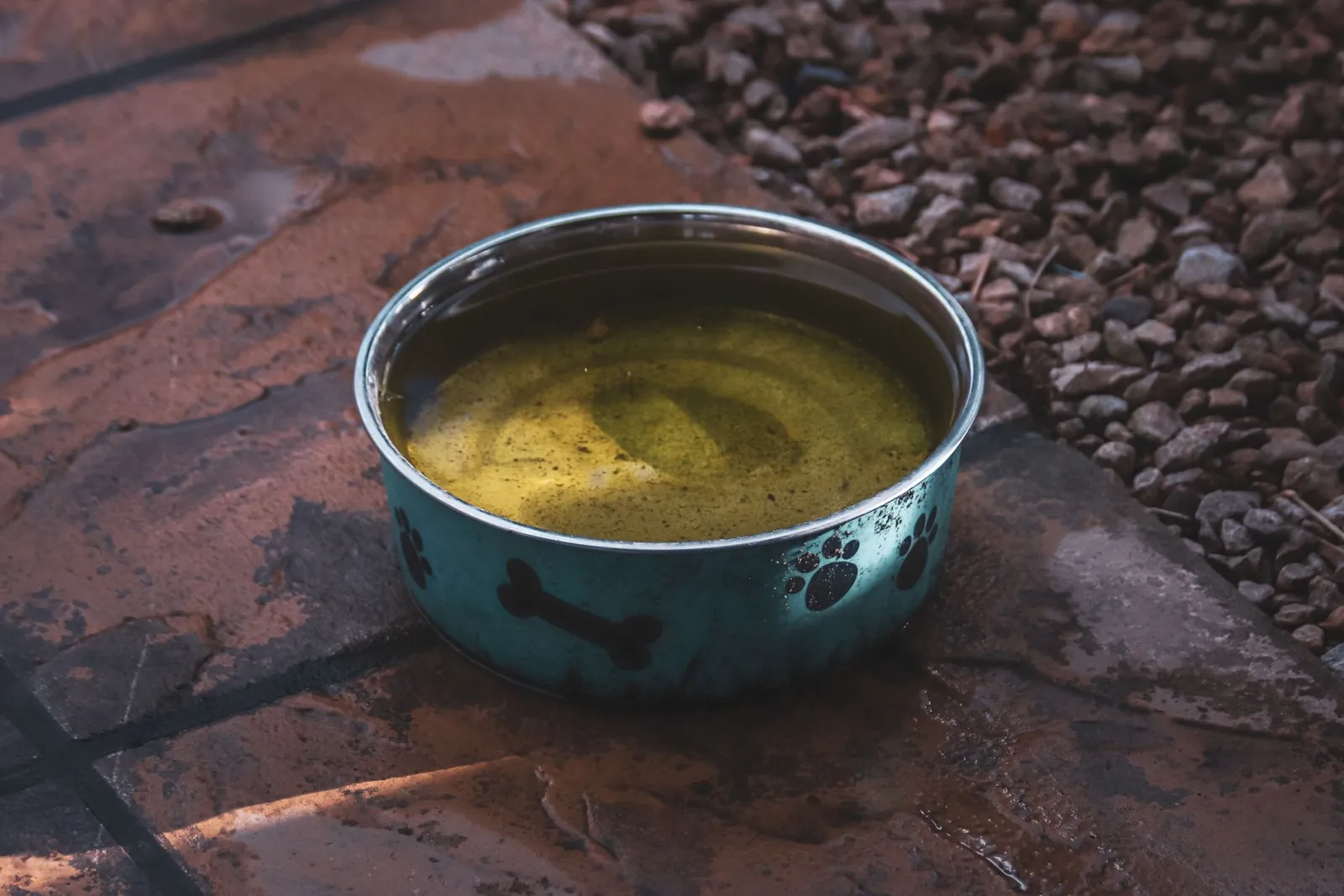
Hard water stains and biofilm look similar from a distance, but they behave differently. Hard water leaves behind calcium and magnesium deposits — that’s the white, crusty ring you can scrape with a fingernail. Biofilm is a living layer of bacteria and yeast that clings to the bowl’s surface, especially in warm weather or when water sits out for hours.
\n
Why does this matter? Because scrubbing biofilm with a sponge and cold water just spreads it around. And attacking hard water stains with dish soap alone barely dents them. You need to identify which one you’re dealing with before you reach for anything.
\n
Concrete example: Last summer, a pinkish-orange film appeared inside a stainless water bowl for dogs. The first assumption was rust. It wasn’t — it was a common airborne bacterium that loves standing water. A quick rinse didn’t touch it. A vinegar soak removed it in twenty minutes. Had the scrubbing continued with soap, it would have been an all-afternoon job.
\n\n
Daily habits that stop the buildup before it starts
\n
Prevention beats deep cleaning every time. If you change the water twice a day and rinse the bowl with hot water each time, you’ll rarely see heavy stains. But “rarely” isn’t “never,” especially if your dog drools a lot or you live in a hard water area.
\n
Here’s a routine that makes a real difference:
\n
- \n
- Rinse with hot water after every refill. Not cold. Hot water loosens the film before it sets.
- Use a dedicated bowl sponge. Don’t share it with your dishes. Biofilm travels.
- Skip the dishwasher for plastic bowls. Heat can warp them and create microscopic cracks where bacteria hide. Stainless steel and ceramic handle dishwashers fine.
- Keep a spare bowl. While one soaks, the other serves fresh water. No excuses to skip cleaning.
\n
\n
\n
\n
\n
Concrete example: A friend couldn’t figure out why her dog’s water always smelled musty within a day. Turned out she was rinsing with cold water and letting the bowl air-dry upside down on a damp counter. The bowl never fully dried inside. Switching to a hot rinse and drying with a clean cloth solved it in a week.
\n\n
Deep cleaning: how to remove hard water stains and biofilm properly
\n
When the buildup is already there, you need a two-step approach. First, break down the mineral deposits. Then, kill and remove the biofilm. Doing them in reverse wastes effort.
\n\n
Step 1: The vinegar soak (for hard water stains)
\n
White vinegar is your best friend here. It’s acidic enough to dissolve calcium without harsh chemicals. Fill the bowl with equal parts white vinegar and warm water. Let it sit for 30 minutes to an hour. For stubborn rings, use undiluted vinegar and let it sit longer. Then scrub with a non-abrasive sponge. The white crust should wipe away.
\n
If you have a plastic bowl with deep scratches, vinegar won’t reach inside them. In that case, replace the bowl — scratched plastic is a biofilm magnet.
\n\n
Step 2: The baking soda paste (for biofilm and odor)
\n
After the vinegar rinse, make a paste of baking soda and a little water. Apply it to the bowl’s interior, especially the sides and bottom. Let it sit for 10 minutes. Scrub gently, then rinse thoroughly with hot water. Baking soda lifts the slimy layer and neutralizes odors without leaving residue.
\n
Concrete example: A bowl once sat out for three days during a heatwave. The biofilm was thick enough to peel. Vinegar alone didn’t cut it. The baking soda paste did. A boiling water rinse followed — just poured in, left five minutes, then washed as usual. That bowl came back good as new.
\n\n
What about bleach?
\n
A diluted bleach solution (one teaspoon per gallon of water) can sanitize stainless steel or ceramic bowls, but you must rinse obsessively afterward. It’s not recommended for routine cleaning.
\n\n
Choosing the right bowl material for your situation
\n
Not all bowls are equal when it comes to resisting stains and biofilm. Here’s a quick comparison based on real-world use:
\n
| Material | Hard water resistance | Biofilm resistance | Durability | Best for |
|---|---|---|---|---|
| Stainless steel | High | High | Excellent | Most dogs, easy cleaning |
| Ceramic (glazed) | Medium | Medium | Good if not dropped | Slow drinkers, stylish kitchens |
| Plastic | Low | Low | Poor — scratches easily | Short-term use only |
| Glass | High | High | Fragile | Small dogs, indoor use |
\n
Stainless steel wins for most active owners. It doesn’t hold onto odors, resists scratches, and handles both vinegar and baking soda without issue. Ceramic is fine if you clean it daily. Plastic? Best skipped unless you’re traveling and need something lightweight.
\n\n
Comparing bowl types: which option fits your dog and your routine
\n
Material is only half the story. The shape, size, and style of the bowl change how often it gets dirty, how easy it is to clean, and whether your dog actually drinks enough. Here’s a practical breakdown of the main options you’ll run into, judged on generic criteria rather than any specific product.
\n\n
| Type / option | Advantages | Drawbacks | Best suited for |
|---|---|---|---|
| Standard open bowl (any material) | Cheap to replace, easy to scrub inside, works for most dogs | Tips over with enthusiastic drinkers, water gets dirty fast outdoors | Calm drinkers, indoor use, owners who clean daily |
| Wide, shallow bowl | Less whisker and muzzle contact, good for flat-faced breeds | Holds less water, needs more frequent refills, splashes easily | Flat-faced breeds, dogs with sensitive muzzles, small dogs |
| Deep, narrow bowl | Holds more water, fewer refills, less splashing | Harder to reach the bottom to scrub, can trap grime in corners | Large dogs, busy owners, outdoor setups |
| Non-slip / weighted base | Stays put, less spillage, good for tile floors | Heavier to lift and rinse, base can trap water underneath | Enthusiastic drinkers, puppies, hard floors |
| Elevated / raised stand | Easier swallowing posture for some dogs, less neck strain | More parts to clean, stand itself collects dust and drips | Senior dogs, large breeds, dogs with joint issues |
| Travel / collapsible bowl | Portable, packs flat, handy on walks and trips | Thin material creases and scratches, dries slowly, harbors film | Hiking, road trips, days out — not daily home use |
| Water fountain / circulating bowl | Encourages drinking, keeps water moving, some dogs prefer it | More parts, filters to change, pump and tubing need regular deep cleaning | Dogs that drink too little, multi-pet homes, owners ready to maintain it |
\n\n
A few things worth knowing before you pick. First, bowl size should match your dog’s daily intake, not the biggest bowl on the shelf — a giant bowl of water that sits for days is a biofilm farm. Second, if your dog is a messy drinker, a weighted or non-slip base saves your floor and your patience. Third, fountains are genuinely useful for dogs that under-drink, but they add maintenance: the pump, the reservoir, and any tubing all need the same vinegar-and-baking-soda treatment as a plain bowl, and often more often because water is constantly recirculating.
\n\n
For most active owners, the sweet spot is a stainless steel bowl sized to your dog, with a spare on standby. Add a travel bowl for outings and, if your dog needs encouragement to drink, consider a fountain — but only if you’re willing to keep up with its cleaning. If you’re weighing specific picks, our buying guide to the best water bowls for dogs walks through what to look for.
\n\n
Maintenance, lifespan, and when to replace your dog’s water bowl
\n
A water bowl isn’t a forever purchase, and treating it like one is how that slimy film becomes a permanent resident. How long a bowl lasts depends far more on how you use and clean it than on any fixed number. Here’s how to think about it.
\n\n
Everyday maintenance that extends lifespan
\n
- \n
- Rinse after every refill. A quick hot-water rinse removes the film before it bonds to the surface. This single habit does more for bowl longevity than anything else.
- Dry it properly. Air-drying upside down on a damp surface keeps the inside wet and invites growth. Dry with a clean cloth or let it stand upright to air out fully.
- Don’t stack bowls. Stacking traps moisture between them and scuffs the surfaces, especially ceramic and plastic.
- Keep it out of direct sun and heat. Warm, standing water grows biofilm faster, and prolonged heat stress can degrade plastic and some coatings.
- Handle with care. Chips, hairline cracks, and scratches are where bacteria settle in and where a bowl starts to fail.
\n
\n
\n
\n
\n
\n\n
What actually shortens a bowl’s life
\n
Three things do the most damage. The first is scratches — every scratch on plastic or a worn ceramic glaze becomes a hiding place that no sponge can reach. The second is heat, whether from a dishwasher cycle on a plastic bowl or from sitting in the sun. The third is neglect: a bowl that’s rinsed but never deep cleaned builds up a mineral and biofilm layer that eventually stains permanently and can’t be scrubbed back to clean.
\n\n
Signs it’s time to replace the bowl
\n
You don’t need a calendar — you need to look and smell. Replace the bowl when you notice any of these:
\n
- \n
- Persistent odor that returns within a day of cleaning, even after a vinegar and baking soda treatment.
- Deep scratches or a worn, dull surface you can feel with a fingernail — especially on plastic.
- Cracks, chips, or a flaking glaze on ceramic, which can harbor bacteria and, with glazes, potentially expose what’s underneath.
- Stains that won’t lift after a proper soak and scrub — the surface has absorbed what’s on it.
- Rust spots or pitting on metal, which signal the protective surface has broken down.
- A warped or misshapen bowl that no longer sits flat or holds water evenly.
\n
\n
\n
\n
\n
\n
\n\n
For stainless steel and well-glazed ceramic that are cleaned daily and deep cleaned weekly, a bowl can serve for a long time — often years — because the surface stays smooth and non-porous. Plastic is the opposite: it degrades fastest, scratches easily, and is usually the first to go. If you’re unsure, use the smell test. A bowl that smells clean after washing is fine. A bowl that smells off the moment it’s dry is telling you something.
\n\n
The practical takeaway: keep two bowls in rotation, clean them properly, and replace any bowl the moment its surface stops being smooth and odor-free. A fresh bowl is inexpensive compared to the hassle of fighting buildup you can never fully remove.
\n\n
FAQ
\n
How often should I deep clean my dog’s water bowl?
\n
Daily rinsing with hot water, plus a deep clean once a week. If your dog is a messy drinker (drops food in the bowl, drools heavily), deep clean every three days. In hot weather, biofilm grows faster — bump it up to every other day.
\n\n
Is the pink or orange slime dangerous for my dog?
\n
That pinkish film is usually a harmless airborne bacterium called Serratia marcescens. It won’t make your dog sick on its own, but it signals that the bowl is a breeding ground for other things. Remove it promptly and don’t let it become a habit.
\n\n
Can I use essential oils to freshen the bowl?
\n
No. Many essential oils are toxic to dogs, even in tiny amounts. Skip the scented cleaners. Vinegar and baking soda leave no dangerous residue and do the job better.
\n\n
How long does a dog water bowl last before it needs replacing?
\n
It depends on the material and how you care for it. Stainless steel and well-glazed ceramic that are cleaned daily can last for years. Plastic wears out fastest because it scratches and holds onto bacteria. Replace any bowl as soon as it has deep scratches, cracks, a flaking glaze, rust, or an odor that returns right after cleaning.
\n\n
Should I switch to a water fountain for my dog?
\n
Fountains help dogs that don’t drink enough, since moving water is more appealing to many of them. But they add parts — pump, reservoir, tubing — that all need regular deep cleaning, often more frequently than a plain bowl because water recirculates. If you’ll keep up with the maintenance, a fountain can be a good fit. If not, a simple stainless bowl you rinse daily is the safer choice.
\n\n\n\n
Put it into practice : How do I measure my dog’s bowl height?
\n
\n
Sources
\n
- \n
- American Society for the Prevention of Cruelty to Animals (ASPCA) — pet care and toxicology guidance on household substances.
- American Veterinary Medical Association (AVMA) — general pet health and hygiene resources.
- Centers for Disease Control and Prevention (CDC) — information on biofilm and household water hygiene.
\n
\n
\n
\n\n\n\n\n\n
Full guide :Pets
More from this guide :
Was this guide helpful?
Share your experience with the WiseHomeGuides community.