In short :
- Hard, smooth surfaces and tightly woven materials are your best bet against claws.
- Powder-coated metal frames, glass or stone tops, and dense synthetic weaves hold up best.
- Soft, loose natural weaves and textured fabrics are the ones to avoid.
- No garden furniture is truly claw-proof, so match the material to your pet’s habits.
- Add covers, a scratching post, and regular claw trimming to protect what you already own.
Your dog launches himself onto the garden bench to bark at a passing cat. Your cat treats the sofa cushions like a scratching post. Either way, you walk outside a week later and find the fabric snagged, the weave pulled, and a fresh set of claw marks where your nice seating used to be. Pet scratches are one of the fastest ways garden furniture loses its looks — and the material you choose decides whether your set survives years of claws or looks tired after one season.
The good news: no garden furniture is truly claw-proof, but some materials resist scratching far better than others. The trick is understanding why a surface scratches, then matching the material to your pet’s habits. Below, you’ll find the materials that hold up best, the ones to avoid, and the practical details that make the biggest difference.
Why some materials scratch and others don’t
Scratching damage comes down to two things: how hard the surface is, and how tightly the material is woven or bonded. A soft, loosely woven fabric gives a claw something to catch and pull. A hard, smooth surface lets the claw slide off without leaving a mark.
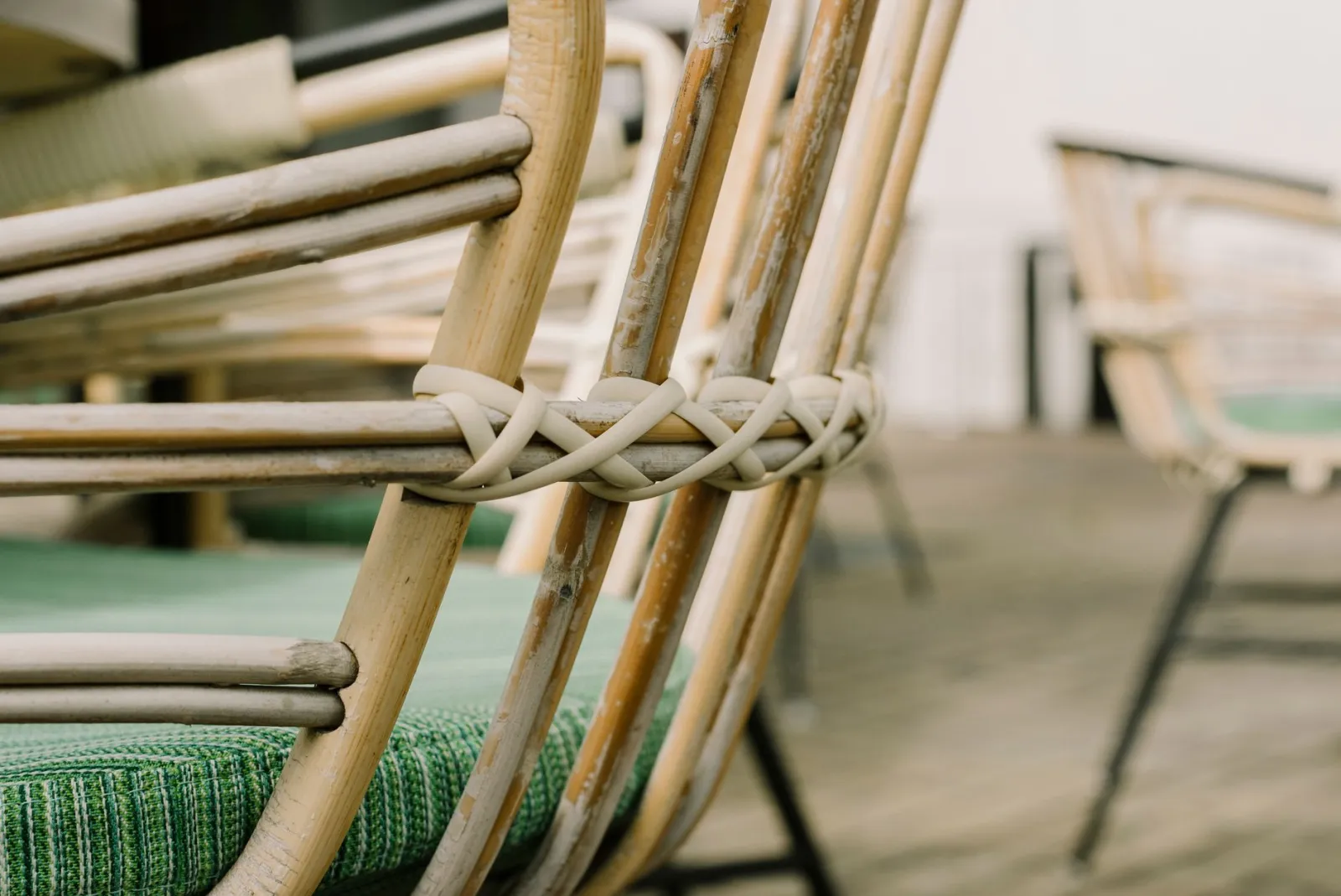
Think about a woven wicker-style chair. The strands sit slightly apart, so a cat’s claw hooks into the gap and drags the fiber out of shape. Now picture a smooth, glazed ceramic planter — a cat can paw at it all day and nothing happens. Same animal, same claw, completely different outcome. That contrast is the whole principle behind scratch-resistant garden furniture.
There’s also a third factor people overlook: color and texture hide damage. A tightly woven dark fabric with a subtle pattern masks snags that would scream for attention on a pale, flat weave. So when you’re choosing, think about hardness first, weave second, and how well the surface disguises wear third.
The materials that hold up best against claws
If scratch resistance is your priority, a few material families consistently come out ahead.
Metal frames with smooth finishes
Powder-coated or painted metal — aluminum and steel especially — is about as claw-resistant as garden furniture gets. The surface is hard and non-porous, so claws skate across it rather than digging in. A cat stretching against a metal table leg leaves nothing behind.
The weak point isn’t the metal; it’s the finish. A chipped or scratched coating exposes bare metal, which can then rust. Touch up any chips promptly and metal will outlast almost anything else in a pet household.
Tightly woven synthetic resin
Synthetic woven furniture has come a long way. The key word is tightly. When the strands are woven close together with no gaps, claws can’t hook into the weave. A dog scrambling onto a well-made synthetic bench tends to slide rather than snag.
Loosely woven versions are a different story. Run your hand across the surface before buying — if your fingernail catches between strands, a claw will too.
Hard, smooth surfaces: glass, stone, and composite tops
Tabletops made of tempered glass, stone, or dense composite are effectively scratch-proof against normal pet behavior. A cat walking across a glass table leaves paw prints, not damage. These surfaces are also easy to wipe clean, which matters when muddy paws are involved.
The caveat is edges and frames. A glass top is safe, but the frame around it might not be. Pay attention to what surrounds the smooth surface.
Dense, tightly woven outdoor fabrics
For cushions and upholstered pieces, look for dense, tight weaves rather than loose, textured ones. A tightly woven fabric gives claws less to grab. Smooth, flat weaves outperform chunky, nubby textures every time when pets are in the picture.
| Material | Scratch resistance | Watch out for |
|---|---|---|
| Powder-coated metal | Excellent | Chipped coating leading to rust |
| Tightly woven synthetic | Very good | Loose weaves that snag |
| Glass, stone, composite tops | Excellent | Frames and edges around the top |
| Dense outdoor fabric | Good | Loose textures and raised patterns |
| Soft, loose natural weaves | Poor | Claws hooking into gaps |
Materials to think twice about
Some materials look beautiful but struggle with pets.
Loose natural wicker and rattan. The open weave is a claw magnet. A single enthusiastic jump can pull strands out of place, and once a strand is loose, it invites more damage.
Soft, textured fabrics. Chunky knits, bouclé-style textures, and raised patterns give claws plenty to catch. They feel wonderful, but they show every snag.
Untreated soft woods. Soft woods dent and scratch easily. A cat using a wooden armrest as a scratching post will leave visible grooves within days.
Here’s a real-world illustration: a household with two cats and a loose-weave natural chair often finds the seat back frayed within a single summer, while the powder-coated metal table beside it looks untouched. Same pets, same patio, opposite outcomes — purely because of material choice.
Practical habits that protect your furniture
Material choice does most of the work, but a few habits stretch it further.
- Give pets their own scratching option nearby. A cat that has a dedicated post close to the patio is far less likely to target your seating.
- Use fitted covers on cushions. Removable, washable covers take the wear so the cushion underneath stays intact.
- Trim claws regularly. Blunt claws do dramatically less damage than sharp ones.
- Position furniture thoughtfully. Placing seating away from favorite launch points — fences, ledges, windowsills — reduces the number of dramatic landings.
- Wipe and inspect monthly. Catching a small snag early stops it becoming a torn panel.
One more tip: keep a repair kit handy. A little touch-up paint for metal chips and a fabric snag tool for weaves can undo minor damage before it spreads.
FAQ
Is any garden furniture completely scratch-proof?
No. Even the hardest surfaces can eventually show wear under determined claws. But powder-coated metal, glass, stone, and tightly woven synthetics resist scratches so well that normal pet behavior leaves little to no visible damage. The goal is damage resistance, not invincibility.
What’s the single best choice for a home with cats and dogs?
If you want one safe bet, choose a powder-coated metal frame paired with a smooth, dense tabletop and tightly woven or removable-cover cushions. That combination handles jumping, stretching, and scratching better than almost any other setup, and it’s easy to clean.
Can I protect furniture I already own?
Yes. Fitted covers on cushions, a nearby scratching post, regular claw trimming, and prompt repair of small snags all make a real difference. You can’t change the material, but you can reduce how often claws meet it — and how much damage each contact causes.
The bottom line
So, what garden furniture resists pet scratches? The short answer: hard, smooth surfaces and tightly woven materials win. Powder-coated metal frames, glass or stone tops, dense synthetic weaves, and tightly woven outdoor fabrics all stand up well. Soft, loose natural weaves and textured fabrics are the ones to approach with caution.
Match the material to your pet’s habits, add a few simple protective routines, and your outdoor space can look good for years — claws and all. For a broader look at choosing and caring for garden furniture across every style and budget, there’s a more complete guide on the site worth reading next.