This article contains Amazon affiliate links. As an Amazon Associate we earn from qualifying purchases.
In short :
- Start with what goes in, not with the shelf — your longest, tallest and bulkiest items set the minimum size.
- Measure the internal opening, including height and any lip, and leave a little clearance so the lid opens and your fingers fit.
- Keep weight in mind: a big box gets heavy fast, so several smaller ones often beat one giant container.
- Rigid boxes keep their stated dimensions and stack cleanly, while soft ones bulge and take up more room than you expect.
- The right size isn’t the biggest one that fits — it’s the one that matches your contents, your space and how you handle it.
You’ve cleared the clutter, sorted the tools, and finally decided to bring order to the garden shed. Then comes the moment of truth: standing in front of a shelf of storage boxes, wondering which size to carry home. Pick too small, and you’ll be back for more within a month. Pick too large, and you’ll wrestle a container that’s too heavy to lift, too bulky for the shelf, and half empty anyway. Size is the single most consequential choice you’ll make, and it’s rarely about how much you can store. It’s about how you actually use what’s inside.
This guide focuses squarely on that decision: how to match box dimensions to your tools, your storage space, and your daily habits. No brand talk, no shopping lists — just the practical reasoning that helps you buy the right size the first time.
Start With What Goes In, Not With the Shelf
Most people measure the shelf first. That’s backwards. The contents dictate the box, and the shelf only sets the outer limit.
Begin by gathering the items you intend to store and laying them out together. A pair of secateurs, a trowel, twine, plant labels, and a few seed packets tell you far more about the right box than any tape measure. Look at the longest item, the tallest item, and the bulkiest item. Those three dimensions set your minimums.
Here’s a concrete example. A long-handled dibber or a folding pruning saw won’t fit in a shallow tray, no matter how wide it is. If you buy a box that’s roomy but shallow, you’ll end up laying the tool diagonally, wasting half the space. Conversely, a deep box for a handful of seed packets means you’ll be rummaging at the bottom every time.
A useful habit: group your items into two piles — “frequently grabbed” and “seasonal.” Frequently grabbed items deserve a box sized so that everything is visible at a glance, ideally in one layer. Seasonal items can go deeper, because you’ll only reach for them a few times a year.
- Long tools (dibbers, saws, stakes): prioritize length and a lid that opens fully.
- Small hand tools (trowels, weeders): choose a shallow box so nothing hides underneath.
- Loose consumables (twine, labels, seeds): a medium box with dividers keeps everything findable.
- Bulky items (hoses, fleece, netting): go wide and deep, but check you can still lift it when full.
Match the Box to the Space You Actually Have
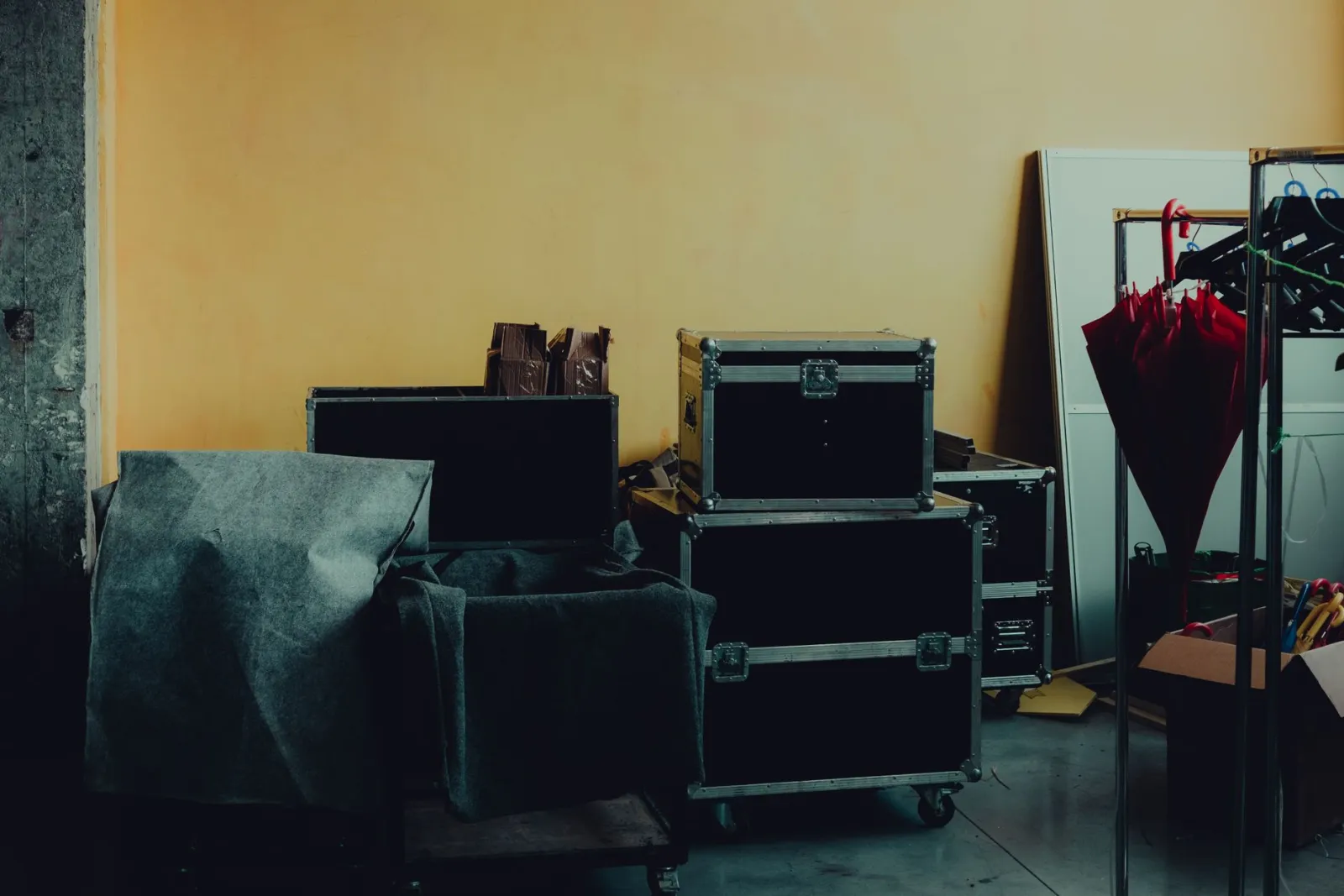
Now measure. But measure with intent, not just length and width. Three numbers matter: the internal dimensions of your shelf or cabinet, the height of the opening, and the clearance above the box once it’s in place.
The height of the opening is the one people forget. A box may fit perfectly on the shelf but be impossible to slide in if the shelf above is too low — especially if the lid needs to flip open. Picture a garden cabinet with fixed shelves: a tall box on the bottom shelf is fine, but the same box on a middle shelf becomes a daily annoyance because you can’t open it without pulling it out.
Depth deserves equal attention. In a deep cupboard, boxes that are too shallow leave a dead zone at the back where things vanish. Boxes that are too deep are hard to reach into. A practical rule: the box should be shallow enough that your hand reaches the back comfortably, or deep enough that you’re willing to pull it out entirely each time.
Don’t overlook the path to the shelf, either. A box that’s easy to carry in two hands is one thing; a box wedged under a workbench is another. If you’ll be sliding it, check that the base glides and that the box isn’t wider than the gap.
Think About Weight and Handling
Size and weight travel together. A large box filled with compost bags, stones, or wet hose will be far heavier than the same box filled with fleece and netting. The right size is the largest one you can still move comfortably when full.
Here’s a real-world illustration. Someone stores a season’s worth of netting and fleece in a single generous box, then discovers in autumn that it’s too heavy to lift down from a high shelf. The fix isn’t a bigger box — it’s two smaller ones, each light enough to handle safely.
Ask yourself three questions before committing:
- Will I lift this box, or will it stay put?
- If I lift it, can I do so with one hand free for a ladder or a door?
- Will the contents get heavier over time (soil, wet items, tools)?
If the answer to the first is “lift,” err on the smaller side. Boxes that stay on a shelf can be larger, because weight matters less.
A Quick Size Comparison
The table below maps typical box formats to their best uses. Treat it as a starting point, then adjust for your own tools and space.
| Box format | Best for | Watch out for |
|---|---|---|
| Shallow tray | Hand tools, seeds, labels, twine | Long items won’t fit; contents can spill if tipped |
| Medium lidded box | Mixed hand tools, small consumables, gloves | Deep enough to hide small items at the bottom |
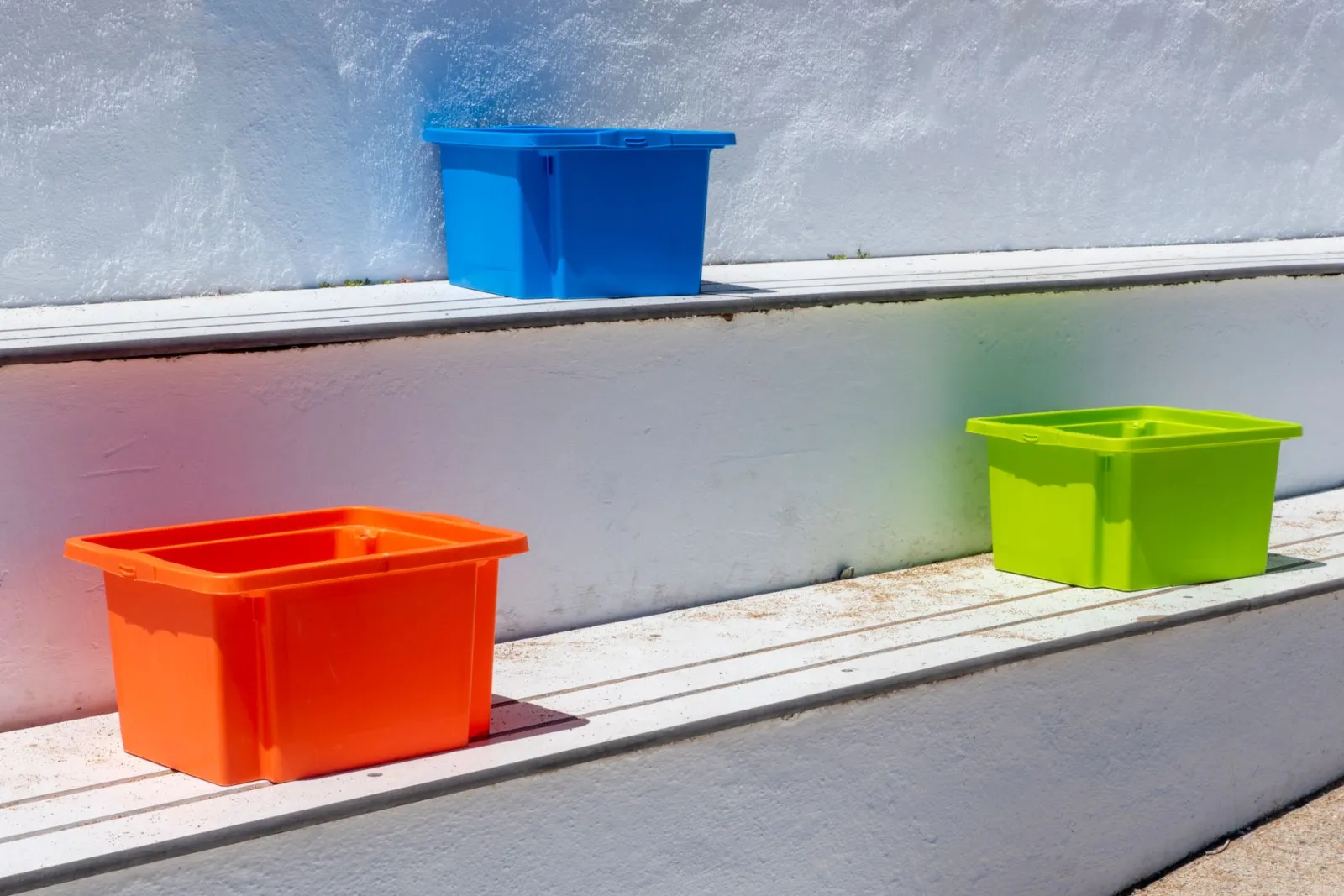
| Large deep box | Hoses, fleece, netting, bulky seasonal gear | Heavy when full; hard to reach the bottom |
| Long narrow box | Stakes, canes, long-handled tools | Limited width; check lid clearance |
Frequently Asked Questions
Should I buy one big box or several smaller ones?
Several smaller boxes almost always win for garden storage. They’re easier to lift, easier to sort, and let you group items by task rather than by whatever happens to fit. A single large box tends to become a catch-all where small items sink to the bottom. The exception is genuinely bulky seasonal gear that you only handle once or twice a year.
How do I know if a box will fit before I buy it?
Measure the internal space, not the outside of the shelf or cabinet. Note the width, depth, and — crucially — the height of the opening, including any lip or frame. Then add a little clearance for your fingers and for the lid to open. A box that fits with zero margin is a box you’ll fight with every time.
Does the material affect the right size?
It can. Rigid materials hold their shape, so the stated dimensions are reliable and stack cleanly. Softer or flexible containers can bulge when full, effectively taking up more space than their measurements suggest. If you plan to stack boxes, favor rigid ones and size them so the stack stays stable.
The Bottom Line
The right size isn’t the biggest one that fits — it’s the one that matches your contents, your space, and your handling habits. Start with what goes in, measure the opening and depth with care, and keep weight in mind before you commit. Do that, and you’ll buy once instead of twice.
For the broader picture — materials, lids, ventilation, placement, and long-term care — a more complete guide to garden storage boxes covers everything beyond size. Start here with dimensions, then widen your view.
Run the numbers with our calculator : How many plants for my balcony
Was this guide helpful?
Share your experience with the WiseHomeGuides community.