What Is a Caterpillar? A Cat Owner’s Guide to the Larval Stage (and to Keeping Curious Cats Safe)
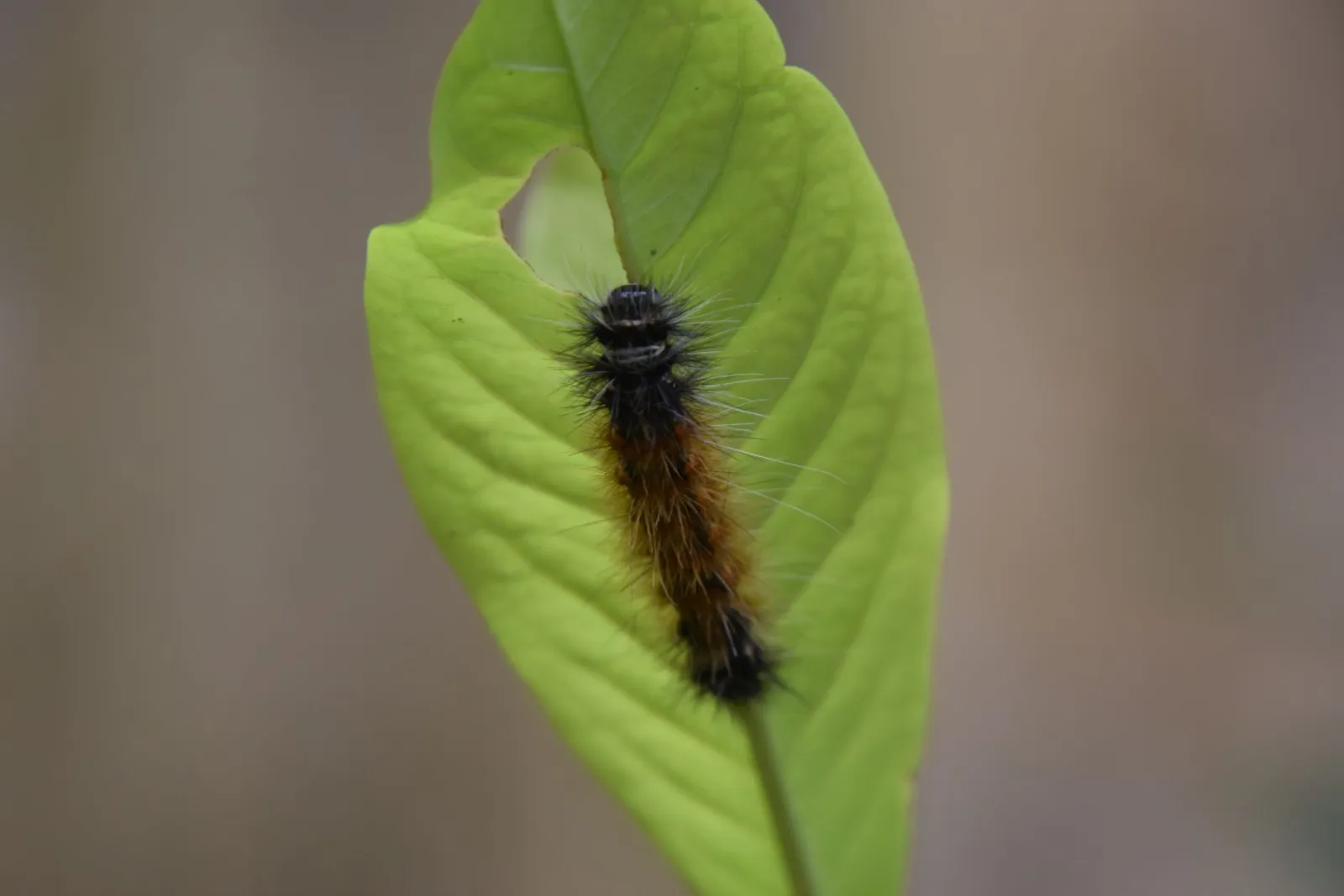
A caterpillar is the larval stage of a butterfly or moth — a soft-bodied, plant-eating insect that hatches from an egg, grows through a series of moults, and later transforms into a winged adult. In a multi-cat home it is also a small, twitching object that cats will stalk, bat, and often try to eat.
Table of contents
- What exactly is a caterpillar?
- How does a caterpillar turn into a butterfly or moth?
- Why do cats find caterpillars so fascinating?
- Which caterpillars are dangerous to cats?
- What should you do if a cat catches or eats a caterpillar?
- How do you keep caterpillars out of a multi-cat apartment?
- Frequently asked questions
What exactly is a caterpillar?
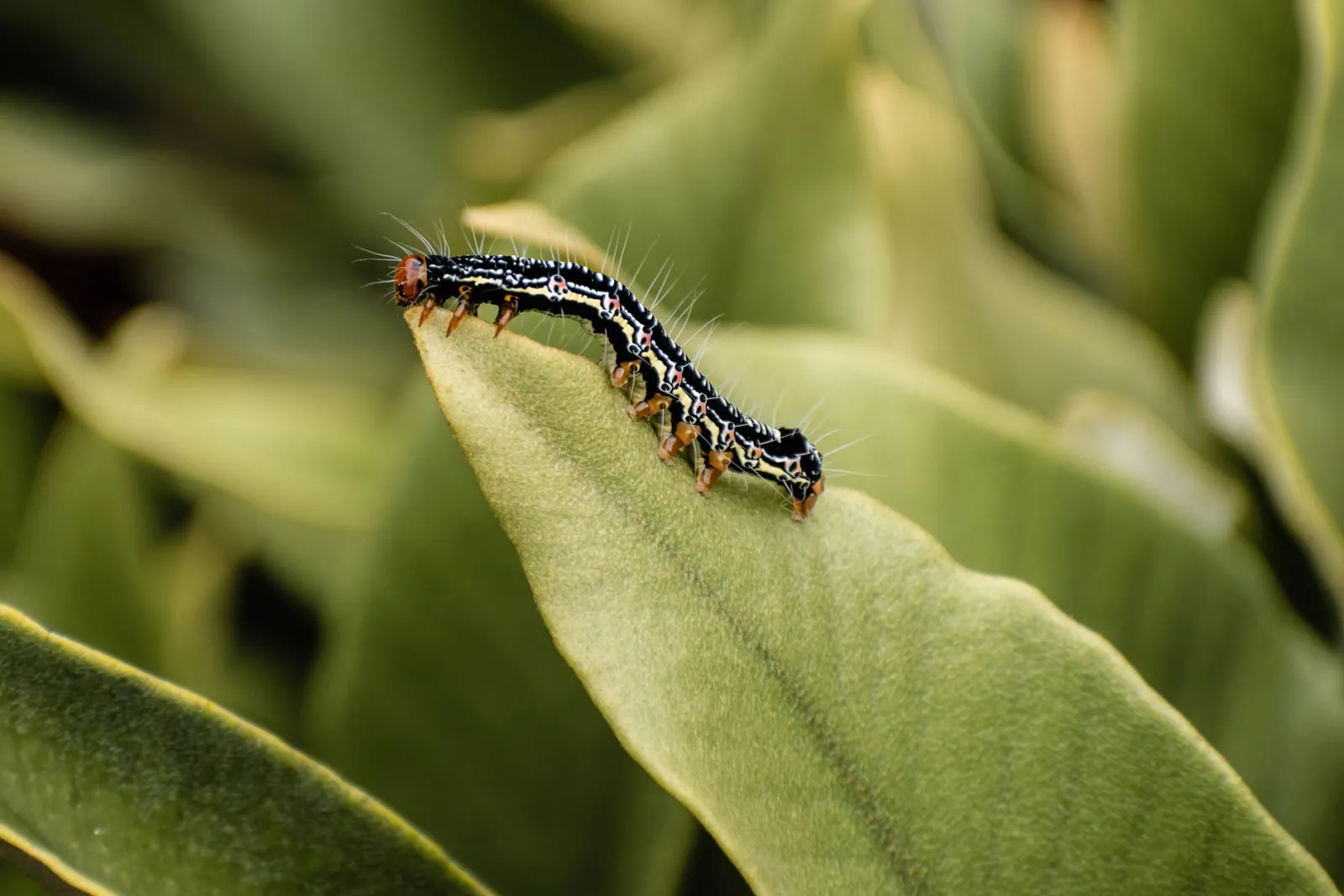
A caterpillar is the immature, crawling form of any insect in the butterfly and moth group. It hatches from an egg, spends its whole larval life eating and growing, and never reproduces in that form. Think of it as the building phase of a two-stage life: the caterpillar gathers the raw material, and the adult spends it.
The anatomy is quite distinctive once you know what to look at. A caterpillar has a hard head capsule, chewing mouthparts, three pairs of true legs on the thorax just behind the head, and up to five pairs of fleshy “prolegs” further down the abdomen that grip like suction cups. It has no wings, no visible reproductive organs, and simple eyes rather than the large compound eyes of the adult. Most species are entirely herbivorous, and many are fussy to the point of eating only one or two plant species.
Confusion with lookalikes is common, and it matters if you are trying to work out what is on your windowsill. Sawfly larvae look almost identical but are not caterpillars at all: they usually carry prolegs on nearly every abdominal segment, while a true caterpillar has a gap between the back prolegs and the front ones. A concrete example — a cluster of green grubs stripping a potted parsley plant on a balcony is often a sawfly larva, not a butterfly caterpillar, which is why squashing them does nothing to reduce butterfly numbers.
One more useful distinction: caterpillars are not worms, not grubs, and not maggots. Grubs are beetle larvae with a hardened body and six prominent legs; maggots are legless fly larvae. A caterpillar is always soft, always segmented, and always destined for a pupa.
How does a caterpillar turn into a butterfly or moth?
The transformation happens in four stages — egg, larva, pupa, adult — and the caterpillar is only the second of them. Nothing about the adult butterfly exists yet in any visible form; the entire body is rebuilt inside the pupal case.
The larval phase is essentially a growth marathon split into stages called instars. A caterpillar eats, swells, splits its skin, and emerges larger, usually four to six times before it is ready to pupate. A concrete case: a small green caterpillar hatching in spring on a patch of stinging nettle may moult five times over three or four weeks, then spin a silk pad, attach itself, and form a chrysalis that hangs for a fortnight before the adult emerges. Other species take far longer — some spend an entire winter as pupae tucked into shed corners, log piles, or the folds of a rolled-up tarpaulin.
Where pupation happens is worth knowing, because it explains why caterpillars turn up in odd places. Moth caterpillars often wander away from their food plant before pupating, which is why one can appear on a hallway floor, inside a watering can, or under a doormat. Butterfly caterpillars usually stay closer to the host plant and hang themselves from a stem or a leaf edge.
The adult stage is short and single-minded: mate, lay eggs, die. Most adult butterflies and moths live days to a few weeks and feed on nectar or not at all.
Why do cats find caterpillars so fascinating?
Cats are wired to notice small, erratic, ground-level movement, and a crawling caterpillar presses every one of those buttons at once. It is roughly prey-sized, it moves in unpredictable little surges, and it does not run away fast enough to be frustrating.
The predatory sequence in cats runs roughly: watch, stalk, crouch, pounce, grab, mouth, and sometimes eat. A caterpillar triggers the first five steps almost automatically and then gets stuck at step six, because a caterpillar does not behave like a mouse. It does not flee, it does not squeak, and it does not fight back in a way that ends the game. That mismatch is exactly what makes the encounter drag on — and dragging on is what turns a harmless curiosity into a mouthful.
In a multi-cat household the dynamic gets louder. One cat spots the caterpillar, another notices the first cat’s fixed stare, and a third arrives to see what the commotion is about. A very ordinary scene: a moth caterpillar crosses the balcony threshold, the youngest cat freezes, the eldest shoves in, and within thirty seconds two cats are batting the same object while a third watches from the cat tree, mildly stressed. Nothing about that sequence is aggression — it is competitive hunting over a shared target.
Indoor cats are not immune, and this surprises people. Caterpillars arrive on nursery plants, in cut flowers, on firewood, through window screens, on shoes, and on the washing. If your cats have a balcony, a windowsill, or a pot of cat grass, they have a realistic chance of meeting one.
Which caterpillars are dangerous to cats?
A minority of caterpillars can hurt a cat, and the risk comes from two mechanisms: urticating hairs or spines that break off in skin and mouth tissue, and toxins absorbed from the plants the caterpillar ate.
Urticating hairs are the more common problem in a home setting. These are hollow, brittle spines that detach on contact and release irritant substances. They lodge in the tongue, gums, lips, and paws, and because cats groom with their tongues, a single mouthful can spread them across the whole mouth. Bright colouration is a warning signal in nature — yellow, red, black, and bold stripes usually mean “leave me alone” — but it is not a reliable rule, because plenty of dull brown caterpillars are perfectly irritating too.
Chemical defence is the second mechanism. Some caterpillars store plant compounds that are toxic to anything that eats them, and a few of those compounds affect the heart or the nervous system. The practical consequence for you is simple: any caterpillar your cat has actually swallowed warrants a call to a veterinarian, even if the cat looks fine at that moment.
| Caterpillar appearance | Typical situation | Risk to cats | What to do |
|---|---|---|---|
| Smooth, green or brown, no visible hairs | On parsley, cabbage, nettles, balcony pots | Low — mainly a choking or stomach-upset risk if swallowed | Remove with a leaf or gloved hand, watch the cat for an hour |
| Dense long fur or tufts | Wandering on paths, walls, or indoor floors in autumn | Moderate — hairs break off and irritate mouth and paws | Do not let the cat mouth it; rinse the mouth, check paws |
| Spiky bristles, bright colours, bold stripes | On ornamental plants, hedges, balcony greenery | High — stinging spines cause pain and swelling | Move the cat away, rinse with water, contact a vet |
| Tiny, thin, looping “inchworm” | Dropping from plants or ceilings on a silk thread | Low, but frequently batted and swallowed | Remove and dispose of it outside; redirect the cat to a toy |
What you should not do is assume that a fuzzy caterpillar is automatically the dangerous kind. Hairiness is not a reliable danger signal in either direction — some hairy species are harmless, and some of the most painful stinging caterpillars are relatively smooth-looking. Judge by spines and colour, and when in doubt, treat every caterpillar as untouchable with bare hands.
What should you do if a cat catches or eats a caterpillar?
Stay calm, separate the cat from the insect, and check the mouth before you do anything else. Most encounters end with a bat and a bored cat; the ones that matter are the ones where the caterpillar went into the mouth.
- Remove the caterpillar first. Use a leaf, a piece of card, or a gloved hand — never bare fingers, and never a tissue you will then throw in an open bin where a cat can fish it out.
- Look inside the mouth. Lift the lip gently and check the gums, the inside of the cheeks, and under the tongue for hairs, spines, or fragments. Do not use tweezers inside a cat’s mouth; you will do more damage than the caterpillar did.
- Rinse with plain water. A gentle flush with room-temperature water from a syringe or a low-pressure tap helps dislodge loose hairs. Never use cotton buds or swabs, which push hairs deeper.
- Watch for the first hour. Drooling, pawing at the mouth, lip-smacking, vomiting, swelling, or a sudden change in behaviour all mean a veterinary call. So does a cat that swallowed the caterpillar whole.
- Keep the evidence. If you can, put the caterpillar in a sealed container and take it with you. Identification changes the treatment, and it is far easier than describing a squashed insect over the phone.
- Check the other cats. In a multi-cat home, the cat that did not catch the caterpillar often investigates the same spot minutes later. Sweep the floor, check the plant pots, and look along the skirting boards.
A realistic example of how this plays out: a cat brings a hairy caterpillar in through a balcony door, drops it, and a second cat picks it up. The first cat is fine; the second drools and paws at its face for ten minutes. That is a classic contact-irritation picture, and rinsing the mouth plus a vet call is the right response — not waiting to see whether it settles.
How do you keep caterpillars out of a multi-cat apartment?
Prevention is mostly about interception: stop the caterpillar before it becomes a moving toy on your floor. That means controlling the routes it uses to get in, and giving your cats a better outlet for the hunting drive.
Start with plants, because potted greenery is the single most common entry point. Inspect every new plant before it crosses the threshold — turn the leaves over, look at the stem joints, and check the soil surface for droppings that look like tiny dark grains. A concrete habit worth building: unpack a new plant in the hallway or outside the front door, shake it gently over a sheet of newspaper, and only then bring it in. The same applies to cut flowers, which frequently carry small caterpillars in the foliage.
Then look at openings. Window screens with a torn corner, a balcony door that stays ajar for the cat, a gap under a fire door — all of them let in moths at night, and moths lay eggs. Lights left on beside an open window are a moth magnet, so draw the curtain or switch to a lamp further inside. Check balcony pots weekly during warm months, and look under the rims of planters, where pupae are often tucked away.
Finally, redirect the hunting drive. A cat that has a daily outlet for stalking and pouncing is measurably less interested in whatever is crawling across the tiles. Wand toys that move erratically, a few minutes of chase-and-catch before meals, and a scatter feeding routine that makes the cat work for kibble all compete directly with the caterpillar’s appeal. In a multi-cat home, run these sessions with two toys in two directions so the boldest cat does not monopolise the game — the shy cat needs a target of its own.
Frequently asked questions
No. The majority are harmless if briefly mouthed, and only a minority carry urticating spines or stored plant toxins. The practical rule is that any caterpillar with spines, bright warning colours, or dense detachable hairs should be treated as a hazard, and any caterpillar actually swallowed justifies a veterinary call.
Can a cat get sick just from touching a caterpillar?
Yes, through contact with detached hairs or spines. A cat that bats a spiny caterpillar and then grooms its paw can transfer irritant hairs to its mouth. Signs are usually local — pawing at the face, drooling, rubbing the muzzle — and settle once the hairs are rinsed away.
Do indoor cats really encounter caterpillars?
More often than owners expect. Nursery plants, cut flowers, firewood, window screens, balcony planters, and clothing brought in from outside all carry them. Autumn is a peak period, because many moth caterpillars leave their food plant to find a pupation site and end up indoors.
Will a cat eat a caterpillar whole?
Sometimes, especially a small one. More often the cat bats it, mouths it, spits it out, and loses interest. The risk rises in multi-cat homes, where competition over a shared target encourages faster grabbing and swallowing.
Are fuzzy caterpillars always the dangerous ones?
No. Hairiness is not a reliable indicator in either direction. Spines and bold warning colouration are better clues, but the safest approach is to handle nothing with bare hands and to keep every caterpillar out of reach of every cat in the household.
What to take away
A caterpillar is the larval stage of a butterfly or moth: soft, segmented, plant-eating, and temporary. It exists to grow, moult a handful of times, and then rebuild itself inside a pupa. For your cats, it is a moving object that fits the prey template almost too well — and that is where the practical work begins.
Three habits cover most of the risk. Inspect plants before they come inside. Keep screens and balcony doors in good repair, especially at night. And give your cats a daily hunting outlet so the floor is not the most interesting thing in the room.
If a caterpillar does get caught, act in order: separate, check the mouth, rinse with water, watch for an hour, and call a vet if anything looks wrong or if the insect was swallowed. That sequence handles the vast majority of encounters calmly and correctly.
For the wider setup, the companion guides on this site cover multi-cat feeding stations that reduce competition, indoor enrichment routines for small apartments, and choosing houseplants that are safe around cats — all of which make a caterpillar sighting a minor event rather than a household emergency.
Put it into practice : How do I get my kitten used to car rides?
Work out your own case in 30 seconds:
Methodology
This calculator produces an indicative estimate based on the parameters you enter. The ranges used reflect typical market tiers in the pets space and are neither a commercial offer nor a guarantee. Prices and availability may vary.
Full guide :Pets
More from this guide :
Was this guide helpful?
Share your experience with the WiseHomeGuides community.